Presentation: The Multi-Agent Approach: Building Reliable and Controllable Software Development Automation
Our take
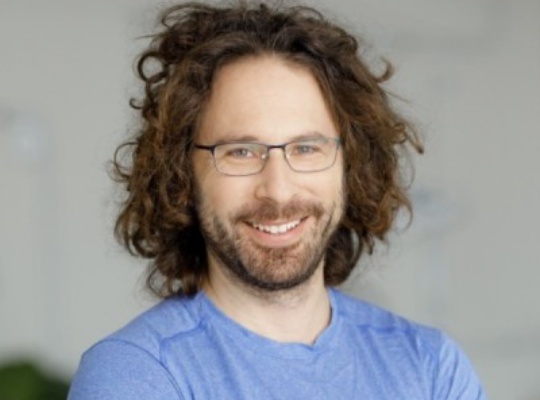
The conversation surrounding AI’s impact on software development has largely centered on individual tools – clever code completion, automated documentation, and the like. Itamar Friedman’s presentation, however, points to a more profound shift: moving beyond these isolated instances to architecting truly resilient and scalable workflows through multi-agent systems. The core idea, as Friedman lays out, is to leverage autonomous agents working in concert, each handling a specific task—testing, code review, arbitration—and communicating to create a self-regulating development lifecycle. This is a significant departure from the current paradigm and reflects a growing recognition that AI's true potential in software engineering lies not in replacing developers, but in augmenting their abilities through collaborative, adaptive systems. The challenges are considerable, of course, but the potential rewards—reduced errors, faster iteration cycles, and a more adaptable SDLC—are compelling. It’s a direction already being explored by forward-thinking organizations, as demonstrated by Airbnb’s work on Sitar-agent [Airbnb Shares Architecture Behind Sitar-Agent Dynamic Configuration Sidecar for Kubernetes Services], a dynamic configuration delivery system, and Slack’s integration of CRM data and automated workflows into their platform [Slack’s Slackbot can now pull your CRM data, generate charts, and send DocuSigns — all from a chat message].
The beauty of the multi-agent approach lies in its inherent robustness. Traditional automation often breaks down when faced with unexpected inputs or evolving requirements. A system built on individual AI components can be brittle, susceptible to cascading failures if one element falters. By contrast, a multi-agent system, with its built-in arbitration and communication protocols, can adapt to changing circumstances and recover from errors more gracefully. This mirrors biological systems, where individual cells work together to maintain the overall health and functionality of an organism. The challenge, as Friedman highlights, is in governing these agent interactions – ensuring they align with architectural principles and business goals. It demands a new level of architectural foresight and control, moving beyond simply deploying individual AI tools to designing ecosystems of intelligent agents. The work being done by ZML to optimize inference across various AI chips [Hot French startup ZML releases free product to speed inference across lots of AI chips] also underscores the increasing demand for efficient and scalable AI infrastructure to support these complex workflows.
This shift also necessitates a rethinking of how we approach software development roles. While individual developers will still be essential, new roles focused on agent design, orchestration, and governance are likely to emerge. System architects will need to become architects of AI ecosystems, defining the rules of engagement for these autonomous agents. Furthermore, the rise of multi-agent SDLCs will likely amplify the importance of robust testing and validation strategies. Because these systems are self-regulating and adaptive, traditional testing methods may prove inadequate. New techniques will be needed to ensure that these systems behave as intended across a wide range of scenarios. It’s a complex transition, but one that promises to unlock significant productivity gains and enable organizations to build and deploy software at an unprecedented pace.
Ultimately, Friedman's presentation offers a glimpse into the future of software development—a future where AI isn’t just a helpful assistant, but a collaborative partner. The move towards multi-agent systems represents a significant step beyond the current hype cycle, grounding AI’s promise in practical architectural considerations and engineering realities. The question now is: how quickly can organizations adapt their processes, their teams, and their infrastructure to embrace this new paradigm? And, perhaps more importantly, how will we ensure that these increasingly autonomous systems remain aligned with human values and ethical principles as they reshape the software development landscape?
Itamar Friedman discusses how architects and engineering leaders can break through the AI productivity ceiling using adaptive multi-agent systems. He shares insights on moving past simple autocomplete to resilient workflows by integrating autonomous testing, intelligent code review, and robust arbitration. Learn how to govern agent communication and build a context-driven SDLC that scales.
By Itamar FriedmanRead on the original site
Open the publisher's page for the full experience