QCon AI Boston 2026 Schedule: Agents in Production, Inference Cost, and AI in the SDLC
Our take
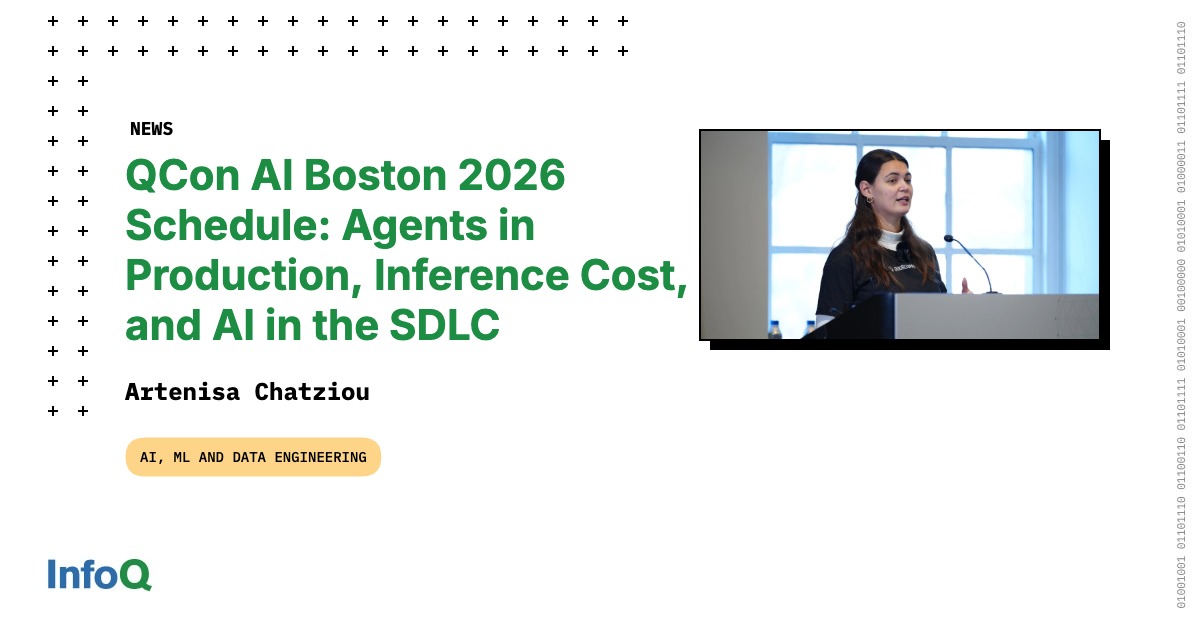
As the landscape of artificial intelligence continues to evolve, the upcoming QCon AI Boston 2026, set for June 1-2, promises to be a significant gathering for professionals eager to deepen their understanding of AI's role in software development. With a schedule that includes themes such as context engineering, inference economics, and agent reliability, this event is poised to shed light on how AI is not just a tool, but a transformative force reshaping the software development lifecycle (SDLC). Featuring insights from engineers at notable organizations like DoorDash, LinkedIn, Netflix, Apple, and Red Hat, attendees can expect a rich blend of practical knowledge and innovative thinking. For those who may have missed it, the recent announcement of the QCon San Francisco 2026: 12 Tracks Announced highlights similar trends in AI integration across various production sectors.
The emphasis on agent reliability and inference cost at QCon AI Boston reflects a growing recognition of the complexities involved in deploying AI systems effectively. As businesses increasingly rely on AI to drive decision-making and enhance productivity, understanding the economic implications of inference becomes paramount. This focus on inference economics is particularly relevant, as organizations seek to balance innovation with cost-efficiency. It’s a reminder that while AI can provide powerful solutions, the financial viability of these technologies must also be carefully considered. The discussions surrounding context engineering further emphasize the importance of relevancy in AI applications, ensuring that systems not only operate efficiently but are also aligned with user needs and expectations.
Moreover, the session topics signal a shift in how we view the software development lifecycle itself. With AI becoming more integrated, traditional methodologies are being challenged, pushing developers to rethink how they approach design, testing, and deployment. The QCon AI Boston 2026 agenda suggests that the future of software development will require adaptability and a willingness to embrace new paradigms. This is echoed in our previous coverage on AI in production, such as the article on QCon San Francisco 2026, which highlighted the need for continuous learning and adaptation in a rapidly changing technological environment.
Attending QCon AI Boston 2026 offers a unique opportunity for professionals to engage with thought leaders and practitioners who are at the forefront of AI innovation. The insights shared during these sessions can empower attendees to implement transformative strategies within their organizations. As AI continues to permeate various aspects of business operations, the conversations around agent reliability and inference economics will be critical in guiding how companies leverage these technologies responsibly and effectively.
Looking ahead, one question remains: how will emerging AI solutions redefine not just the tools we use, but the very processes we follow in software development? As this event approaches, it will be fascinating to see how the discussions unfold and what new strategies will emerge to meet the challenges of an AI-driven future. The answers may well shape the next generation of software development practices, positioning companies to thrive in an increasingly complex digital landscape.
The schedule for QCon AI Boston 2026 (June 1-2) is now live. The two-day program groups sessions around context engineering, inference economics, agent reliability, and how AI is changing the software development lifecycle. Speakers include engineers from DoorDash, LinkedIn, Netflix, Apple, and Red Hat.
By Artenisa ChatziouRead on the original site
Open the publisher's page for the full experience