RAG Evaluation Frameworks Compared: RAGAS vs TruLens vs DeepEval
Our take
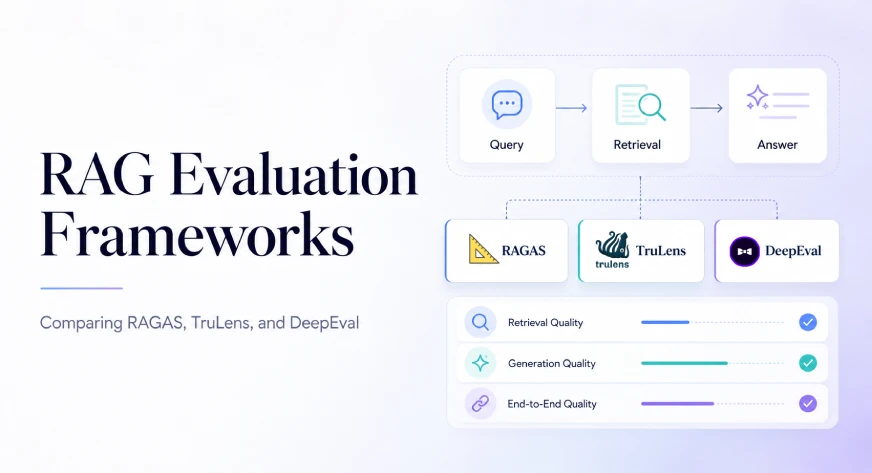
The rapid advancement of Large Language Models (LLMs) has undeniably lowered the barrier to entry for building Retrieval-Augmented Generation (RAG) pipelines. It's become remarkably straightforward to assemble a system capable of generating seemingly coherent responses. However, as the Analytics Vidhya article, Forget typosquatting; slopsquatting is the software supply chain threat created by AI coding tools, highlights, relying on superficial assessments of output—decent-looking answers—is a dangerous trap. Many teams are finding that these systems, while initially appearing functional, quickly falter under real-world user scrutiny, revealing issues like hallucinations, missed context, and irrelevant information retrieval. This underscores the critical need for robust evaluation frameworks, and the emergence of tools like RAGAS, TruLens, and DeepEval represents a significant step forward in addressing this challenge. The ease of deployment shouldn't eclipse the responsibility to verify performance; otherwise, we risk embedding unreliable data practices into increasingly critical workflows. That Is Embarrassing: Why Frontier AI Still Makes Things Up, and What to Do About It reinforces this point, demonstrating the persistent issue of LLM hallucinations even in the most sophisticated models.
The comparison of RAGAS, TruLens, and DeepEval, as presented in the Analytics Vidhya piece, offers valuable insights for practitioners. Each framework brings a slightly different approach to evaluating RAG pipelines, with varying strengths in areas like faithfulness, context relevance, and answer correctness. Moving beyond simple qualitative assessments to employ these structured evaluation methodologies allows for more objective and repeatable results. This is particularly important as organizations move from experimentation to production deployment of RAG systems. The ability to quantify performance—to pinpoint specific areas of weakness—is essential for iterative improvement and building user trust. Furthermore, the discussion about the nuances of each framework highlights a broader trend: the evolving sophistication of AI evaluation itself. We’re moving beyond simply asking “does it work?” to asking “how well does it work, and in what specific contexts?” The challenges highlighted in Long Context Isn’t Free — I Built a Safe Prompt-Pruning Layer That Makes LLM Systems Work also bear relevance - systems that "remember too much" can easily introduce irrelevant context, which these frameworks are designed to assess.
The significance of this development extends beyond simply improving existing RAG pipelines. It signals a maturing of the AI landscape—a shift from enthusiastic adoption to thoughtful implementation. The rise of these evaluation frameworks reflects a growing recognition that the power of LLMs must be tempered by rigorous validation and ongoing monitoring. As RAG systems become increasingly integrated into business processes, the stakes become higher. Inaccurate information or irrelevant responses can have tangible consequences, impacting decision-making, customer experience, and even regulatory compliance. Investing in robust evaluation practices isn’t merely a technical exercise; it’s a strategic imperative for organizations seeking to harness the potential of AI responsibly and effectively. The fact that teams are now actively seeking tools to *test* these systems rather than simply deploying them reflects a healthy dose of realism about the current state of AI.
Looking ahead, the evolution of RAG evaluation frameworks will likely be driven by the increasing complexity of LLMs and the broadening range of applications for RAG. We can anticipate a greater emphasis on automated evaluation, reducing the manual effort required to assess performance. Moreover, the integration of these frameworks with continuous integration and continuous delivery (CI/CD) pipelines will become increasingly common, enabling proactive identification and remediation of issues. A critical question to watch is how these frameworks will adapt to handle the emerging challenges of multimodal RAG, where data is drawn from diverse sources beyond text. Will current metrics and methodologies translate effectively, or will entirely new approaches be needed to ensure the reliability and trustworthiness of these increasingly sophisticated systems?
LLMs are getting stronger every day, and building a RAG pipeline has never been easier. Knowing whether it actually works is not. Most teams ship a RAG system, see decent-looking answers, and call it done, until users hit hallucination, missing context, or irrelevant chunks. That’s where evaluation frameworks come in. RAGAS, TruLens, and DeepEval are […]
The post RAG Evaluation Frameworks Compared: RAGAS vs TruLens vs DeepEval appeared first on Analytics Vidhya.
Read on the original site
Open the publisher's page for the full experience