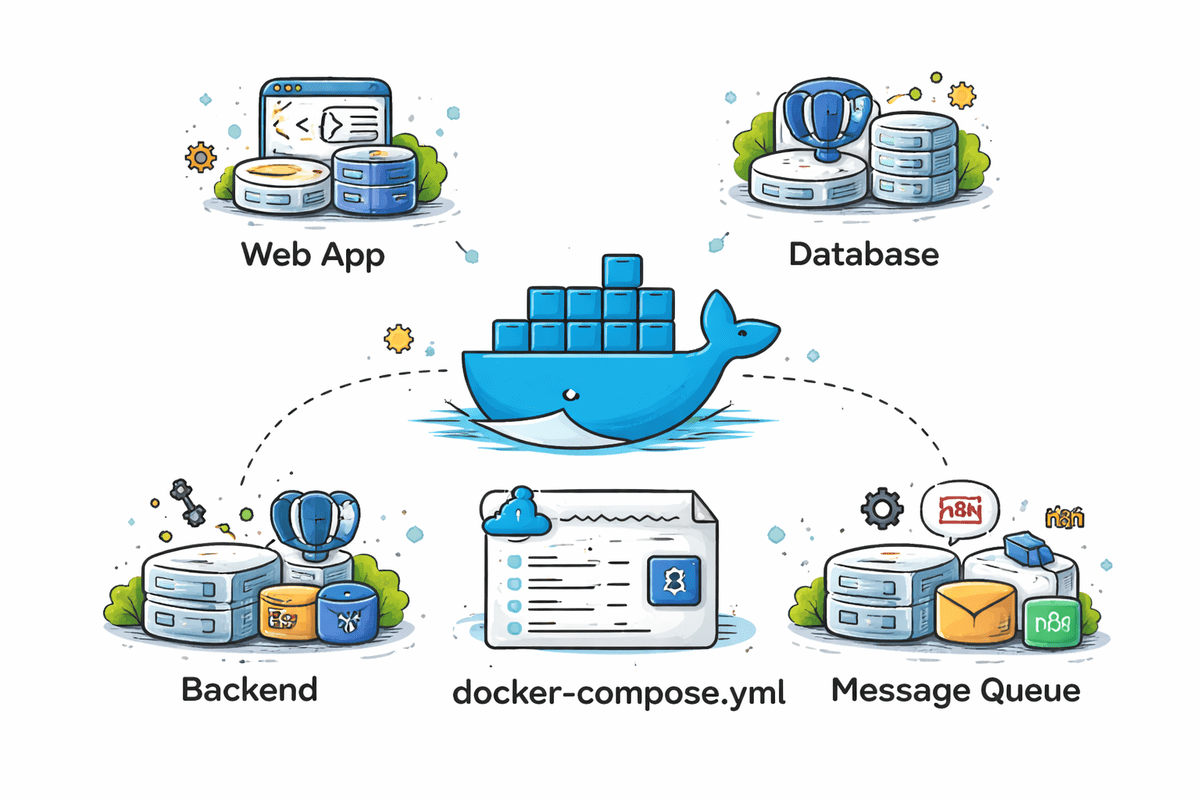
Development teams lose more time to environment setup than they care to admit. The seven Docker Compose templates covered here address that friction directly, and that alone makes them worth your attention. But the real value is not in the convenience of a preconfigured YAML file. It is in what those templates free you to do: stop wrestling with dependencies and start building the actual product. If you have been treating containerization as a necessary chore rather than a strategic advantage, these templates are a practical nudge toward a better workflow.
Consider what is actually being offered. A CMS template means you can spin up a content platform without reading three different setup guides and hoping the versions align. Web app templates remove the guesswork from linking your frontend, backend, and database services. The database template is particularly useful because it standardizes something that usually becomes a personal project for every engineer on the team. Python backends, streaming pipelines, automation workers, and even local AI development all get the same treatment: a clear, repeatable starting point. For teams that have been burned by "works on my machine" one too many times, this is not a luxury. It is a baseline.
What stands out is the inclusion of local AI development. That is not a throwaway addition. As AI-assisted coding and local model experimentation become more common, having a template that handles the infrastructure means you can test ideas without committing to cloud costs or wrestling with GPU drivers at 11 p.m. The automation template also deserves a closer look. It speaks to a broader truth: the teams that thrive are not the ones doing more manual work, but the ones who automate the boring parts so they can focus on the interesting problems. These templates are not about making you feel productive. They are about removing the barriers that keep you from being productive.
The honest take here is that Docker Compose has always had the capability to simplify these workflows. What has been missing is the willingness to standardize. These templates do the unglamorous work of making the right choice the easy choice. They will not write your application for you, and they will not fix a poorly designed architecture. But they will get you to the point where you can start writing real code faster, with fewer detours into configuration hell. If you are still hand-rolling your local development environments, start with one template. Use it on your next project. See how much mental energy you get back. That is the metric that matters.