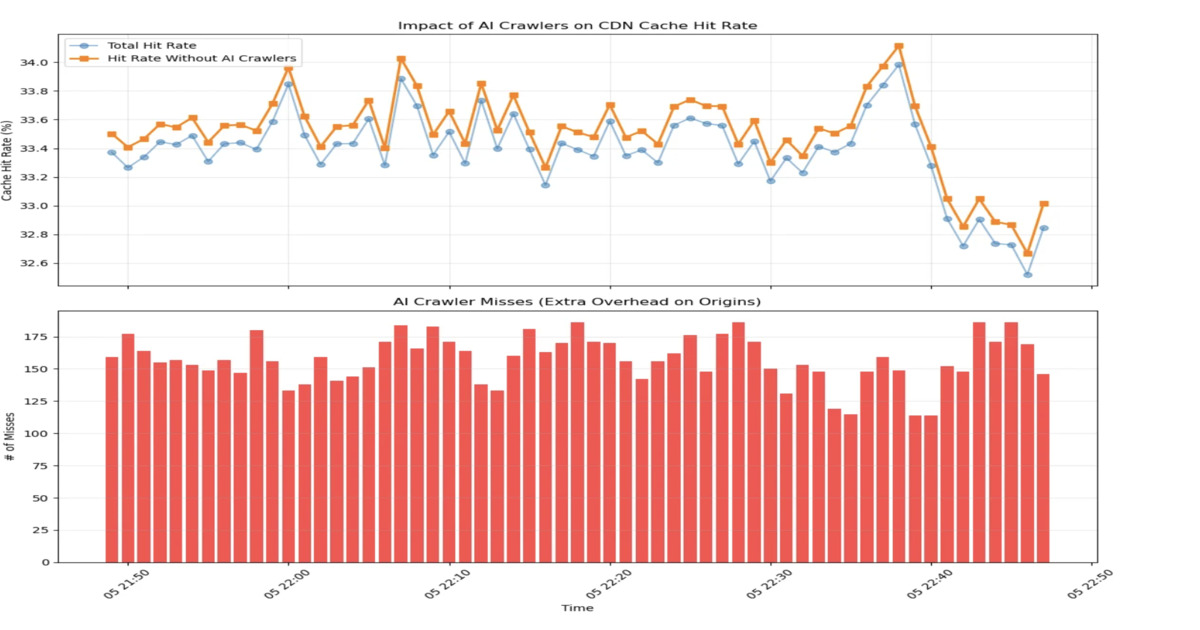
The tension between serving human users and accommodating AI crawlers is not a future problem; it is happening now, and Cloudflare and ETH Zurich are right to treat it as a core infrastructure issue rather than an afterthought. Their proposed strategies, including separate cache tiers, adaptive algorithms, and pay-per-crawl models, are practical acknowledgments that the old rules of caching no longer apply. For anyone running a modern website or application, this is not abstract research; it is a direct challenge to rethink how resources are allocated when a growing share of traffic comes from machines that consume content differently than people do.
What this means for you is straightforward: your current caching setup is likely already under strain, even if you have not noticed the tipping point yet. AI crawlers do not behave like browsers; they request large volumes of data, often revisiting the same URLs repeatedly, and they do so without the same session-based patterns that traditional CDNs were designed to handle. If you treat all traffic equally, you are forcing human users to compete with automated systems for the same cached assets, which leads to slower load times, higher origin pressure, and unpredictable costs. The separate cache tier approach is particularly compelling because it isolates the noise, ensuring that a sudden spike in crawler activity does not evict the content your actual visitors need most.
The adaptive algorithms and pay-per-crawl models are where the proposal gets genuinely interesting, because they move beyond technical fixes into economic incentives. By making AI providers pay for the load they generate, you create a direct financial signal that encourages more considerate crawling behavior. This is not about punishing innovation; it is about aligning costs with value. If an AI service benefits from your content, it should bear a fair share of the infrastructure burden. At the same time, adaptive caching that learns from real-time traffic patterns means your system can prioritize what matters without constant manual tuning. This is the kind of pragmatic evolution that keeps the web open and fast for everyone.
The takeaway is simple: do not wait for a crisis to rethink your caching strategy. Start by auditing your traffic mix to see how much of it is AI-driven, then consider whether your current CDN or database setup can distinguish between a human scrolling on a phone and a crawler indexing your entire site. The tools Cloudflare and ETH Zurich describe are not hypothetical; they are building blocks you can adopt incrementally. The goal is not to block AI crawlers but to manage them intelligently, and the sooner you treat them as a distinct class of traffic with its own rules, the better positioned you will be to keep your human users fast and your systems stable.