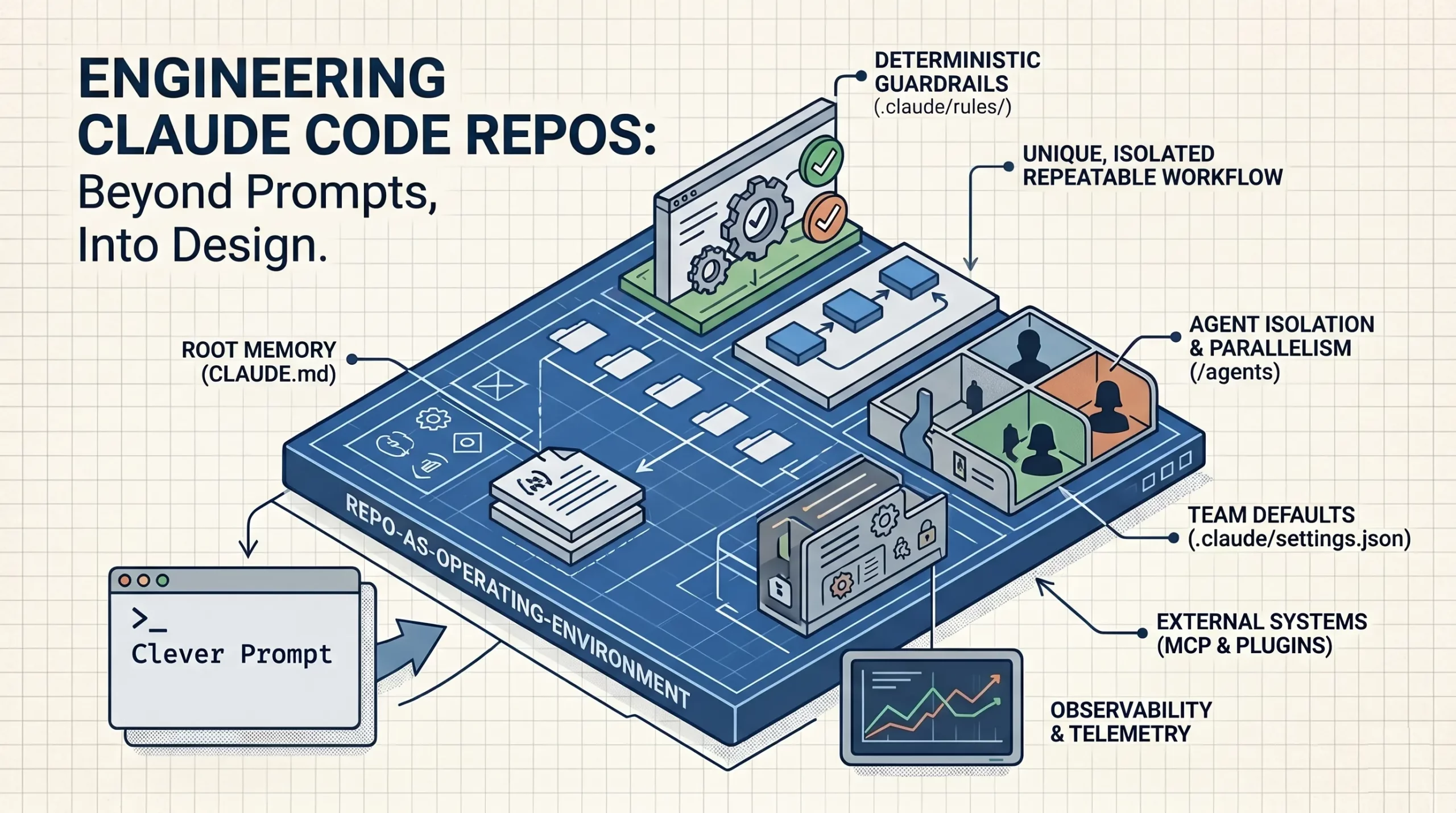
Treating Claude Code like an autocomplete engine is a misuse of the tool, and it's the root cause of the inconsistent results so many developers accept as normal. The pattern is familiar: you open a file, type a prompt, and hope for the best. Sometimes the output is decent. Occasionally it's great. But too often the model loses track of context, repeats its initial mistakes, and leaves you cleaning up a mess that never should have happened. This isn't a limitation of the model's intelligence; it's a failure of project structure.
The fix isn't a better prompt or a more powerful model. It's treating your codebase like a system the AI can navigate with intention, not a blank slate for improvisation. When developers rely on Claude Code as an enhanced autocomplete, they offload responsibility for context to a system that has no inherent memory of why a file exists or how it fits into the larger architecture. The result is output that looks plausible but lacks the consistency an engineer would demand. The direct point is that you need a project structure that forces the model to think like an engineer, not like a parrot with a large vocabulary.
What does that mean in practice? It means being deliberate about how you organize files, define interfaces, and document intent. It means creating explicit boundaries so the model doesn't have to guess what belongs where. It means giving it a map, not a maze. If you're seeing repeated errors or context drift, the problem isn't that Claude Code is unreliable. It's that you're asking it to work without a system. An engineer doesn't start coding in a random directory with no plan. Neither should your AI assistant.
The practical takeaway is simple: stop treating Claude Code as a magic box and start treating it as a junior engineer who needs clear instructions and a well-ordered workspace. That means investing time in project scaffolding, writing clear comments that explain why code exists, and breaking large tasks into smaller, well-defined steps. When you do that, the quality of output becomes predictable. Consistency isn't a feature you buy; it's a result you design for. So before you type your next prompt, ask yourself: would a thoughtful engineer know what to do with this file? If the answer is no, the problem isn't the model. It's the structure you haven't built yet.