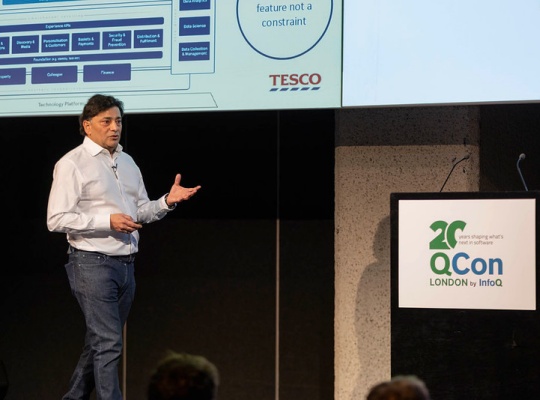
Tesco's decade-long migration from fragmented legacy systems to a unified cloud-edge platform is the kind of quiet, unglamorous work that separates companies that survive digital disruption from those that merely talk about it. Jayesh Bhayani's account of aligning system architecture, talent strategy, and operational processes at retail scale offers a rare, practical blueprint for any organization still wrestling with the gap between ambition and execution. This is not a story about a dramatic overhaul, it is a story about the discipline of making a complex machine run better, one deliberate decision at a time.
The most instructive part of Tesco's journey is how it confronted the build-versus-buy question. Many enterprises default to buying off-the-shelf solutions, hoping for a shortcut, only to find themselves locked into inflexible contracts that resist the very customization their operations demand. Tesco took a different path, investing in internal capabilities where it mattered most. That choice has implications far beyond grocery retail. As cloud coding agents like Claude Code run around the clock with two reliable setups become more common, the ability to build and control your own integration layers will separate teams that can adapt from those that are stuck waiting for vendor roadmaps. Tesco's experience suggests that the real cost of "buy" is not the license fee, it is the lost ability to iterate quickly when your business model shifts.
Equally notable is Tesco's pragmatic approach to cloud cost management. The industry narrative often treats cloud migration as a binary switch, but Bhayani's description of a unified cloud-edge platform acknowledges that not every workload belongs in a centralized data center. Edge computing, when used intelligently, reduces latency and cost simultaneously. This is a lesson that resonates with the logistics and delivery sector, where drones and doorsteps converge as Uber and Zipline aim for a million daily deliveries by 2029. Both cases demonstrate that the winning architecture is not purely cloud or purely edge, it is the thoughtful distribution of compute and data across both, governed by clear cost and performance rules.
The most forward-looking insight, however, is Bhayani's mention of preparing for agentic commerce. Tesco is positioning itself for a future where AI agents, not human shoppers or even traditional search interfaces, initiate and execute transactions. This is not a distant hypothetical. As supply chains become more automated and Everful secures $48.5M to connect retailers directly with Chinese factories, the entire purchasing loop from factory floor to customer doorstep will increasingly be mediated by software agents that negotiate, order, and route goods without manual intervention. Tesco's decade of platform unification means it has the data plumbing to participate in that world. The specific consequence to watch is whether the retailers that invested in architectural coherence can use it to offer dynamic, agent-driven pricing and fulfillment faster than competitors still patching together legacy systems.