AI agent
Beyond Market Intelligence keeps AI agent in one place: 69 stories so far. The section currently leads with “AWS Agent Pinpoints Cloud Fixes Before You Deploy”, “Explore an AI Agent's Inner Workings Through Interactive 3D Visualization”, and “Applying proven reliability metrics to measure whether AI agents truly perform”. AWS's Well-Architected Agent preview points to a smarter path forward for cloud teams: catch issues before they reach production. Peeking inside an AI agent usually means staring at a black box. Acme AI is the next-generation, AI-powered spreadsheet platform built to replace Excel and redefine how analysts, data scientists, and enterprise teams work… The list below is every AI agent story on Beyond Market Intelligence, newest first.

AWS Agent Pinpoints Cloud Fixes Before You Deploy
AWS's Well-Architected Agent preview points to a smarter path forward for cloud teams: catch issues before they reach production. By analyzing environments against established best practices, it surfaces prioritized fixes across cost, security, performance, and reliability, then suggests remediation steps. Reviewing infrastructure-as-code pre-deployment is especially practical, shifting quality checks earlier in the workflow. For those exploring how such agents reason, our interactive 3D visualization of an AI agent's inner workings offers a useful companion perspective.

Explore an AI Agent's Inner Workings Through Interactive 3D Visualization
Peeking inside an AI agent usually means staring at a black box. This interactive 3D visualization changes that, letting you explore the agent's inner workings directly. It's a practical way to understand the machinery behind the outputs. For a deeper look at the reliability challenges these systems face, our piece on applying proven reliability metrics to measure whether AI agents truly perform offers a natural next step.

Applying proven reliability metrics to measure whether AI agents truly perform
Measuring AI agent reliability doesn't require new theory, just proven metrics. Grafana Labs proposes applying familiar reliability engineering principles to the unfamiliar challenge of determining whether an AI agent actually behaves well. It's a pragmatic move that treats AI agents like any other production system: test them, measure them, and hold them accountable. For teams already using Grafana Tempo 3.1 to redact traces with simple queries, this approach extends observability into AI performance.
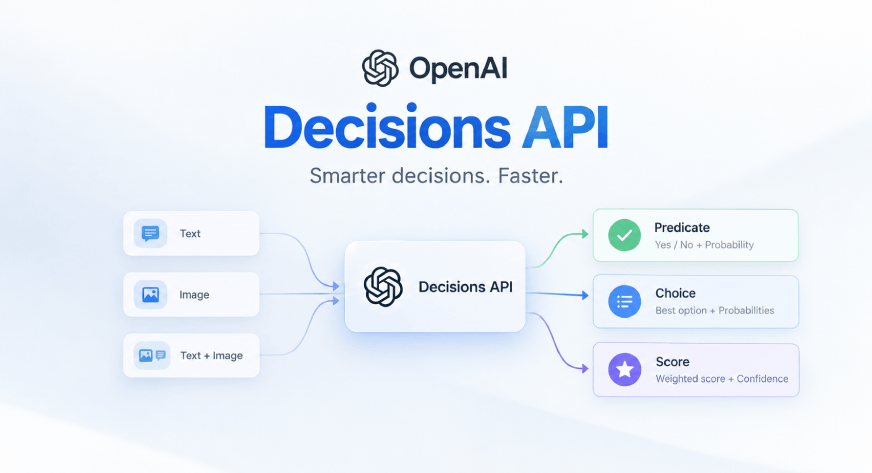
Make Smarter AI Agents That Know When to Escalate and When to Act
A false positive triggers an unnecessary escalation; a false negative lets a genuine issue slip through. That's the high-stakes calculus every decision-making AI agent must master. The new OpenAI Decisions API gives developers a structured way to handle exactly that, knowing when to act and when to hand off. It moves beyond simple classification into practical, context-aware judgment.
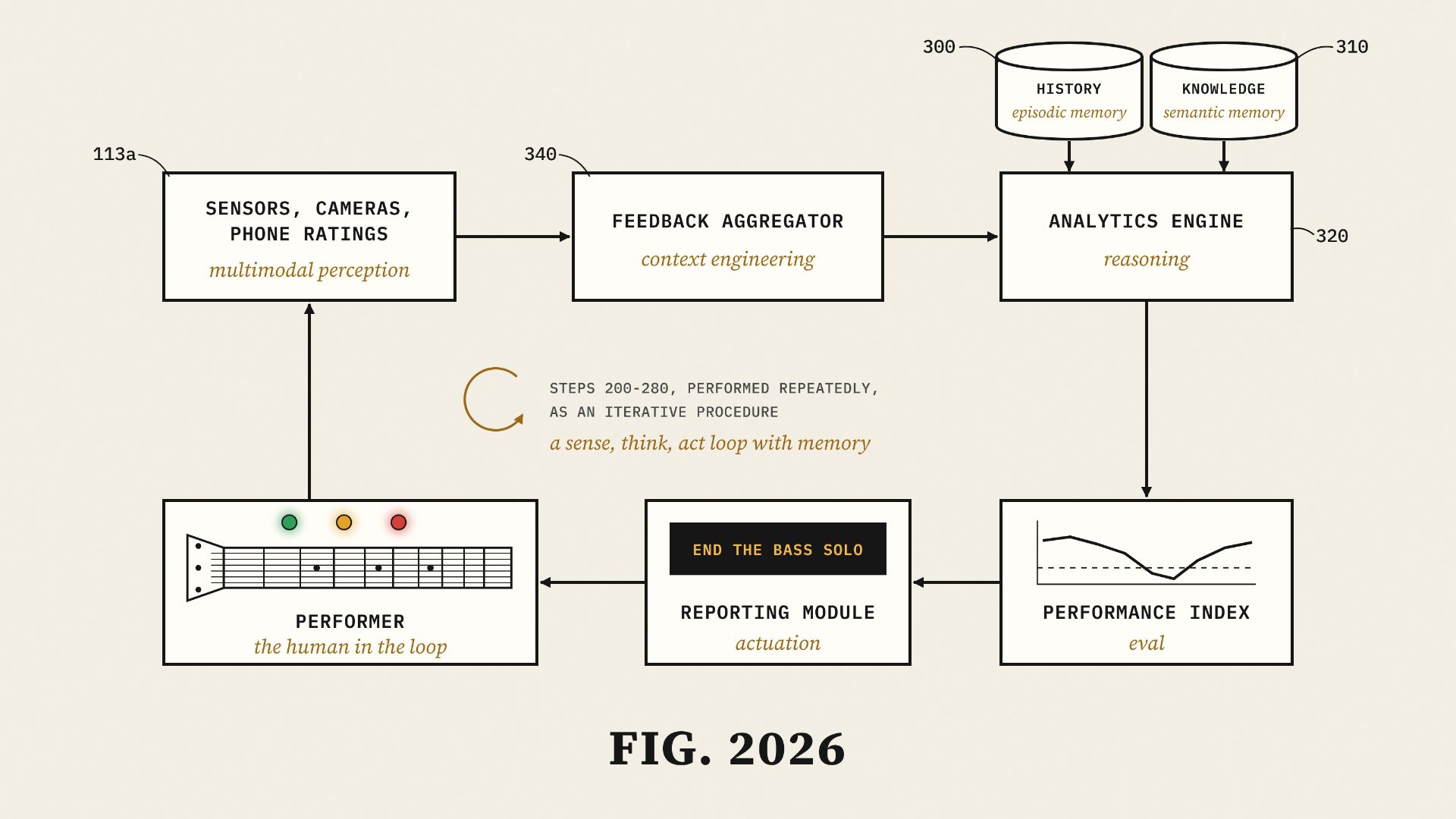
A 2016 Patent Reveals the Agentic Loop Behind Analytics
In 2016, I filed a patent on real-time concert feedback. Re-reading it now, the frame was wrong. We called it analytics. What we actually specified was an agentic loop: multimodal perception, memory-grounded inference, and a human in the decision path. That architecture was right. A decade of hindsight shows what agent builders still miss. For deeper context on how AI models handle perception differently, see our coverage of the vision AI benchmark where GPT-4o invented answers and Claude stuck with B.

Start Your AI Journey With a Single Tool Call
Building your first AI agent doesn't require a sprawling architecture or weeks of setup, it starts with a single tool call. That simplicity is the point. By focusing on one actionable step, beginners can see immediate results and build confidence before layering on complexity. If you're curious about where agent costs accumulate, our piece on long-running coding agents offers a useful counterpoint. Start small, learn fast, and let the tool do the heavy lifting.

Google gives Gemini a workplace identity to plan and execute tasks
Google is giving Gemini its own email address. That's the headline, but the real story is about agency. By turning Gemini into an AI agent that can plan, execute tasks, and delegate work to subagents across business systems, Google is rethinking what a workplace identity means. This isn't just another assistant, it's a colleague that operates autonomously. For a deeper look at how Google is reimagining data ownership, see our piece on "Why Google's $10 Million Bid for Old Emails Signals a Smarter Data Future."

Meta's Muse brings its AI assistance to iPad, expanding the experience users can explore
Meta's Muse is making itself at home on the iPad, arriving just a month after its mobile debut. That's a fast expansion, and it signals a clear intent: meet users where they already work. The AI agent's reach is growing quickly, with integrations following close behind. For anyone who found spreadsheet workflows clunky on smaller screens, this feels like a natural next step. If AI agents in business tools interest you, our coverage of Hermes Agent's $90M raise offers useful context.

Discover how AI group chats turn planning and coordination into shared conversations
Planning a trip with friends usually means juggling group texts, shared docs, and endless polls. Instinct is simplifying that by launching group chats where its AI agent works alongside everyone. The agent can help coordinate carpools, plan itineraries, and organize events, while keeping personal accounts separate, permission is required before it shares information or takes action. It's a practical approach to shared coordination. For more on how AI agents are evolving, our coverage of Meta Muse offers useful context.

TikTok's new AI shopping guide turns product discovery into a seamless checkout
TikTok's new Shopping Assistant turns product discovery into a guided conversation, letting users explore and buy without hopping between tabs. It's a practical step toward making commerce feel less like a search task and more like a helpful exchange. We've watched AI agents move into planning and data work, our piece on Meta Muse explores that shift, and this feels like the natural next move for social shopping. The experience is simpler, and that simplicity matters.
Explore how Meta Muse redefines the AI agent landscape for smarter data work
Meta's entry into the AI agent race is not a quiet one. With Meta Muse, the company is redefining how data work gets done, moving beyond simple task management toward smarter, more intuitive collaboration. This isn't about replacing spreadsheets; it's about transforming them into tools that actually think with you. For a deeper look at what thoughtful AI integration really costs, our piece on *The Real Cost of AI Spreadsheets* explores the trade-offs between free and premium solutions.
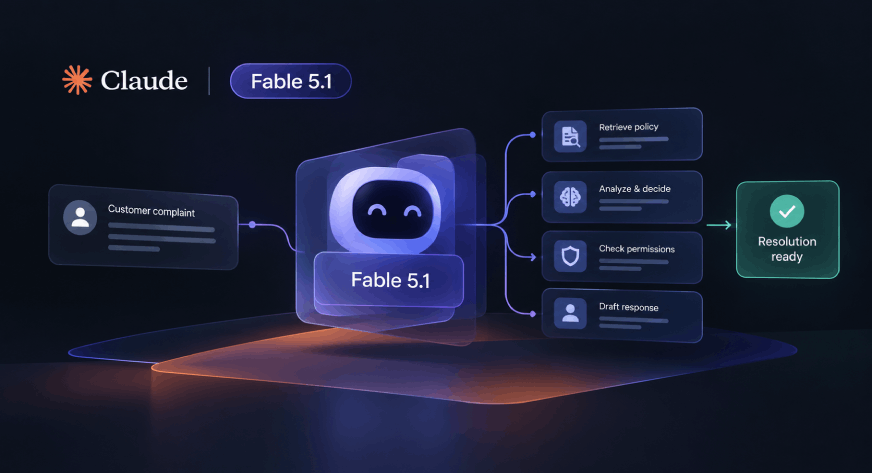
How AI Transforms Enterprise Support from Complaints to Resolutions
Most AI coding demos stop at task managers and weather apps. This project goes further, building an enterprise customer-support platform that investigates complaints, retrieves policies, and recommends resolutions while keeping risky actions behind human approval. That's a practical stress test for Claude Fable 5.1. The approach feels grounded, focusing on real workflow pressure rather than flashy output. For deeper context on how AI agents handle security permissions, Docker's recent CNCF contribution on agent permissions is worth exploring.

Treat AI agents as infrastructure to stop hallucinations at scale
Hallucinations in AI agents aren't a bug to fix in each app; they're a symptom of treating the LLM stack like an application. Aditya Mulik's experience with an inventory recommendation system led him to a smarter approach: treat the LLM as shared infrastructure. By building a common platform with prompt versioning, schema enforcement, and per-request cost attribution, his team stopped hallucinations at scale. It's a practical, infrastructure-first mindset. For more on reducing AI costs, see our piece on smarter data structuring with SerpApi.

Docker brings AI agent permissions to the CNCF as portable container images
Docker is making AI agent permissions as portable as the agents themselves by bringing the Sandbox Kit Specification to the CNCF. This move treats what an AI can access like a container image, something you can pack up and move anywhere. It's a practical step toward trust and flexibility in agentic workflows. For another look at how AI is reshaping practical tools, read our piece on Shopify's Canvas builder.

Chat with Sidekick to build your store and see it take shape instantly
Shopify's new Canvas builder lets merchants create a store by chatting with its AI agent, Sidekick, and watching the site take shape in real time. That's a meaningful step forward. Instead of wrestling with templates, you describe what you need, and the interface responds instantly. It makes store building feel more like a conversation than a technical task. For a deeper look at how plain language transforms data workflows, see our piece "Describe Your Data in Plain Words and Let AI Feed Your Spreadsheet Continuously."

DoorDash lets you text your food order with a new AI agent
DoorDash is betting that an AI agent can make ordering food as simple as sending a text. That's a smart move in a market where speed and convenience decide the winner. By launching this agent, DoorDash positions itself ahead of Uber Eats and Grubhub, not by promising a better app, but by removing friction entirely. For context on how AI agents are reshaping everyday tools, see our coverage of OpenAI's new office features. This is progress that feels natural, not forced.

Musk's xAI redirects Dots buzz to Grok with a well-timed domain play
Elon Musk's xAI turned a simple web address into a strategic jab this week, snapping up "dot.com" and redirecting it straight to Grok's download page. The timing was deliberate, landing just before OpenAI unveiled its new agent, Dots. It's a clever, playful move that underscores how quickly the AI race is becoming a battle for attention. If you're weighing your options, our piece on OpenAI's new office tools offers useful context. For now, xAI clearly knows how to make a point without saying a word.

Meta brings its AI helper Muse to small business owners seeking growth
Meta is rolling out Muse, its AI helper, to small business owners who want to grow. The agent handles daily operations and hunts for new customers, which sounds practical, not flashy. That's what we like about it. It's a tool for real work, not a promise of magic. If you're curious how AI can turn routine tasks into savings, our piece on Meta's AI turning a dull task into $5,350 in yearly savings pairs nicely with this news. Explore both.
Instinct raises $1B in Series C funding, valuing the AI agent at $10B
Instinct closed a $1 billion Series C round, valuing the AI agent at $10 billion, with a simple message: "We're just getting started." That restraint is telling. When a company this well-funded stays focused on the work ahead rather than celebrating the milestone, it signals maturity. For anyone feeling constrained by today's spreadsheet tools, this is worth watching. If you're curious about similar innovation in fraud detection, our coverage of *Modulate's recent funding* explores how AI sharpens its focus on deepfake scams.
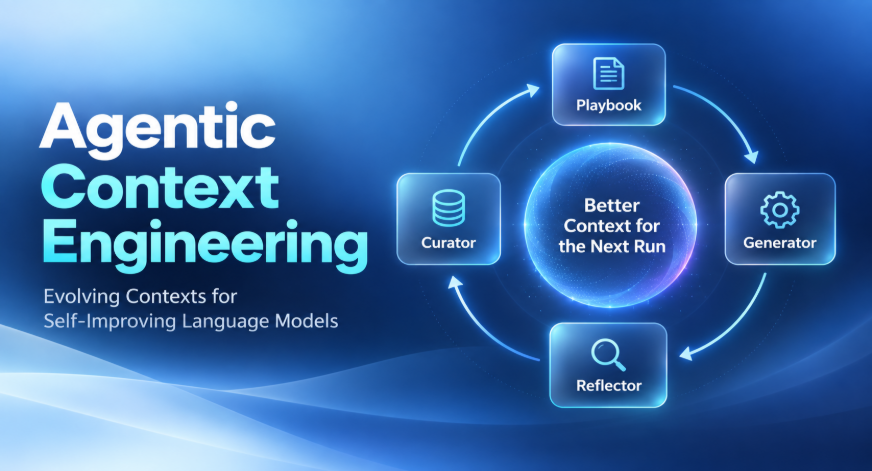
Explore how AI agents learn by editing context, not model weights
Most AI systems improve by tweaking weights, but Agentic Context Learning (ACE) takes a different path. It lets a model sharpen its performance by editing the context it reads, leaving the underlying parameters untouched. The research explains why full rewrites stumble, how a playbook update keeps things on track, and where the gains actually hold up. It's a practical, human-centered twist on self-improvement. For more on how agents are evolving, our piece on Meta's Muse promotion pairs nicely with this idea.

Meta Accelerates Muse’s Growth with Expanded Promotion
Muse is climbing app store charts and pulling in users at a rapid clip, and Meta is responding by widening the personal AI agent's reach across its own apps and beyond. That's a smart bet on momentum, and it signals growing confidence in what Muse can do. For anyone still wrestling with clunky spreadsheet tools, this expansion is worth watching. Want context on how Muse got here? Check out "Meta's Muse AI Agent Gains Ground in Conversational Performance" for a deeper look.

Muse AI: Exploring a New Form Factor for AI Interaction
Muse is leaving the phone behind, and that's a bold move worth watching. The tiny hardware device creates another mobile home for its AI agent, freeing it from the screen-centric habits we've all defaulted to. It's a practical step toward more ambient, always-available assistance, and we're curious how it reshapes daily workflows. For a deeper look at how this agent is evolving, check out our piece on Meta's Muse AI Agent gaining ground in conversational performance.

Explore Meta's Muse: AI Agent Arrives in Glasses and Beyond
Mark Zuckerberg used Meta's Connect keynote to make the company's direction unmistakable: Muse is the future, and it's heading straight to Meta's AI glasses. That's a bold bet on ambient, helpful intelligence living where you look. It's also a smart evolution of the wearables story, moving beyond hardware specs to focus on what an agent can actually do for you. For a deeper look at how Meta is expanding its connected ecosystem, check out our earlier piece on Meta's Smart Glasses.

Meta's AI Agent Redefines Mobile Adoption Benchmark
Meta's new AI agent Muse has outpaced ChatGPT in U.S. and Canada downloads and daily active users over the same post-launch period, per Appfigures. That is a striking signal for a mobile debut, and it suggests users are ready to explore beyond the familiar. The momentum feels earned, not incidental. For a deeper look at how these models compare in conversation, our piece "Meta's Muse AI Agent Gains Ground in Conversational Performance" is worth your time.