The ‘Entry-Level’ Gatekeeper: Auditing Job Descriptions with Textstat
Our take
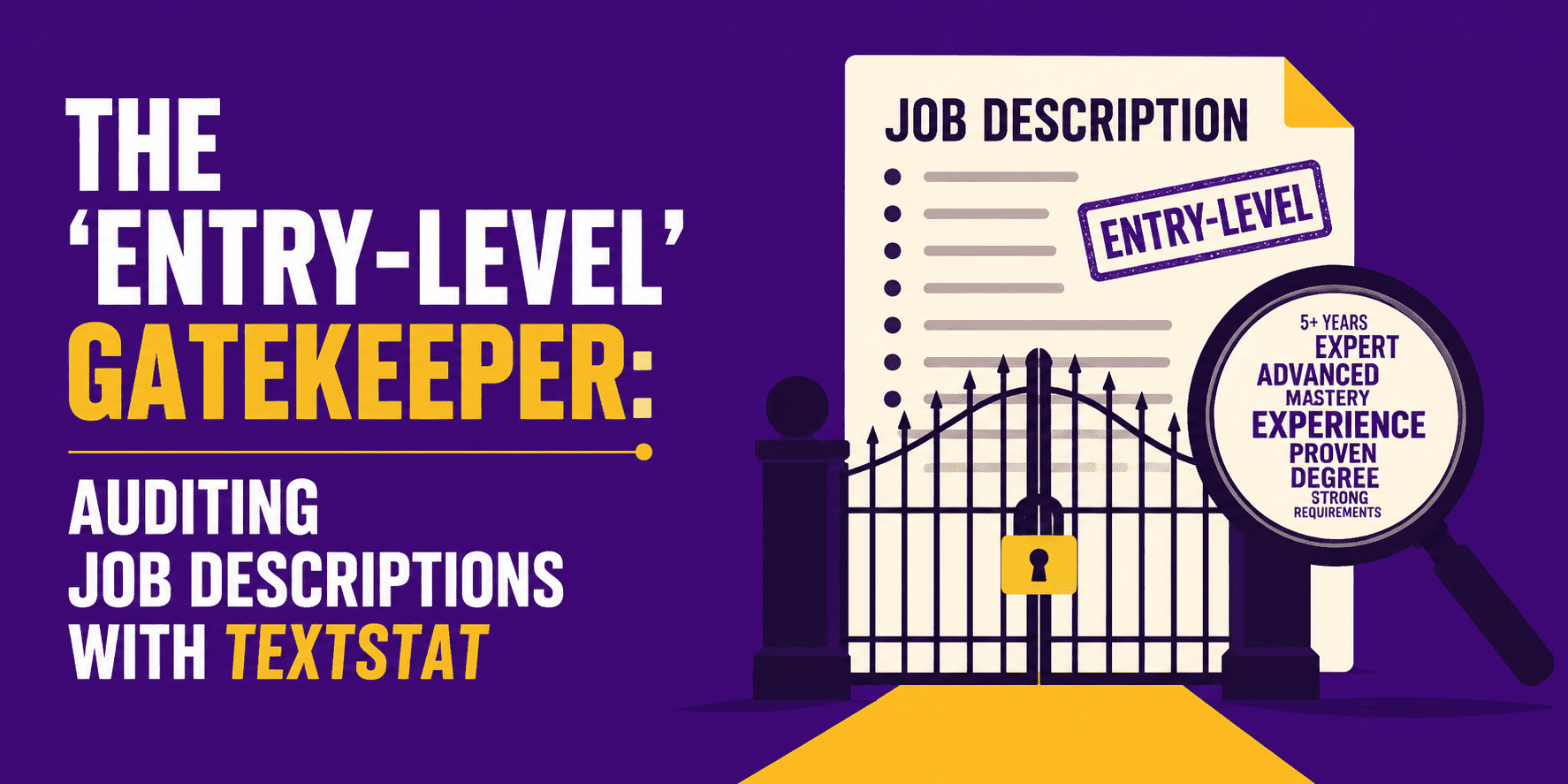
In the evolving landscape of hiring practices, the article "The ‘Entry-Level’ Gatekeeper: Auditing Job Descriptions with Textstat" sheds light on a crucial aspect of recruitment: the language used in job descriptions. The piece illustrates how free, open-source tools like Python and the Textstat library can be harnessed to automate the detection of "gatekeeping language"—terms or phrases that might unintentionally alienate potential candidates, particularly those from underrepresented backgrounds. This initiative not only enhances inclusivity but also aligns with the broader movement towards equitable hiring practices, a theme echoed in discussions about transparency and accessibility in technology and data management.
The significance of employing tools like Textstat cannot be overstated. By automating the auditing process, organizations can streamline their hiring practices while ensuring that their job descriptions are welcoming and inclusive. This approach mirrors the innovative solutions we discuss in other areas, such as How to find the last filled in value in a range, where technology transforms mundane tasks into simpler, more efficient processes. In this case, the automation of language auditing not only saves time but also promotes a culture of reflection and improvement within hiring teams. It encourages organizations to critically examine their language and, by extension, their values.
Furthermore, the conversation around job description language ties into a larger dialogue about the role of AI and data in modern workplaces. Organizations are increasingly recognizing that the tools they use can empower them to create more equitable environments. As we see in the article on [Making LLMs tell you how confident they really are through probe-targeted fine tuning.[R]](/post/making-llms-tell-you-how-confident-they-really-are-through-p-cmpqijf8c0t9ps0glwz90r8nk), leveraging technology to enhance transparency is not just a technical upgrade; it's a fundamental shift in how organizations interact with their potential employees. The emphasis on confidence calibration in AI underscores the importance of clarity and authenticity in communication, principles that are equally applicable to job descriptions.
As we look to the future, the implications of adopting these auditing practices are profound. By minimizing gatekeeping language, organizations can attract a more diverse talent pool, ultimately driving innovation and creativity within teams. However, it raises critical questions about accountability and transparency in the hiring process. Will organizations genuinely commit to fostering inclusivity, or will this be a fleeting trend? The evolving dynamics of workplace culture suggest that those who adopt such practices may gain a significant competitive advantage.
In conclusion, the insights offered by the article not only highlight an innovative use of technology but also spark a necessary conversation about the language we use in professional settings. By integrating tools like Textstat into their hiring processes, organizations can take meaningful steps toward creating a more inclusive workforce. As we continue to explore the intersections of technology and human-centric practices, it will be essential to monitor how these developments shape the future of hiring and the broader implications for workplace equity. Will we see a lasting change in how job descriptions are crafted, or will the old norms persist? This is a question worth watching as we move forward.
Read on the original site
Open the publisher's page for the full experience