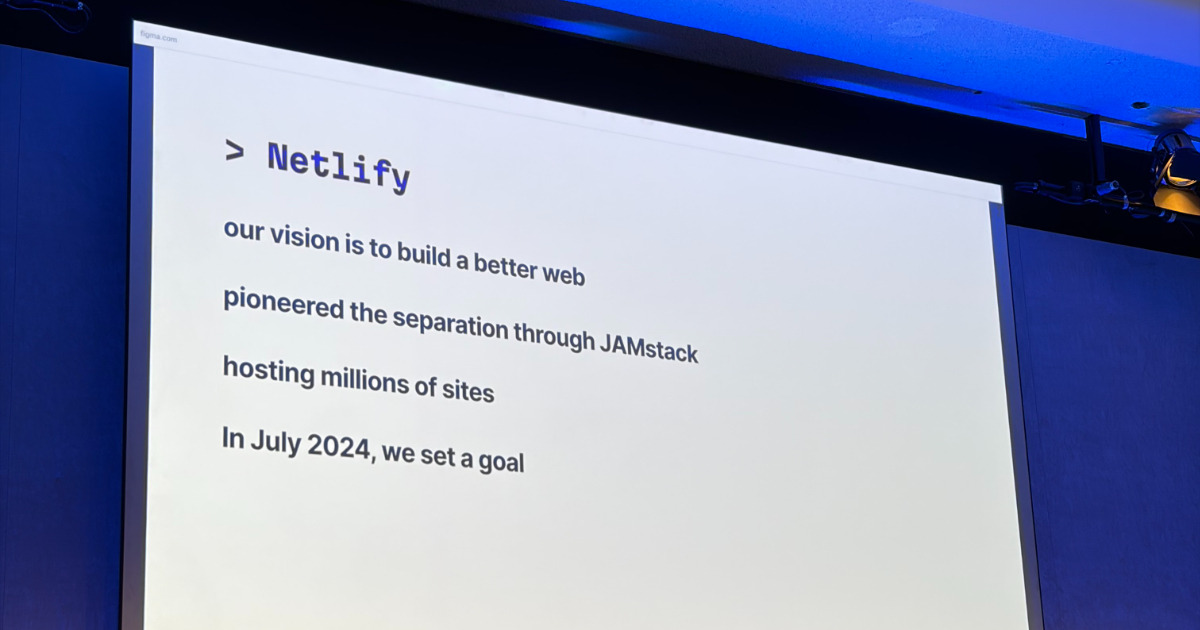
At QCon London 2026, Ivan Zarea offered a framework that deserves more than a passing nod. His three pillars for AI-native developers, developing expertise, honing taste, and practicing clairvoyance, cut through the noise surrounding AI's role in web development. We think this is exactly the kind of thinking the industry needs right now, and it carries practical weight for anyone building tools or working with them.
The surge of non-traditional developers on Netlify's platform, now reaching 11 million users, tells a story that legacy spreadsheet vendors should find familiar. When barriers lower, new people arrive. They bring energy and fresh problems, but they also bring gaps in experience. Zarea's first pillar, expertise, addresses this directly. For developers and for the tools they use, expertise is not about memorizing syntax. It is about understanding why one architecture survives a production load while another collapses. For our readers, the implication is clear: if you are evaluating a new AI-native spreadsheet or development platform, ask whether it helps you build genuine understanding or simply automates decisions you should be making yourself.
The second pillar, taste, is the one that often gets overlooked in technical discussions. Taste in this context means knowing what to build and what to leave out. AI can generate endless variations of a formula or a function, but without taste, the result is clutter. Zarea is correct that thoughtful architecture matters more than raw capability. For the developer or data professional who feels overwhelmed by AI's possibilities, this is permission to be selective. The best tools are not the ones that do everything; they are the ones that help you decide what not to do.
Clairvoyance, the third pillar, sounds lofty, but Zarea grounds it in practical terms. It means anticipating how a system will behave under conditions you have not yet tested. For anyone who has watched a spreadsheet break at the worst possible moment, this resonates. The next wave of AI-native tools must help users see around corners, not just react to problems. That is the difference between a tool that empowers and one that simply responds. Our take is that Zarea's pillars are not abstract philosophy. They are a checklist. If your next tool cannot help you develop expertise, refine your taste, or anticipate failure, it is not ready for the work ahead.