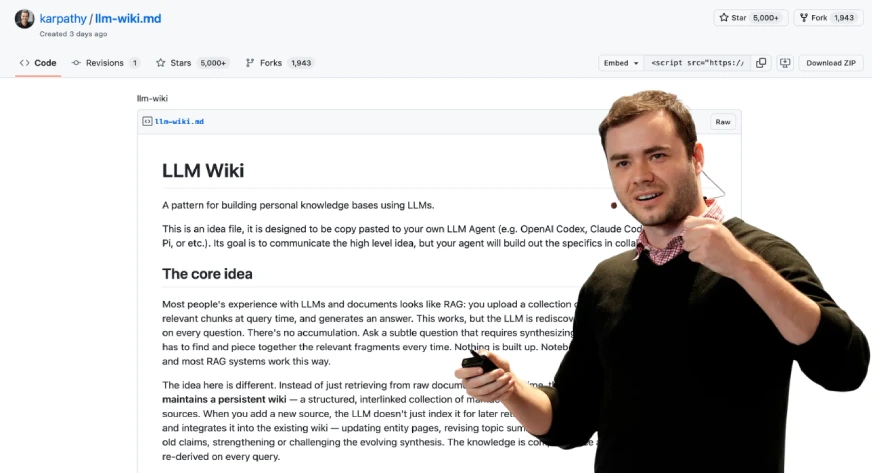
Most people are excellent at collecting information and terrible at doing anything with it. That is the quiet crisis of the modern knowledge worker, and it is exactly why Andrej Karpathy's idea for an AI-powered wiki matters. He is not proposing another note-taking app or a smarter bookmarking tool. He is pointing at the pile of links you have saved to Pocket, Notion, or your browser and asking a simple question: what if that pile could think for you?
The practical shift here is from storage to synthesis. Right now, saving a link is an act of hope. You tell yourself you will revisit that guide on machine learning or that guide on prompt design, but you rarely do. The reason is not laziness; it is that re-reading is a second full-time job. Karpathy's vision flips that dynamic. Instead of you digging through your own archive, the wiki surfaces what is relevant when you need it. It turns your saved links into a living layer of knowledge that answers questions, connects ideas, and fills gaps without demanding a weekend of catch-up reading. For anyone who has watched their bookmarks become a digital graveyard, this is not a minor convenience. It is the difference between hoarding information and actually using it.
What makes this approach feel different from the usual AI promises is that it does not ask you to change your habits. You do not need to learn a new system or abandon the tools you already trust. The intelligence works with the mess you already have. That is a human-centered design choice, and it is the right one. Too many products demand that users adapt to the machine; this idea adapts the machine to the user. It acknowledges that your saved links are not clutter. They are unprocessed thoughts, waiting for the right moment and the right prompt to become something useful. The AI is not replacing your memory; it is giving your memory a second chance to be useful.
The practical takeaway is direct: stop treating your saved links as a to-do list for later and start treating them as raw material for an ongoing conversation. Karpathy's model suggests that the future of personal knowledge management is not about better folders or more tags. It is about letting an AI read what you have already chosen to keep and then doing the heavy lifting of connecting it to your current questions. If that works, the time you spend searching for a half-remembered article becomes time spent learning something new. That is a trade worth making, and it starts the moment you decide that your saved links deserve more than a permanent spot in a digital drawer.