Tweaking Local Language Model Settings with Ollama
Our take
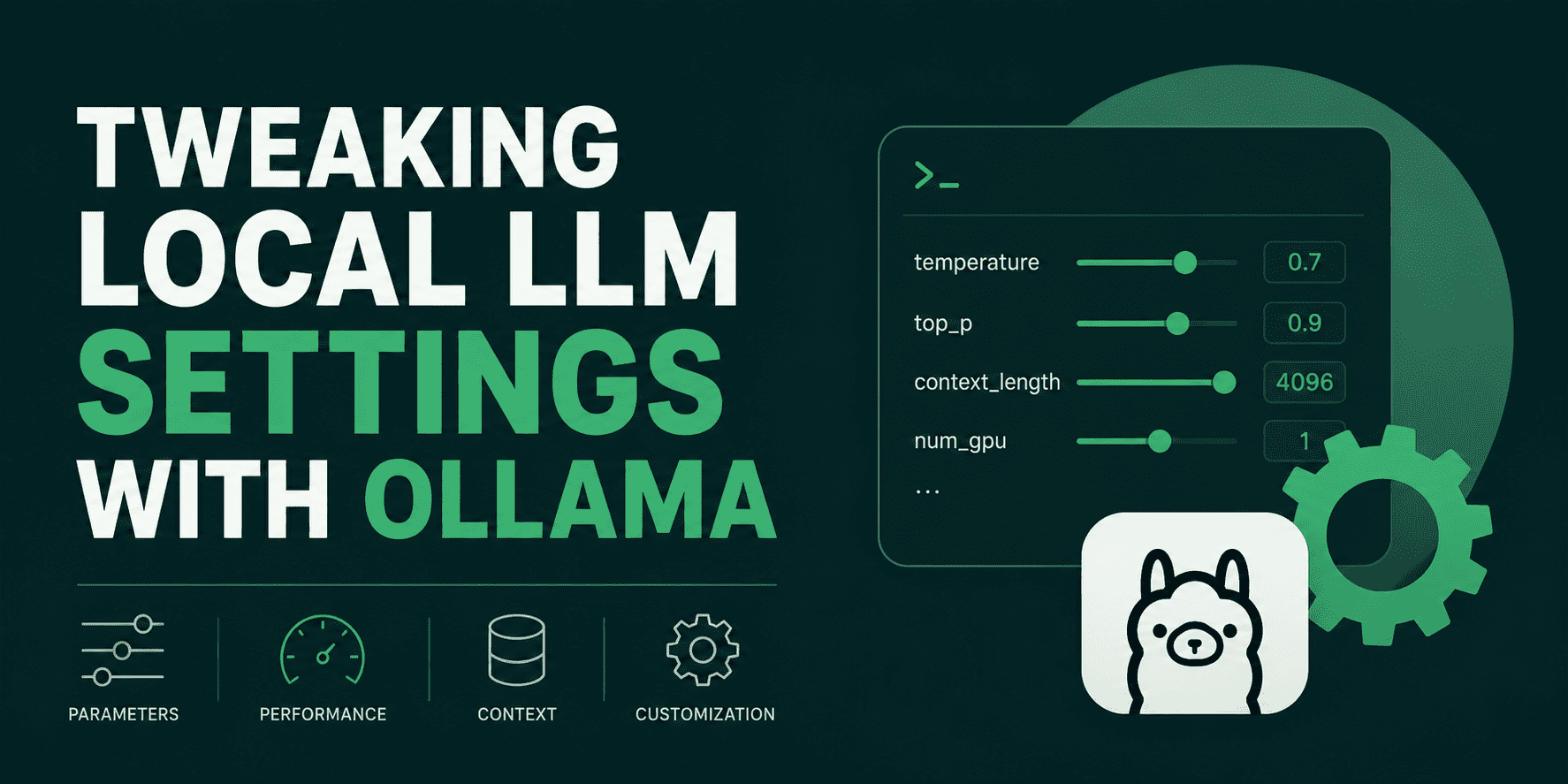
As the landscape of artificial intelligence continues to evolve, the ability to fine-tune local language models is becoming increasingly significant. The recent article titled "Tweaking Local Language Model Settings with Ollama" delves into Ollama's configuration engine, revealing how users can optimize local language model parameters to better suit their needs. This exploration is particularly timely, as it aligns with ongoing developments in the field, such as the insights shared in The Infrastructure Behind Making Local LLM Agents Actually Useful and the challenges discussed in Why AI Still Can’t Solve Your Real Mathematical Optimization Problem. Together, these pieces highlight the growing necessity for users to engage deeply with their AI tools, pushing the boundaries of what these technologies can achieve.
Understanding how to adjust local language model settings is crucial for maximizing the effectiveness of AI-driven applications. As organizations increasingly rely on these models for various tasks—ranging from content generation to data analysis—the ability to tailor them to specific needs can lead to enhanced performance and user satisfaction. The article on Ollama provides valuable insights into this process, illuminating aspects of the configuration engine that may have previously gone unnoticed. By fine-tuning parameters, users can achieve a level of customization that transforms a generic tool into a powerful, personalized assistant. This capability is essential for organizations seeking to harness AI's full potential while navigating the complexities that arise from varying user requirements.
The significance of this development extends beyond mere customization. As the demand for local language models grows, the emphasis on user control and adaptability becomes a cornerstone of AI strategy. The ability to tweak settings not only democratizes access to advanced technology but also fosters a culture of empowerment among users. This empowerment is echoed in the broader context of AI advancement, where tools like Ollama are positioned as more than just software; they are instruments of innovation that can drive meaningful change. As highlighted in the piece on DiffuJudge-AV: A Diffusion-Inspired Framework for Calibrated AV Video Evaluation, the evolution of frameworks that support user engagement is critical in ensuring AI solutions are not only effective but also trustworthy and safe.
Looking ahead, the implications of fine-tuning local language model parameters are profound. As users become more adept at customizing their AI tools, we may witness a shift in how organizations approach data management and decision-making. Will we see a future where user-configured models become the norm, leading to more agile and responsive business strategies? As we continue to explore these emerging technologies, it's vital to consider how user experience and adaptability will shape the trajectory of AI applications. The developments we are witnessing today are just the beginning of a transformative journey that holds the potential to redefine productivity and creativity in the digital age.
Read on the original site
Open the publisher's page for the full experience