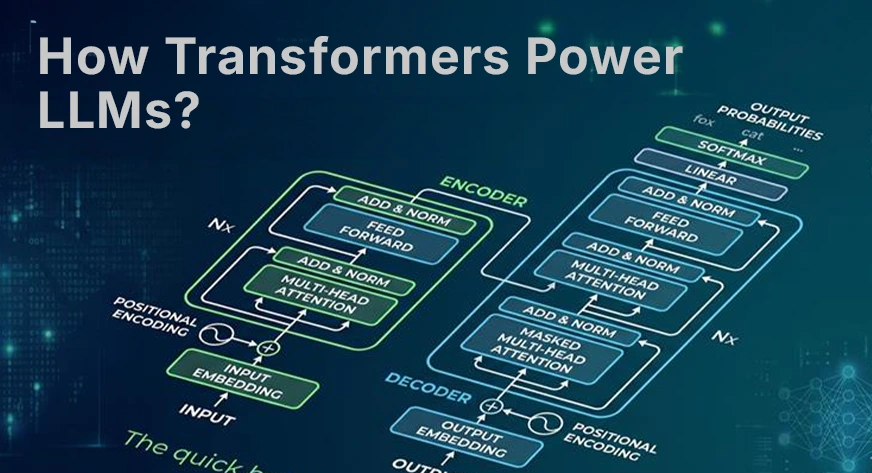
The Transformer architecture isn't just another incremental improvement in natural language processing. It represents a fundamental rethinking of how machines understand language, and that shift has direct, practical consequences for anyone who works with data. By processing all words in a sentence simultaneously rather than sequentially, Transformers solved the bottleneck that had limited earlier models like RNNs and LSTMs. That parallel processing capability is the reason models like GPT and Gemini can handle massive amounts of text efficiently, and it's why they feel so much more capable than what came before.
For spreadsheet users, this matters more than it might seem. The same attention mechanism that lets a Transformer weigh the importance of every word in a sentence is the engine behind tools that can now interpret your data, suggest formulas, or generate summaries from raw tables. When you ask an AI-native spreadsheet to find patterns across thousands of rows, it's relying on the self-attention layers that give Transformers their ability to see relationships without being forced to process information in a fixed order. That means less time waiting for calculations and more time acting on insights.
What makes this architecture genuinely valuable is its accessibility. Concepts like text representation, self-attention, and multi-head attention are broken down into digestible steps, and that clarity reflects a broader truth: you don't need a PhD to understand how these systems work or to benefit from them. The technology is complex, but the user experience doesn't have to be. The best implementations hide the complexity behind interfaces that feel natural, allowing you to focus on outcomes rather than algorithms.
The practical takeaway is straightforward. If you have ever felt constrained by spreadsheets that force you to manually connect data points or write nested formulas, the Transformer architecture is the reason that experience is changing. It enables models that understand context, not just cell values. The next time you see a suggestion from an AI assistant in your spreadsheet, remember that it's powered by a system designed to see the whole picture at once. That is the shift worth paying attention to, not because it's revolutionary, but because it simply works better for the way people actually use data.