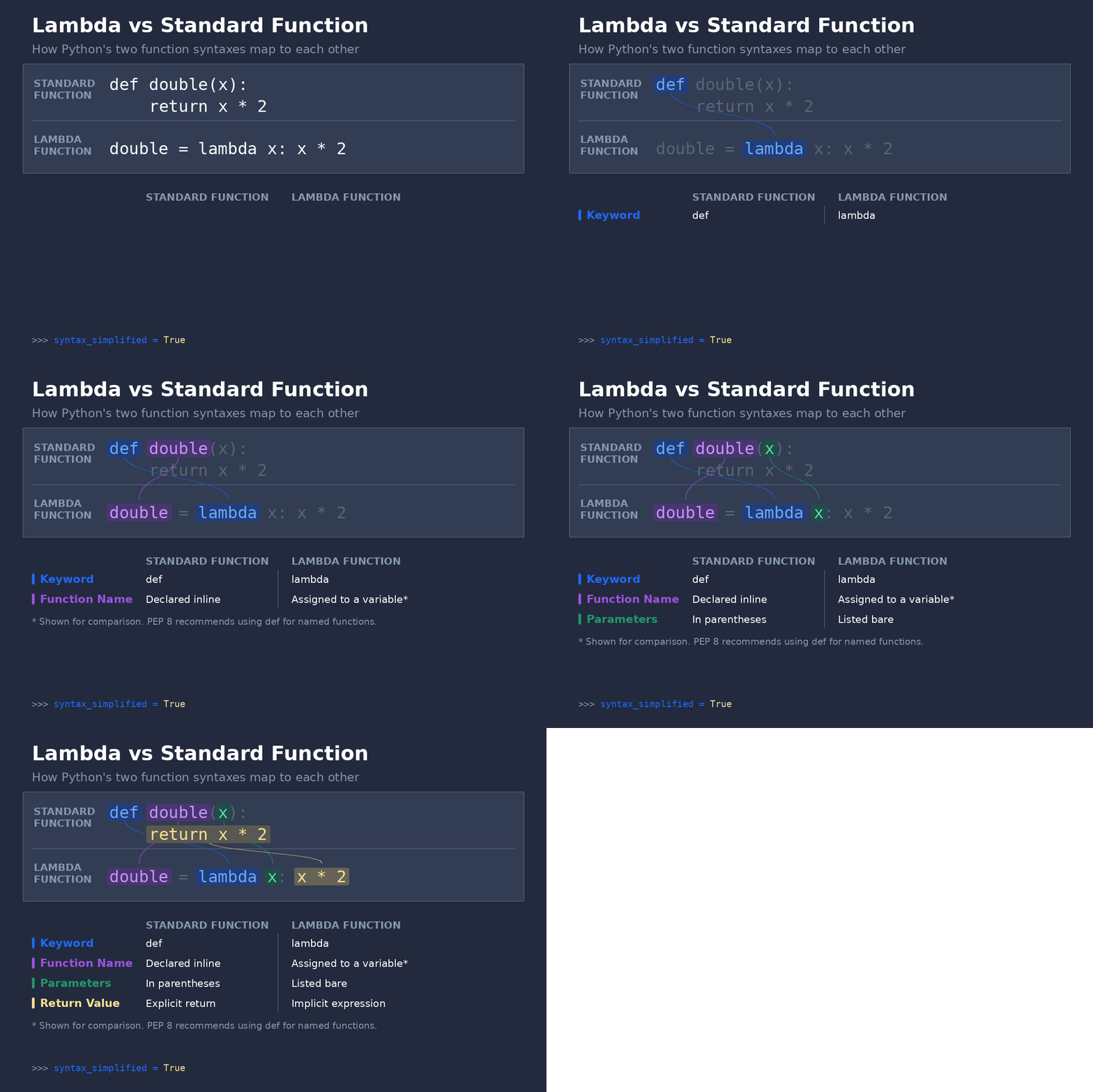
Python's lambda functions have a reputation for being intimidating, but that reputation is undeserved. These small, anonymous functions are just a way to write a simple operation on a single line, and once you see them in action, they lose all their mystery. The tutorial you're about to read does exactly what more Python resources should do: it strips away the confusion and shows you the practical, everyday use cases where lambdas genuinely shine. For anyone who has ever stared at a `filter()` or `sorted()` call and felt their brain start to glaze over, this is the clarity you've been waiting for.
The real value here is not in memorizing syntax; it's in recognizing a pattern. Lambda functions are not a separate, advanced topic. They are a tool for expressing a small transformation or condition right where you need it, without the ceremony of a full `def` block. The tutorial walks you through `map()`, `filter()`, and `sorted()`, which are the places lambdas appear most often in real code. It also touches on pandas, where these functions can save you from writing clunky loops that obscure what you're actually trying to do. When you understand lambdas in these contexts, you're not just learning a trick; you're learning how to read and write code that is more direct and more honest about its intent.
What we appreciate most is that the tutorial does not oversell lambda functions. It doesn't claim they're the one tool you need to solve every problem. Instead, it gives you a clear sense of when they are useful and, just as importantly, when they are not. That kind of grounded, practical teaching is rare in a world of clickbait programming content. It respects your time and your intelligence. You walk away with a skill you can actually apply, not a vague sense that you've learned something "advanced" that you'll probably never use.
So, if you've been avoiding lambdas because they look confusing, give this tutorial a chance. Read it with a code editor open, try the examples yourself, and watch how quickly the syntax becomes second nature. The goal is not to make your code more clever; it's to make it more readable and more efficient in the places where a lambda fits naturally. Once you see that, you'll wonder why you ever hesitated. That's the point where Python starts to feel less like a set of rules and more like a language you can speak fluently.