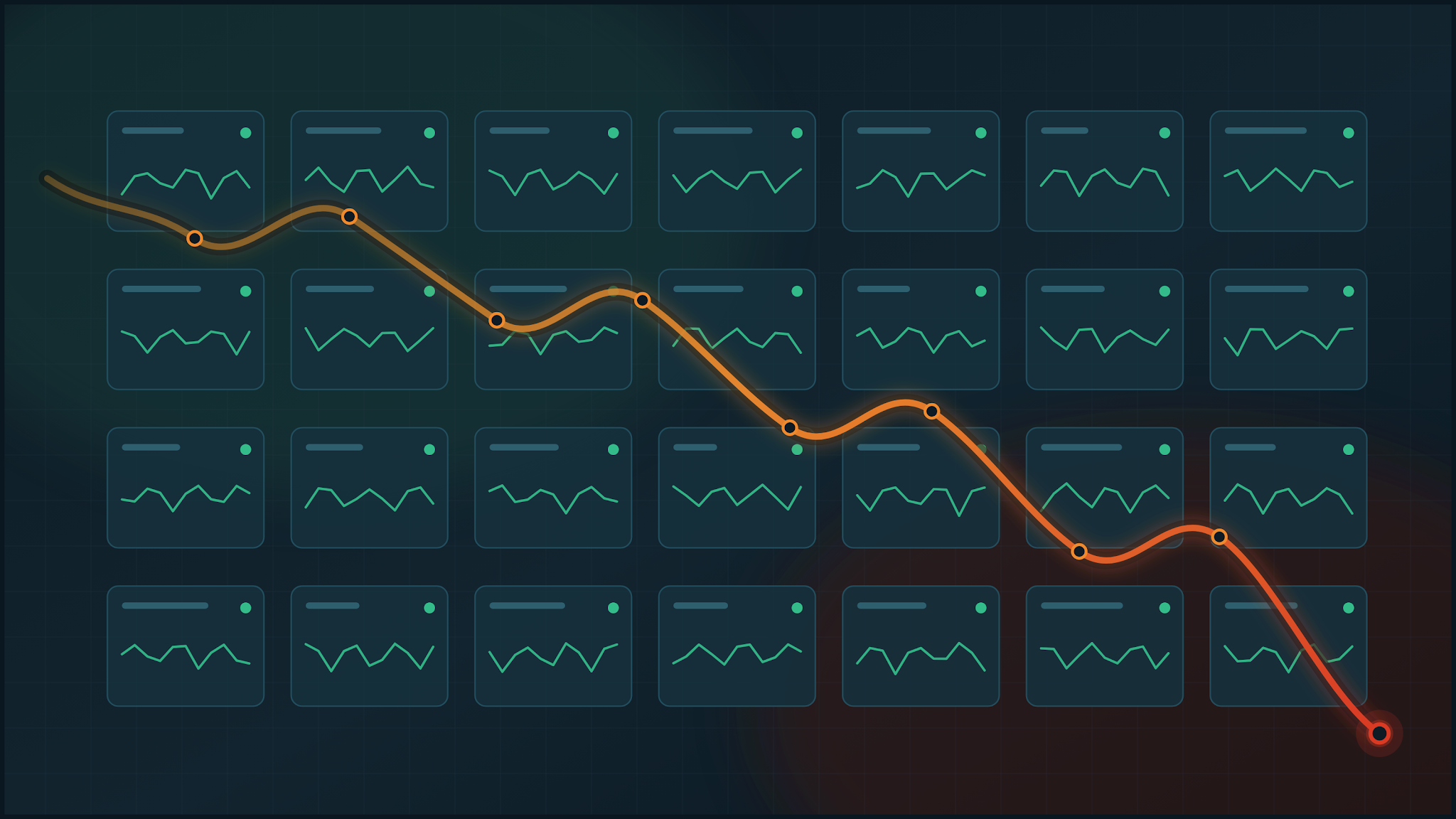
The assumption that an agent is just a model with a longer context window is a dangerous one, and the central claim deserves attention: the monitoring stack that worked for your ML pipelines will actively lie to you the moment agents hit production. The piece identifies five MLOps assumptions that agents break, and the most insidious part is not that the signals go quiet. It is that they go green. A failed run, in the agentic sense, often looks like a successful one if you are only watching for a bad loss curve or a dropped API call. The agent might have completed its loop, generated a tool call, and then used that tool incorrectly, or worse, it might have hallucinated a path that was internally consistent but factually wrong. Your old dashboard will show a healthy latency and a 200 status code while the agent silently fails at the task it was given.
This is not a minor tweak to your observability strategy. We inherit signals from MLOps and assume they are transferable, but the fundamental unit of work changes. In classic ML, you monitor for distribution drift because the model's output space is bounded. In agentic systems, the output space is a graph of possible actions, and the failure modes are not statistical; they are procedural. A model either called the right function with the wrong argument, or it called the wrong function with the right intent. Neither of those shows up as a spike in inference time. The practical consequence for our readers is that you cannot simply bolt a new "agent monitoring" tab onto your existing Datadog or Grafana setup. You need to rethink what a successful run means, which means moving from tracking outcomes to tracking the *trajectory* of decisions. The insight about inherited signals passing failed runs as healthy is the key takeaway here: if you are not logging the intermediate reasoning and tool calls, you are flying blind, and your metrics are giving you false confidence.
So what do we tell a reader who asks, "What should I do on Monday?" First, stop treating the LLM's final output as the source of truth. Start instrumenting the steps, not just the result. Second, accept that your current alerting rules are not just insufficient; they are counterproductive because they will distract you with false alarms while missing the real failures. The framing suggests a more profound shift: MLOps was about monitoring a model's health, but AgentOps is about monitoring a system's *behavior*. That means you need to log the sequence of actions, the context window at each step, and the rationale for each tool call. You also need to build a system that can detect when the agent is looping on a bad decision, which is a failure mode with no direct equivalent in traditional ML.
The specific detail to watch is the one about "which inherited signals now pass failed runs as healthy." That is the detail that should keep you up at night. It means your current monitoring stack is not just missing errors; it is actively hiding them. The concrete point we would leave you with is this: before you scale your agent from demo to production, do a chaos test. Intentionally give it a task that requires a multi-step plan, then break one of the tools in the middle. Check whether your dashboard screams "healthy" or "unknown." If it says healthy, you have your answer. You are not doing AgentOps yet; you are doing MLOps with extra steps and a false sense of security. This is a warning, but it is also a practical guide for what to fix first.