**The Hotel Room Is the New Phishing Email, and Your Laptop Is Already Compromised**
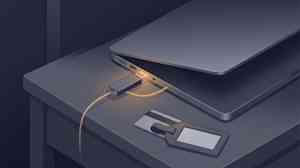
Here's the uncomfortable truth about the OVERCAST PANDA campaign: the most sophisticated hacking group you've never heard of didn't need a zero-day exploit, a clever phishing lure, or a cloud misconfiguration. They needed a hotel keycard and a USB stick. As CrowdStrike detailed in its 2026 Threat Hunting Report, the intruders walked into executive hotel rooms on Hainan Island, booted the laptops from USB while the owners were at dinner, and wrote a backdoor called FlowCloud directly to disk. No network alert fired. No MFA prompt appeared. The first sign of trouble came the next morning when the machine powered on and the trigger executed, a window of silent compromise that had been open for hours. This is the gap that Gemini's Brief Hacks Highlight AI's Evolving Data Access Landscape and Apple's push notification spyware alerts both gesture toward: the perimeter has moved from the network to the physical world, and most security teams are still staring at the wrong screen.
Let's be direct about what this means for you. The tools you've been told to trust, EDR, MFA, AI agent security, all share a fatal assumption: that the operating system is already running and trustworthy. OVERCAST PANDA bypassed all of them at the point of entry, below the OS, below the agent, below the authentication stack. Falcon only caught FlowCloud after boot, meaning the attackers had already won the first battle. The fix is not another product. As CrowdStrike's Adam Meyers put it, "It's a solvable problem. It's just an inconvenient solution." That inconvenience is why a BIOS setting that has existed for years, disabling external boot in UEFI, remains unchecked on most executive laptops. It's why a $49 FPGA can still pull BitLocker keys off the LPC bus, as researchers demonstrated in 2021. And it's why the same conference circuit that fills Las Vegas show floors this week is also where state intelligence services practice their craft. The controls that stop this campaign are old, cheap, and boring: a BIOS administrator password, pre-boot authentication with a PIN, and a travel-only laptop with no access to production systems. The real question isn't whether your vendor offers these features, they have for seven years. It's whether your CISO has decided that the board meeting in Shanghai is worth the risk of a single, targeted, physical intrusion.
Here's what we'd tell a reader who asks what to do tomorrow. Audit every executive laptop for USB boot status. If it can boot from USB, it has the same gap OVERCAST PANDA exploited. Enforce pre-boot authentication with a PIN, TPM-only BitLocker is a documented weak point against physical access. Verify Secure Boot is enabled and the latest revocation list is applied, especially after ESET's findings on legacy Microsoft-signed shims. Then have the uncomfortable conversation about travel devices: issue cheap laptops with no persistent VPN, no saved credentials, and no access to internal tools. Meyers' advice is blunt but correct: "If they can get their hands on it, they can own it." The scale argument, that physical access doesn't scale like network-speed AI intrusions, is true, but it misses the point. REVENANT SPIDER can hit 17 victims in 48 minutes; OVERCAST PANDA only needs to hit one executive whose company's five-year plan aligns with Beijing's collection priorities. The threat that worries Meyers more is the network-based one, and he's right to be concerned. But for the specific executive whose hotel room was entered at 8 p.m. and again at 9:57 p.m., the scale of the attack is irrelevant. The only number that matters is the hours between the USB write and the next boot, a window that firmware settings can close today, without a single new purchase or a vendor announcement. The question is whether your organization has the will to deploy the fix it already owns.