Zero-Shot Local Document Parsing with Gemma 4: Treating PDFs as Images
Our take
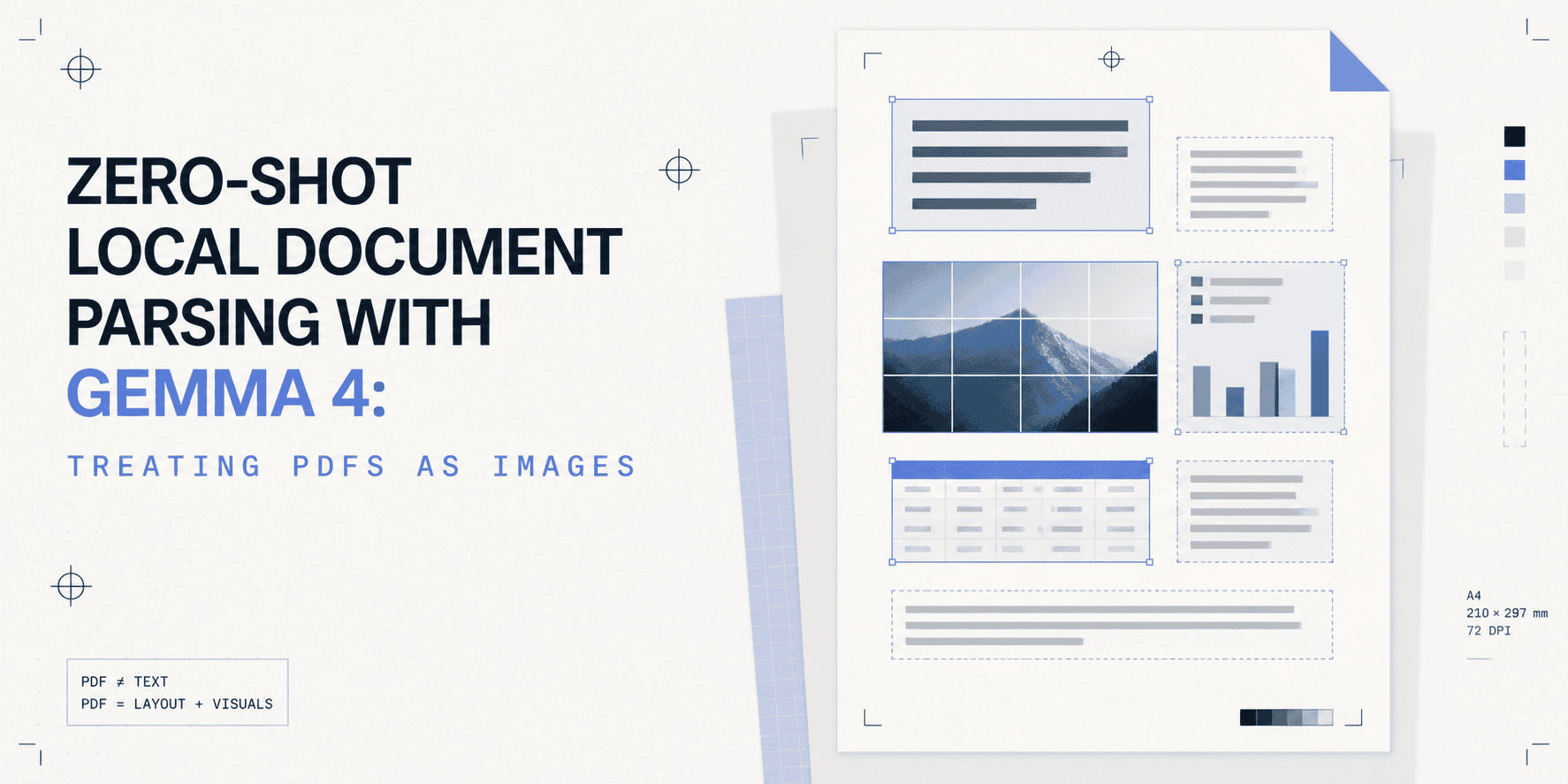
The recent announcement regarding zero-shot local document parsing with Gemma 4, treating PDFs as images, offers a genuinely compelling solution to a persistent frustration in data management. For years, extracting text from PDFs has been a fragile dance around the distinction between natively digital documents and scanned images. Traditional text extraction pipelines are notoriously sensitive to this difference, requiring complex pre-processing steps to handle variations in image quality, font rendering, and document structure. The elegance of Gemma 4’s approach—simply feeding the PDF image directly to the model—is striking in its simplicity and potential impact. This sidesteps the need for Optical Character Recognition (OCR) or other intermediary processes, significantly streamlining the workflow and, crucially, reducing the likelihood of errors that arise from imperfect extraction. This aligns with a broader trend we’ve observed in tackling data challenges, as illustrated in our recent comparison of SQL vs Pandas vs AI Agents: Which Solves Analytics Problems Best?, where different tools approach problem-solving with varying degrees of complexity and efficiency. The ability to bypass these traditional complexities represents a substantial leap forward.
The implications of this development extend beyond mere convenience; it speaks to a fundamental shift in how we approach document understanding. Historically, document processing has been heavily reliant on rules-based systems and bespoke solutions tailored to specific document formats. This has created a significant barrier to entry for organizations dealing with diverse and often unstructured data sources. Gemma 4's image-based approach, leveraging the power of large language models, promises to democratize document understanding, making it accessible to a wider range of users and applications. Consider, for example, the challenges faced by businesses managing legacy archives or dealing with contracts from various vendors – each document potentially formatted differently. The fragility of existing extraction pipelines meant that automating these processes was often prohibitively expensive. Now, with a model like Gemma 4, the focus shifts from painstakingly engineering extraction rules to simply providing the raw image data, allowing the AI to infer the underlying structure and meaning. This resonates with the spirit of innovation we highlighted in our look at Meet Kirki: WordPress’s First Visual Builder With An Infinite Canvas, where breaking free from established constraints leads to a more fluid and adaptable approach.
The success of this strategy highlights the growing power of multimodal AI models – those capable of processing and integrating information from multiple modalities, such as text and images. While the technology is still relatively nascent, we're already seeing evidence of its transformative potential across various industries. The scale at which companies like HubSpot are deploying these technologies, as detailed in How HubSpot Scaled Semantic Search to 20 Billion Vectors, underscores the growing importance of semantic understanding and the computational resources required to achieve it. The shift towards treating documents as images, rather than as structured text files, is a natural extension of this trend, enabling AI to extract meaning from a wider range of data sources, regardless of their original format. This approach also subtly challenges the prevailing wisdom that all document processing *must* involve brittle, pre-processing steps—implicitly demonstrating the value of embracing a more holistic, AI-driven perspective.
Ultimately, the zero-shot local document parsing with Gemma 4 represents a significant step towards a future where data extraction is seamless and intuitive. The ability to bypass traditional OCR and other pre-processing steps will unlock new possibilities for automation and analysis, empowering users to derive valuable insights from previously inaccessible data. As AI models continue to evolve and become more sophisticated, we can expect to see even more innovative approaches to document understanding, blurring the lines between different data formats and creating new opportunities for data-driven decision-making. The question now becomes: how quickly will organizations adopt these AI-native approaches, and what new workflows will emerge as a result of this paradigm shift in document processing?
Read on the original site
Open the publisher's page for the full experience