AI agents
AI agents at Beyond Market Intelligence is a file of 255 stories. The newest of them: “Move beyond AI hype to discover what agents actually need from you”, “Aina pilots a new device designed to control AI agents, not just observe”, and “When Agents Outrun Billing, Your Cloud Costs Compound Before You Notice”. We hear endless promises about what AI agents can do, but the real problem is simpler and more human: they don't yet understand context the way we do. Acme AI is the next-generation, AI-powered spreadsheet platform built to replace Excel and redefine how analysts, data scientists, and enterprise teams work… The list below is every AI agents story on Beyond Market Intelligence, newest first.
Move beyond AI hype to discover what agents actually need from you
We hear endless promises about what AI agents can do, but the real problem is simpler and more human: they don't yet understand context the way we do. That gap creates friction, not freedom. We're exploring how tools like Claude and OpenClaw fit into real workflows, and it's clear the hype outpaces the reality. If you're questioning whether these systems truly get you, you're not alone. Our piece on talking to an AI clone digs into that unease, and it's worth reading.

Aina pilots a new device designed to control AI agents, not just observe
Ultrahuman's former hardware VP has raised $5.5 million to build devices that don't just record your world, they act on it. The new company, Aina, plans to pilot its first device in the coming weeks, and that speed matters. This is about moving from passive capture to active control, a shift that feels overdue. For context on how AI agents already handle sensitive data, our piece on shared user images is worth a look. The potential here is real, but execution will define it.

When Agents Outrun Billing, Your Cloud Costs Compound Before You Notice
A $14,000 AWS bill in one day. That's what a three-person agency faced after attackers lifted static access keys and burned Claude invocations on Bedrock. It's a stark reminder that cloud billing, built for human-speed mistakes, lags a full day behind agent-speed spend. When autonomous agents move faster than your guardrails, the cost isn't just computational; it's existential. Practitioners are right to warn us.

Why enterprise AI agents stall at deployment, not capability
At VB Transform 2026, Bryan Silverthorn from Amazon made a pointed case: enterprise AI agents aren't failing because they're not smart enough. They're failing because they're not reliable enough. With 85% of companies piloting agents but only 5% shipping them, the gap is a measurement problem, not a model problem. His "intern" framework is a refreshingly human lens on managing autonomous systems. It's practical advice for escaping pilot purgatory. For more on scaling these workflows, see our piece on orchestrating AI agents with Google's AX.
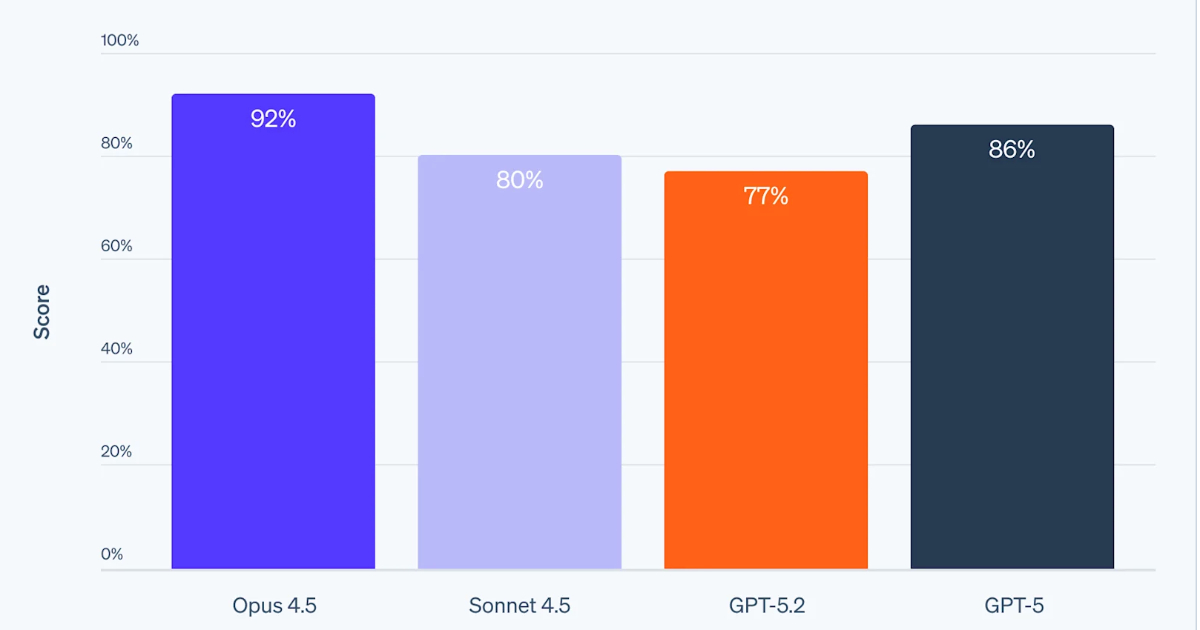
Stripe's New Benchmark Tests If AI Agents Can Actually Build Integrations
Stripe's new benchmark suite cuts straight to a hard truth: AI agents can build integrations, but they stumble when it's time to validate them. That gap between execution and testing is where real-world reliability lives, and Stripe is right to put it under the microscope. We're not talking about toy demos here; these are production-like constraints that expose weaknesses. It's a useful reality check for anyone convinced agents are ready to run unchecked.
Your infrastructure was built for humans. Agents need a new foundation.
Meta VP Barak Yagour opened VB Transform 2026 with a pointed warning: enterprise infrastructure was built for humans, not agents, and the cracks are already showing. Agentic queries on Meta's systems grew 30x in one half, and automated traffic now outpaces human traffic. His timeline is blunt: we have roughly 20 months to rebuild. That urgency is worth taking seriously. The window is open, but it won't stay open long. For deeper context, explore our coverage of AI deployment priorities at QCon AI New York.

Scale Your AI Agents with Postgres's Native Multi-Modal Power
Postgres has quietly become the backbone for production AI, and Gwen Shapira's session makes a compelling case for why that matters. She shows how teams are moving beyond toy demos, using Postgres's JSONB parsing and high-recall HNSW indexing to ground LLMs in both deterministic and semantic context. The 4x speedup from vector quantization is a practical win, but the real insight is managing agentic memory without losing reliability. For those exploring distributed training challenges, our guide on distributed algorithms pairs well with this foundation.

Vint Cerf helps define a standard for identifying AI agents online
Vint Cerf, the mind behind TCP/IP, is now tackling a new frontier: giving AI agents a standard identity on the open internet. It's a pragmatic move from someone who knows that structure makes networks work. If agents are going to act on our behalf, we need to know who they are. It's a technical answer to a trust problem, and that's exactly the kind of foundation worth exploring.

Seven Python Tools for Coordinating Local AI Agents
Seven Python tools are earning their keep in 2026, and none of them require a cloud bill to run. This guide walks through the frameworks engineers actually rely on to build, coordinate, and run local AI agents. It's a practical look at what's working now, without the hype. For those also wrestling with test reliability, our piece on monitoring Cypress tests with Grafana pairs well with this focus on persistent, local-first infrastructure.

Oak emerges with $60M to solve AI-driven identity complexity
Oak is stepping out of stealth with $60 million in seed funding, and the timing couldn't be more telling. As AI agents increasingly fumble through identity and access, the mess they leave behind is becoming a real liability. Shai Morag, the cofounder, knows this space well, and Oak is positioning itself to clean it up. It's a practical, needed response to a problem that's only growing.
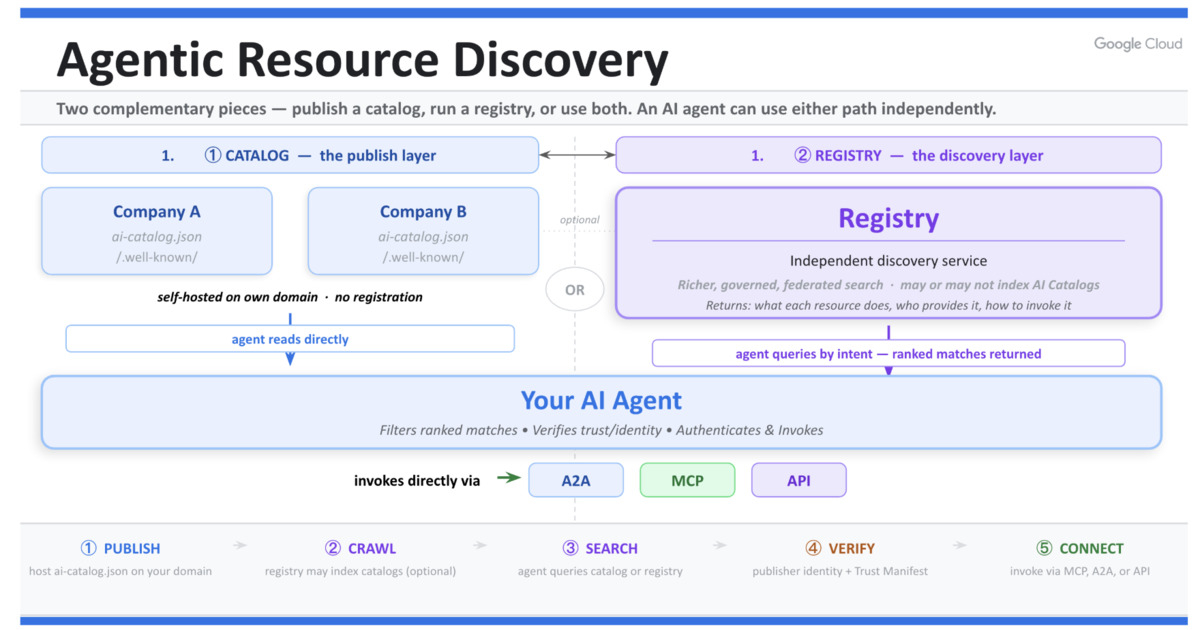
Explore how ARD makes AI tools discoverable and trustworthy.
The Agentic Resource Discovery Specification tackles a problem that has quietly slowed AI progress: tools and agents remain hard to find. Google and its partners are introducing an open standard built on catalogs and registries, which enables dynamic discovery while leaning on existing protocols like MCP and OpenAPI for execution. It is a practical move toward trust and interoperability. If you are still mapping out how MCP fits into your workflow, our visual guide to unlocking MCP is worth a look.
Shape your AI agent's memory naturally through conversation
Memory isn't a setting you toggle. It's a conversation. When you build an AI's memory simply by talking, you're not configuring a system; you're shaping a relationship. That's the real shift here, and it's one we think deserves your attention. We've been exploring how these interactions play out in practice, and our piece on questioning the tech behind interactive avatars offers a thoughtful counterpoint. For now, start a dialogue. See what your AI retains. The catch is that you have to begin.

Build a Context Store to Keep AI Development from Outpacing Understanding
Fast development is seductive. AI makes the first 80% of coding feel effortless, yet the structural debt hides until it surfaces as instability. That is why we find the argument for a "Context Store" so compelling. By binding spec-anchored design, tests, and fitness functions directly to the repo, Stella Berhe and her team show how we can make evolution safe. It is a practical shift from chasing speed to ensuring comprehension, and a smart next step for leaders.