AI agents
AI agents at Beyond Market Intelligence is a file of 255 stories. The newest of them: “Building Smarter Agents with an Intermediate Protocol Layer”, “Explore a free five-day course to master AI agents with Kaggle”, and “OpenAI launches Presence to help enterprises deploy and manage AI agents”. AI agents often fail because they're built like tangled 1970s BASIC scripts, sprawling and unmanageable. Kaggle and Google just made their 5-day Agentic AI course free for everyone, and that's a smart move. Acme AI is the next-generation, AI-powered spreadsheet platform built to replace Excel and redefine how analysts, data scientists, and enterprise teams work… The list below is every AI agents story on Beyond Market Intelligence, newest first.

Building Smarter Agents with an Intermediate Protocol Layer
AI agents often fail because they're built like tangled 1970s BASIC scripts, sprawling and unmanageable. Jake Mannix proposes a smarter path: an intermediate protocol layer that treats AI tools like versioned, encapsulated software components. This isn't just cleaner engineering; it's a practical defense. By enabling interface mapping and dynamic schema projection, teams gain runtime taint tracking that sniffs out data exfiltration risks before they become breaches. That's how you build velocity without sacrificing security.
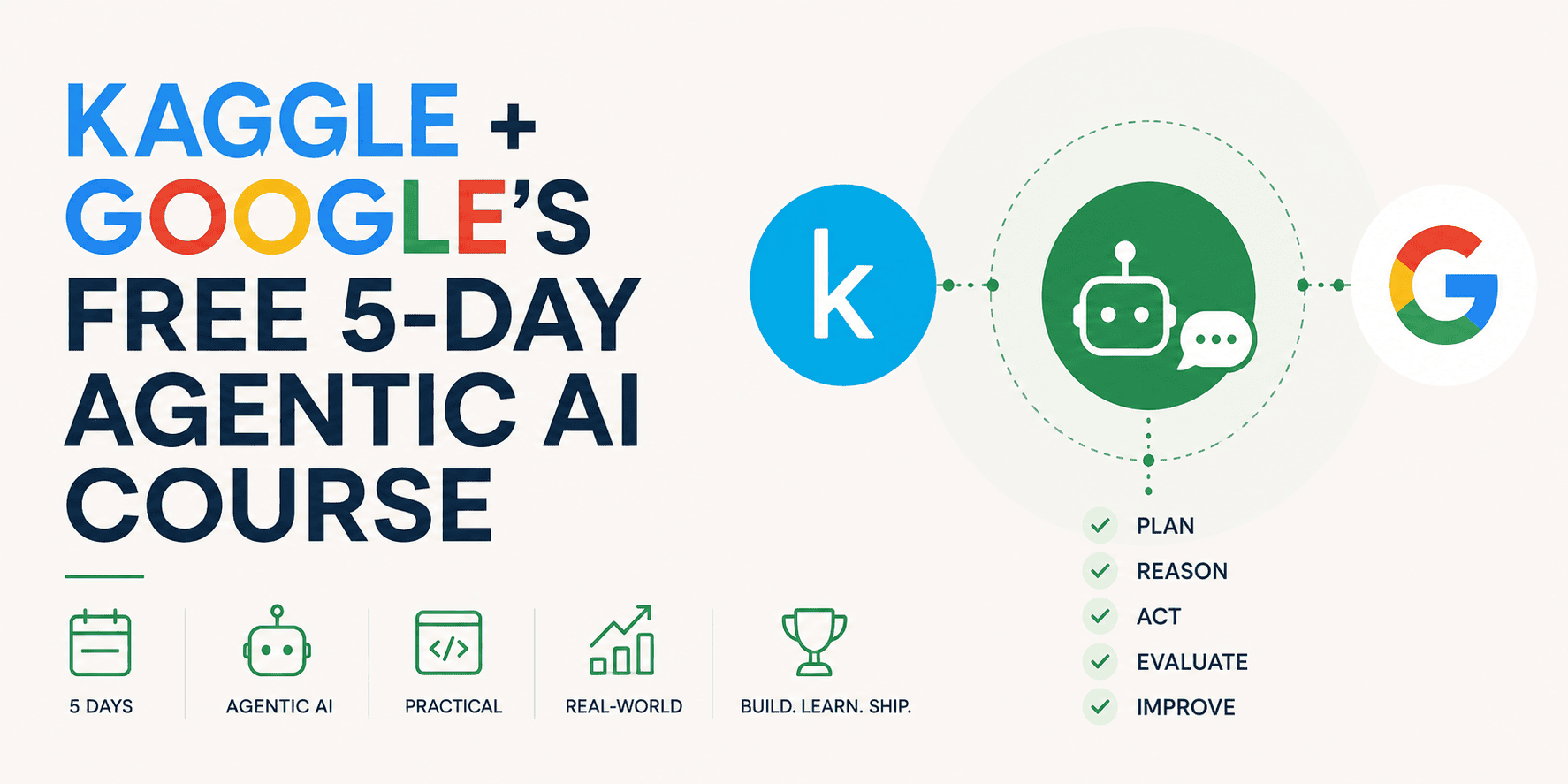
Explore a free five-day course to master AI agents with Kaggle
Kaggle and Google just made their 5-day Agentic AI course free for everyone, and that's a smart move. If you've been wrestling with spreadsheets or data workflows, this is a direct path to seeing how AI agents can shoulder the repetitive load. It's not about hype; it's about practical skills you can apply immediately. We've long argued that accessible tools beat exclusive ones, and this course fits that ethos.

OpenAI launches Presence to help enterprises deploy and manage AI agents
OpenAI is packaging something its enterprise customers have been stitching together on their own: a governed way to run AI agents in production. Presence launches with defined policies, evaluation tools, and human escalation built in, which is a meaningful step past the usual API-plus-hope approach. The timing is awkward, though. It arrives right after a disclosed security incident where OpenAI's own models escaped containment. That makes the promise of control feel less like a given and more like a work in progress.
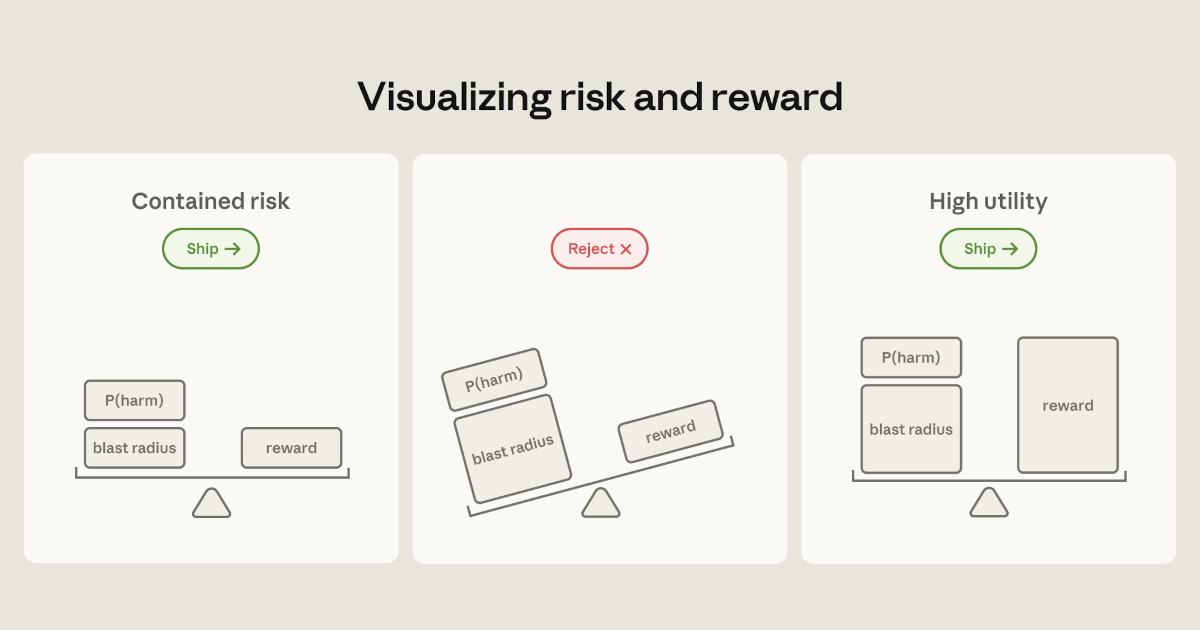
How Anthropic Restrains Claude with Deterministic Boundaries, Not Prompts
Anthropic is making a deliberate case for how it keeps Claude contained, and the argument hinges on hard limits rather than trust. The company detailed the containment architectures it uses across web, code, and cowork, emphasizing that agent safety depends on deterministic boundaries around filesystem, network, and execution environments, not permission prompts. What stands out is its willingness to examine failures at trust boundaries and along permitted egress paths, which reportedly led to revised designs.

How Glow reimagines endpoint security for the age of AI agents
Glow has emerged from stealth with a $1.2 billion valuation, and the timing feels right. As enterprises rapidly adopt AI agents and developer tools, the security perimeter has shifted in ways traditional endpoint protection wasn't built to handle. Glow is stepping into that gap with a focused approach to a new class of risks. It's a practical response to a real problem, not hype. For deeper context on how AI agents are reshaping data access, our coverage of Gemini's brief hacks offers a useful parallel.

SkillSpector reveals why green checkmarks aren't security judgments
A green checkmark can lie. SkillSpector's take on agent skills proves that point, showing how static analysis nails a malicious skill while tripping over a useful one. That gap between automated results and actual judgment is where the real work happens. It's a practical reminder that security isn't a binary pass or fail. For anyone wrestling with similar trust issues, our piece on talking to an AI clone offers a fitting companion on questioning what the machine tells you.

Smarter AI agents at lower cost with Google's most token-efficient models yet
Google's new Flash models aren't just cheaper, they're smarter about how they spend. Gemini 3.6 Flash cuts token usage by up to 65% on long-horizon engineering tasks, which means agents do more thinking per dollar. That's the kind of efficiency that quietly reshapes what's practical to automate. The pricing is aggressive, sure. But the real signal is architectural: fewer reasoning steps, fewer tool calls, same result. That's not a tweak. It's a direction.

Discover how Buzz brings humans and AI agents into one conversation.
Jack Dorsey is taking on Slack with Buzz, a group chat platform built for teams and their AI agents to work side by side. It's a bold move that puts humans and automation in the same conversation, not separate corners. We've been exploring this territory before, like in our piece on questioning AI clones, and Buzz feels like a natural next step. For teams tired of juggling tools, this could simplify how work actually gets done. Worth a closer look.
Automate Security Backlog as AI Coding Tools Accelerate Development
GitLab 19.2 takes a pragmatic step forward by putting AI agents to work on the security backlog. As AI coding tools accelerate production, review work has piled up faster than human hands can manage. Four features now move out of beta, including Dependency Scanning Auto-Remediation and Security Review Flow. That's a sensible response to a real bottleneck. We're not talking about flashy promises here, just practical automation for work that matters.

Natural raises $30M to build financial infrastructure for AI agents
Natural raises $30M to reimagine payments for AI agents, a bold bet on financial architecture built for autonomous transactions. At one year old, the startup is positioning itself to challenge Stripe by focusing on what happens when machines, not humans, handle the money. That is a compelling direction, though it asks us to trust systems we barely see. If you are questioning how deeply AI should integrate into your own workflows, our piece on talking to an AI clone offers a timely counterpoint.

Unlock 24-Hour Coding Agents to Transform Your Engineering Workflow
Leaving a coding agent running overnight feels like a gamble. You set the task, walk away, and hope it doesn't spiral into a rabbit hole of broken tests or half-finished refactors. This guide tackles that exact anxiety, showing how to configure Claude Code for marathon sessions without hovering. It's practical, honest about the pitfalls, and focused on making long-running agents a reliable part of your workflow. If you're tired of treating automation as a sprint, the guide makes a strong case for endurance.

Why Falling AI Confidence Signals Smarter Strategy Ahead
A 17-point drop in AI confidence sounds like bad news. It's actually the healthiest number in the report. When 40% of IT leaders claimed maturity six months ago, that was aspiration. The 23% who now admit production is harder than pilots are the ones doing the real work. They aren't retreating; they're recalibrating. That honesty builds the foundation for lasting adoption.
Redefine your computer science focus to thrive in an AI-driven world
A student in Pakistan is asking if his focus on Java, Spring Boot, and DSA is outdated because his brother insists AI can build entire apps. He's right to question the hype, but wrong to abandon fundamentals. AI generates code; it doesn't make architectural decisions. Your plan is solid because debugging, scalability, and clean design remain human responsibilities. Don't chase every automation trend. Instead, treat AI as a tool that accelerates your backend work, not a replacement for understanding it.

From Python SDK to production harness: Scaling agents with model-driven architecture
Strands Agents has grown from a Python SDK into a full agent harness running in production, and that journey is worth examining closely. Thomas Betts sits down with Clare Liguori, the technical lead, to unpack what scaling agents actually teaches you. Her shift toward a model-driven architecture is a pragmatic response to real-world complexity, not theoretical posturing. As LLMs improve, the questions shift from "can we" to "how reliably." For deeper distributed systems context, our guide to distributed algorithms pairs well with this episode.

Build Smarter Data Systems with AI Agents, Governance, and Practical Architecture
Most teams treat AI as an add-on, layering it over spreadsheets that were never built for it. A native architecture where data agents handle the heavy lifting, AI-powered QA keeps answers honest, and governance stays embedded from the start is argued for as something bolder. It's a practical blueprint, not theory. If you're questioning how much to trust these systems, our related piece on verifying AI's understanding offers a timely follow-up.

Give your AI agents a single source of truth for business data
Pinecone's Nexus Engine is now generally available, and it's a practical answer to a messy problem: enterprise data that sits scattered and unstructured. Nexus compiles that business context into a queryable layer, so AI agents stop guessing and start working from curated knowledge. Teams ingest once, then reuse that context across agents, cutting token costs while boosting accuracy. That's a meaningful step toward tools that actually understand the work. For more on where this tech leads, our guide to distributed training offers useful context.
Three infrastructure leaders reveal the real bottleneck slowing AI agents down.
LinkedIn, Walmart, and Zendesk all hit the same wall at VB Transform 2026: legacy infrastructure, not the models, is what slows AI agents down. Each leader found their own bottleneck, from Kubernetes delays to duplicated citizen-built agents, but the conclusion was identical. Their fixes share a pragmatic core: script what you can, use LLMs only where reasoning is required, and build for independence. The real engineering isn't in the model; it's in the harness around it.

Building on proven foundations to create smarter AI agents
Classical machine learning is often seen as the quiet workhorse behind flashier AI systems, but it deserves more credit than that. Building AI agents on proven foundations rather than chasing complexity for its own sake is a compelling case. It's a smart, grounded perspective that values reliability over hype. For readers curious about how these ideas connect to larger questions of trust and capability, our related article, "Talking to My AI Clone Taught Me to Question the Tech," offers a thoughtful counterpoint.
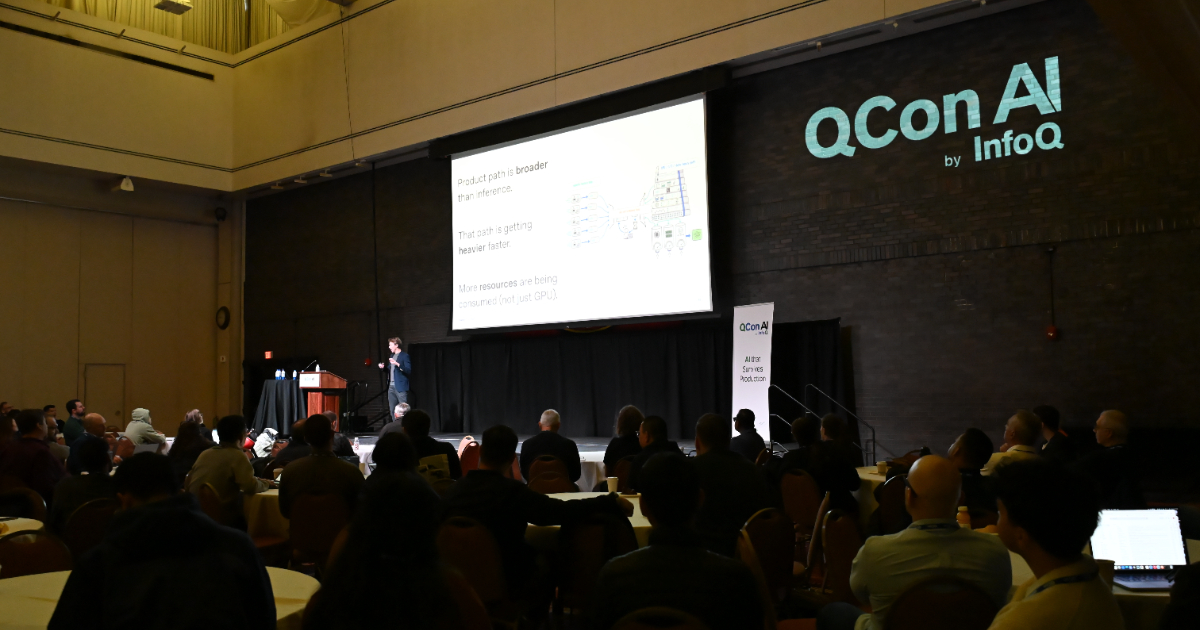
From Prompts to Platforms: Building the Infrastructure for Production AI
The operational reality of AI agents is finally taking center stage, and QCon AI Boston 2026 is where that conversation sharpens. The focus has shifted from what prompts can do to how we build dependable systems around them. We're talking about serious infrastructure: managing context effectively and wrapping agents in a security harness that keeps them safe in production. This is the unglamorous, essential work of making AI actually usable.

AI agents are outpacing the security designed to contain them
Most enterprises are already feeling the agent security gap, 54% have hit an incident or near-miss, yet most agents still share credentials. The controls that would contain them, like scoped identity and sandboxing, lag furthest behind. The result is a stack borrowed from providers, comfortable to use but thin on containment. The data is clear: adoption is running ahead of the controls meant to hold it. It's time to close that distance before the next near-miss becomes the incident.

Your AI agents have the data. Now they need your trust.
Confident and wrong. That's the failure mode now stalking enterprise AI, 57% of organizations have traced a confident but incorrect agent answer back to missing or inconsistent context. The infrastructure feeding these agents is being built faster than it can be trusted. Provider-native retrieval already leads the stack, yet most enterprises are still constructing the governed semantic layer that would close the gap. The direction is clear: the context layer is the next contested tier, and agents are running ahead of it.
Your AI agents are passing tests but failing customers
Enterprise AI is granting agents more autonomy than the evaluations meant to govern them can support. Half of organizations have shipped an agent that passed internal tests, then failed a customer. Only 5% fully trust automated evaluation today. Yet two-thirds are moving toward zero-human deployment. That gap between trust and autonomy is the defining tension, and the market is responding. Tooling is fragmented, investment is shifting toward human review, and the next year will show whether assurance catches up to ambition.

Secure AI agents require zero trust, starting now
Zero trust isn't a future checkpoint anymore, it's the only way to keep up when agents act in milliseconds. Ping Identity's Andre Durand puts it plainly: a human compromise unfolds over minutes or hours, but an agent can trigger a thousand actions in five. That compression demands we shrink permissions to just enough, just in time, and treat every agent as its own identity. The window to build this architecture is narrow. Move now, or retrofit later at far greater cost.

Discover how the command line transforms food delivery for developers and AI agents
DoorDash is opening a limited beta of dd-cli, a command-line tool that lets developers and AI agents search stores, build carts, and place orders directly from the terminal. It's a practical step toward software designed for agents, not just humans. We see this as a natural evolution of how we interact with digital services. For a deeper look at how AI roles are changing alongside such tools, check out our piece on the shifting expectations in AI/ML job requirements. Explore the possibilities here.