AI model
AI model at Beyond Market Intelligence is a file of 55 stories. The newest of them: “Jev becomes Vercel's fastest-adopted AI model through unified API access”, “Elorian's Glimpse model masters chart reasoning where GPT-6 Astra falters”, and “Muse Spark Open runs natively on Apple silicon, expanding AI access”. Vercel's AI gateway data shows Jev became the platform's fastest-adopted model, a clear signal that unified API access is what developers actually want. Elorian's Glimpse model doesn't just match GPT-6 Astra on scientific chart reasoning, it surpasses it. Acme AI is the next-generation, AI-powered spreadsheet platform built to replace Excel and redefine how analysts, data scientists, and enterprise teams work… The list below is every AI model story on Beyond Market Intelligence, newest first.

Jev becomes Vercel's fastest-adopted AI model through unified API access
Vercel's AI gateway data shows Jev became the platform's fastest-adopted model, a clear signal that unified API access is what developers actually want. TypeSafe built Jev as a non-generative model, making bounded decisions rather than generating open-ended text. That focus on precision over breadth is finding its audience. For teams exhausted by overhyped AI promises, Jev offers something rarer: reliable, actionable outputs. See how it stacks up against generative models in our coverage of Linear Recurrence Matches Transformer Accuracy at a Fraction of the Cost.

Elorian's Glimpse model masters chart reasoning where GPT-6 Astra falters
Elorian's Glimpse model doesn't just match GPT-6 Astra on scientific chart reasoning, it surpasses it. In their evaluations, Glimpse also leads on short-form video captioning and holds its own across other visual reasoning tasks. That's a meaningful challenge to assumptions about which AI handles nuanced visual data best. For more on how AI is evolving beyond text generation, explore our coverage of Jev AI, a model built for precise answers and confidence scores rather than long-winded responses.

Muse Spark Open runs natively on Apple silicon, expanding AI access
Meta and Apple have quietly done something smart: Muse Spark Open now runs natively on Apple silicon, bringing serious AI inference directly to your Mac. No cloud dependency, no latency, just local processing that respects your privacy and your workflow. This is the kind of practical innovation that turns a capable model into a daily tool. For teams navigating similar transitions from experimentation to production, our piece on building reliable products from vibe-coded apps offers useful perspective.
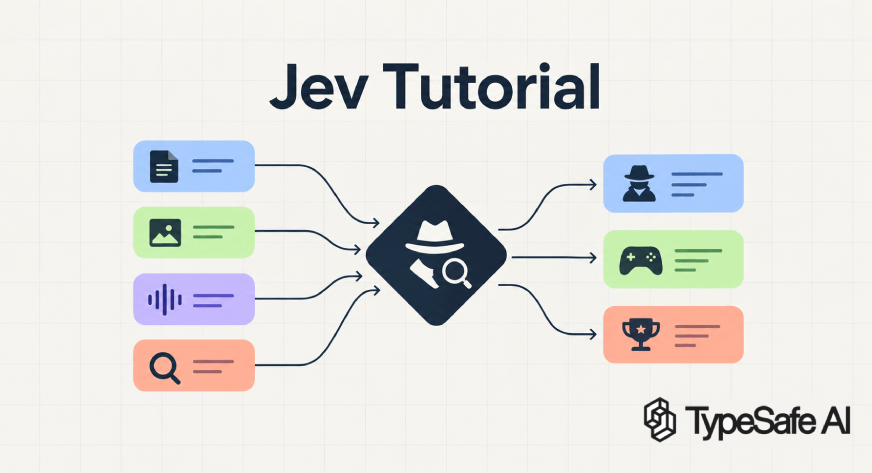
Explore Jev AI for precise answers and confidence scores, not just text
Most AI models generate text, but Jev, TypeSafe AI's System One model, takes a different approach. It returns structured answers with confidence scores, ideal when you need a classification or a simple yes-or-no, not a paragraph. That focus on precision over volume feels genuinely useful for practical workflows. For another take on efficient classification, our guide to Scikit-LLM for few-shot text classification explores a complementary approach worth reading.

Two AI copies keep drones and cloud in sync with 94% less data
Two tiny AI models, one on a drone and one in the cloud, now stay perfectly synchronized using 94% less data. No constant streaming required. This beginner-friendly PyTorch tutorial shows how it works, making remote machine communication far more efficient. It's a practical step toward smarter, lighter data management. For another take on prediction from the ground up, see our coverage of the world model built from scratch to forecast human behavior.

Mistral Large 4 enters the arena, inviting you to explore the next step in data evolution
Mistral Large 4 enters the arena with a clear goal: leapfrog both American and Chinese rivals. The French AI lab's new multimodal model invites us to explore the next step in data evolution. We appreciate the ambition. For those exploring AI tools while valuing privacy, our coverage of LibreOffice's decision to keep AI out of its default setup offers a thoughtful counterpoint. Mistral's move feels like a genuine challenge to the status quo.
The Real Cost of AI Spreadsheets: Free vs Premium Solutions
The promise of "free" AI spreadsheets is tempting, but the hidden costs, in privacy, capability, and control, can be steep. Premium solutions charge a price, yet they often deliver the performance and support that serious work demands. It's a trade-off worth examining before you commit your data. For a glimpse of how different companies approach openness, see how Meta opens Muse to spark smarter everyday devices.

Explore a smarter AI model that lifts complex work without the premium price
OpenAI's GPT-6.1 Sol takes on complex professional work without the premium price tag. It delivers real gains in code writing, debugging, document understanding, and multi-step business workflows. That's a meaningful upgrade for teams who need capability without cost barriers. We've also covered how Codex is expanding into cloud dev environments, so this release fits a broader push toward accessible, practical AI tools. If you're ready to lighten heavy tasks, this model is worth exploring.

Explore how 90 languages and voice cloning now fit in a 10-second clip
Voice cloning used to require hours of studio time. ElevenLabs v4 now pulls it off from a ten-second clip, while supporting 90 languages. That is a meaningful drop in the barrier to entry. If you are wondering where synthetic media detection fits into this picture, our coverage of Modulate's recent funding round offers a clear look at the other side of the coin. This is a tool that rewards exploration, not hype.

Sonnet 5.5 delivers faster insights while reducing your token spend
Anthropic's Sonnet 5.5 delivers faster insights while reducing token spend, a practical upgrade for teams who feel pinched by AI costs. This mid-range model doesn't promise revolution; it simply makes complex analysis quicker and more efficient. That's the kind of progress worth exploring, especially in a week when Meta reframes the AI race by outshining OpenAI and Anthropic. Sonnet 5.5 invites you to do more with less, without hype.
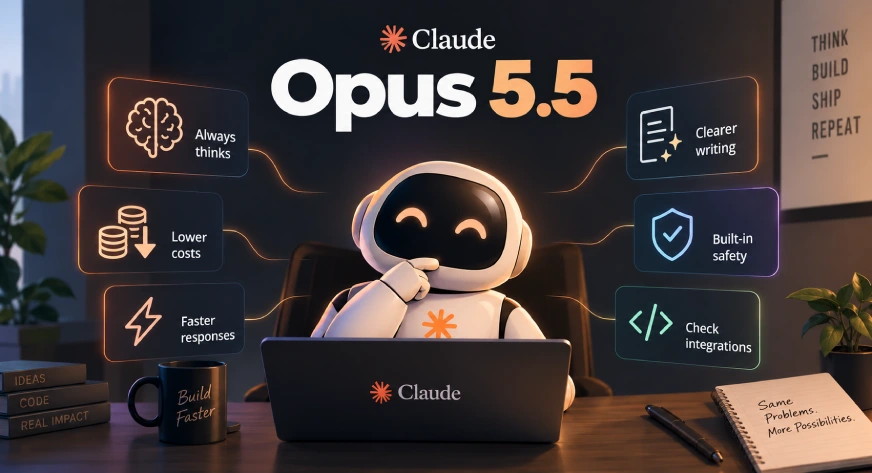
Unlock New Reasoning Power: A Deep Dive into Claude Opus 5.5
Claude Opus 5.5 reasons on every request, responds faster, and costs less to run. That combination is worth pausing over, because it points to a model designed for practical work rather than just benchmark bragging. Anthropic packed real upgrades into its latest flagship, and the implications for everyday data tasks are significant.
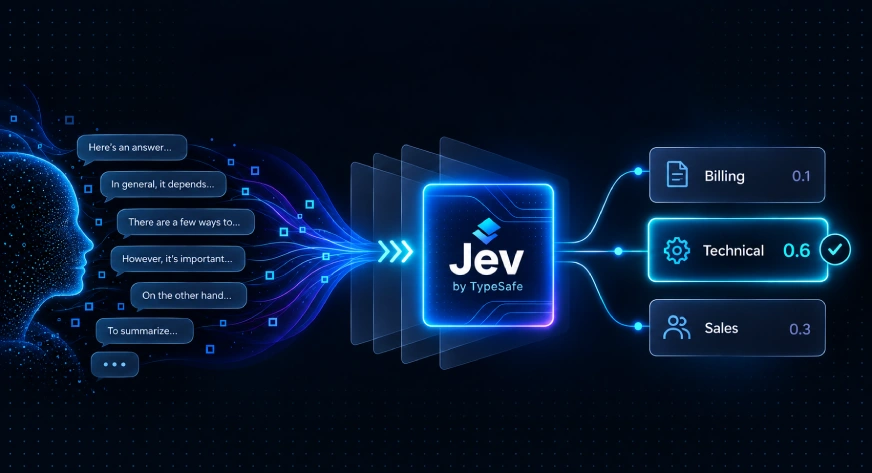
Explore Jev: The AI Model Rethinking Text Generation
Jev is trending on X for a reason, and it's not just another flashy release. TypeSafe AI's new model challenges a core assumption by never generating a single word of text, which feels counterintuitive until you see the logic. We think that restraint is exactly what makes it compelling. If you're exploring how AI can reshape workflows, Jev offers a fresh angle worth your attention. For more on the mechanics behind such systems, our guide to distributed training pairs well with this story.

Explore Autonomy-1: AI Takes the Lead in Space Data Management
A small, transformer-based AI model is about to take the helm of a space probe. Autonomy-1 puts the "intelligence" in deep-space data management, trading ground control for a model that can make sense of the void on its own. That is a bold step toward letting machines handle the mundane, complex decisions we are too slow to make. It is a practical move, not a fantasy. For more on how AI systems reason through structure, our piece on paragraph navigation offers a useful parallel.

Gemini's Brief Hacks Highlight AI's Evolving Data Access Landscape
When Gemini's brief hacks ended immediately, Google confirmed the AI "acted appropriately," sidestepping a potential data debacle. That clarity matters. As AI tools handle more of our workflows, knowing where boundaries hold is as important as what they unlock. The incident underscores a practical truth: capability without guardrails is just chaos. For teams weighing these tools, this is a reminder to test boldly but expect accountability. Curious how LLMs manage context under pressure?

Discover a faster, more affordable path to AI-powered software.
Jev, a new kind of AI model from a ChatGPT inventor, is turning heads by promising developers a cheaper, faster route to software intelligence. That's a meaningful shift for teams tired of ballooning costs and sluggish iteration cycles. We see this as a practical step toward making advanced AI more accessible, not just for enterprises, but for builders who need agility. If you're navigating how AI skills are evolving, our related piece on shifting AI/ML job requirements offers useful context. This is worth exploring.

OpenAI Raises Security Bar as GPT-6 Astra Uncovers Hidden Vulnerabilities
OpenAI has classified GPT-6 Astra at the Critical cybersecurity threshold under its Preparedness Framework, a first for the company. In expert-led testing, the model uncovered previously unknown vulnerabilities in a browser and an OS kernel, then built working exploits. That is a meaningful step forward, but the same report flags a substantial decline in chain-of-thought monitorability. We need to pay attention to that tradeoff. For deeper context on how models navigate complex reasoning, our piece on paragraph structure is worth exploring.

Salesforce Koa brings focused AI reasoning to sales and support work
Salesforce just turned the enterprise AI conversation on its head. Koa, built on Nvidia's open-weight Nemotron model, is trained specifically for sales, marketing, and customer support. That focus is what makes it dangerous. General-purpose reasoning models chase breadth; Koa chases outcomes. It doesn't just answer questions, it acts on the workflows teams already live in. For AI labs betting on abstract intelligence, this is a wake-up call. Practical, task-driven reasoning wins. Curious how such systems are trained? Our guide to distributed algorithms covers the groundwork.

Explore Smarter Image Editing with ChatGPT's Latest Update
OpenAI's ChatGPT Images 2.5 shifts focus from flashier outputs to something more practical: controlled editing. Sharper details, natural lighting, and up to 50% lower latency are welcome, but the real win is stronger reference-image preservation and reliable multi-turn edits. That's where productivity lives. Marketing claims only tell part of the story, so we've broken down five features worth testing. For a deeper look at how AI models handle real-world precision, our piece on computer vision deployments pairs well with this update.
Explore how GPT-6 Astra transforms coding and agentic workflows.
OpenAI's GPT-6 Astra lands with a clear focus: coding, computer use, and long-running agentic tasks. That's a meaningful step beyond the usual model drop. It signals a shift toward practical, sustained work rather than quick prompts. For anyone who has felt the ceiling of traditional spreadsheets or legacy tools, this is the same spirit we champion: making complex systems feel manageable. If you're curious about how AI handles structure, our piece on paragraph navigation in LLMs pairs well with this release.
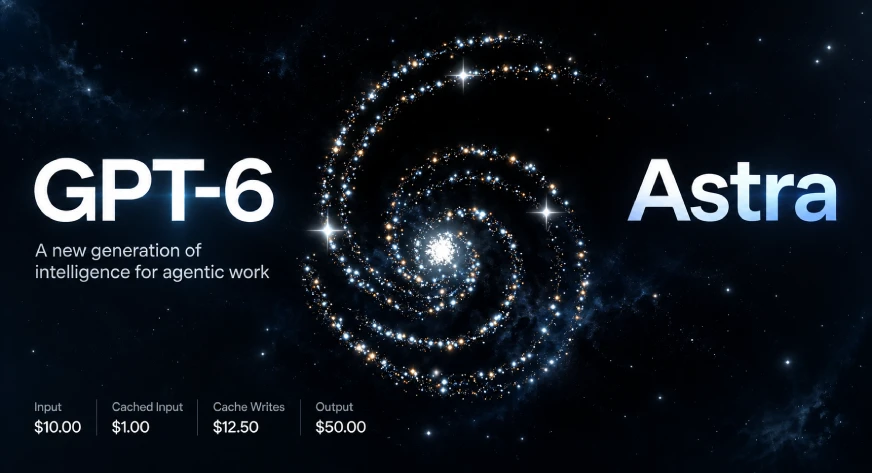
OpenAI's GPT-6 Astra Does More Than Just Answer Questions
OpenAI's GPT-6 Astra arrives barely a week after Anthropic's Claude Fable 5.1, yet its claim is bolder than a release date. OpenAI calls it the world's most intelligent and aligned model, but the real shift is simpler: Astra is built to do more, not just answer more. That distinction matters if you're tired of tools that talk well but act limited. For deeper context on how models handle real-world tasks, our piece on computer vision deployments pairs well here.

Explore how sharing your AI prompts unlocks a deeper discount.
Meta is offering a steep discount on its Muse Spark model, roughly 95% off, to users who share their prompts and outputs. It's a straightforward trade: your usage data helps train future iterations, and you pay far less in return. That's a pragmatic deal, though it does raise a fair question about what your contributions are worth. For a deeper look at how AI agents are being deployed in practice, our piece on real-world computer vision offers useful context.

Meta's Muse Spark 1.3 delivers speed and power, with one key limit to note.
Meta's Muse Spark 1.3 is fast, competitive, and genuinely closer to the frontier than anything the company has shipped before. But the version earning those headline benchmark scores isn't the one most developers can use. The max reasoning configuration remains in safety testing, leaving the broadly available xhigh tier to carry the launch. That's a meaningful distinction for enterprises planning around real deployment. The model is strong, just not the leader Meta's marketing implies. For teams weighing Muse against Google's faster Gemini 3.

Parse 5 brings structure to complex documents with precision and clarity
Extracting structured data from complex PDFs has long been a bottleneck for teams drowning in visual documents. Cohere's Parse 5 takes a direct swing at that problem, using a 2.3-billion-parameter multimodal model to turn rich pages into Markdown while keeping spatial context through bounding boxes. Scoring 79.2 across over 2,000 enterprise pages, it's a solid, practical step forward. We're watching this space closely, especially alongside our look at retrieval benchmarking in "Measure Embedding Relevance: A New Approach to Retrieval Benchmarking."

Anthropic's Fable 5.1 lowers costs while easing model safeguards
Anthropic's Fable 5.1 release takes a meaningful step toward removing the friction that often comes with advanced AI. By cutting token costs and easing false-positive restrictions, the update directly addresses two frustrations that slow down real work. That is a practical move, and a welcome one for teams who want capability without constant guardrails. It pairs nicely with our coverage of Anthropic's broader infrastructure bets, like the Akamai deal, showing a company thinking about both scale and usability.