Podcast: Cloud and DevOps InfoQ Trends Report 2026: AI, Resilience, Platforms, FinOps, and Sovereignty
Our take
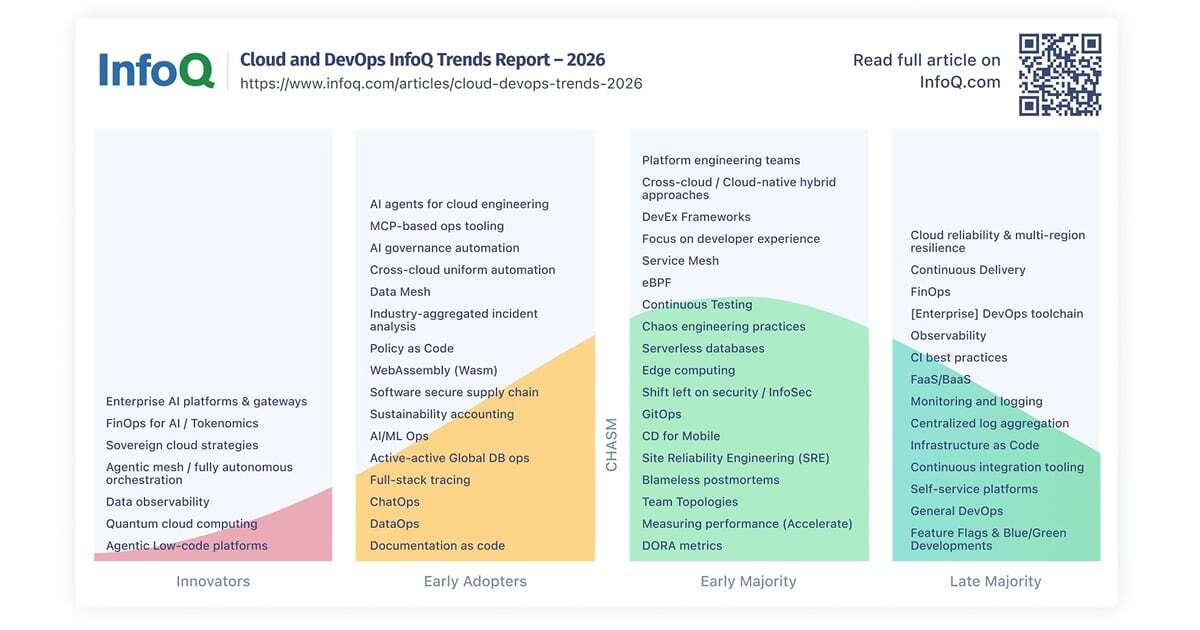
The InfoQ Trends Report 2026 podcast, and the reports it represents, offer a valuable snapshot of the evolving cloud and DevOps landscape, and this year's iteration highlights a fascinating convergence of forces. It’s clear that the industry is moving beyond simply adopting cloud technologies and embracing a more mature, nuanced approach to data management and infrastructure. The focus on AI, resilience, platforms, FinOps, and sovereignty isn’t just a checklist of buzzwords; it reflects a genuine shift in priorities driven by increased complexity and heightened expectations. The report’s emphasis on “raw conversation” and practitioner stories is particularly welcome, as it promises a grounded perspective, moving beyond the often-hyped narratives that dominate the tech space. The surrounding articles paint a picture of this evolving ecosystem: consider the challenges of deploying [Can a Local LLM Run My AI Assistant?] and the implications of Claude’s content watermarking [Claude Now Watermarks Everything It Makes], both of which touch on the practical realities of integrating AI into existing workflows. The sheer scale of investment in companies like River AI [General Catalyst leads $1.1B round into 2-month-old River AI] underscores the belief in AI-powered personal agents and their potential to reshape how we interact with data.
The prominence of resilience as a trend speaks volumes about the lessons learned from recent global events and the increasing reliance on distributed systems. Organizations are no longer content with simply having backups; they need architectures that can withstand failures and adapt to changing conditions. This necessitates a deeper understanding of infrastructure as code, automated testing, and robust monitoring – all core tenets of DevOps. Similarly, the focus on FinOps highlights a growing awareness of the financial implications of cloud adoption. Many organizations initially benefited from the cost savings of the cloud, but as usage grows and architectures become more complex, controlling costs has become a significant challenge. Effective FinOps practices require a collaborative approach involving engineering, finance, and operations teams. The inclusion of sovereignty is particularly timely, reflecting the increasing regulatory scrutiny of data privacy and security. Businesses must now navigate a complex web of legal and compliance requirements, which adds another layer of complexity to cloud deployments.
The combined effect of these trends points towards a future where cloud and DevOps are less about individual tools and technologies and more about creating robust, adaptable, and cost-effective platforms. We're seeing a move towards platform engineering, where teams build internal developer platforms to streamline workflows and reduce cognitive load. This allows developers to focus on building applications, while the platform team handles the underlying infrastructure and tooling. The increasing sophistication of AI models, as explored in the related articles, further amplifies the need for these platforms. Managing and deploying these models at scale requires automation, observability, and robust governance – capabilities that are best delivered through a well-designed platform. It’s no longer sufficient to simply migrate applications to the cloud; organizations must fundamentally rethink how they build, deploy, and manage their systems.
Looking ahead, a critical question arises: how will the rise of sovereign cloud solutions impact the broader cloud ecosystem? While public cloud providers are adapting to meet regulatory requirements, the demand for data residency and control is likely to drive increased adoption of private and hybrid cloud environments. The interplay between these different deployment models and the need for seamless interoperability will be a defining challenge for the next few years. The InfoQ Trends Report 2026 provides a valuable starting point for understanding these complexities, and we anticipate continued evolution in these areas as the industry navigates the challenges and opportunities of the future.
In this episode of the podcast, members of the InfoQ editorial staff and friends of InfoQ will discuss current trends in the cloud and DevOps domains as part of our annual trends report. These reports provide InfoQ readers with a high-level overview of key topics to watch. This podcast offers a chance to hear our raw conversation and the stories shared by our expert practitioners.
By Daniel Bryant, Matt Saunders, Shweta Vohra, Steef-Jan Wiggers, Mark SilvesterRead on the original site
Open the publisher's page for the full experience