algorithms
Beyond Market Intelligence keeps algorithms in one place: 82 stories so far. The section currently leads with “The Founder of Orkut Returns to Tackle AI's Impact on Connection”, “For the Vatican, creativity requires more than an algorithm can deliver”, and “The Hidden Architecture of Language Models Gets a Definitive Survey”. Orkut Büyükkökten built one of the internet's first great social spaces, and now he's returning to fix what came after it. The pope's critique of AI-generated art cuts to something deeper than technical limitations. Acme AI is the next-generation, AI-powered spreadsheet platform built to replace Excel and redefine how analysts, data scientists, and enterprise teams work… The list below is every algorithms story on Beyond Market Intelligence, newest first.

The Founder of Orkut Returns to Tackle AI's Impact on Connection
Orkut Büyükkökten built one of the internet's first great social spaces, and now he's returning to fix what came after it. His new focus: the algorithms and AI-generated content shaping how we connect today. That's a worthy target. The tools that promised to bring us closer often feel like they're sorting us into silos. For anyone who remembers the simpler promise of social platforms, his return is a chance to rediscover what digital community can be.

For the Vatican, creativity requires more than an algorithm can deliver
The pope's critique of AI-generated art cuts to something deeper than technical limitations. He names the gap directly: an ontological difference between human creativity and statistical calculation. Algorithms process what already exists. They lack the spark of humanity. This is not a dismissal of technology but a call for clarity. When even the Vatican draws this line, it's worth asking where we stop letting machines shape meaning.
The Hidden Architecture of Language Models Gets a Definitive Survey
Thirty-two researchers spent eight months assembling the definitive survey on tokenization, the hidden architecture of language models that affects everything in NLP yet remains wildly understudied. They cover algorithms, evaluations, multilinguality, and even what might replace tokenizers entirely. This is the resource the field has needed. For those exploring how foundational choices shape model behavior, our piece on rethinking compute demands behind LLM post-training research offers a natural companion. Tokenization deserves this level of scrutiny.

Solving functional gradient descent with adaptive representations
Functional gradient descent often beats neural networks in practice, yet it rarely gets implemented accurately. The core issue is that functional gradients are infinite-dimensional, and naive approximations converge to the wrong solution. This new work, accepted at NeurIPS, formalizes a class of adaptive representations that provably guarantee convergence to the global minimizer. The resulting algorithms outperform neural nets by an order of magnitude across multiple settings. It's early days, but this line of research carries genuine potential.
NeurIPS Main Track: 7900 Submissions Accepted, 112 Oral Presentations
NeurIPS set a new bar this year: 7,900 accepted papers from 30,709 valid submissions, with 112 oral presentations and 292 spotlights. That's a steep funnel, and it reflects a field maturing fast. The sheer volume signals serious momentum in AI research, but the real story is selectivity. For practitioners, this isn't just a stat; it's a signal to pay attention to where the community is investing its energy. If you're tracking breakthroughs, our coverage of real-world computer vision deployments pairs well with this moment.
Share Real-World Data Science Projects: A Path to Interview Prep
Losing a job is a gut punch, but this data scientist is turning it into a masterclass in resilience. Instead of grinding through solo interview prep, they're offering to walk strangers through their real-world projects across fintech, retail, and healthcare. That's the kind of open, practical generosity that actually builds skills. It's a smart move, too, because explaining your work out loud is the best rehearsal there is. If you're prepping for a data role, this is a low-pressure way to learn.
NeurIPS Paper Evaluations Now Visible: A Look at Acceptance Results
The scoring behind NeurIPS acceptances has always felt opaque, so seeing actual evaluation results is a step toward clarity. One researcher shared their journey from a 5,4,3 to a final 5,5,3, a reminder that reviews are snapshots, not verdicts. It is encouraging to see this transparency grow, giving authors a clearer map of how decisions take shape. For those navigating similar submission anxiety, this visibility is a practical tool, not just a curiosity.
Finding a Publishing Venue to Complete Your AI Research Degree
Getting a fifth-year research paper accepted feels less like a milestone and more like a lock picking session in the dark. You have solid review scores, yet the top-tier doors stay shut, which is frustrating when all you need is a legitimate venue to cross the finish line. For efficient generative AI work, look beyond the NeurIPS crowd. Solid, respectable Elsevier journals or Springer's Applied Intelligence often value solid methodology over prestige. They accept quality work without the ego.
Explore Data Innovation at the Discovery Science Conference in Mainz
A small conference with a clear focus on applied data work, the Discovery Science Conference in Mainz is worth a look if you're tired of theory-heavy talks. From October 5-9, the agenda leans into practical outcomes, which feels refreshing for anyone who wants to see how data innovation actually lands in the real world. I'm presenting my paper there and would be glad to connect with fellow attendees. If you're on the fence about going, this is the kind of event where exploration meets execution.
Exploring a Career Shift: An MD, a PhD, and a Data-Driven Future
Weighing an MD against a Math + CS degree is a high-stakes bet on your future. You have two years left in medicine, but you already know it's not your path. The real question isn't whether research or software suits you better; it's how much you trust a degree to matter in an AI-driven market. A strong Math + CS foundation remains valuable, but AI is changing the role of the degree, not eliminating its core utility.

Greece's PM: AI's Future Demands More Than Yesterday's Solutions
When Greek Prime Minister Kyriakos Mitsotakis sat down with us on his trade mission, he didn't just pitch his country. He admitted something refreshingly honest: no government is ready for what AI is about to do. That kind of candor stands out. It suggests we're all scrambling to keep pace, and that's okay. Acknowledging the gap is the first step toward building smarter policies.

Fueling AI Innovation: Snorkel AI Secures $350M Series E
Snorkel AI has raised $350 million in a Series E round, a clear signal that the market is ready for a more practical path to AI development. The seven-year-old startup is betting its future on a data-as-a-service model, which speaks to a core truth: models are only as powerful as the data fueling them. This funding validates that approach. For anyone wrestling with messy datasets, this is worth watching.

Jev: AI That Decides, Not Just Writes
Most spreadsheet users know the pain of writing formulas; Jev skips the typing and moves straight to the outcome. This AI doesn't just generate text for you to interpret; it makes the call, deciding what the next step should be based on your data. It's a direct answer to the question of what happens when the tool stops assisting and starts acting. For those interested in how far AI can go beyond simple generation, our piece on the Forrester function offers a deeper mathematical look.

Building a resilient data science career in an AI-native world
Data science careers are being reshaped by the very tools they helped create. If you are entering this field now, the old playbook of static skills won't cut it. The key is to focus on how you adapt, not just what you already know. For those feeling the pressure to keep up, our piece on navigating AI/ML job requirements offers a practical look at how the expectations are shifting. This is about building a resilient skill set for the long haul.
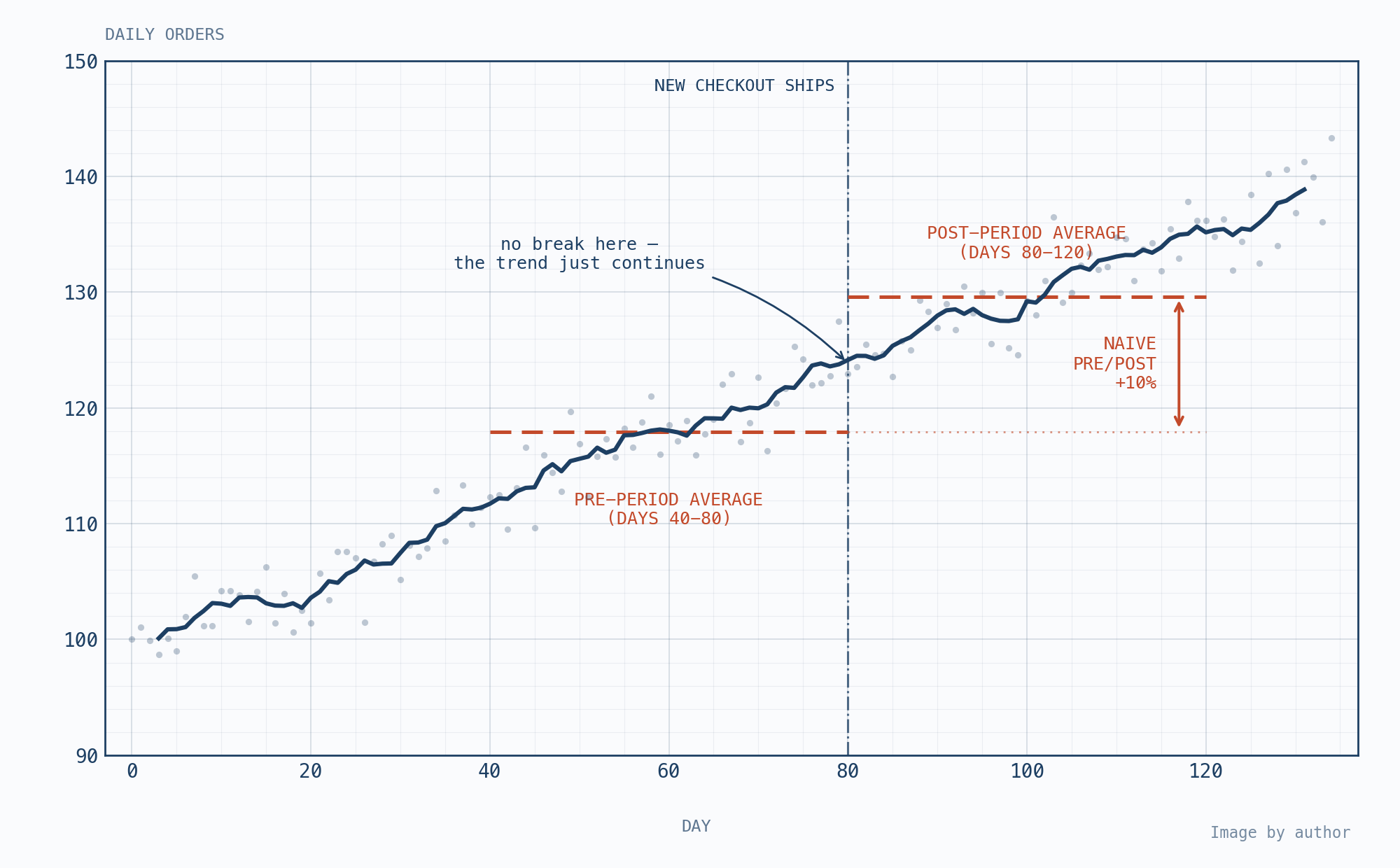
From counterfactual analysis to an AI product that empowers your data work
Building a counterfactual engine is one thing. Turning it into a multi-agent product is another. This walkthrough shows exactly what it takes to move interrupted time series analysis from a manual research task into an AI-driven workflow. It's a practical, honest look at the engineering and design choices that matter. If you're curious how structured reasoning gets automated, this is worth your time. For a deeper dive into the underlying mechanics, our guide to distributed algorithms pairs well with the concepts explored here.
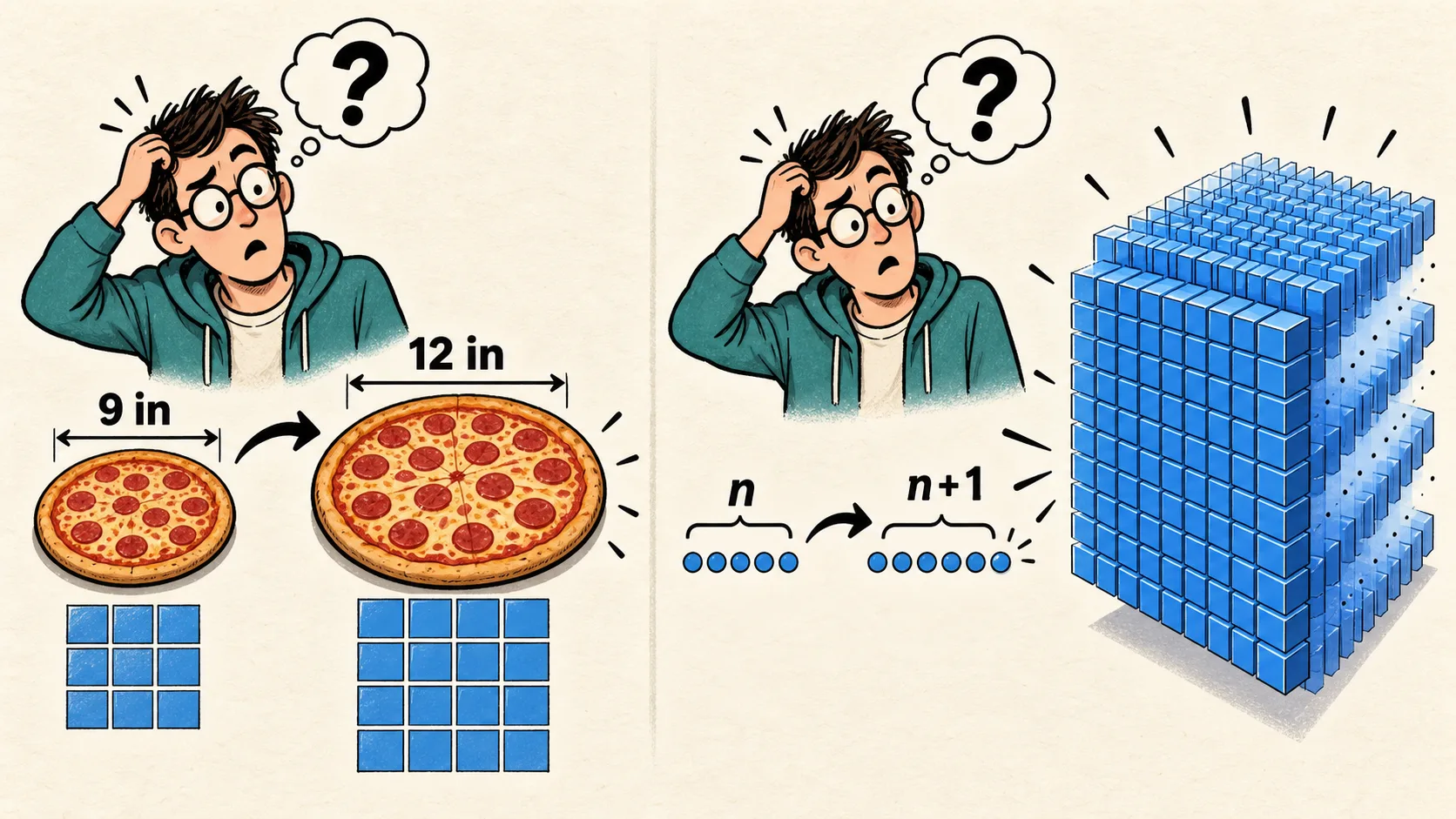
AI Memory: Lessons Learned from a Large, Uneaten Pizza
A large pizza ordered and left uneaten is more than a waste of good food. It is a perfect metaphor for how machine learning models handle memory. The post, "The N Squared Pizza Problem," draws a sharp parallel between that oversized order and the inefficiencies lurking in AI memory management. We appreciate the clever framing because it makes a complex topic feel immediate and relatable.

Discover how AI helps you pose naturally in any photo.
Posing for a photo shouldn't feel like a guessing game, yet most of us default to the same two awkward angles. Former TikTok executives clearly noticed. Their new app, Superpose, uses AI to analyze your selfies and suggest four distinct poses, turning uncertainty into a simple, actionable next step. It's a practical use of computer vision that meets users where they already are. This feels like a natural evolution of the technology we've explored in our piece on real-world deployments.
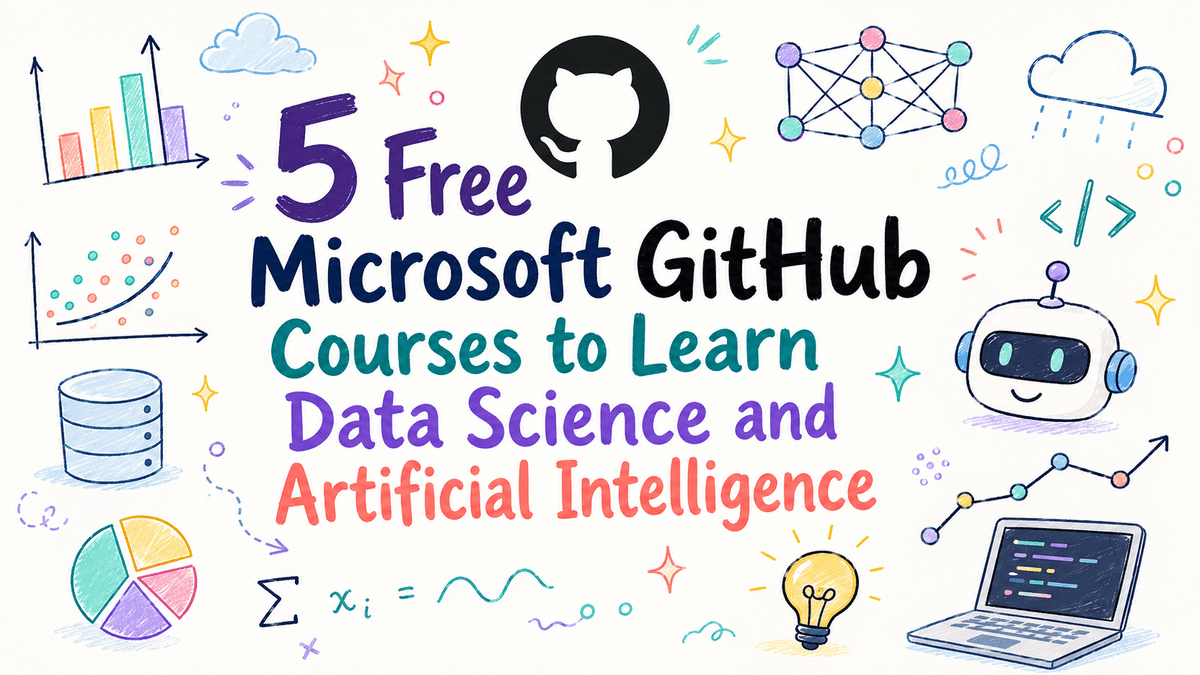
Discover five free GitHub courses to build practical AI skills
Microsoft's GitHub is quietly becoming one of the best free launchpads for data science and AI skills. These five courses cut through the noise, covering everything from machine learning fundamentals to generative AI, LLMs, RAG, and fine-tuning. What stands out is how practical the path feels, you are not just reading about concepts, you are building toward AI agents. If you are ready to move beyond theory, this is a solid starting point.
Explore how a PhD in Graph ML shapes your path to research leadership
Choosing between CS and EE for a PhD is a strategic decision, not just an academic one. The job market you are entering rewards clarity, and both paths offer distinct signals. CS screams broad applicability to ATS filters, while EE signals a deeper, signal-processing rigor that big tech research divisions often respect. Your graph ML work sits firmly in the overlap, so the degree will not limit your research. The real tradeoff is perception. If you want maximum optionality, CS is safer.

When AI learns from math, the human mind behind it seeks recognition.
Twenty-five leading mathematicians just signed an open letter that puts OpenAI's escalating feud with their field into stark relief. Their point is direct: AI labs are now threatening the very intellectual work that fuels discovery. That tension deserves attention, not just as a clash of titans, but as a signal of what progress costs. If you're tracking how AI pressures skilled professionals, our guide to verifying AI's understanding offers a practical parallel. This isn't abstract hand-wringing. It's about who shapes the tools we trust.

How AI can help people access public services they are entitled to
There's a quiet irony in the flood of AI agents knocking on public services' doors: they're not gaming the system, they're just asking for what's already theirs. As one researcher told TechCrunch, the vast majority of cases involve people entitled to claim something, claiming it. That's not abuse; that's access finally catching up with intent. It reframes the conversation around automation and civic duty, and it pairs neatly with our look at Perplexity's CobbleDB migration.

Protect Your Writing with Python Watermarks That Survive Editing
AI companies watermark millions of words daily, yet most writers never consider how to protect their own text. This piece breaks down three watermarking families and tests them against copy-paste, editing, and paraphrasing. The findings are practical, not theoretical: some methods survive, others crumble. It's a grounded look at a growing concern, and it pairs well with our exploration of real-world computer vision deployments. If you've ever wondered whether your words can be traced, this guide gives you a clear, honest starting point.

Transfer learning for physics with simplified dynamical models
Training an RL agent on one complex physical system rarely transfers cleanly to another. That is the bottleneck this approach tackles directly, using reduced order models to compress the dynamics into something the agent can actually reuse. It is a smart, practical step toward generalizable simulation control. If you are already wrestling with how to scale your own models, our guide to distributed training algorithms pairs well with this mindset. The takeaway: smarter abstractions, not brute force, are the way forward.

Explore How Graph Neural Networks Unlock Smarter Data Connections
Graph neural networks can feel like a black box, but they don't have to. This visual guide breaks down GCN, MPNN, and GAT by showing exactly how they pass messages and weigh connections. It's a clear, practical look at the mechanics, and it's perfect for anyone ready to move beyond spreadsheet mental models. For a broader perspective on how AI structures complex information, you might also explore our related guide on paragraph structure in LLMs.