algorithms
Beyond Market Intelligence keeps algorithms in one place: 82 stories so far. The section currently leads with “What Hidden Gaps in Your Data Reveal About Your Assumptions”, “Explore the AI skills that will empower data scientists through 2027”, and “Learn from Common Python Errors to Write Cleaner Code”. We often treat missing values as a glitch, a blank cell to be filled or dropped. If you're a data scientist, the tools you use are changing faster than the workflows you've mastered. Acme AI is the next-generation, AI-powered spreadsheet platform built to replace Excel and redefine how analysts, data scientists, and enterprise teams work… The list below is every algorithms story on Beyond Market Intelligence, newest first.

What Hidden Gaps in Your Data Reveal About Your Assumptions
We often treat missing values as a glitch, a blank cell to be filled or dropped. But that silence carries its own message, hiding assumptions we rarely question. This piece on Towards Data Science digs into what we overlook when data goes unrecorded, challenging us to see absence as part of the story. It is a thoughtful, grounded read for anyone who has ever trusted a dataset too quickly.

Explore the AI skills that will empower data scientists through 2027
If you're a data scientist, the tools you use are changing faster than the workflows you've mastered. That's why we're focusing on five AI skills that will keep you relevant in 2027. Each one targets a specific challenge, from simplifying complex tasks to boosting productivity. We've included runnable code you can paste straight into your notebook, so you're not just learning, you're doing. For a deeper look at how distributed systems fit into this, check out our guide on unlocking LLM training.
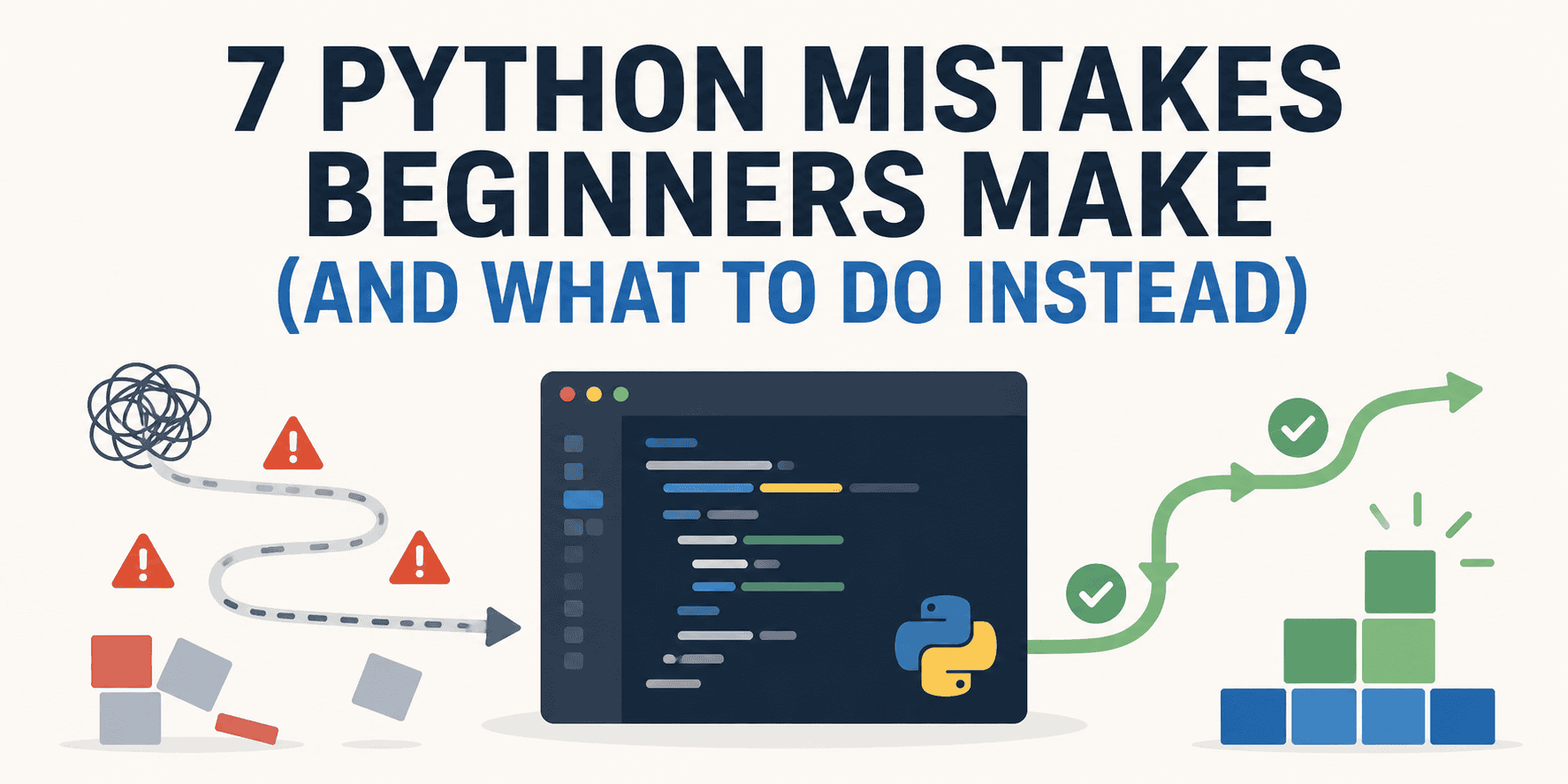
Learn from Common Python Errors to Write Cleaner Code
Your code runs, but it's wrong. That's the frustrating part of Python. The syntax is fine, the program executes, yet the output drifts from what you intended. These seven mistakes aren't typos or crashes; they're silent logic traps hiding in plain sight. We break down each hidden cause and give you the first concrete thing to check, so you can stop guessing and start correcting. For a deeper dive into smarter coding habits, our piece on unlocking Python's potential pairs well with this guide.
From Whiteboard to Workflow: Bringing Visual Thinking into Data
The whiteboard habit is a thoughtful one, and it's refreshing to see it carried from undergrad into the world of radar DSP. Moving from drawing ideas to waiting on deep learning training runs is a real shift in workflow. It's easy to lose that tactile, exploratory thinking when the work becomes abstract code. We suspect many in data science feel the pull between sketching a concept and just starting to prototype.

From Zero to Automation: Free AI Courses That Empower Your Skills
Starting from zero in AI automation is no longer a barrier. We have curated seven free courses that respect your current skill level, whether you are just opening a spreadsheet for the first time or ready to build complex workflows. The selection spans from gentle introductions to hands-on projects, ensuring a practical path forward. It is a straightforward way to move from consuming content to creating solutions.

Focus human attention where it drives real data outcomes
Reviewing every AI action is a luxury most teams can't afford. In this piece, the author tackles a familiar bottleneck: how to keep humans in the loop without turning oversight into a full-time job. The answer isn't more checkpoints, it's routing attention to the moments that genuinely need it. We appreciate this practical take on balancing control with momentum. It pairs well with our guide on distributed training, where similar trade-offs between efficiency and oversight come into play.

Meet Microduck, an open-source robot you can train to do new tricks.
Hugging Face's Microduck isn't just a cute robot; it's a $399 invitation to rethink how we interact with open-source AI. CEO Clem Delangue frames it as a duck you can teach new tricks through reinforcement learning, which feels both playful and genuinely forward-thinking. We like that it lowers the barrier to hands-on experimentation. For anyone curious about where such practical, edge-driven AI fits into broader computer vision work, our piece on real-world deployments offers a useful companion.
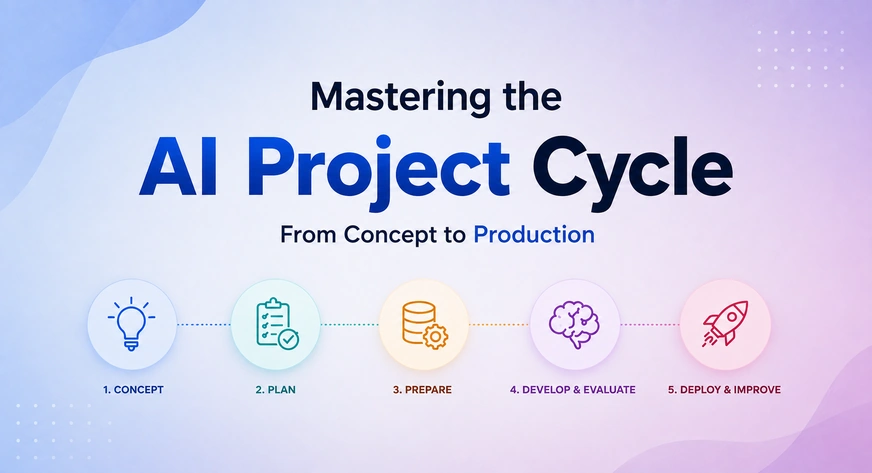
From Problem to Production: Navigating the AI Project Lifecycle
Picking a model and feeding it data is only the beginning. Real AI projects demand a structured path, one that starts with the right problem and carries through to deployment, monitoring, and refinement. That journey is the AI Project Cycle, and this piece breaks it down clearly. We appreciate how it frames the process as an accessible roadmap rather than a maze. If you are ready to go deeper, our guide to distributed algorithms offers a practical next step for those scaling their efforts.

Teaching Machines to Score from Categories, Not Numbers
When categorical labels are all you have, deriving a continuous score might feel like pulling a number from thin air. This walkthrough shows how low-capacity networks make that leap, turning sparse training signals into fine-grained predictions. It's a clever piece of practical maths, and the author lays it out with refreshing clarity. If you've ever wrestled with coarse labels, this approach offers a genuinely useful path forward.

Fine-Tune Large Language Models for Real-World Results
Fine-tuning an LLM often feels like stepping into a black box, but this guide opens it up. It walks you through the entire process, from preparing data to deployment, with a clear focus on practical, real-world application. We appreciate how it cuts through the complexity, giving you a path to follow rather than abstract theory. If you are curious about the broader challenges of training these models, our related piece on distributed algorithms is a useful next step.
Empower your classroom with smarter, automated student activity grouping.
A teacher's request to automate student group assignments for a theme-week is exactly the kind of practical challenge that deserves a smart, accessible solution. You've already done the hard part by cleaning the data; the next step is letting Excel's logic handle the heavy lifting. With priorities and activity constraints in play, a simple formula won't cut it, but a structured approach using built-in tools can. If you're curious how similar optimization problems scale, our piece on the Forrester function offers a useful parallel.
Discover the five software types you can build with AI-native spreadsheets.
If you've ever stared at a blank spreadsheet and felt the limits of what it can do, you're not alone. I mapped out the five kinds of software you can actually build, and the range is wider than most of us assume. This isn't about forcing a tool to fit; it's about seeing the possibilities clearly. For a deeper look at how AI reshapes our assumptions, our piece on talking to an AI clone offers a fitting companion.

When Value Falters, Public Skepticism of AI Takes Hold
People accept tradeoffs when the value is clear. But when they don't see that value, resistance builds, and that's exactly where public opinion turns. This piece digs into why anti-AI sentiment persists, and it's a conversation worth having on your own terms. If you're curious how even early adopters wrestle with similar doubts, our related piece, *Talking to My AI Clone Taught Me to Question the Tech*, offers a personal look at that tension.

Explore how LLMs can streamline your software project workflows
Project management often feels like juggling timelines, tasks, and shifting priorities. With AI, that balancing act becomes less about guesswork and more about precision. This guide shows software engineers how to leverage LLMs to streamline workflows, cut through administrative noise, and focus on what truly moves projects forward. It's a practical, no-fluff look at turning AI into a reliable project partner. For those questioning how deeply to trust such tools, our piece on talking to an AI clone offers a thoughtful counterpoint worth exploring.
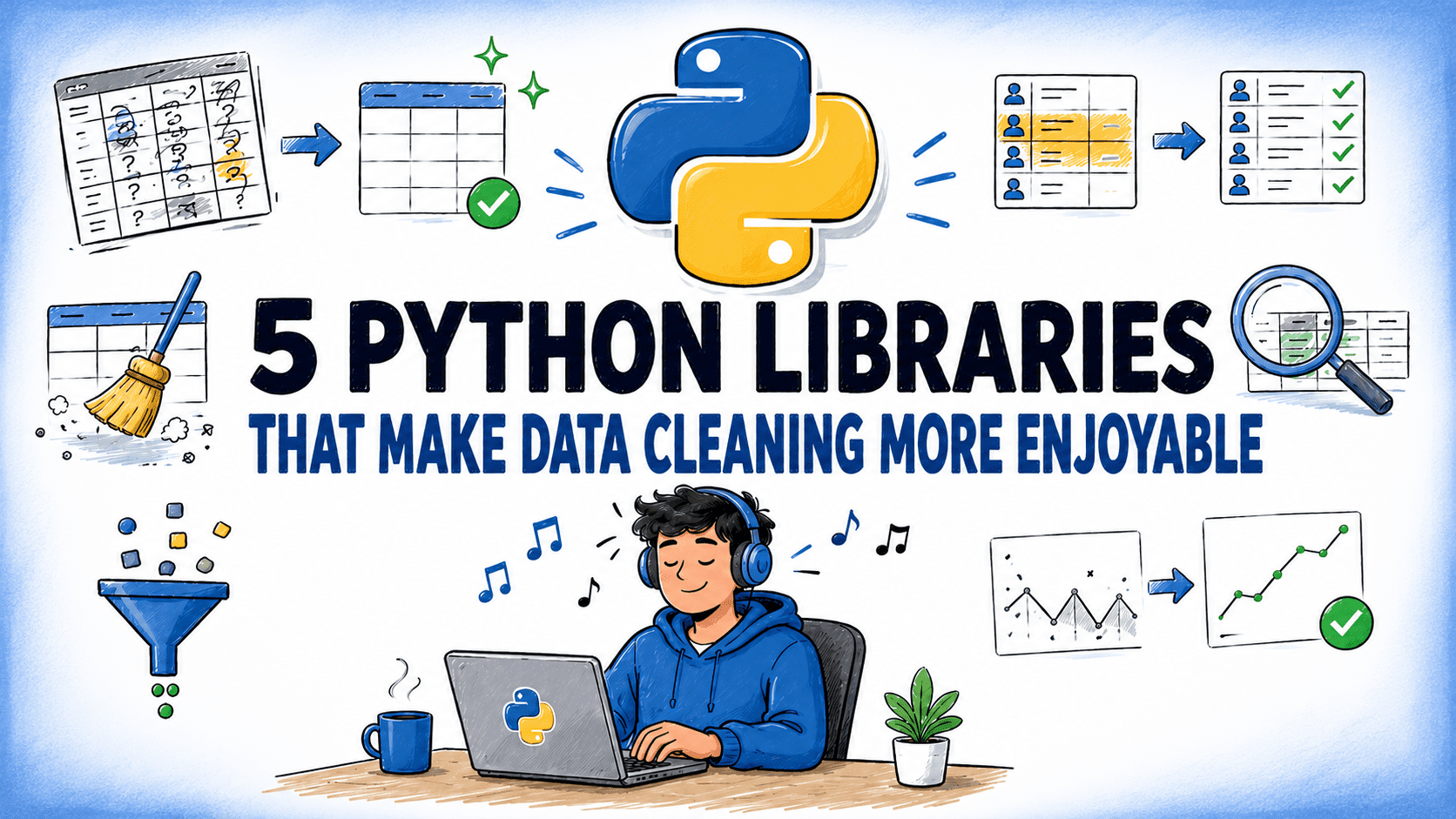
Explore Python Tools That Make Data Cleaning Feel Expressive
Cleaning data is often the least loved part of the job, but it doesn't have to be a grind. This guide highlights five Python libraries that turn tedious tidying into something expressive and even enjoyable. Each tool is chosen for its ability to simplify complex tasks while keeping you in control. If you're ready to make your workflow feel less like a chore and more like a craft, these libraries are worth exploring.

Let AI choose the right tool so you can focus on results.
Choosing an AI shouldn't feel like a research project. If you're stuck weighing options, stop overthinking and start with one clear action: define the single task you want to simplify, then test that first. The right tool reveals itself through use, not speculation. We've explored similar themes before, like in "Talking to My AI Clone Taught Me to Question the Tech," which shows why hands-on experience beats abstract debate. So pick a starting point, try it, and let the results guide your next move.

How AI Transformed a Data Scientist's Daily Workflow
The morning no longer starts with a chaotic scramble through CSV files. By 2026, the data scientist's workflow has shifted from manual cleanup to strategic oversight, where AI handles the repetitive grind. It's a transformation that feels less like automation and more like partnership. We still ask the hard questions, but now we have a thinking partner that accelerates discovery.

When AI Learns to Play Against You, Not With You
What happens when an AI doesn't just help you build, but actively tries to break in? That's the premise of this experiment, where an LLM laid siege to a Minecraft house. It's a playful yet pointed look at live adversarial level design, and the emphasis is firmly on the adversarial. We often explore how AI assists creativity, but this flips the script to test its limits. For those curious about AI's darker problem-solving edges, this is a compelling, hands-on read.
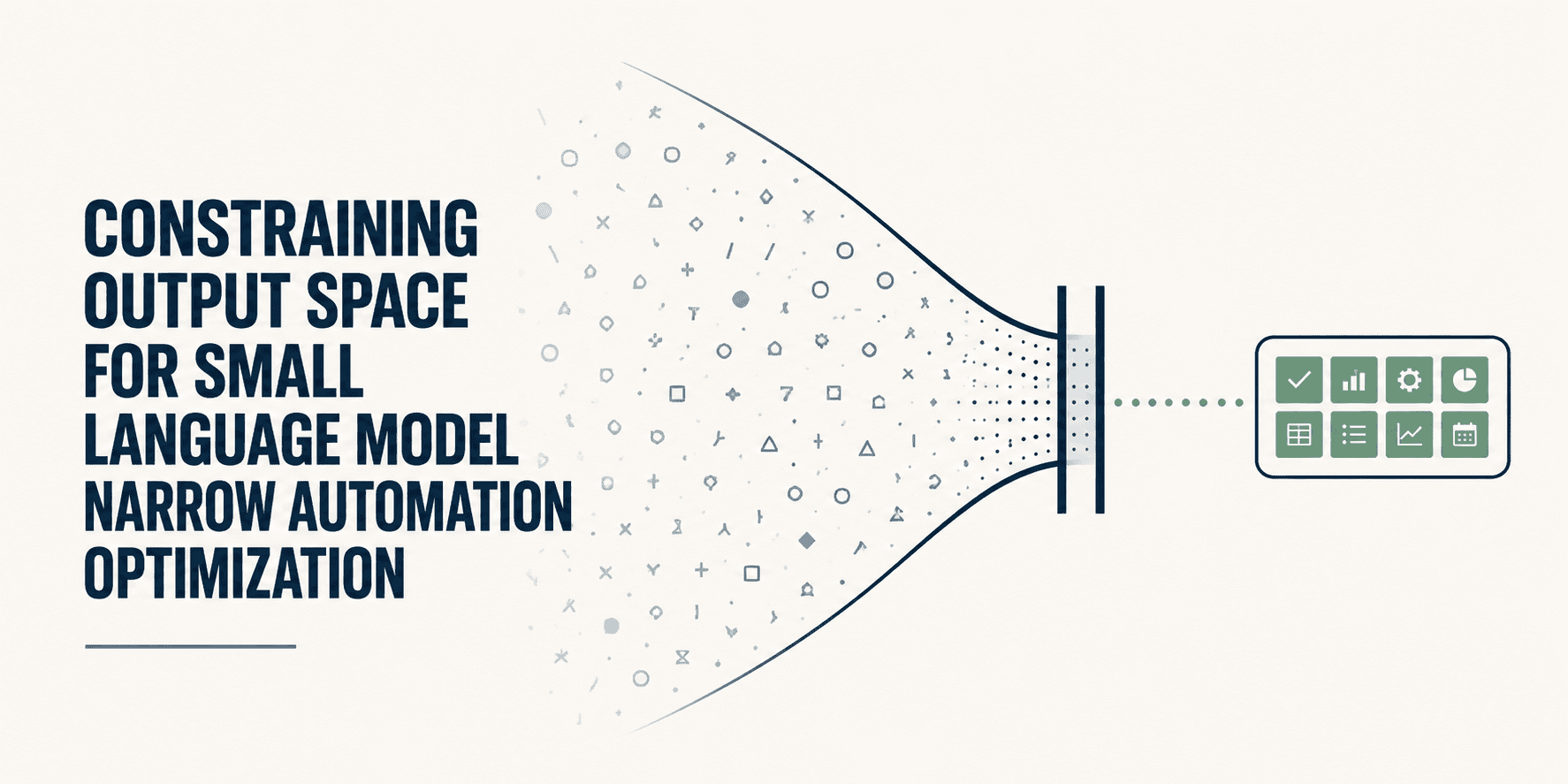
Tame Small Language Models by Constraining Their Output Space
Parsing generated text is a losing game. Every format variation you forget to handle becomes another silent failure. This first entry in our narrow automation optimization series tackles the real solution: constraining the output space from the start. It's a practical technique that saves time and spares you the headache of brittle regex. For a broader take on connecting systems, our piece on bridging retrieval and action offers a useful companion. This approach is simpler than it sounds, and it works.

Where AI learns the physics of teamwork and competition.
The Agentic World Cup asks a sharp question: what happens when LLMs stop crunching numbers and start playing soccer? The team behind it sees sports as the proving ground for embodied intelligence, a space where agents must react, adapt, and outmaneuver in real time. It's a clever reframing of the "embodiment gap," and the format is refreshingly direct: pick a model, coach it through prompts, and let it compete.
Why causal inference was missing from NeurIPS workshops this year
Seventy-three workshops at NeurIPS, and causality doesn't get a single slot. That stings, especially for those of us who've watched the field push real boundaries at UAI and CLeaR. It's not that those venues lack merit; they're excellent. But the energy at the top conferences has clearly pivoted toward LLMs and agents, leaving causal inference on the periphery. We're not saying the work vanished, just that its visibility is shrinking. For researchers who value rigorous, human-centered data science, this feels like a quiet loss.
CIKM results are here: discover what this year's acceptances reveal.
CIKM '26 notifications are out, and the results are worth celebrating. One researcher from our community shared a strong showing: three of six full papers and one of three short papers accepted. That is a solid hit rate by any measure. It also speaks to the growing momentum behind AI-driven research that pushes beyond traditional boundaries. For anyone navigating the increasingly complex world of AI and ML expectations, these wins feel especially earned.

Explore how VAEs generate new data through math and practical insight
Variational autoencoders ask a deceptively simple question: how do you generate something new from a learned distribution of what already exists? This walkthrough takes the math-first route, tracing the path from theory to the evidence lower bound and the reparameterization trick that makes training possible. It is a precise, grounded explanation for anyone ready to move past surface-level intuition. If distributed training feels like the next step in your LLM journey, our guide on distributed algorithms pairs well with this foundation.

When democracy meets data, history offers a better guide than hype.
Jill Lepore has a warning for Silicon Valley: stop treating science fiction like a user manual. On the latest episode of Equity, she argues that misreading the genre, especially the kind of "government by machines" thinking that figures like Elon Musk champion, undermines democracy itself. It's a sharp critique, and one worth sitting with. If you're tired of tech's self-serving narratives, this conversation offers a grounded counterweight.