architecture
architecture at Beyond Market Intelligence is a file of 110 stories. The newest of them: “When a scientific calculator becomes a platform for AI discovery”, “Design Your Spreadsheet to Evolve with Changing Conditions”, and “Single runtime outperforms multi-system stacks for live data workloads”. A 67% accuracy on handwritten digits sounds unimpressive, until you remember the entire model fits in your head. Architecture is not a fixed choice made once; fitness is a moving target shaped by shifting regulations, technology, and markets. Acme AI is the next-generation, AI-powered spreadsheet platform built to replace Excel and redefine how analysts, data scientists, and enterprise teams work… The list below is every architecture story on Beyond Market Intelligence, newest first.
When a scientific calculator becomes a platform for AI discovery
A 67% accuracy on handwritten digits sounds unimpressive, until you remember the entire model fits in your head. This builder trained a binary classifier on the Casio FX-82CE X, hand-punching weights from just six images. The architecture is brutally simple: a 3x3 grid feeding one neuron. That it works at all is a quiet win for minimalism. The real lesson? Even a clunky, manual process reveals how much signal lives in raw data.

Design Your Spreadsheet to Evolve with Changing Conditions
Architecture is not a fixed choice made once; fitness is a moving target shaped by shifting regulations, technology, and markets. Even a sound design can silently stop fitting over time without any bad calls. This collection of seven articles treats architecture as an evolving sociotechnical craft, where teams deliberately shape friction and flow. It's a practical, human-centered lens on complexity. For more on how infrastructure decisions ripple outward, explore our piece on Perplexity's migration to CobbleDB.
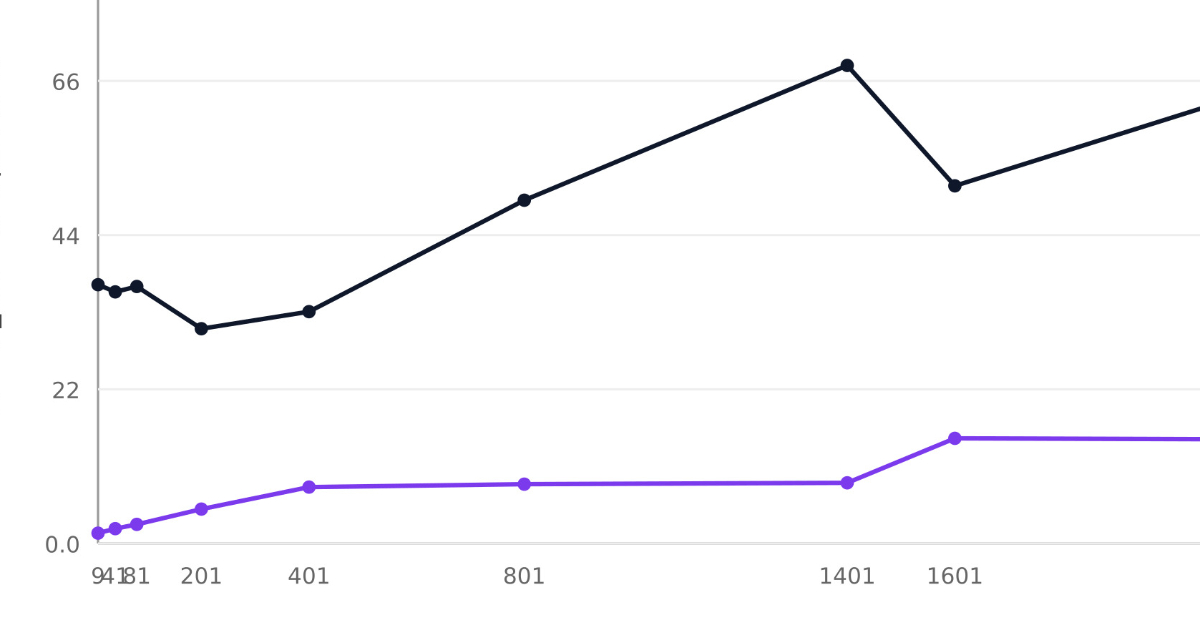
Single runtime outperforms multi-system stacks for live data workloads
Harper is pushing back on the multi-system stack, and the argument is hard to ignore. By keeping application code and data together in a single runtime, the database platform reports notably better performance on live, personalized workloads compared to a Vercel-based setup. Version 5.2 adds a record cache and greater throughput per node. That is a practical step toward less complexity. For readers tracking how modern architectures evolve, our related piece on Cloudflare's CMS migration offers another angle worth exploring.

Next.js 16.3 makes development faster with smarter memory and instant navigation
Next.js 16.3 cuts development memory usage by up to 90% and speeds up builds, which is exactly the kind of relief developers have been waiting for. Vercel's Instant Navigations deliver client-like speed without sacrificing the server-rendered architecture that keeps things solid. That balance matters. We appreciate the honest note about gradual adoption, since new power always comes with caveats. For teams juggling AI workflows, pairing this with our look at scaling AWS deployments through the Stateless Model Context Protocol could round out your optimization playbook.
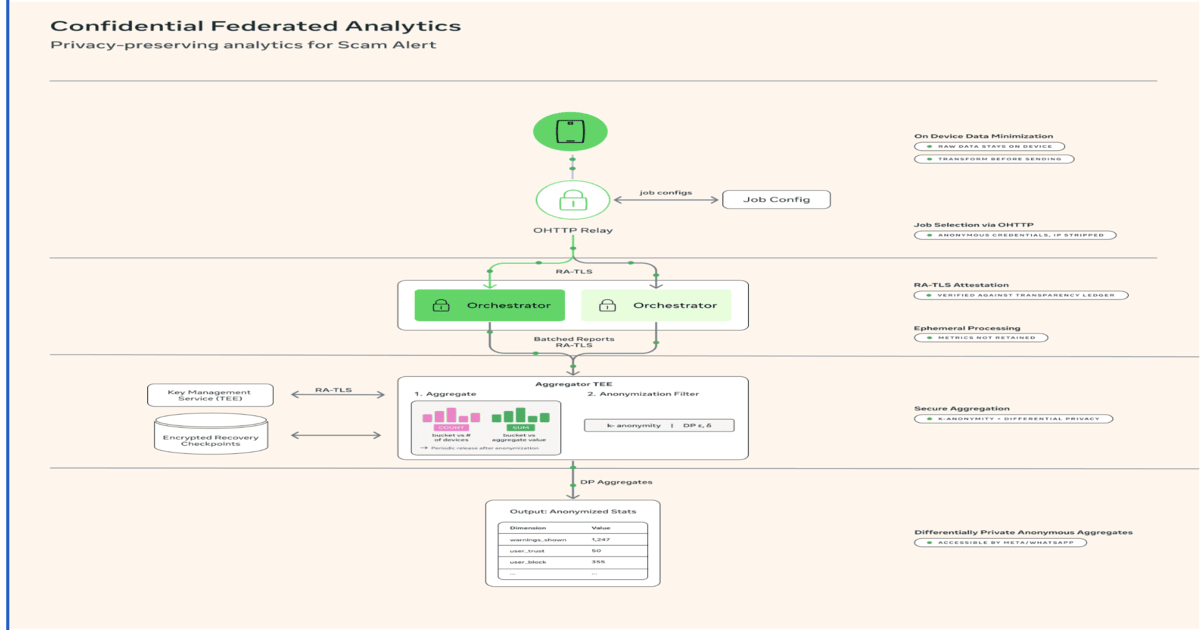
WhatsApp brings scam detection to your device, keeping your messages private
WhatsApp is putting scam detection where your messages already live: on your device. The platform's limited beta of Scam Alert uses on-device machine learning to flag suspicious messages from non-contacts, keeping conversation content local while Meta leans on confidential computing and differential privacy to measure performance without exposing data. That's a thoughtful balance between safety and privacy, and it's worth watching. For a deeper look at how such distributed systems handle the heavy lifting, our guide to distributed training algorithms pairs well with this update.

Scaling from 500 to 8,000 Events Per Second Without Sacrificing Accuracy
When an integration pipeline grows from 500 to 8,000 events per second, the temptation is to let correctness slide. This production account shows how one team scaled without sacrificing the two guarantees that matter most. It's a practical, grounded look at trade-offs, written for anyone who has felt the pressure of rapid growth. If you're curious about how performance and precision can coexist, this is the read for you. For a related take on turning complex systems into approachable tools, explore the Forrester Function piece.
Discover the five software types you can build with AI-native spreadsheets.
If you've ever stared at a blank spreadsheet and felt the limits of what it can do, you're not alone. I mapped out the five kinds of software you can actually build, and the range is wider than most of us assume. This isn't about forcing a tool to fit; it's about seeing the possibilities clearly. For a deeper look at how AI reshapes our assumptions, our piece on talking to an AI clone offers a fitting companion.

From Fab to Token: Navigating AI's Infrastructure Bottlenecks
The gap between chip fabrication and the models that actually process data is where the real pressure builds. Jordan Nanos unpacks this friction in his presentation, connecting semiconductor constraints and data center buildout to the tokenomics that shape AI software today. What stands out is the focus on real-world GPU scaling and benchmark performance, grounding the conversation in practical reality. It is a useful perspective for anyone navigating this market, and it pairs well with our guide on distributed training algorithms.

Warp Factories makes AI development infrastructure accessible and actionable.
Building AI software shouldn't require a dedicated infrastructure team. On Tuesday, Warp introduced Warp Factories, a new system designed to make creating AI development environments as straightforward as possible. It's an out-of-the-box approach that removes the heavy lifting, letting teams focus on the work itself. We're impressed by the focus on accessibility here. For a deeper look at how these systems perform in the wild, our piece on real-world computer vision deployments is a solid companion read. Explore what this means for your workflow.

Agentic traffic demands a smarter approach to autoscaling.
Autoscaling used to follow a predictable arc: manual rules, then reactive thresholds, then predictive models. Each generation assumed traffic patterns that resemble human behavior. Autonomous agents broke that assumption. They spawn bursts of activity that don't map to any prior curve, so two decades of capacity planning logic stops holding up. We need a new mental model, one that treats agentic bursts as first-class citizens rather than anomalies. It's a sharp, practical read.

Agentic fitness functions bring nuanced judgment to evolutionary architecture.
Deterministic rules can guard hard metrics, but they go silent when architectural intent is on the line. That's where Hemant Kumar Mahato, Łukasz Sieczkowski, and Vijayasenthilkumar Kuppusamy turn our attention. Their piece on agentic fitness functions pairs AI agents with versioned rubrics to assess judgment-heavy concerns like boundary fidelity and stale ADR assumptions. It's a practical, forward-looking approach to governance. For readers still weighing AI's judgment, our earlier piece, "Talking to My AI Clone Taught Me to Question the Tech," offers a fitting counterpoint.
Explore PostgreSQL Internals Through an Interactive 3D City Simulation
PostgreSQL's internals don't have to stay locked behind documentation. PGSimCity, an open-source project by Nikolay Samokhvalov, turns them into a 3D spatial simulation you can explore right in your browser. It's a practical way for backend developers and site reliability engineers to grasp SQL behavior and kernel execution dynamics through interactive play. The project is live on GitHub, inviting hands-on learning. For those already thinking about distributed systems, our guide to distributed training algorithms pairs naturally with this visual approach.
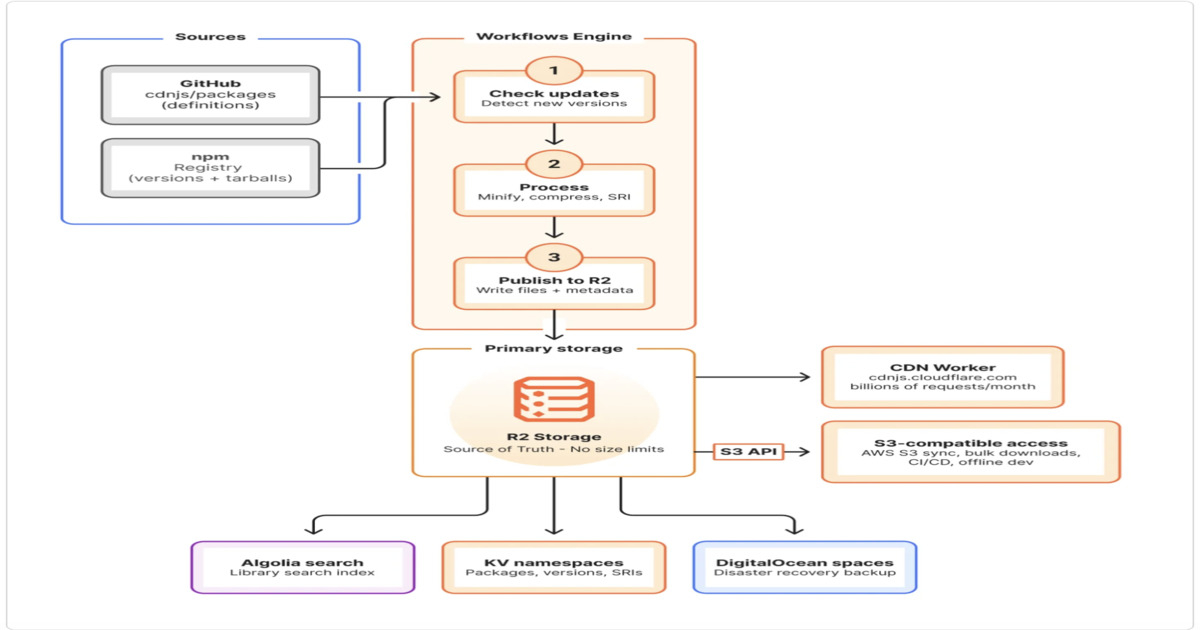
Cloudflare moves 9 billion daily CDN requests to its developer platform
Cloudflare has moved cdnjs, its open source CDN for JavaScript and CSS libraries, onto its Developer Platform, and the scale is striking: 9 billion requests a day now run on Workers, R2, KV, Workflows, Queues, Durable Objects, and Containers. That's not just a hosting swap; it's a consolidation of publishing and delivery into one architecture, all while keeping URLs and SRI hashes intact. For teams wrestling with legacy tools, this shows what's possible when infrastructure steps forward. Curious about similar migration thinking?
Smarter Prompts, Not Bigger Ones: Engineering Context That Works
Big context windows feel like the easy answer, but Baruch Sadogursky and Patrick Debois argue otherwise in their session, "The Right 300 Tokens Beat 100k Noisy Ones." They show why stuffed prompts drag coding agents down, then offer practical fixes like lazy-loaded skills and externalized memory banks. It is a grounded, useful take for engineering leaders wrestling with agentic workflows.

Three Teams, One Problem: LLMs Fill GraphQL Mock Gaps
Three teams are now solving the same problem in different ways. Expedia Group open-sourced mockql-rs, a Rust CLI that fills @mock-annotated GraphQL fields with LLM-generated data at request time. It follows Airbnb's @generateMock from April and a GraphQL Foundation RFC opened in February. The catch: two use the same directive name with incompatible semantics. That is a coordination gap worth watching. For more on how these models reason structurally, see our piece on paragraph structure in token space.

Choosing Between LangChain and LangGraph for Smarter Agentic Workflows
Choosing between LangChain and LangGraph doesn't have to stall your agentic workflow. This guide cuts through the overlap to highlight four key differences, helping you match the tool to the task. It's a practical read for anyone tired of guessing which framework fits. We appreciate the clarity here, especially since it complements our earlier exploration of distributed training algorithms. If you're building systems that need structure, start with this breakdown. It's a straightforward step toward more intentional design.
Rebuilding a Smarter Language Model from the CPU Up
After six months away, developer zemondza is rebuilding NORD, their spiking language model, with a sharper focus: CPU-first inference from the ground up. The new version, NORD 5.5 Flash, drops the artificial spike-time dimension in favor of using the actual token sequence as the time axis. That's a cleaner design choice. The goal isn't to outrun Transformers, but to see if a simplified, truly causal architecture holds its own. We're curious to see the benchmarks when they arrive.
Spotify's new index unlocks low-latency queries without copying data
Spotify's new external indexing architecture for Apache Parquet data lakes is a smart answer to a persistent problem: why copy data into a separate database just to get fast point queries? By mapping lookup keys directly to Parquet file locations, the team enables targeted reads from cloud storage without duplicating datasets. It's a practical move that keeps analytics, machine learning, and online services on the same source of truth.

Governing Context Layers Doubles the Catch of Bad AI Answers
Enterprises that govern their AI data are catching twice as many bad answers as those that don't, not because they have worse context, but because they can see it failing. Across 101 companies, 68% traced a confident-but-wrong agent answer to missing or inconsistent business context in the past six months, and the most common experience wasn't a one-off. It was recurrence. The governed semantic layer built to fix this is revealing the problem before it solves it. That's not a setback.

MCP Drops the Handshake to Let Agents Route Without JSON Parsing
The MCP 2026-07-28 spec drops the initialize handshake and session header, adding required method and tool-name headers so gateways route traffic without parsing JSON. Some developers call it a rediscovery of REST, while others argue the standard was always the point. Both sides have merit, though the shift feels less like a regression and more like a practical concession. For a deeper look at how statelessness changes deployment, our piece on scaling AWS server deployments with stateless MCP is worth a read.

Teaching AI Agents to Understand Your Data's Meaning and Trustworthiness
Granting an AI agent access to your data warehouse is only the first step; it doesn't make the agent truly ready. The real work lies in teaching it what the data means and when it's reliable enough to act on. This piece tackles that gap head-on. If you're curious about how agents learn and adapt, our related article on agentic context learning offers a useful counterpoint. For now, explore how traditional architectures miss the mark, and consider what your data needs to empower smarter decisions.

Adapting Vision Models to Any Image Size with Spatial Pyramid Pooling
Fixed-size inputs have long been the quiet bottleneck in computer vision, and SPP-Net finally removes that constraint. This walkthrough breaks down how Spatial Pyramid Pooling lets CNNs accept any image dimension, then pairs the theory with a from-scratch PyTorch implementation. It's a practical, grounded look at a genuine shift in flexibility. If you're tired of resizing your data to fit a model's demands, this one's worth your time.

From 60 years of databases to 18 months of agents, memory bridges the gap.
Six decades of database engineering. Eighteen months of modern AI agents. That ratio explains everything about the state of agentic development right now, we're not mid-curve, we're at its base. Token-maxxing already taught us the hard lesson: context is scarce, and stuffing it isn't strategy. The real answer is persistent, queryable memory, semantic, access-controlled, human-curated, that makes each expensive answer cheap next time. That's the architecture emerging.

Exploring the design logic behind the Transformer architecture
Most explainers hand you the finished Transformer and move on. We wanted to know why it looks the way it does. This piece steps back from Q, K, and V to ask the question that actually matters: what problem was the architecture solving in the first place? It is a thoughtful, grounded reconstruction that rewards curiosity. If you are ready to go deeper, our guide to distributed algorithms pairs well with this foundational view.