architecture
architecture at Beyond Market Intelligence is a file of 110 stories. The newest of them: “Blending RAG and fine-tuning for smarter, human-centered AI support”, “How JioHotstar Coordinates Distributed Systems for Real-Time Ad Selection”, and “Explore how internal platforms reduce cognitive load for microservices teams.”. Fine-tuning and retrieval aren't rivals. When a video streams, the ad request behind it is a distributed engineering feat. Acme AI is the next-generation, AI-powered spreadsheet platform built to replace Excel and redefine how analysts, data scientists, and enterprise teams work… The list below is every architecture story on Beyond Market Intelligence, newest first.
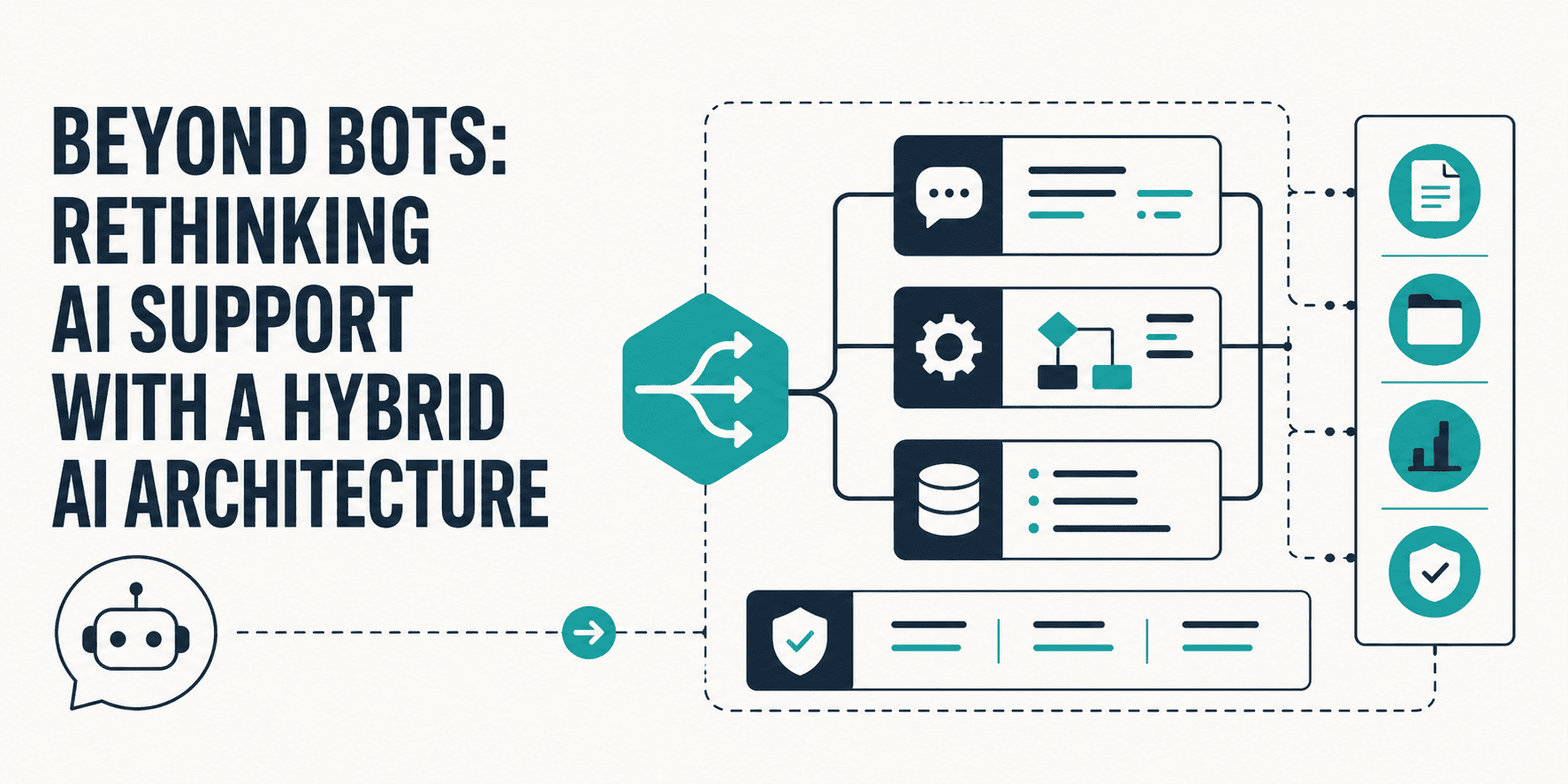
Blending RAG and fine-tuning for smarter, human-centered AI support
Fine-tuning and retrieval aren't rivals. They're partners. This piece breaks down why a hybrid AI architecture, one that blends RAG's precision with fine-tuning's adaptability, creates support experiences that actually feel helpful. It's a practical look at moving beyond rigid bot scripts toward something more responsive. If you're exploring how AI can better serve real users, this is a solid starting point. For a broader view on AI's trajectory, you might also check out "Explore the Future: When AI Designs Its Own Hardware."
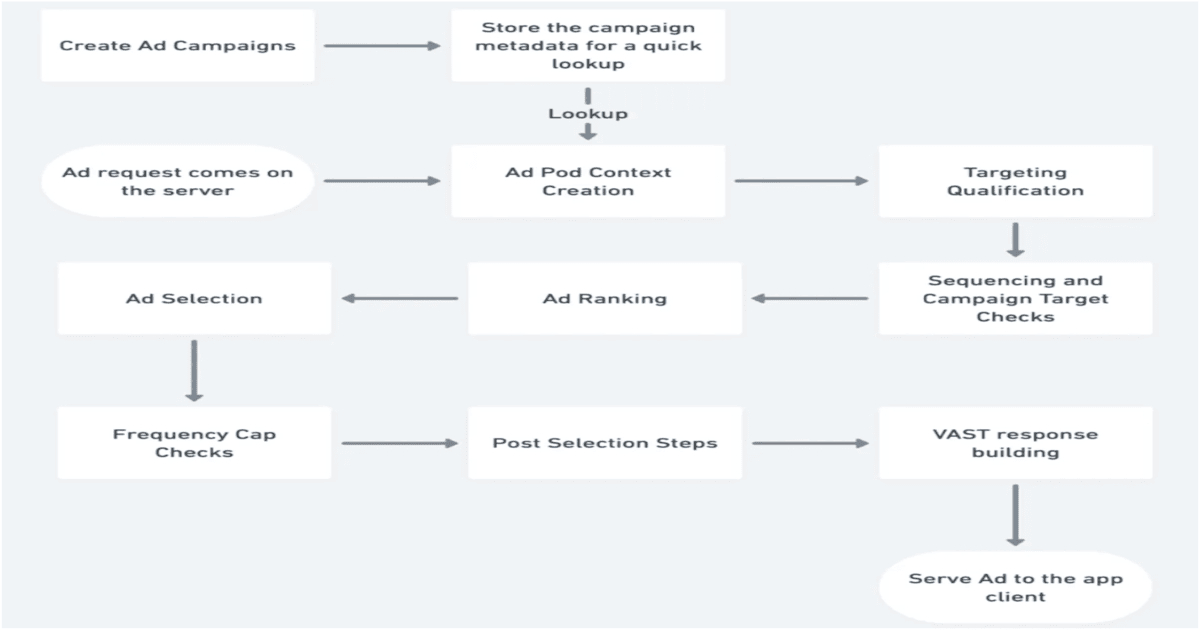
How JioHotstar Coordinates Distributed Systems for Real-Time Ad Selection
When a video streams, the ad request behind it is a distributed engineering feat. JioHotstar's Leela Kumili breaks down the real-time workflow, from ad decisioning and waterfall tiering to pacing algorithms and latency optimization. It's a clear look at how service coordination selects personalized ads without stalling playback. For more on how modern systems handle scale, our piece on the Stateless Model Context Protocol offers a useful counterpoint. This is practical, forward-looking engineering worth your attention.

Explore how internal platforms reduce cognitive load for microservices teams.
Microservices deliver real value only when teams can sustain their pace, and Chris Richardson's presentation gets straight to that challenge. He pairs Team Topologies with internal platforms to cut through complexity, focusing on six concrete patterns, from security to deployment, that keep stream-aligned teams moving. The payoff is a clear strategy for shrinking cognitive load while sidestepping the usual platform traps. It's a practical, grounded take on acceleration. For more ways to simplify technical workflows, our guide, "Unlock ChatGPT for Work," offers a useful parallel.
When peer reviews chase perfect control, they miss the real insight.
LLM-assisted peer review has a hidden cost: it can drown authors in speculative critiques. A recent discussion highlights two recurring issues. First, LLMs excel at listing uncontrolled variables, but they fail to weigh whether those variables actually threaten the paper's core conclusion. Second, their feedback often drifts into vague, field-level abstractions instead of concrete methodological comparisons. This shifts the burden onto authors to debunk endless hypotheticals. The real skill isn't generating critiques; it's filtering them.

Three Criteria for Choosing Skills Over Sub-Agents in AI Design
Choosing the right building block for AI systems often comes down to fit, not flash. In a recent Azure Architecture blog post, lead engineer Kishorekumar Pattabiraman lays out practical criteria for deciding between skills and sub-agents, with reusability and long-term maintainability leading the way. It's a grounded take that cuts through the noise, favoring simplicity over cleverness. For those weighing similar trade-offs, this is the kind of clarity that helps teams move forward.

Four strategies to scale multi-agent AI without rising token costs
Scaling a multi-agent architecture doesn't have to mean watching your token bill climb. This guide lays out four practical strategies to keep costs in check while you grow, and it's a refreshingly grounded take on a problem many teams quietly wrestle with. The focus here is on smart implementation, not hype. For more on the broader infrastructure behind such systems, our piece on distributed training algorithms offers a useful foundation. If you're ready to streamline without the sting, this is a worthwhile read.
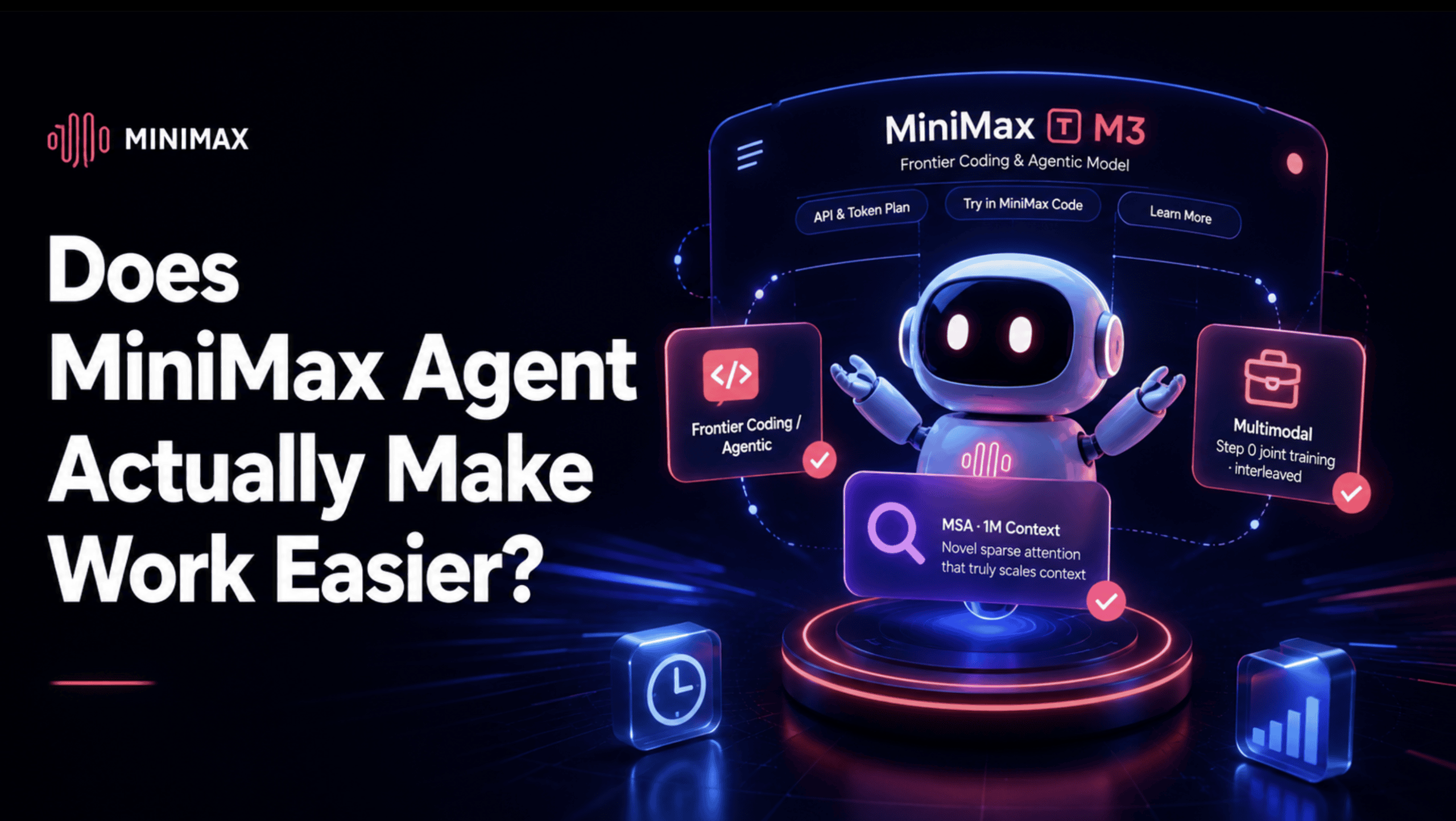
Explore how MiniMax Agent transforms complex tasks into simpler workflows
MiniMax's own architecture is the story here, not just the promises. We read how their agent handles a real task against the actual API, and the details matter. It's one thing to claim simplicity; it's another to trace the workflow and see where the friction actually disappears. This piece fills in the gaps the launch post skipped, giving you a clearer lens on whether the tool genuinely lightens the load.

WebAssembly on the JVM unlocks new potential for server-side innovation
WebAssembly is no longer just a browser story, and Andrea Peruffo is here to prove it. His discussion on the JVM traces the technology's journey from simple interpreters to the speed of JIT compilation, making server-side Wasm a practical option for real workloads. What stands out is the focus on production reality, from edge platforms to modular plugins, rather than abstract potential.

When Multi-Agent Architecture Tripled Our LLM Costs and What Fixed It
A seemingly small shift to multi-agent architecture quietly tripled the token bill, and the author felt it in the ledger before the dashboard caught up. It's a sharp reminder that progress often hides its price tag. The fix wasn't a bigger budget but a smarter orchestration of prompts. If you're exploring AI's subtle costs, you might also appreciate "Talking to My AI Clone Taught Me to Question the Tech," which tackles hidden trade-offs from a different angle.

Your AI model is not your competitive advantage
Target's AI edge isn't the model, it's the discipline wrapped around it. Siobhán Mc Feeney argues that autonomy must be earned, not granted, and Target's four-level ladder proves it. Starting with observation and advancing only through proven accuracy keeps agents accountable. That's a sharp counter to the rush to deploy. For a deeper look at how this thinking scales, our piece on bridging retrieval and action shows why connecting systems matters just as much as the intelligence driving them.

Microsoft's three-layer architecture clarifies AI agent routing on AKS
Microsoft's new reference architecture for routing agent traffic on Azure Kubernetes Service tackles a practical headache: deciding which model answers a call, how that call is managed, and which GPU replica handles it. It's a clear-eyed breakdown of a messy problem. That kind of clarity matters, especially when AI feels like a black box.
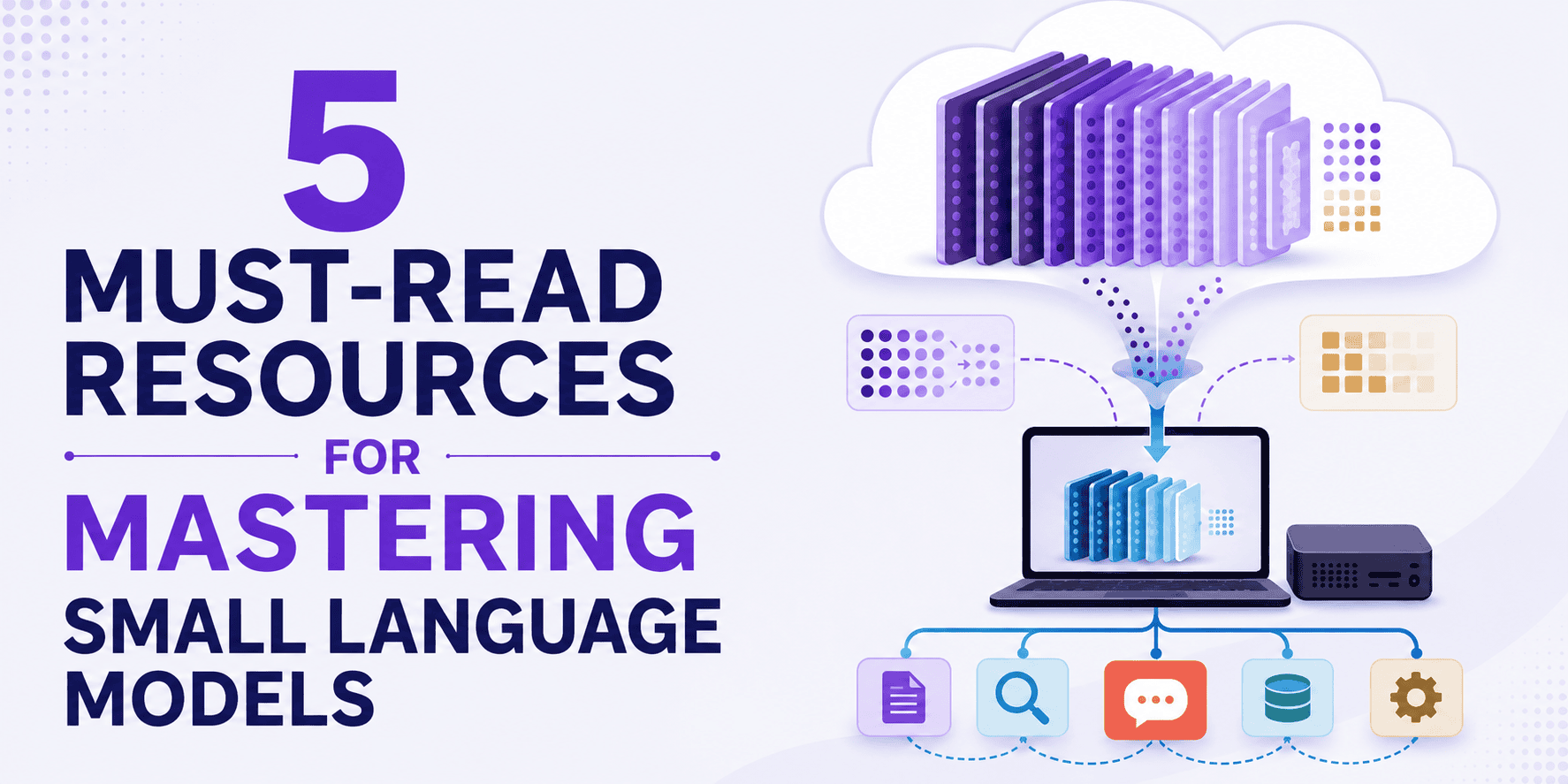
Explore practical resources to master small language models
Small language models are quietly reshaping what's possible for data professionals, and this guide cuts straight to the resources that matter. We've curated five essential reads that cover architecture, fine-tuning, agentic workflows, and local deployment, giving you a practical path forward without the fluff. If you're ready to move beyond theory, these picks will help you build real skills. For a deeper look at how AI systems truly behave, our piece on talking to an AI clone offers a thought-provoking companion.

Four security layers to protect your MCP production environment
Securing MCP in production isn't just about locking the front door. Nik Kale argues that real safety comes from enforcement at the earliest trustworthy control points, not just the gateway. His defense-in-depth approach spans four architectural layers: safe execution, management infrastructure, outbound trust, and semantic integrity. It's a practical framework for teams moving beyond pilots. If you're still mapping MCP's basics, our visual guide to MCP helps ground the concepts before you dive into production hardening.
Choose the Right Architecture for Your Multi-Tenant Data Platform
Choosing between fine-tuning and a shared RAG layer isn't about sophistication; it's about where truth lives. Your instinct on Option 1 is sound. Fine-tuning is costly and slow to update, while a curated global knowledge base gives you control over accuracy and citations. For Sri Lankan context, pair a global RAG with your user-specific stores. This scales cleanly and keeps sensitive data isolated. For deeper architectural trade-offs, our piece on "Exploring Paragraph Structure" offers useful context on how LLMs navigate token spaces.
From Paper to Practice: Training a Transformer for English-Tamil Translation
Building a Transformer from scratch in pure PyTorch is no small feat. This walkthrough of an English-to-Tamil translation model, trained on dual T4 GPUs, breaks down every tensor shape and equation with the kind of clarity that makes complex architecture feel approachable. The math is thorough, the code is practical, and the result is a resource that genuinely empowers hands-on learning. For anyone ready to move beyond theory, this is a solid next step.
From Python to weights: a compiler proves what transformers can express
Most people assume a transformer's capabilities come from training. Rob's compiler challenges that assumption directly. He built a tool that takes a computation graph written in ordinary Python and outputs the weights for a standard Phi-3 model, loadable in vanilla Hugging Face with zero training involved. It's a clever way to isolate what these architectures can express, separate from what they can learn. For a deeper look at how he constructs these proofs, the write-up is worth your time.
Mastering the Technical Interview for Live Streaming Deployments
Preparing for a live streaming deployment interview means more than rehearsing answers. You need to show how CI/CD pipelines, Kafka, and Kubernetes work together under real-time pressure. For an MLE role, focus on fault tolerance, scaling, and data consistency. Your friend should map out scenarios around message replay, pod autoscaling, and rolling updates. It's practical, not theoretical. For deeper grounding, our guide "Unlock LLM Training: A Practical Guide to Distributed Algorithms" offers a solid base on system coordination.

Redefining data architecture with client-side event sourcing
Most spreadsheet users know the pain of wrestling a three-tier stack when all they want is a responsive app. Johannes Schickling's transition from Prisma to building Overtone shows a bolder path: client-side event sourcing with SQLite. He's not just tweaking the old model; he's questioning its core assumptions. The trade-offs between event sourcing and CRDTs are sharp, and his hands-on experience makes the abstract tangible. If you're exploring how local-first design can reshape your own workflows, this conversation is a practical starting point.

How AI Gateways Keep Agentic Systems Stable Without Rewriting Your Platform
Traditional API gateways were built for deterministic services and simple schemas. Agentic AI breaks those assumptions. That's why enterprise engineering leaders are turning to AI Gateways as an evolutionary architecture seam. By centralizing guardrails, model routing, agent identity, action policy, and semantic audit into one control plane, teams prevent costly incidents without destabilizing core platforms. It's a practical, human-centered response to AI's pace of change.

Build portable serverless logic without sacrificing native cloud power
Vendor lock-in feels like a price you pay for using the cloud, but Elena van Engelen thinks you can have it both ways. In her presentation, she lays out how Clean Architecture, Spring Cloud Function, and Gradle modules keep business logic portable across AWS and Azure. The payoff is a live demo deploying Kotlin services with Terraform CDK. It's a practical path to flexibility. For more on reducing cloud constraints, check out our piece on stateless deployments with the Model Context Protocol.

When Scaling AI Agents, Small CPU Tasks Become Big Bottlenecks
We scaled to hundreds of LLM agents and watched our system crawl. The culprit wasn't the models. It was the hidden cost of asynchronous design, where tiny CPU tasks quietly piled up until they became the bottleneck. This story is a practical look at that tradeoff, and it pairs well with our guide on distributed algorithms if you want the deeper mechanics. The takeaway is simple: more agents mean more overhead, and ignoring it slows everything down.
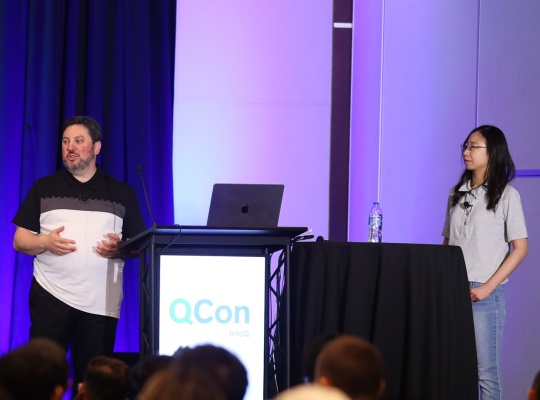
Durable workflows live in your database, not a separate orchestrator
External orchestrators promise flexibility, but they often add a fragile layer that undermines reliability. In this presentation, Jeremy Edberg and Qian Li make a compelling case for flipping the script: use your database as the engine for durable execution. Their approach with DBOS Transact, leveraging standard tables and SKIP LOCKED queues, is both elegantly simple and surprisingly robust. It's a smart, practical alternative for complex AI workflows that avoids the operational drag of separate systems.

Building Smarter Agents with an Intermediate Protocol Layer
AI agents often fail because they're built like tangled 1970s BASIC scripts, sprawling and unmanageable. Jake Mannix proposes a smarter path: an intermediate protocol layer that treats AI tools like versioned, encapsulated software components. This isn't just cleaner engineering; it's a practical defense. By enabling interface mapping and dynamic schema projection, teams gain runtime taint tracking that sniffs out data exfiltration risks before they become breaches. That's how you build velocity without sacrificing security.
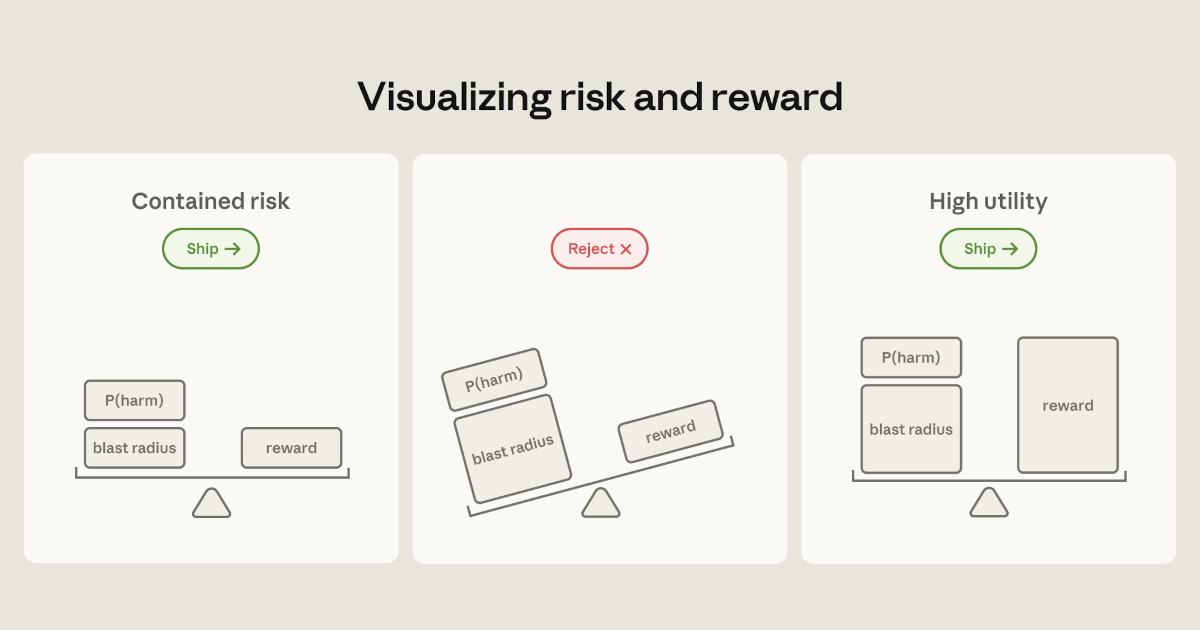
How Anthropic Restrains Claude with Deterministic Boundaries, Not Prompts
Anthropic is making a deliberate case for how it keeps Claude contained, and the argument hinges on hard limits rather than trust. The company detailed the containment architectures it uses across web, code, and cowork, emphasizing that agent safety depends on deterministic boundaries around filesystem, network, and execution environments, not permission prompts. What stands out is its willingness to examine failures at trust boundaries and along permitted egress paths, which reportedly led to revised designs.