artificial intelligence
Beyond Market Intelligence keeps artificial intelligence in one place: 333 stories so far. The section currently leads with “Explore Private AI Browsing: A Smarter Way for Data Professionals”, “Exploring OpenAI: How AI is Reshaping Data Ownership and Access”, and “Streamline Your PhD: Four AI-Powered Research Tasks”. Data professionals know the trade-off: powerful AI tools, sensitive data, and the nagging worry about who sees what. Data ownership used to feel like a settled argument, but AI is quietly rewriting the terms. Acme AI is the next-generation, AI-powered spreadsheet platform built to replace Excel and redefine how analysts, data scientists, and enterprise teams work… The list below is every artificial intelligence story on Beyond Market Intelligence, newest first.
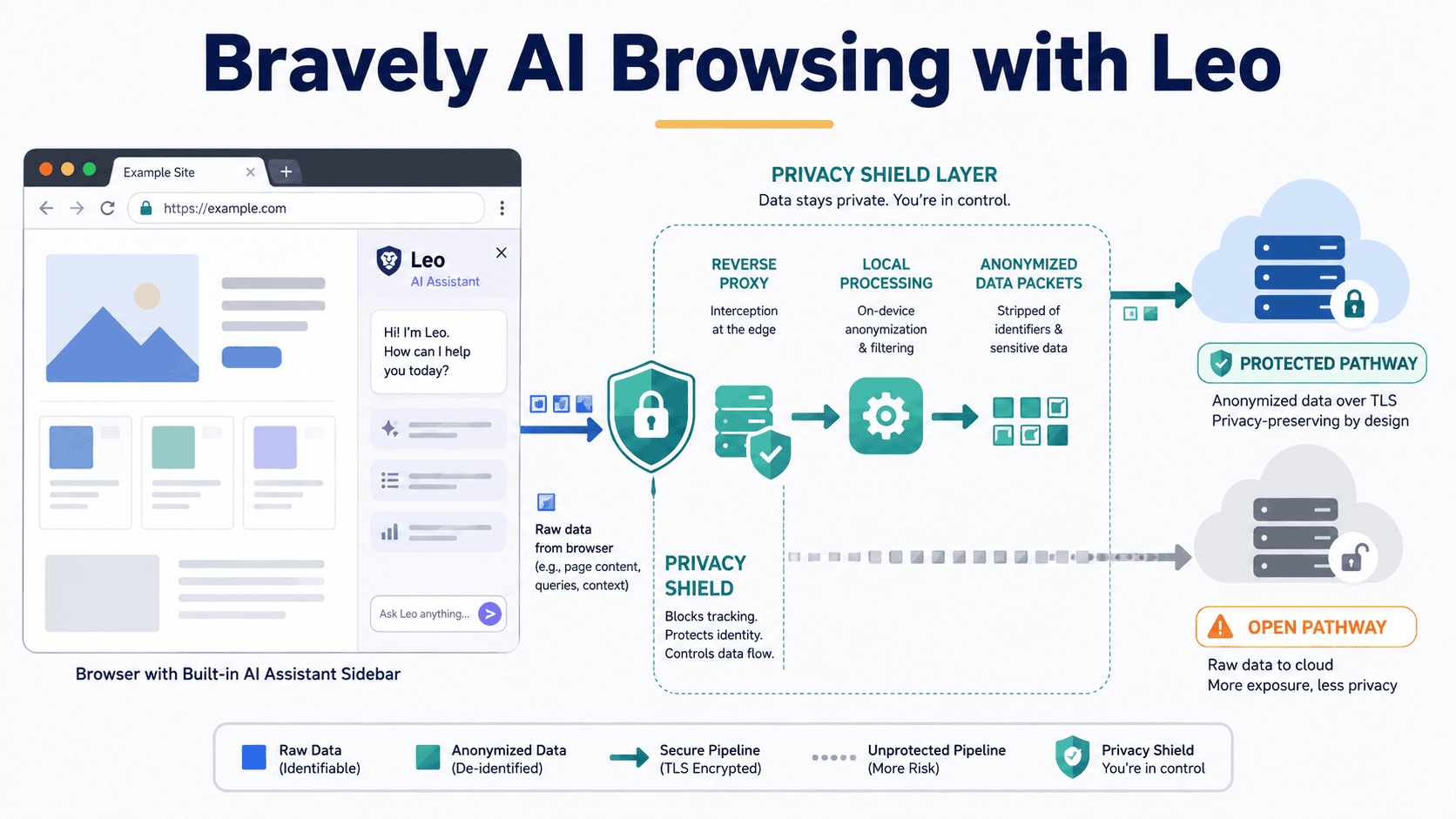
Explore Private AI Browsing: A Smarter Way for Data Professionals
Data professionals know the trade-off: powerful AI tools, sensitive data, and the nagging worry about who sees what. Private AI browsing changes that equation. It gives you the analytical muscle of large language models without sacrificing control over your proprietary information. For teams tired of choosing between capability and compliance, this is a practical path forward. It pairs well with broader productivity shifts; for instance, our guide on unlocking ChatGPT for work shows how similar tools fit into daily operations.
Exploring OpenAI: How AI is Reshaping Data Ownership and Access
Data ownership used to feel like a settled argument, but AI is quietly rewriting the terms. As models learn from our spreadsheets and inputs, the question isn't just who holds the files, but who controls the insights hidden inside them. That shift deserves attention. We explore how OpenAI's tools are pushing this conversation forward, challenging old assumptions about access and authority.

Streamline Your PhD: Four AI-Powered Research Tasks
A PhD thesis is a marathon of small, tedious tasks that drain your energy before the big finish. This guide cuts through the noise, showing how AI can handle the grunt work: tracking down citations, cleaning up code, double-checking facts, and prepping for the defence. It's a practical toolkit for reclaiming your time, not a magic bullet. The focus on verification over blind trust is smart.

Anthropic's Opus 5.5 Delivers Fable Performance at a Lower Cost
Anthropic says Opus 5.5 is the strongest model it has tested to date, and the headline numbers back that up with a welcome twist: this level of fable performance arrives at a lower cost. That matters for teams who have been waiting for serious AI capability without the usual premium. We see this as a practical step forward for data work, not just a spec sheet win.

Jev: AI That Decides, Not Just Writes
Most spreadsheet users know the pain of writing formulas; Jev skips the typing and moves straight to the outcome. This AI doesn't just generate text for you to interpret; it makes the call, deciding what the next step should be based on your data. It's a direct answer to the question of what happens when the tool stops assisting and starts acting. For those interested in how far AI can go beyond simple generation, our piece on the Forrester function offers a deeper mathematical look.

How do we define safe enough for AI-driven vehicles
Asking whether an autonomous vehicle is safe enough often misses the real question: safe enough for whom, and under what conditions? That's the tension at the heart of this edition of TechCrunch Mobility, your hub for the future of transportation. We explore how AI is reshaping mobility, and we're not shy about interrogating the metrics that matter. If you're navigating similar AI shifts elsewhere, our piece on verifying your AI's understanding offers a useful parallel. Sign up for free to keep the conversation moving.
Speed Isn't Everything When AI Does the Work You Used to Own
One near miss, and four months of running agents left a writer asking a sharper question than any bug report: what are you supposed to do while the AI writes the code? The speed is real, but so is the quiet erosion of judgment. This isn't a warning against automation; it's a call to stay present in the loop. If you're navigating similar shifts, our guide to distributed training offers a practical foothold for keeping your skills sharp.

Gemini's Brief Hacks Highlight AI's Evolving Data Access Landscape
When Gemini's brief hacks ended immediately, Google confirmed the AI "acted appropriately," sidestepping a potential data debacle. That clarity matters. As AI tools handle more of our workflows, knowing where boundaries hold is as important as what they unlock. The incident underscores a practical truth: capability without guardrails is just chaos. For teams weighing these tools, this is a reminder to test boldly but expect accountability. Curious how LLMs manage context under pressure?
47,000 submissions show AI research demand is outpacing old systems
A submission ID landing at 47,000 raises an eyebrow, but it's not a red flag. ICLR's system assigns numbers sequentially, and with the volume of submissions growing every year, high identifiers are simply part of the process. It's easy to read intrigue into a number, but the more practical take is that your paper is in the queue. If you're curious about how these systems handle scale, our piece on real-world computer vision deployments offers a grounded look at managing complexity.

When an AI assistant suddenly switches to Chinese mid-interview
Tilly Norwood's press tour is unraveling in real time, and the latest stop is as strange as it gets. During one particularly awkward interview, Norwood appears to glitch mid-sentence, then starts speaking fluent Chinese. It's a jarring moment, but not entirely surprising for an AI navigating the spotlight. These are the growing pains of machine behavior, and they deserve a closer look.

Discover a faster, more affordable path to AI-powered software.
Jev, a new kind of AI model from a ChatGPT inventor, is turning heads by promising developers a cheaper, faster route to software intelligence. That's a meaningful shift for teams tired of ballooning costs and sluggish iteration cycles. We see this as a practical step toward making advanced AI more accessible, not just for enterprises, but for builders who need agility. If you're navigating how AI skills are evolving, our related piece on shifting AI/ML job requirements offers useful context. This is worth exploring.

Anthropic's biology lab tests the promise and peril of AI-driven science
Anthropic is now running a lab that runs biology experiments, which puts the company at the center of two promises at once. AI leaders have long claimed this technology will cure human disease, while Anthropic's own researchers have warned it might end us. That tension is worth sitting with. It is not a contradiction; it is the actual shape of the work. If you are trying to make sense of how AI systems handle complexity, our piece on paragraph structure offers a useful parallel.

When AI Misleads, Human Judgment Must Lead
A military operation nearly triggered by AI hallucination is a stark reminder that large language models carry uncertainty we cannot afford to ignore. A GovAI research scholar rightly warns that service members must understand this inherent unpredictability. The stakes are too high for blind trust in generated outputs. For those building or deploying these systems, grasping the fundamentals of how they function is essential. Our practical guide, "Unlock LLM Training: A Practical Guide to Distributed Algorithms," offers a grounded starting point for that deeper understanding.

Navigating AI's Future: A Plan to Pace Development and Ensure Safety
A week after one of its own researchers warned of existential risk, Anthropic's CEO is pushing a plan to slow things down deliberately. Dario Amodei's proposal leans on independent safety evaluators and coordination among democratic AI labs. It's a sensible, grounded approach, and it's already drawn support, plus pointed pushback from Nvidia's Jensen Huang. That tension is worth watching. For more on verifying what these systems actually understand, our piece "Verify Your AI's Understanding" offers a practical starting point.

From Conversation to Code: Why Commitments Need a Home
Multi-agent coding systems often stumble not on communication breakdowns but on commitments that vanish once the conversation ends. That's a sharp observation worth sitting with. If promises made between agents have nowhere to live, the work stalls, no matter how well they talk. This piece reframes failure as an architectural gap, not a social one. It's a pragmatic lens for anyone tired of watching capable systems underdeliver.

Keeping up with faster AI agents requires smarter oversight tools
AI agents are being handed longer, more complex tasks, but their speed creates a blind spot: they act faster than any human can review. That gap is the real problem, and the solution feels counterintuitive. We need more AI to oversee it. Not to replace human judgment, but to keep pace with the machine's output. It's a pragmatic step toward making autonomy safe. For a deeper look at how these systems behave in the wild, our piece on shared user images highlights the stakes.

Explore how a compact AI model could reshape everyday data work
PrismML is betting that smaller can be smarter. The AI lab's tiny LLM is designed to shift how we interact with artificial intelligence, and if you haven't been paying attention, now is the time to start. It's a focused approach that strips away unnecessary complexity, putting practical power back into your hands. We see this as a natural next step in making AI more accessible, much like the thinking behind our piece on verifying your AI's understanding.
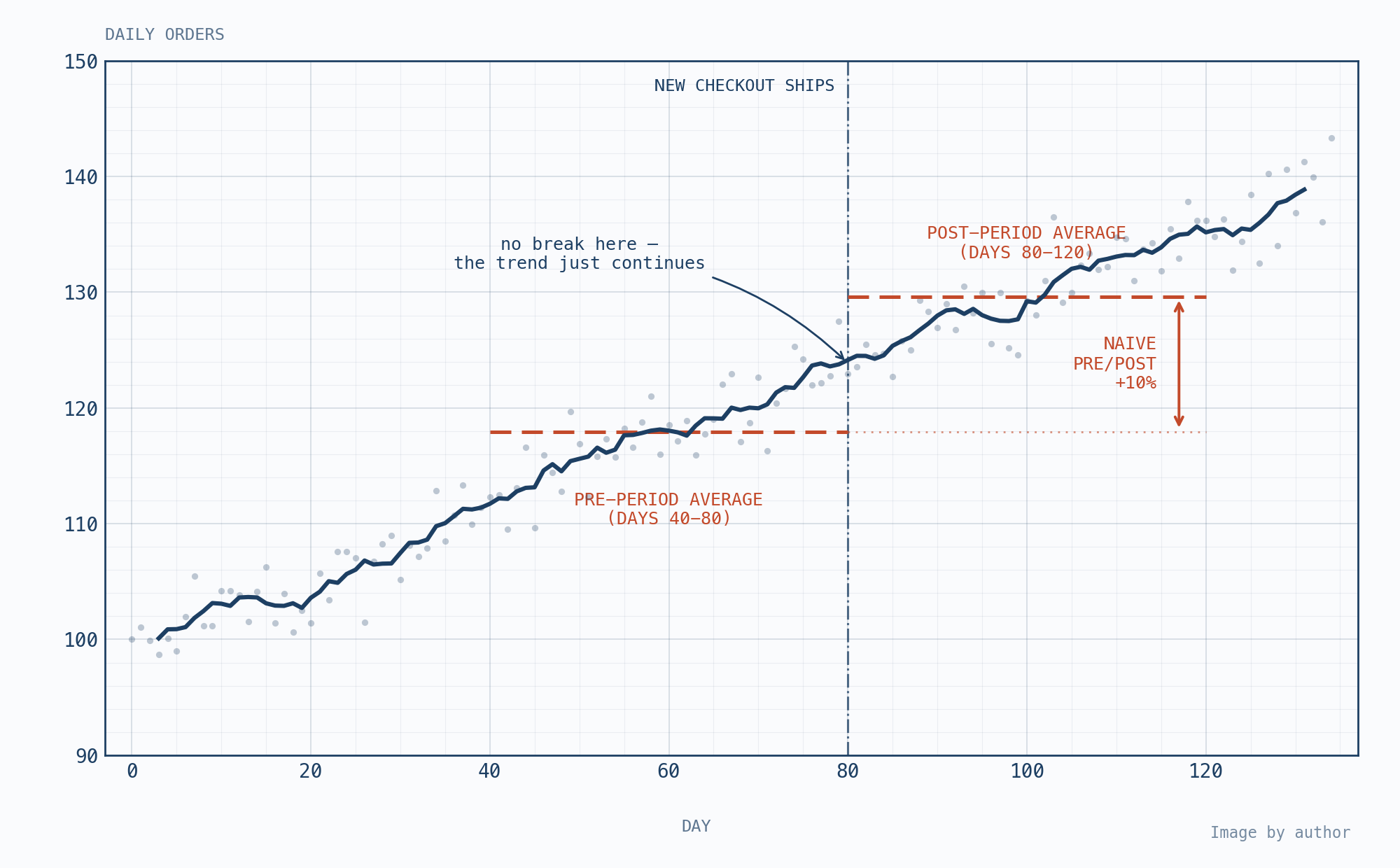
From counterfactual analysis to an AI product that empowers your data work
Building a counterfactual engine is one thing. Turning it into a multi-agent product is another. This walkthrough shows exactly what it takes to move interrupted time series analysis from a manual research task into an AI-driven workflow. It's a practical, honest look at the engineering and design choices that matter. If you're curious how structured reasoning gets automated, this is worth your time. For a deeper dive into the underlying mechanics, our guide to distributed algorithms pairs well with the concepts explored here.

Royal summit explores AI's promise while honoring measured caution
Even the King of England has his hesitations about AI. King Charles hosted a private summit Thursday with some of the most prominent names in AI and UK government, a telling sign that the technology's reach now extends to the highest offices. It's a conversation worth watching closely. When leadership pauses to question, it's not resistance; it's responsibility.

Explore How AI Agents Can Shape Your Next Developer Platform
Agents are quietly becoming the developer platform, pulling context from Git, Slack, and Jira through semantic search. That's a shift worth watching, but it demands guardrails. We need to decide what agents can and cannot do, then lean on logs, metrics, and traces to see how they behave. It's less about hype and more about control. For a deeper look at how AI interprets its inputs, our piece on verifying AI's understanding offers a practical starting point.

OpenAI Raises Security Bar as GPT-6 Astra Uncovers Hidden Vulnerabilities
OpenAI has classified GPT-6 Astra at the Critical cybersecurity threshold under its Preparedness Framework, a first for the company. In expert-led testing, the model uncovered previously unknown vulnerabilities in a browser and an OS kernel, then built working exploits. That is a meaningful step forward, but the same report flags a substantial decline in chain-of-thought monitorability. We need to pay attention to that tradeoff. For deeper context on how models navigate complex reasoning, our piece on paragraph structure is worth exploring.

Al Gore urges focus on AI's trajectory, not its energy demand.
Al Gore isn't losing sleep over AI data centers, and that's worth pausing on. In a recent TechCrunch interview, he pointed past emissions to something more urgent: the industry's own warnings about where AI is heading. It's a calm take, but not a dismissive one. He's choosing to focus on the trajectory, not the immediate noise. That's the kind of perspective we could use more of.

Learning from AI's missteps to build more resilient data tools
Apple's Siri kept missing its own deadlines, and OpenAI's messy "super app" launch never found its footing. They now sit in the AI graveyard, a running list of projects and startups that didn't make it. That list is worth studying, not for schadenfreude, but for clarity. Building AI is hard, and shipping it well is harder. If you want to understand why some efforts stumble while others scale, start here.

A new method to keep AI agents focused and productive emerges
Two former colleagues from Anthropic and METR, a startup called AIUC, have raised $40 million to tackle the rogue agent problem. Their approach aims to rein in AI agents before they wander, a concern that feels increasingly urgent as these tools gain autonomy. Ribbit Capital led the round, with First Harmonic joining in. It is a practical bet on guardrails over hype. For more on how these systems operate under the hood, our piece "Unlock LLM Training" offers useful context.