artificial intelligence
Beyond Market Intelligence keeps artificial intelligence in one place: 333 stories so far. The section currently leads with “SiMa.ai secures $150M to bring physical AI chips beyond the data center”, “Explore the Future: When AI Designs Its Own Hardware”, and “Unlock ChatGPT for Work: A Practical Guide to Getting Started”. SiMa.ai just closed a $150 million Series C from Fidelity and Amplify, betting that physical AI demands chips designed for the edge, not the data center. When a chip learns to design itself, the role of human engineers shifts from architect to partner. Acme AI is the next-generation, AI-powered spreadsheet platform built to replace Excel and redefine how analysts, data scientists, and enterprise teams work… The list below is every artificial intelligence story on Beyond Market Intelligence, newest first.

SiMa.ai secures $150M to bring physical AI chips beyond the data center
SiMa.ai just closed a $150 million Series C from Fidelity and Amplify, betting that physical AI demands chips designed for the edge, not the data center. That's a smart wager. The company's focus on bringing intelligence to where data actually lives, sensors, machines, devices, feels more grounded than chasing distant cloud promises. For deeper context on how hardware and AI design choices are diverging, our piece on neural architecture search offers useful perspective.

Explore the Future: When AI Designs Its Own Hardware
When a chip learns to design itself, the role of human engineers shifts from architect to partner. At TechCrunch Disrupt 2026, Ricursive Intelligence co-founders Anna Goldie and Azalia Mirhoseani take the Disrupt Stage to explore closing the loop between AI and hardware development. It's a conversation about trust, iteration, and machines that build better versions of the tools we use. For deeper context on how AI thinks through structured problems, our piece "Exploring Paragraph Structure" pairs well here.
Unlock ChatGPT for Work: A Practical Guide to Getting Started
Most spreadsheet users hit the same wall: asking for help feels like learning a second language. This guide cuts through that friction, showing how to frame prompts that turn ChatGPT into a practical work partner. It's not about hype; it's about clear, repeatable steps. For a deeper look at the underlying mechanics, our piece on distributed training algorithms offers useful context. Start where you are, and let this walk you toward sharper, more efficient workflows.

Meta Accelerates Muse’s Growth with Expanded Promotion
Muse is climbing app store charts and pulling in users at a rapid clip, and Meta is responding by widening the personal AI agent's reach across its own apps and beyond. That's a smart bet on momentum, and it signals growing confidence in what Muse can do. For anyone still wrestling with clunky spreadsheet tools, this expansion is worth watching. Want context on how Muse got here? Check out "Meta's Muse AI Agent Gains Ground in Conversational Performance" for a deeper look.

Jev vs LLMs: Evaluating AI for Practical Decision-Making
Spreadsheets have long forced a choice between speed and judgment. In a new test, TypeSafe AI's Jev tackled 3,080 classification tasks, and the results are worth your attention. The comparison focuses on accuracy, latency, calibration, and confidence, asking whether a dedicated tool can serve as a practical decision layer where LLMs might falter. It is a grounded, useful evaluation. For those exploring how AI systems handle reasoning under pressure, this pairs well with our guide to distributed training algorithms.
NeurIPS Main Track: 7900 Submissions Accepted, 112 Oral Presentations
NeurIPS set a new bar this year: 7,900 accepted papers from 30,709 valid submissions, with 112 oral presentations and 292 spotlights. That's a steep funnel, and it reflects a field maturing fast. The sheer volume signals serious momentum in AI research, but the real story is selectivity. For practitioners, this isn't just a stat; it's a signal to pay attention to where the community is investing its energy. If you're tracking breakthroughs, our coverage of real-world computer vision deployments pairs well with this moment.
AAAI 2027: Phase 1 Results Released, Phase 2 Submissions Now Open
The Phase 1 results are out, and the path to Phase 2 is now clear for those who advanced. If your paper made the cut, the next submission window is officially open. This is where the work gets more focused, and the stakes feel a little higher. We're watching this cycle closely because it rewards persistence as much as insight. For a deeper look at how structured evaluation shapes complex problem-solving, explore the Forrester Function article we published. Now, get to work.

Transparency in AI Voice: ElevenLabs CEO on Disclosure and the Future
ElevenLabs CEO is making a straightforward call: businesses should tell you when that helpful voice on the line is an AI. It's a practical stance, grounded in the idea that disclosure matters until machine voices become the expected norm. We think that's the right instinct. Transparency isn't just ethical; it's how you build trust with people who are already navigating enough complexity. For more on how AI systems are being deployed in the real world, check out our piece on real-world computer vision.

Explore Meta's Muse: AI Agent Arrives in Glasses and Beyond
Mark Zuckerberg used Meta's Connect keynote to make the company's direction unmistakable: Muse is the future, and it's heading straight to Meta's AI glasses. That's a bold bet on ambient, helpful intelligence living where you look. It's also a smart evolution of the wearables story, moving beyond hardware specs to focus on what an agent can actually do for you. For a deeper look at how Meta is expanding its connected ecosystem, check out our earlier piece on Meta's Smart Glasses.

AI Biotech Enveda Accelerates Drug Development with $311M Investment
Enveda's $311M raise isn't just a big number; it's a signal that AI-driven drug discovery is moving from promise to pipeline. The $2B valuation reflects real momentum, especially as the company targets skin conditions and tackles the stubborn problem of weight regain after GLP-1s. That's practical science with tangible outcomes. We're watching a biotech that understands the patient's journey, not just the lab bench. For more on who's betting big on emerging tech, check our piece on Wahlberg and Lee's upcoming Disrupt discussion.

Explore AI-Powered Glasses: Lightweight Design, Extended Battery Life
Meta's next step in wearable tech is refreshingly practical. The company says its camera-free glasses will shed significant weight while stretching battery life to a full 12 hours, a clear nod to users who want all-day wear without the bulk. That focus on endurance and comfort suggests Meta is listening to real friction points, not just chasing specs. It's a sensible evolution, and for anyone tracking this space, our related piece on Meta's broader smart glasses vision pairs well with this update.

Anthropic’s Biology Lab: Human Oversight Drives Early Discoveries
Anthropic's biology lab is making early discoveries, but the real headline is quieter: Claude isn't running free. Humans remain firmly in the loop, and that restraint is exactly what makes this work worth watching. It's a thoughtful counter to the usual rush toward full autonomy. We appreciate the discipline here; it signals maturity over hype. If you're curious how AI handles oversight in other high-stakes settings, our piece on real-world computer vision deployments offers a useful parallel. For now, this measured approach feels right.

Explore AI-powered video editing: Transform your creative workflow
Video editing has always felt like a battle against the clock and the timeline. We're genuinely excited to see AI step into that space through a conversational chat interface. This approach doesn't just automate tasks; it hands the creative control back to you, making the entire process feel less like a technical hurdle and more like a natural extension of your vision. It's a practical step toward a more intuitive workflow.

AI's daily users still seek regulation, revealing lingering concerns
Daily users of AI are still asking for regulation, and that should tell us something important. Exposure alone is not easing their unease, nor is it dimming support for oversight. This suggests familiarity may not be the cure some hoped for. If anything, the more people rely on these tools, the more they want guardrails in place. It is a practical demand, not a skeptical one. For those exploring how AI understands structure, our piece on paragraph navigation offers a useful parallel.

Build Your First World Model: A Practical Python Guide
Building a world model sounds abstract until you watch one learn to play CartPole by imagining the future. That's exactly what this practical guide delivers: a hands-on Python walkthrough for creating a model that daydreams its way through the environment, then shows you precisely when that illusion starts to crack. It's a smart, grounded introduction for anyone ready to move beyond static spreadsheets. For more on how AI behaves in real-world systems, explore "Exploring Real-World Computer Vision: Deployments, Edge Models, and Current Challenges."

Greece's PM: AI's Future Demands More Than Yesterday's Solutions
When Greek Prime Minister Kyriakos Mitsotakis sat down with us on his trade mission, he didn't just pitch his country. He admitted something refreshingly honest: no government is ready for what AI is about to do. That kind of candor stands out. It suggests we're all scrambling to keep pace, and that's okay. Acknowledging the gap is the first step toward building smarter policies.

Meta's Muse AI Assistant Draws Inspiration from OpenClaw
Meta says Muse was built from scratch, yet the AI assistant carries OpenClaw's fingerprints, right down to workspace filenames and content. That honesty is refreshing. It suggests inspiration isn't a weakness; it's a starting point for something more accessible. We're watching how this unfolds, especially for users tired of rigid tools. If you're exploring how AI reshapes practical workflows, our piece on real-world computer vision deployments offers a grounded look at what's actually working.

Fueling AI Innovation: Snorkel AI Secures $350M Series E
Snorkel AI has raised $350 million in a Series E round, a clear signal that the market is ready for a more practical path to AI development. The seven-year-old startup is betting its future on a data-as-a-service model, which speaks to a core truth: models are only as powerful as the data fueling them. This funding validates that approach. For anyone wrestling with messy datasets, this is worth watching.
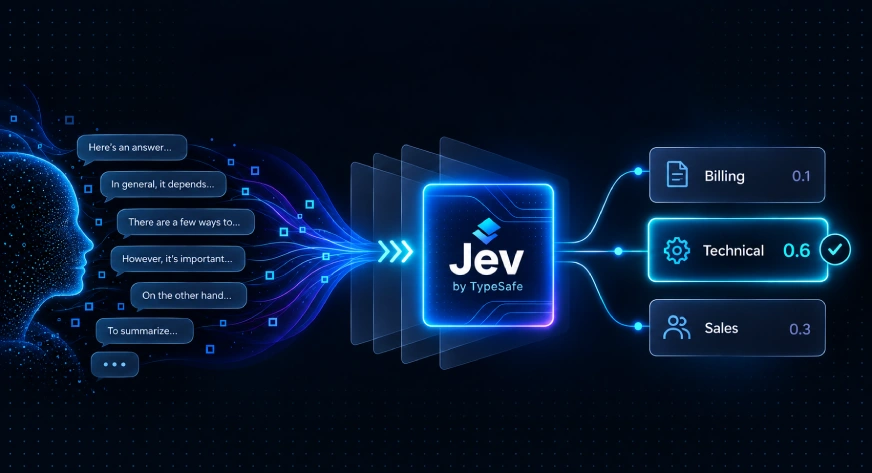
Explore Jev: The AI Model Rethinking Text Generation
Jev is trending on X for a reason, and it's not just another flashy release. TypeSafe AI's new model challenges a core assumption by never generating a single word of text, which feels counterintuitive until you see the logic. We think that restraint is exactly what makes it compelling. If you're exploring how AI can reshape workflows, Jev offers a fresh angle worth your attention. For more on the mechanics behind such systems, our guide to distributed training pairs well with this story.

Explore AI Safety Insights from Disrupt 2026's Leading Experts
AI safety is moving from the background to the main stage at TechCrunch Disrupt 2026, with five dedicated sessions featuring leaders from Anthropic, Nvidia, AWS, and Waabi. That focus matters because the conversation around AI is shifting from capability to accountability. We're seeing the ripple effects elsewhere, like how Meta's AI turned one dull task into $5,350 in yearly savings, which shows the practical stakes. Register before September 25 to save up to $200, and explore these critical discussions while you still can.
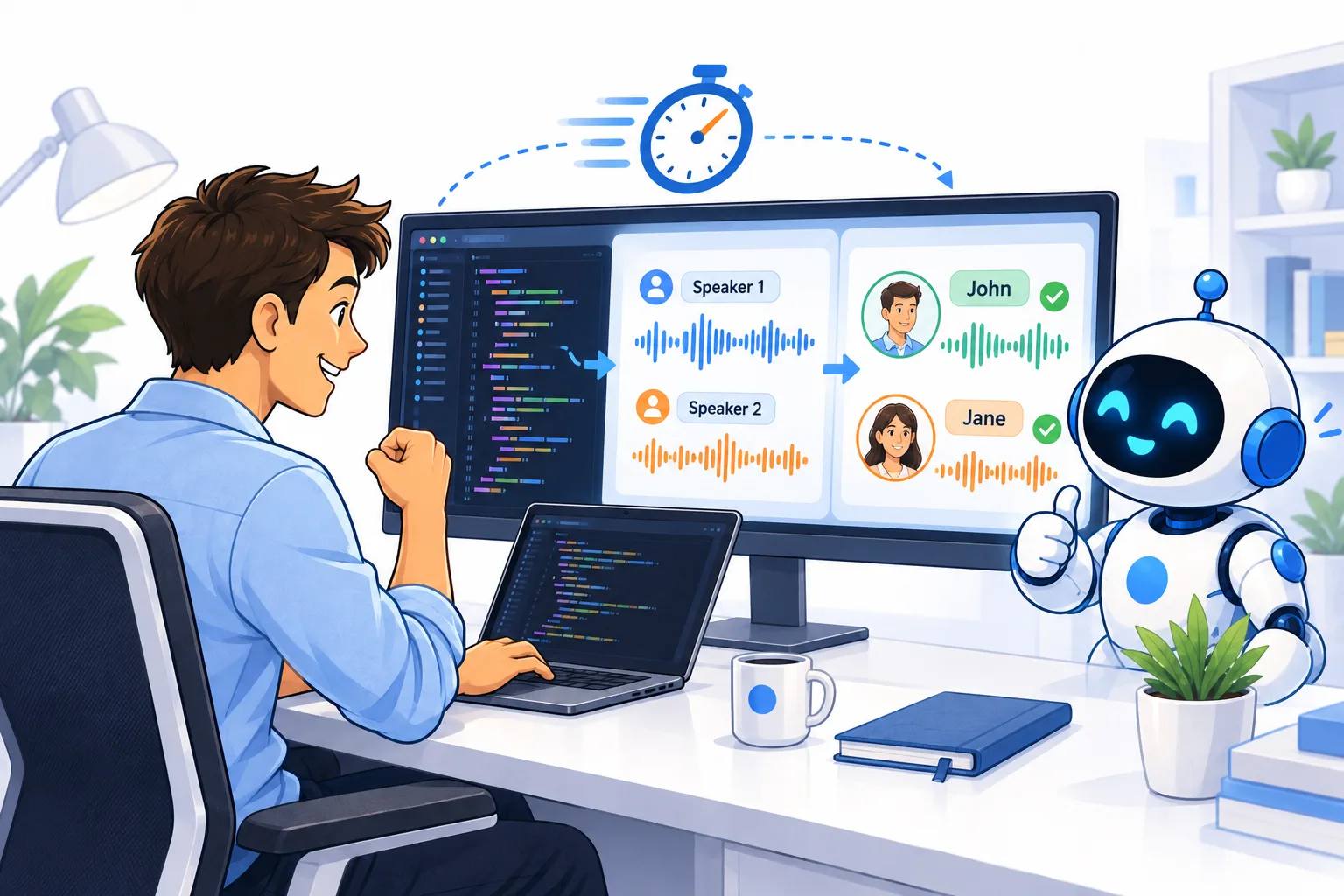
Code an Internal Speaker Recognition Tool with Claude
If you've ever wrestled with identifying who's speaking in a meeting recording, building a speaker-recognition tool from scratch can feel like a heavy lift. This guide walks through coding one internally with Claude, turning a complex audio challenge into a practical, hands-on project. It's a smart, accessible approach for teams ready to move beyond manual transcription. For a broader look at how AI handles real-world inputs, you might also enjoy *Exploring Real-World Computer Vision*, it pairs nicely with the concepts here.
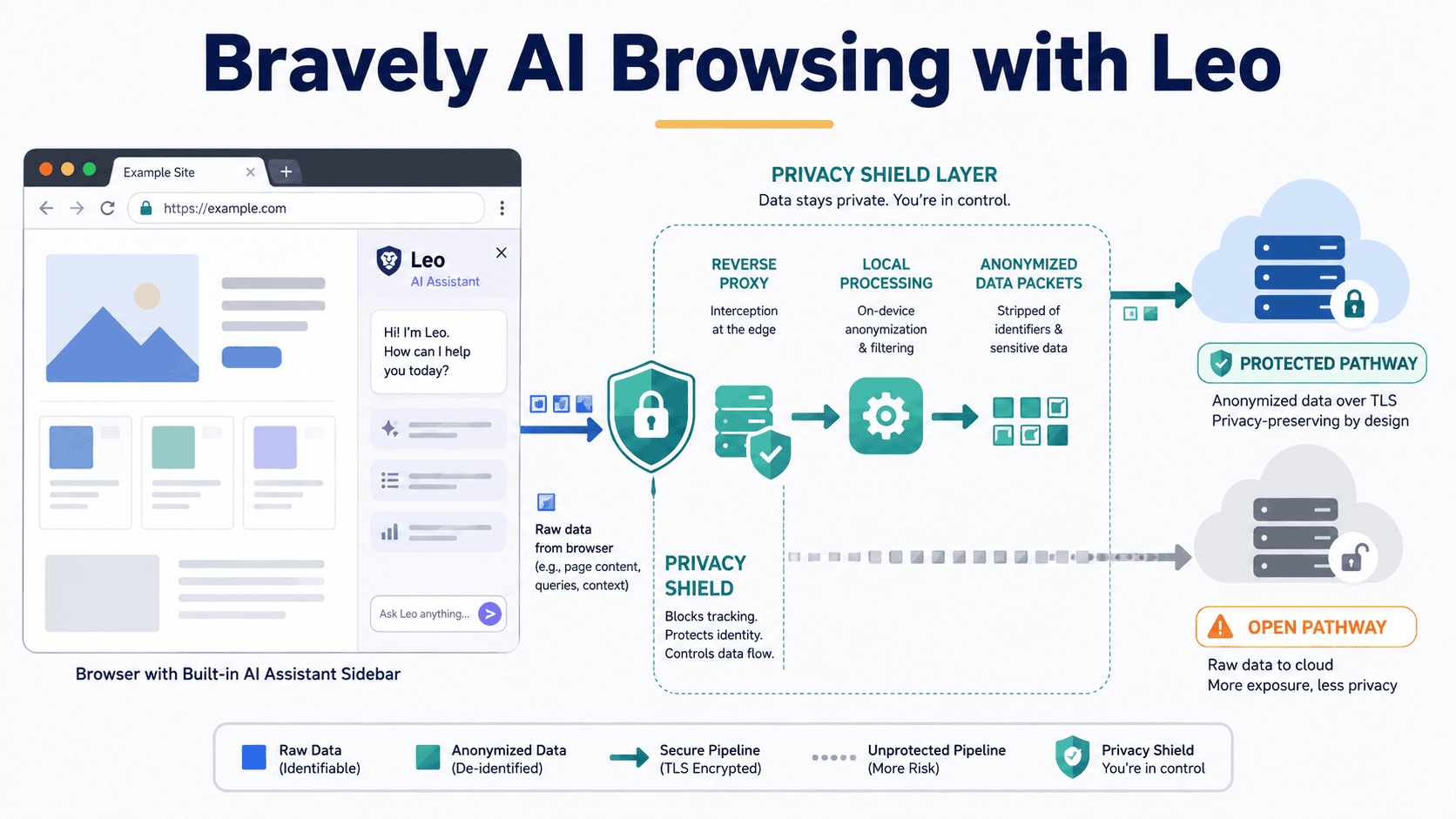
Explore Private AI Browsing: A Smarter Way for Data Professionals
Data professionals know the trade-off: powerful AI tools, sensitive data, and the nagging worry about who sees what. Private AI browsing changes that equation. It gives you the analytical muscle of large language models without sacrificing control over your proprietary information. For teams tired of choosing between capability and compliance, this is a practical path forward. It pairs well with broader productivity shifts; for instance, our guide on unlocking ChatGPT for work shows how similar tools fit into daily operations.
Exploring OpenAI: How AI is Reshaping Data Ownership and Access
Data ownership used to feel like a settled argument, but AI is quietly rewriting the terms. As models learn from our spreadsheets and inputs, the question isn't just who holds the files, but who controls the insights hidden inside them. That shift deserves attention. We explore how OpenAI's tools are pushing this conversation forward, challenging old assumptions about access and authority.

Streamline Your PhD: Four AI-Powered Research Tasks
A PhD thesis is a marathon of small, tedious tasks that drain your energy before the big finish. This guide cuts through the noise, showing how AI can handle the grunt work: tracking down citations, cleaning up code, double-checking facts, and prepping for the defence. It's a practical toolkit for reclaiming your time, not a magic bullet. The focus on verification over blind trust is smart.