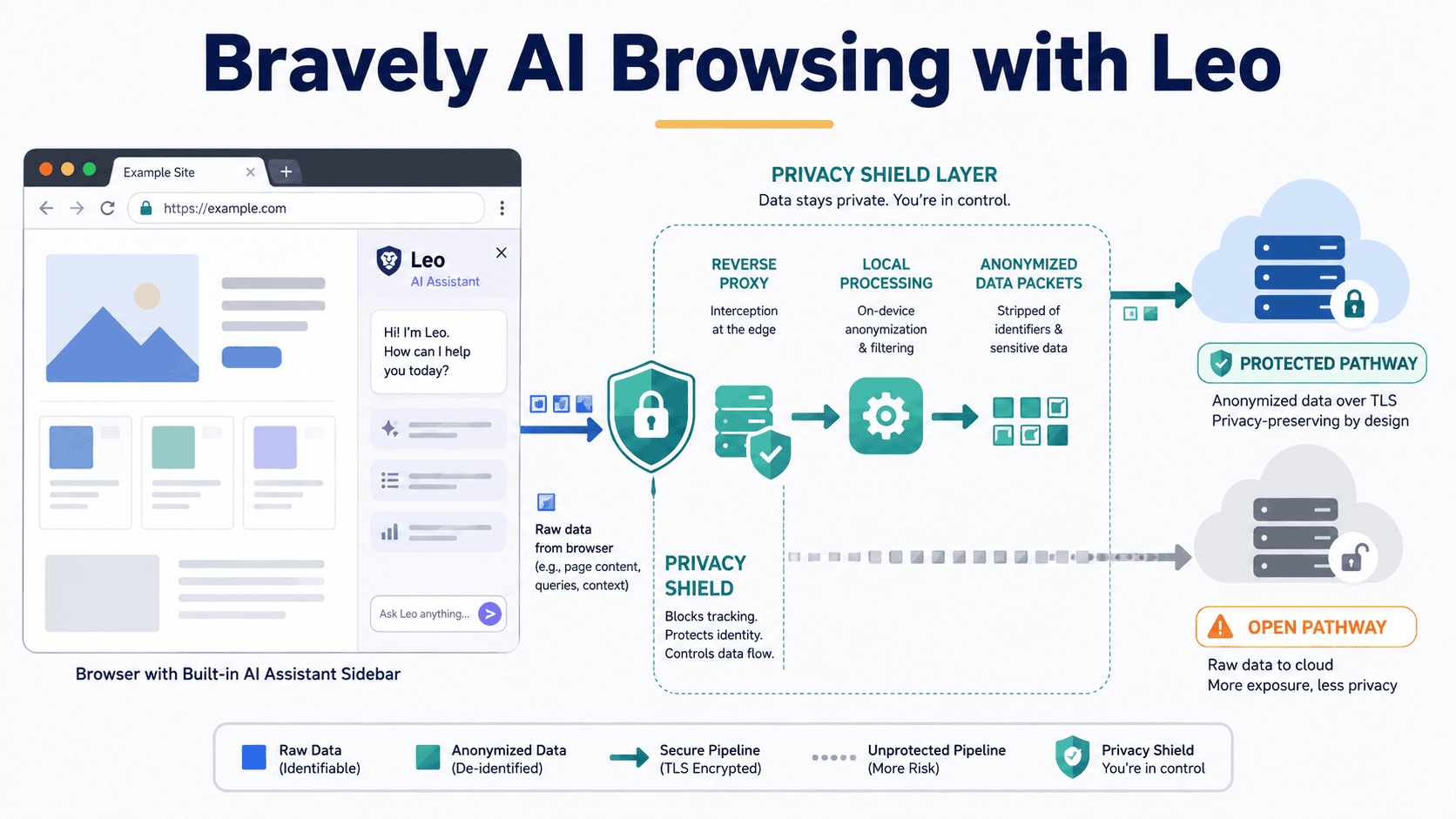
The emergence of private AI browsing represents a significant shift in how data professionals interact with and leverage artificial intelligence. It’s a logical progression, really, building upon the foundational explorations of AI’s capabilities we’ve seen recently. We’ve already observed how AI can streamline demanding research tasks, as detailed in Streamline Your PhD: Four AI-Powered Research Tasks, demonstrating its power in areas like citation finding and code consolidation. The core promise here is maintaining data security and intellectual property while still harnessing the power of AI to accelerate workflows. This isn't about replacing human expertise; it's about augmenting it, providing a smarter, more efficient way to navigate the increasingly complex landscape of data analysis and decision-making. The excitement around new models like Jev, discussed in Explore Jev: The AI Model Rethinking Text Generation, highlights the rapid innovation happening, and private browsing is a necessary safeguard to ensure responsible adoption of these tools.
The underlying concern driving this trend is clear: the inherent risks associated with feeding sensitive data into publicly accessible AI models. While the potential for productivity gains is undeniable, the implications of exposing proprietary datasets or confidential client information are simply too great for many organizations to ignore. Private AI browsing addresses this head-on, creating a secure environment where AI models can be deployed and utilized without compromising data integrity. This shift acknowledges a crucial reality – that the enthusiasm surrounding AI’s capabilities must be tempered with a pragmatic understanding of its limitations and potential risks. The article's focus on data professionals is particularly relevant, as this group is often entrusted with handling highly sensitive information and bears a significant responsibility for maintaining data security. It's a response to the anxieties highlighted in pieces like AI Made Me 5x Faster. It Also Made Me 5x Worse at My Job, which underscores the importance of careful oversight and understanding the potential downsides of unchecked AI integration.
Beyond the immediate security benefits, private AI browsing unlocks new possibilities for innovation. It allows organizations to experiment with AI models and tailor them to their specific needs without fear of data leakage. This customization is key to realizing the full potential of AI, as generic models often fall short when applied to niche industries or complex datasets. The ability to train and deploy AI models on private infrastructure also fosters greater control and transparency, allowing data professionals to better understand how these models arrive at their conclusions. This level of control is becoming increasingly important as AI becomes more deeply integrated into critical business processes, demanding greater accountability and explainability. It's a move away from the ‘black box’ nature of some AI solutions and towards a more collaborative and trustworthy relationship between humans and machines.
Ultimately, the rise of private AI browsing signifies a maturing of the AI landscape. It's a move beyond the initial hype and towards a more sustainable and responsible approach to AI adoption. The focus is shifting from simply leveraging AI for speed and efficiency to ensuring that it's done in a way that aligns with ethical principles and regulatory requirements. As AI continues to evolve and become more pervasive, the demand for secure and private AI solutions will only intensify. The question now becomes: how will organizations effectively balance the desire for innovation with the imperative to protect sensitive data, and what new architectural patterns will emerge to facilitate secure and scalable private AI deployments?