build
Beyond Market Intelligence keeps build in one place: 26 stories so far. The section currently leads with “Amazon challenges Nvidia's AI grip with new tool for alternative chips”, “Bluesky opens Attie to let anyone build interactive experiences for its social network”, and “From vibe-coded app to reliable product: how real teams build for launch”. Amazon is taking direct aim at Nvidia's dominance in AI, and the weapon of choice is PyTorch. Bluesky just opened Attie to everyone, letting anyone build games, quizzes, and websites that plug directly into its social graph. Acme AI is the next-generation, AI-powered spreadsheet platform built to replace Excel and redefine how analysts, data scientists, and enterprise teams work… The list below is every build story on Beyond Market Intelligence, newest first.

Amazon challenges Nvidia's AI grip with new tool for alternative chips
Amazon is taking direct aim at Nvidia's dominance in AI, and the weapon of choice is PyTorch. By offering a new tool that lets developers run their apps on alternative chips, including Amazon's own, the company is trying to break the hardware lock-in that has made Nvidia essential. It is a smart, practical move. For a deeper look at how AI models actually run at the kernel level, our series *From naive GEMM to FlashAttention* offers a free, code-first guide.

Bluesky opens Attie to let anyone build interactive experiences for its social network
Bluesky just opened Attie to everyone, letting anyone build games, quizzes, and websites that plug directly into its social graph. That's a smart move. It turns passive scrolling into shared, interactive moments without forcing a new platform on users. The spirit aligns with what we explored in "From vibe-coded app to reliable product: how real teams build for launch." This is vibe coding with a purpose, accessible, experimental, and built for real engagement. We're curious to see what creators make of it.
From vibe-coded app to reliable product: how real teams build for launch
Vibe-coding gets a product into the world fast, but shipping something real requires more than speed. This story follows teams that bridged that gap, turning experimental prototypes into launch-ready tools by embracing structure without sacrificing momentum. It's a practical look at how good ideas survive the messy transition from exploratory code to reliable software. For a taste of how rapid innovation meets real-world constraints, see our piece on factory robots retraining in minutes.

Navigate TechCrunch Disrupt 2026 to build a company built for the AI era
TechCrunch Disrupt 2026 is built around one question: How do you build an enduring company in the AI era? Our programming and speaker lineup reflect that focus. This isn't about hype, it's about practical, human-centered innovation. If you're feeling constrained by legacy tools, explore how AI can transform your workflow. For deeper context, check out our piece on "Six Architectural Patterns for Scaling Reliable AI Agents", it shows what production-ready AI actually looks like. Your final chance to save $100 is here.

Start Your AI Journey With a Single Tool Call
Building your first AI agent doesn't require a sprawling architecture or weeks of setup, it starts with a single tool call. That simplicity is the point. By focusing on one actionable step, beginners can see immediate results and build confidence before layering on complexity. If you're curious about where agent costs accumulate, our piece on long-running coding agents offers a useful counterpoint. Start small, learn fast, and let the tool do the heavy lifting.
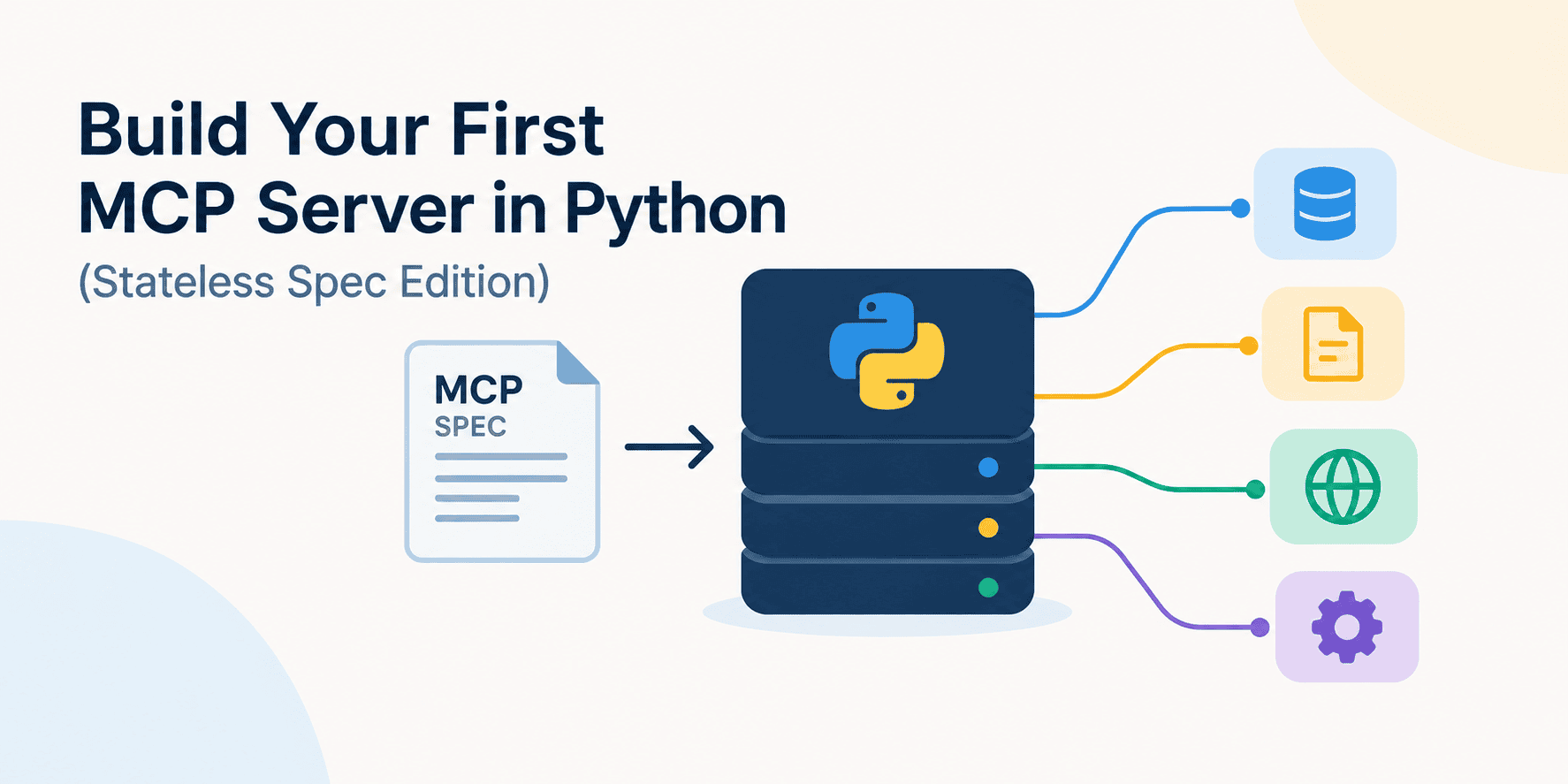
Build a Stateless MCP Server in Python with HTTP Endpoints
MCP doesn't need a heavy server to be useful. This guide shows you how to build a stateless MCP server in Python with plain HTTP endpoints, exposing tools, resources, and prompts without the usual overhead. It's a practical, accessible approach for teams who want AI-native workflows without locking themselves into complex infrastructure. If you're exploring lighter ways to connect agents and data, this is worth your time, and our piece on building a free data science stack pairs well with it.

Type your next prompt: your next prompt
Google Labs is inviting you to build the next game you play. Its new platform, Playground, turns simple text prompts into browser-based games, removing the technical barriers that once kept casual creators on the sidelines. This feels like a natural next step for AI tools, moving from assisting with data to enabling pure play. For a deeper look at how AI is reshaping development workflows, our piece on AI coding and debugging offers useful context. Explore what you can create.

Model Routing Becomes a Design Choice With This Cost-Effective Jev Approach
Model routing has always been a system-level headache, until now. A new Jev approach treats it as a design choice, not an engineering patch. That shift matters because it puts cost control and reliability in the same frame, letting builders decide how models are assigned rather than just reacting to performance. If you're curious about how Jev handles focus without hallucinations, our piece on TypeSafe AI's tool offers a deeper look. This is practical AI architecture, finally made intentional.

Recover Blood Flow from 40 Noisy Readings with a PyTorch PINN
Forty noisy measurements. One narrowed artery. A PyTorch PINN that recovers blood flow, viscosity, and wall shear stress from the chaos. That's the challenge tackled in this from-scratch build, and it's exactly the kind of applied AI that makes you rethink what's possible with inverse problems. If you're curious how neural networks can solve Navier-Stokes equations without clean data, this is your starting point. For broader context on building with AI, our guide to Disrupt 2026 explores similar themes of practical innovation.

Grant Your LLM Safe Autonomy in 9 Practical Steps
Giving an LLM permission to act sounds like a leap of faith. This guide doesn't ask you to take that leap blindly, it breaks the process into nine practical steps. The author builds a control plane for AI agents, walking through how to grant safe autonomy without losing oversight. It's the kind of grounded, actionable thinking that makes complex systems feel manageable.
Build for the AI era: Your guide to Disrupt 2026
Igor Dobrianskyi doesn't see rows of cars on a dealership lot. He sees millions of dollars sitting idle. That's the kind of practical insight that drives the conversation at TechCrunch Disrupt 2026. This year's event is built around one question: How do you build an enduring company in the AI era? Our programming and speaker lineup reflect that focus. Explore deeper coverage on our site, including Dobrianskyi's story, "Turn idle dealer inventory into monthly rental revenue with AI-driven insights."

Chat with Sidekick to build your store and see it take shape instantly
Shopify's new Canvas builder lets merchants create a store by chatting with its AI agent, Sidekick, and watching the site take shape in real time. That's a meaningful step forward. Instead of wrestling with templates, you describe what you need, and the interface responds instantly. It makes store building feel more like a conversation than a technical task. For a deeper look at how plain language transforms data workflows, see our piece "Describe Your Data in Plain Words and Let AI Feed Your Spreadsheet Continuously."

Samsung Supports Kairos Power's AI-Driven Nuclear Future for Google
Samsung C&T's deal to build Kairos Power's first 50-megawatt nuclear plant marks a clear vote of confidence in AI-driven energy. Partnering with Google's future supplier, this move signals that the demand for clean, reliable power is reshaping industrial collaboration. We see this as a practical step toward meeting the immense energy needs of AI infrastructure without losing sight of sustainability. For more on how Google is optimizing its AI stack, our piece on XProf's cycle-level profiling offers useful context.

Beyond Disrupt: Explore Side Events Shaping the Future of Tech.
TechCrunch Disrupt is more than what happens inside Moscone West from October 13-15. The real energy carries beyond the Expo Hall, and that is where the future gets shaped. Side events are where the community digs deeper, debates harder, and connects on a more personal level. We have rounded up the conversations that matter, including our look at "Wahlberg and Lee to Discuss Investing, Entrepreneurship at Disrupt 2026." It is a practical guide to the moments that extend the main stage. Explore them.

Beyond Prompts and Loops: How Graph Engineering Shapes Smarter AI
The debate over loops versus graphs in AI agent design isn't just technical sparring; it's a signal of how far we've come. Graph engineering moves beyond the linear constraints of prompts and loops, offering a structured way to build workflows that adapt and scale. It's a practical evolution, not a buzzword. For those still wrestling with token-level nuances, our piece on paragraph structure offers a useful parallel. This shift matters because it redefines what we can build, and we're just beginning to explore its potential.

Discover practical strategies for scaling your startup at Disrupt 2026.
The Builders Stage returns to TechCrunch Disrupt 2026, and it's a direct response to the questions we hear most: how do you actually scale without losing your edge? We're moving past theory to practical, actionable conversations with founders, operators, and investors who are in the trenches. This is about the messy, real work of building. For deeper context on the current investment climate, our piece on Nscale's recent funding offers a useful backdrop. Come ready to explore what it takes to grow.

Explore how hardware investment is shaping AI's next frontier.
a16z is putting $1.1 billion behind a simple bet: the next wave of AI runs on more than software. The firm, long associated with code-first startups, is now funding the physical infrastructure that keeps pace with model growth. That is a meaningful signal for anyone building in the space. If you are navigating how these systems actually train and scale, our guide to distributed algorithms offers a practical starting point. The hardware story is just beginning.
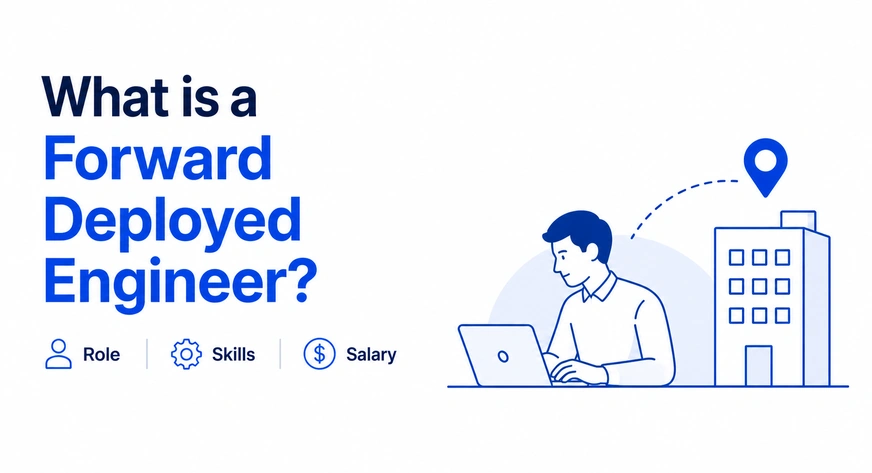
How Forward Deployed Engineers Turn Code into Action
A forward deployed engineer doesn't just advise from a distance; they sit inside your infrastructure and ship code that stays in production. That's a sharp contrast to consultants who hand over reports and leave. The role demands technical range and a comfort with messy, real-world constraints. What makes it compelling is the honesty of the premise: this job exists because generic solutions often fail. If you're exploring how technical roles evolve, our piece on AI agents learning by editing context offers a useful parallel.

Build the Index Before You Open the Folder
A case file is more than a stack of PDFs, and the index proves it by mapping what the case type demands before a single folder is opened. The two questions worth building for are not retrieval questions at all, which reframes how we think about RAG's purpose. It's a sharp, practical push toward relational tables that serve the work. For deeper context on how LLMs handle structure, our related piece on paragraph structure and token space pairs well here.
React Router v8: A Purposeful Shift to ESM and Default Middleware
React Router v8 landed on June 17, 2026, and it's a deliberately boring release. The team stripped things down to an ESM-only build and made middleware the default, signaling a clean break from legacy complexity. With v6 and Remix v2 now at end of life, the migration path is clear, if not thrilling. That's fine. Not every update needs fanfare. For those weighing TanStack Router instead, the choice is yours.

Teaching AI Agents to Understand Your Data's Meaning and Trustworthiness
Granting an AI agent access to your data warehouse is only the first step; it doesn't make the agent truly ready. The real work lies in teaching it what the data means and when it's reliable enough to act on. This piece tackles that gap head-on. If you're curious about how agents learn and adapt, our related article on agentic context learning offers a useful counterpoint. For now, explore how traditional architectures miss the mark, and consider what your data needs to empower smarter decisions.
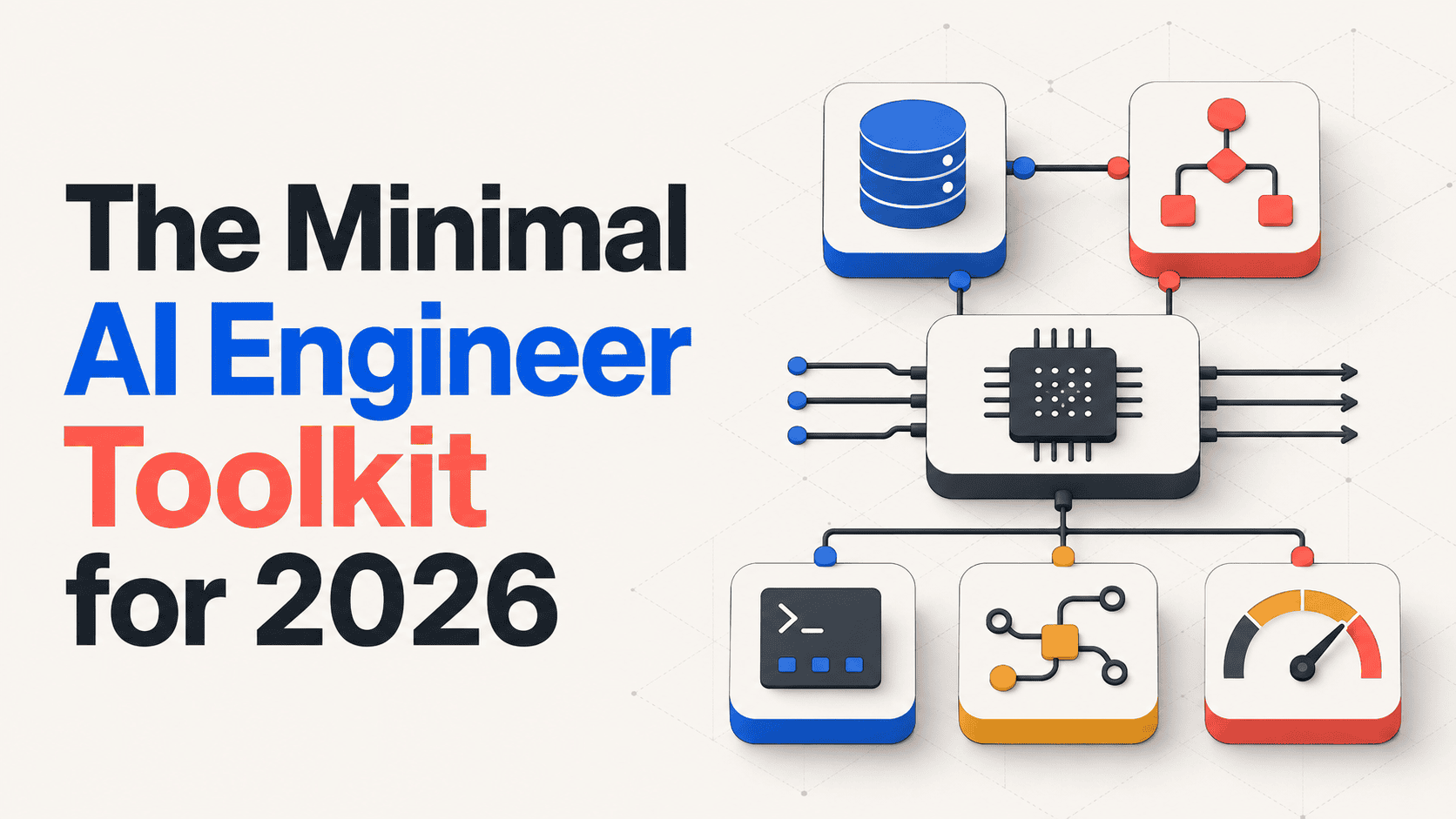
Six Tools to Empower Your AI Engineering Workflow in 2026
Building production-grade autonomous systems in 2026 isn't about hoarding the flashiest tools. It's about choosing a focused set that moves your work forward without the noise. We've identified six essential pieces for AI engineers who want to ship reliable, scalable systems, and we're confident this toolkit strips away the friction. If you're weighing priorities for the year ahead, this is a practical starting point.

Explore how internal platforms reduce cognitive load for microservices teams.
Microservices deliver real value only when teams can sustain their pace, and Chris Richardson's presentation gets straight to that challenge. He pairs Team Topologies with internal platforms to cut through complexity, focusing on six concrete patterns, from security to deployment, that keep stream-aligned teams moving. The payoff is a clear strategy for shrinking cognitive load while sidestepping the usual platform traps. It's a practical, grounded take on acceleration. For more ways to simplify technical workflows, our guide, "Unlock ChatGPT for Work," offers a useful parallel.
Bring AI coding agents to your machine learning projects in the cloud.
The question of running AI coding agents against a remote GPU is the right one to ask. You want the flexibility of your local editor with the horsepower of the cloud, and that setup absolutely exists. The key is using a platform that treats the remote machine as a seamless extension of your workspace. Docker Cloud Sandboxes offer a consistent environment for this, and exploring that approach is a solid starting point for building your ML workflow without leaving your preferred tools behind.