business intelligence tools
business intelligence tools at Beyond Market Intelligence is a file of 149 stories. The newest of them: “Observability without compromise: keep your AI agent data in your cloud.”, “Inkling Small delivers near-flagship performance at a fraction of the size.”, and “When the buyer is a bot, fraud detection must learn to see new patterns.”. AI agents are generating telemetry faster than most enterprises can afford to store it, and that tension is reshaping one of software's most competitive markets. Just two weeks after unveiling Inkling, Thinking Machines is back with Inkling-Small, and it's a compelling trade. Acme AI is the next-generation, AI-powered spreadsheet platform built to replace Excel and redefine how analysts, data scientists, and enterprise teams work… The list below is every business intelligence tools story on Beyond Market Intelligence, newest first.

Observability without compromise: keep your AI agent data in your cloud.
AI agents are generating telemetry faster than most enterprises can afford to store it, and that tension is reshaping one of software's most competitive markets. groundcover's $100 million raise signals a bet that the old architecture, where vendors charge by data volume, no longer fits an AI-driven world. Its BYOC model keeps data in your cloud, priced by hosts, not ingestion. Whether that thesis holds is unclear. But it's a practical challenge to incumbents, and a compelling reason to rethink how observability should work.

Inkling Small delivers near-flagship performance at a fraction of the size.
Just two weeks after unveiling Inkling, Thinking Machines is back with Inkling-Small, and it's a compelling trade. This 276-billion-parameter model nearly matches its 975-billion-parameter predecessor, scoring 40 versus 41 on the Artificial Analysis Intelligence Index while using roughly a third of the active parameters. It even outpaces the flagship on coding and reasoning benchmarks. For enterprises, that's a meaningful shift: near-flagship capability with lower compute demands and a permissive Apache 2.0 license. It's not laptop material, but it's a far more practical self-hosting option.

When the buyer is a bot, fraud detection must learn to see new patterns.
Mastercard spent decades training its fraud system to see bots as thieves. Now those same bots are the buyers, and the company's risk framework is being rewritten to let them in. Greg Ulrich, chief AI and data officer, told the VB Transform 2026 audience that enabling agents to transact requires changing rules built to block them. That shift touches identity, intent, and trust, layers Mastercard is rebuilding as it scores 175 billion transactions a year.

As AI agents multiply, identity security becomes the new frontier.
The conversation around enterprise AI security is no longer about protecting models from attack. It's about governing the identities of the autonomous agents now acting inside production systems. Hush Security's $30 million Series A signals that shift clearly. The company argues that as agents spread, from coding assistants to custom-built software, the control plane must be identity itself. That means moving beyond static credentials to broker short-lived, task-specific access. It's a practical response to a pressing question: who, exactly, is responsible for an agent's actions?
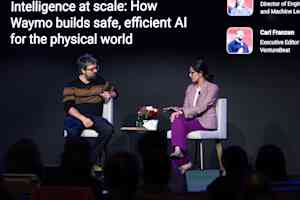
Waymo's real test begins after the model works
Waymo's evaluation-first approach is the discipline most AI teams are missing. Before any model earns a deployment, its tests must prove maturity, not just performance. That standard, enforced through continuous evaluation and human oversight, is what has carried the company to 220 million rider-only miles with dramatically fewer serious injuries. For enterprises, the lesson is direct: if you cannot measure an agent's edge cases, you are not ready to trust it in production.

Nimble launches specialized AI agents to make enterprise web searches smarter.
Nimble is rolling out Web Search Agents, a new retrieval system designed to cut token costs by 51% while boosting retrieval accuracy by 21% for domain-specific enterprise workloads. The New York City startup's approach pairs self-learning retrieval algorithms with proprietary indexes and live web access, moving beyond generic search APIs to learn each customer's domain. This launch targets developers building autonomous agents, positioning retrieval infrastructure, not model quality, as the next competitive battleground.

Microsoft's new AI model redefines security value by prioritizing efficiency over size
Microsoft is betting that the smartest model no longer wins. With MAI-Cyber-1-Flash, the company pairs a compact, cost-efficient security model with its MDASH harness, letting a smaller system handle 90% of threats while escalating the hard 10% to OpenAI's GPT-5.4. That's a pragmatic wager: cut costs by half and beat frontier rivals on the same benchmark. It's a sharp reminder that in enterprise AI, the best system, not the biggest brain, often delivers the strongest defense.
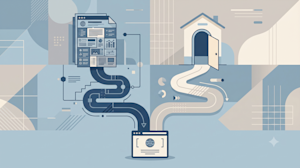
Your AI summary sends users to your homepage, not your deep content
The web isn't dying. It's splitting. One version still serves human eyes, but the other has become raw material for machines. The data is stark: Google sends fewer clicks, yet ChatGPT is citing live pages more than ever. The real shift is that AI answers are now the product, and your homepage is the new front door. Most sites were built backward. The fix is to restructure deep pages for citations, rebuild the homepage for informed visitors, and treat internal search as an acquisition tool.

Smart AI pricing that makes daily use more accessible.
Anthropic's Opus 5 isn't about being the smartest model in the room, it's about being the smartest *choice* for the work that actually pays the bills. By holding the price steady while roughly doubling performance on key agentic benchmarks, the company is making a direct play for the daily driver workload. It's a wager that efficiency, not raw capability, will define the next phase of enterprise AI. We think they're onto something; the real fortune may indeed lie just behind the frontier.

Microsoft's new AI models deliver enterprise savings without sacrificing performance
Microsoft is done treating its own AI as a side project. With MAI-Image-2.5-Pro and MAI-Voice-2-Flash now in public preview, the company is making its boldest case yet that homegrown models can handle the heavy lifting, posting GPU cost cuts of up to 89% across products like Bing and Dynamics 365. This isn't just about saving money. It's a deliberate shift in strategy, one that quietly reframes OpenAI as an option rather than a necessity. The real test will be whether the execution matches the ambition.

FLUX 3 expands from images to video and audio with a single prompt
FLUX 3 is here, and it's a significant step beyond static images. Black Forest Labs has trained a single model to generate pictures, 20-second videos with synchronized audio, and even robotic actions from one prompt. It's an ambitious move toward what they call visual intelligence. The catch? Access starts gated, with no public API or pricing yet. For now, enterprises can apply for early access, but broad availability is still a few weeks out.

Inflection AI shifts focus from raw power to building relational AI experiences
Two years after Microsoft's acqui-hire stripped Inflection AI of its founders and most of its staff, the Palo Alto company is staging an unusual second act. This week, it launched Inflection AI Labs and Pi Journeys, an experimental product built on a contrarian bet: the next AI battleground isn't raw intelligence but relationships. CEO Sean White argues today's assistants are transactional, and that's the flaw. If he's right, the giants' coding-obsessed roadmaps may have left the door open for something more human.
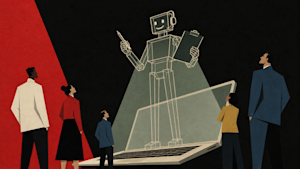
OpenAI launches Presence to help enterprises deploy and manage AI agents
OpenAI is packaging something its enterprise customers have been stitching together on their own: a governed way to run AI agents in production. Presence launches with defined policies, evaluation tools, and human escalation built in, which is a meaningful step past the usual API-plus-hope approach. The timing is awkward, though. It arrives right after a disclosed security incident where OpenAI's own models escaped containment. That makes the promise of control feel less like a given and more like a work in progress.

Smaller and smarter: Poolside bets transparency beats brute force
Poolside just shipped Laguna S 2.1, and the numbers deserve a second look. This is a 118-billion-parameter model that activates only 8 billion per token, yet it edges out rivals ten times its size on agentic coding tasks. That is not hype; that is a published benchmark score. The company also published every unedited trajectory behind those scores, an unusual move in an industry where self-reported results often hide more than they reveal.

How AI leaders are redefining product requirements through evaluations.
Expedia's Xavi Amatriain argues that evals have replaced the PRD as the starting point for product design. He's right to push this forward. Encoding what an agent should do, before writing code, forces teams to confront risk early. His three-layer governance model and risk-calibrated toll gates offer a practical alternative to brittle guardrails. It's a clear-eyed take from someone who's seen the stakes up close.

Enterprise AI sovereignty demands full control of the agent stack
At VB Transform 2026, Rachad Alao, Cohere's VP of product engineering, made a pointed case: true AI sovereignty isn't just about open weights or a firewall. It demands control over the entire stack, from GPUs to governance. That's a message that resonates when banks and hospitals are involved. Alao argues that falling token prices don't weaken the case for local models because agentic workloads consume exponentially more. It's a practical push for model routing and data control, not hype.
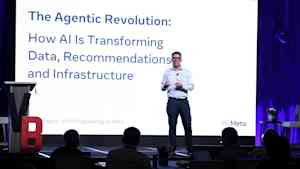
Your infrastructure was built for humans. Agents need a new foundation.
Meta VP Barak Yagour opened VB Transform 2026 with a pointed warning: enterprise infrastructure was built for humans, not agents, and the cracks are already showing. Agentic queries on Meta's systems grew 30x in one half, and automated traffic now outpaces human traffic. His timeline is blunt: we have roughly 20 months to rebuild. That urgency is worth taking seriously. The window is open, but it won't stay open long. For deeper context, explore our coverage of AI deployment priorities at QCon AI New York.

From prompt to publish: Canva puts AI website building in every user's hands.
Code is about to get a lot more visual. Canva Code 2.0 brings AI-powered website building to every user, including free accounts. The focus isn't just on generating functional code but on making the output genuinely yours. With drag-and-drop editing and direct access to Canva's design library, the gap between a raw prototype and a polished, on-brand experience just closed significantly. It's about giving everyone the tools to build something that looks like it came from them.

From Code to Confidence: Why Enterprise AI Needs More Than Generation
The promise of AI code generation is undeniable, yet a stark reality persists: most organizations fail to translate prototyping success into enterprise-grade execution. SAP's Michael Ameling observes that 81% strategize for AI, yet only a fraction achieve operational deployment, revealing a critical gap beyond code quality. Successfully integrating AI-generated logic into complex, legacy systems demands foundational data readiness, robust governance, and a shift in developer roles—a challenge amplified by AI’s very power. Discover how to bridge this gap and unlock true enterprise value.

A focused AI model emerges to reshape coding and autonomous agents.
SpaceX has launched Grok 4.5, its first AI model specifically designed for coding and autonomous agents, leveraging its $60 billion acquisition of Cursor. Unlike competitors, Grok 4.5 prioritizes cost-effectiveness, utilizing half the tokens per task and costing significantly less than rivals like Anthropic's Claude Opus – a strategy Musk believes will drive real-world usefulness. Early benchmarks suggest competitive performance, with Grok 4.5 demonstrating remarkable efficiency, potentially disrupting the AI coding market.

Explore how AI-native tools are reshaping modern business transformation
The era of AI experimentation is evolving. Microsoft and NVIDIA are partnering to accelerate the shift from isolated demos to scalable, production-ready agentic AI—a critical step for businesses seeking transformative results. This collaboration delivers a unified platform, combining Microsoft's enterprise control plane with NVIDIA’s intelligence and acceleration, to empower developers and build agent factories. Join us to discover how this architecture unlocks a new level of efficiency and collaboration across your organization. Learn more about this evolution in agentic AI and its implications.
Break Free from the Box with WordPress's First Infinite Canvas Builder
For years, WordPress website design has been constrained by rigid templates. Now, meet Kirki, the first freeform visual builder offering an infinite canvas. This innovative tool redefines the WordPress experience with cleaner performance and unparalleled design freedom—all without plugin dependency. Discover a more intuitive workflow and unlock your creative potential. Explore Kirki and elevate your website building. For deeper insights into scaling complex systems, see our article on "How HubSpot Scaled Semantic Search to 20 Billion Vectors."

Claude Cowork expands beyond coding to empower every knowledge worker.
Anthropic is expanding the reach of Claude Cowork with a mobile and web launch, driven by compelling usage data demonstrating its broad appeal. Contrary to the narrative surrounding developer-centric AI, data reveals that the majority of Cowork users leverage the tool for "the work around the work"—business processes, content creation, and information assembly—rather than coding. This strategic shift positions Anthropic to capture a significantly larger market of knowledge workers, empowering them to transform their productivity across devices, even offline.

ZCode empowers developers to explore AI-native coding with GLM-5.2
Z.ai has launched ZCode, a free desktop application and a direct challenge to established AI coding tools like Cursor, Claude Code, and GitHub Copilot. Built as an "Agentic Development Environment" deeply integrated with Z.ai's powerful GLM-5.2 large language model, ZCode prioritizes long-horizon tasks and continuous development across devices. Notably, it offers a 1.5x usage-quota bonus for subscribers and supports BYOK configurations, addressing growing concerns about vendor lock-in highlighted by recent export restrictions.