caching
caching at Beyond Market Intelligence is a file of 11 stories. The newest of them: “Build the Engines Behind Fast LLMs With These Hands-On Projects”, “Stop Waiting for Answers Your Local Model Already Knows”, and “Valkey's Future Expands Beyond Caching, Say Its Lead Maintainers”. Latency defines the LLM experience, and the fastest way to understand it is to build it yourself. Waiting seconds for an answer your local model has already figured out hundreds of times is a familiar frustration. Acme AI is the next-generation, AI-powered spreadsheet platform built to replace Excel and redefine how analysts, data scientists, and enterprise teams work… The list below is every caching story on Beyond Market Intelligence, newest first.

Build the Engines Behind Fast LLMs With These Hands-On Projects
Latency defines the LLM experience, and the fastest way to understand it is to build it yourself. These hands-on projects move past theory, putting you behind the engine to see exactly where speed is won and lost. It is direct, practical work that transforms abstract performance concepts into tangible skill. If you are also curious about rethinking core learning methods, our exploration of physics-inspired approaches without backpropagation pairs naturally with this builder's mindset.
Stop Waiting for Answers Your Local Model Already Knows
Waiting seconds for an answer your local model has already figured out hundreds of times is a familiar frustration. shad0v solves that by sitting in front of any OpenAI-compatible server, logging responses, and after roughly a thousand, compiling a tiny table that answers repeats on CPU in microseconds, only when it agrees with the model 95% of the time. It even learned Snake from an LLM's moves.

Valkey's Future Expands Beyond Caching, Say Its Lead Maintainers
Two years after forking from Redis, Valkey is making clear its ambitions extend well beyond caching. The project's twelve maintainers and nine committee members are pushing forward with meaningful upgrades, including better throughput, stronger cluster functionality, and planned features like synchronous replication and tiered storage. That's a serious roadmap for a database aiming to be a core infrastructure player. For teams exploring AI-driven workflows, the emphasis on automation and security feels particularly timely.
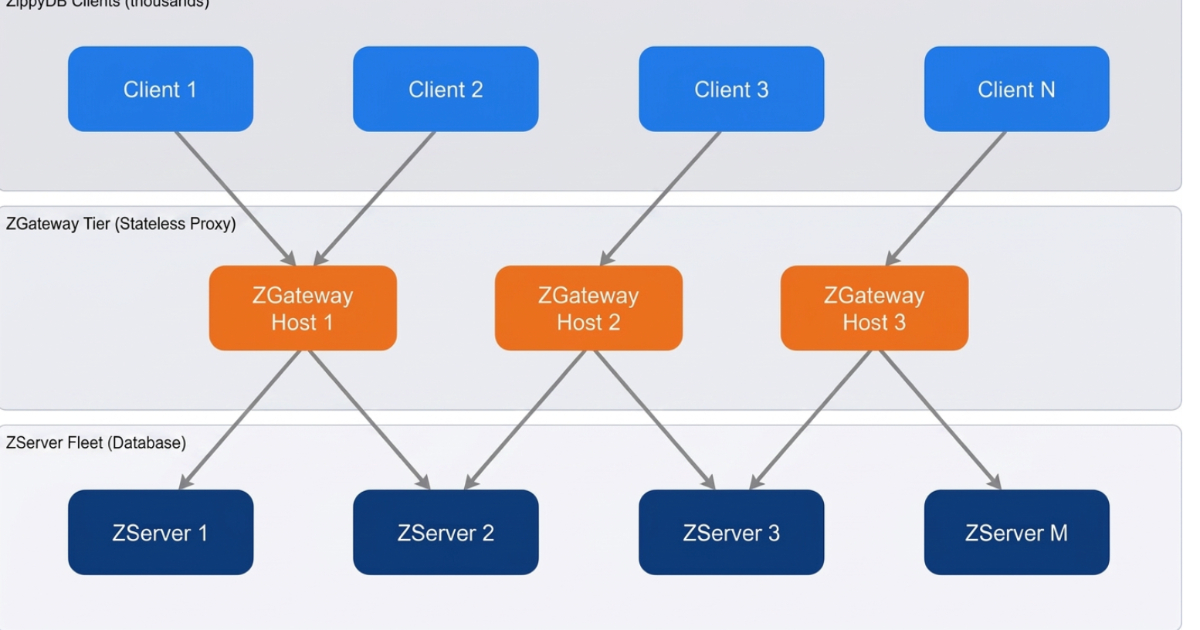
How Meta's ZGateway Slashes Connections 19x While Processing a Billion Operations Per Second
Meta's ZGateway is doing something quietly remarkable: slashing persistent connections by 19x while processing over a billion operations per second. That's not just efficiency; it's a rethinking of how stateless proxies can centralize traffic without becoming a bottleneck. By handling 40% of ZippyDB traffic, it proves scale and simplicity can coexist. For teams wrestling with connection sprawl, this is a model worth studying. And if you're curious about Meta's broader engineering bets, our piece on Linear's StyleX migration offers another angle.
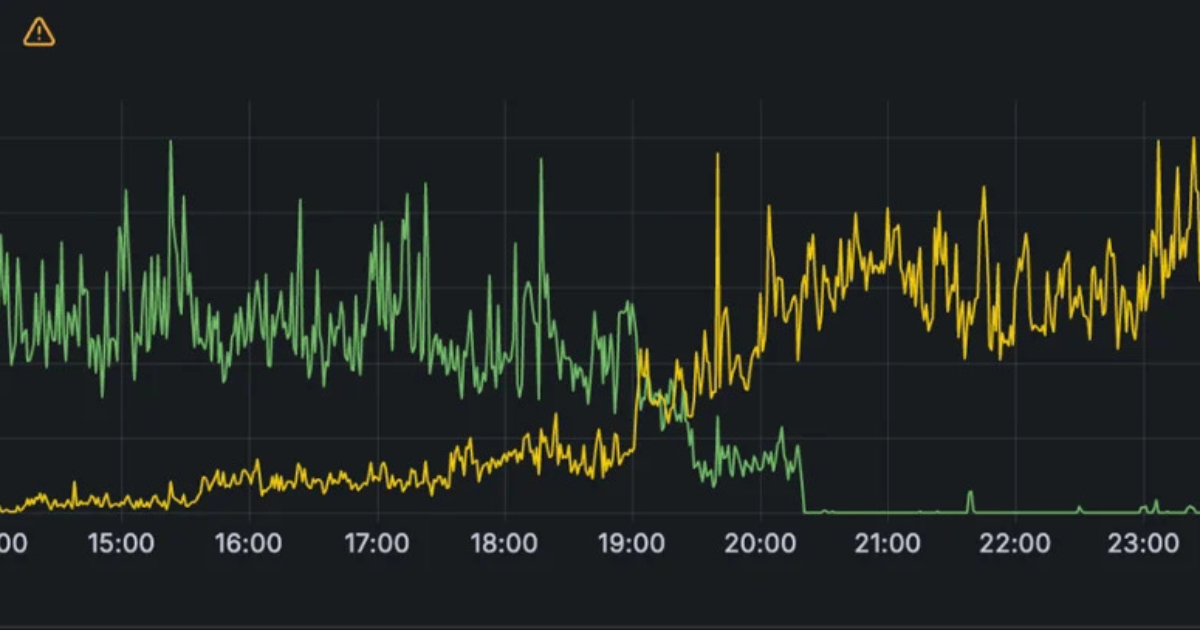
Cloudflare's Blog Finds Performance Gains with EmDash, Its New CMS
When Cloudflare moved its blog off WordPress, it didn't just switch platforms; it built its own CMS, EmDash, and open-sourced it. The payoff is clear: the system handles up to 7,000 requests per second while improving caching and performance. That's a practical win for a team managing heavy traffic. It's a reminder that sometimes the best tool is the one you create yourself. For more on how organizations are building internal infrastructure, check out our piece on Perplexity's CobbleDB migration.
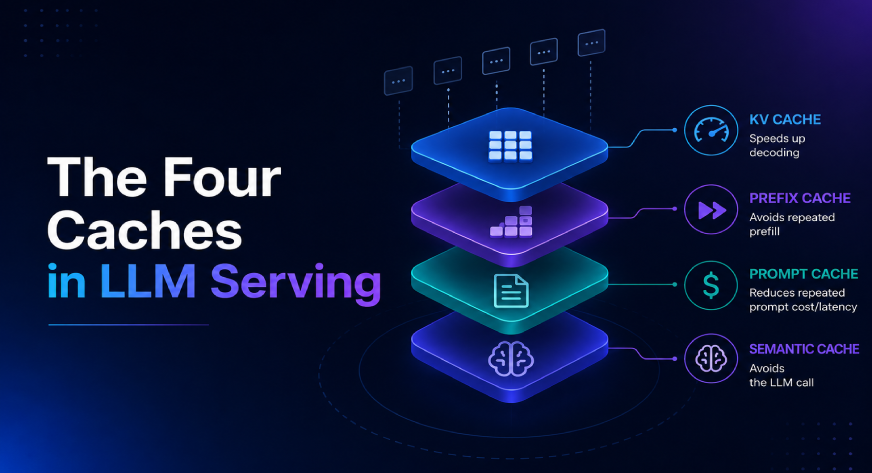
Smart Caching: Optimizing LLM Performance and Reducing Costs
Every request your LLM handles may carry millions of tokens, yet much of that data repeats across calls. Reprocessing it wastes time and drives up compute costs. Smart caching targets exactly this waste, and the new piece breaks down the four cache layers that make serving faster and cheaper. It's a practical read for anyone tired of paying twice for the same work. For a deeper look at distributed systems, our guide to distributed algorithms pairs well with this one.

Autumn's first AI release brings Claude Fable 5.1 with smarter, cheaper caching.
Anthropic is redefining what an enterprise model should be. Claude Fable 5.1 arrives with a 75% cut to cached-read costs, making sustained, multi-hour agents dramatically more economical to run. It's not just another benchmark jump, it's a deliberate shift toward work that doesn't finish in one prompt. Combined with Enterprise Frontier Safeguards, which keep monitoring data in your own cloud, this release tackles capability, cost, and control as a single, unified problem. Explore what persistent, governable AI can actually do.

GLM-5.3 API opens for developers to build with advanced AI agents.
GLM-5.3 has landed on Z.ai's API at the same $1.40/$4.40 per-million-token rate as its predecessor, and that's a bold move. Developers get the new model's stronger coding and agent performance without paying a posted premium. It's not the cheapest option on the board, but at $5.80 per million combined tokens, it undercuts heavyweights like Claude Opus 5 and GPT-5.6 Sol. The catch? It's more verbose, so flat rates don't tell the whole cost story. For teams exploring frontier work, it's a practical entry point.

When benchmarks meet reality, AI agents still have room to grow.
DeepSeek's V4 Flash tops leaderboards and earns developer praise, but real-world agent work tells a different story. In testing across eight harnesses and 240 runs, only 129 passed, just six of 30 complex workflows succeeded everywhere. That gap matters. Raw capability isn't enough when tool configuration, caching, and retries shape outcomes. Meanwhile, price hikes of up to 1,100% complicate the value equation. The model still undercuts rivals, but the real test is orchestration, not benchmarks. Enterprises should measure cost per completed workflow, not per token.
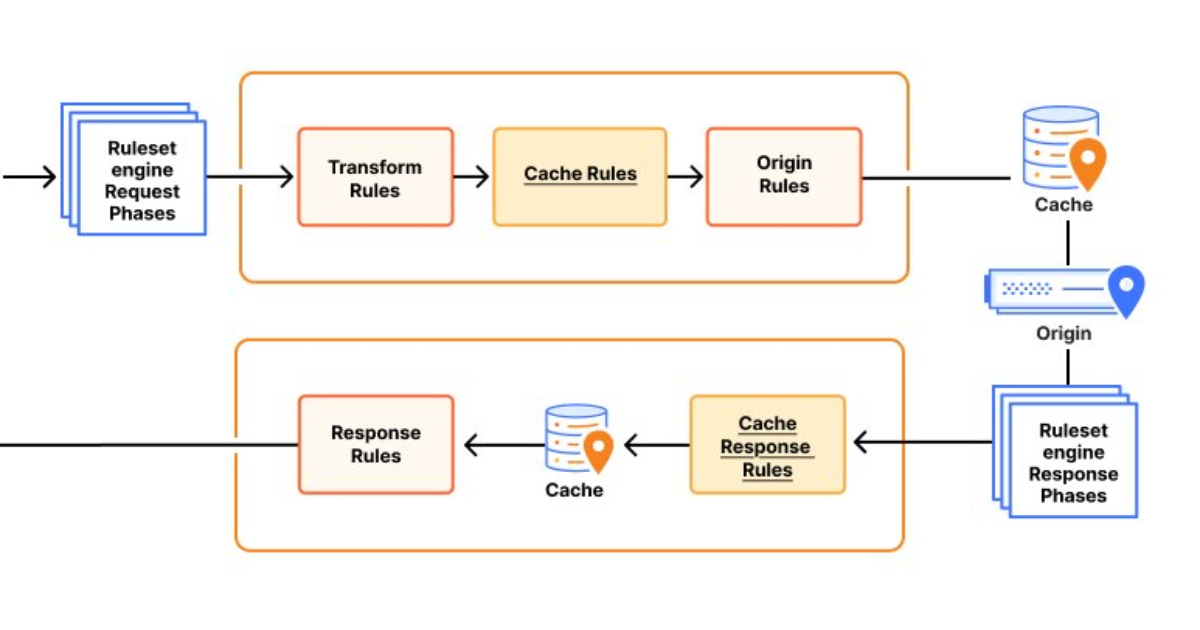
Cloudflare adds response-phase rules for smarter cache control
Cloudflare's new Cache Response Rules add a crucial second phase to its rules engine, evaluating origin responses before they're cached. Previously, Cache Rules only looked at request attributes, leaving response-level control out of reach. This update matters because it gives developers more precise, flexible cache management where it counts. It's a practical step forward, not a flashy overhaul. For deeper performance insights, Cloudflare's own work with EmDash shows the company isn't shy about applying its own innovations to real-world problems.
How DoorDash Built a Proxy Cache Handling 1.5 Million Requests per Second
DoorDash's Entity Cache is a masterclass in handling scale without drama. Serving over 1.5 million requests per second with 99.99999% availability, the platform uses Envoy and Valkey to cut redundant service-to-service calls across its microservices. That's not just impressive; it's the kind of quiet reliability that keeps complex systems humming. By leaning on event-driven invalidation and smart failure handling, DoorDash shows how transparent caching can transform performance. For teams wrestling with similar growth, this approach offers a practical, forward-thinking path worth exploring.