cognitive automation
25 stories filed under cognitive automation on Beyond Market Intelligence. The newest of them: “Designing for intent, not clicks, in the age of invisible AI”, “Connecting AI agents without redesigning your CX architecture creates new challenges.”, and “Slack Code brings AI coding agents into team conversations”. The button is dying, and that's not a loss; it's a release. Enterprises are racing to deploy AI agents across every channel, but most are discovering a hard truth: bolting conversational AI onto legacy systems doesn't create a connected experience. Acme AI is the next-generation, AI-powered spreadsheet platform built to replace Excel and redefine how analysts, data scientists, and enterprise teams work… The list below is every cognitive automation story on Beyond Market Intelligence, newest first.

Designing for intent, not clicks, in the age of invisible AI
The button is dying, and that's not a loss; it's a release. As the web sheds menus and forms, the real work shifts to designing for intent, not clicks. For UX designers, this means stepping back from visible controls and learning to guide transparent, AI-driven experiences. It's a harder, more human craft. If you're tracking how voice and disclosure fit into this shift, our piece on ElevenLabs CEO and transparency pairs well with this conversation. Explore that tension; it's where the next interface begins.

Connecting AI agents without redesigning your CX architecture creates new challenges.
Enterprises are racing to deploy AI agents across every channel, but most are discovering a hard truth: bolting conversational AI onto legacy systems doesn't create a connected experience. It creates new silos. Gaurav Anand of Tata Communications argues the real bottleneck isn't intelligence, but orchestration. The next competitive edge belongs to organizations that can coordinate AI, people, and data through a shared context layer. That's where the work of building truly frictionless customer journeys begins.

Slack Code brings AI coding agents into team conversations
Slack is betting that the future of AI coding isn't a lone developer in a terminal, but a team watching the work happen in the open. With Slack Code, agents like Claude and Devin move into dedicated channels where anyone can steer, review, or contribute, turning software creation into a multiplayer sport. It's a smart, human-centered shift. For a deeper look at how teams are rethinking their workflows, our piece on Docker's sandboxed agent environments pairs well with this story.
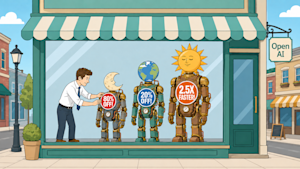
OpenAI slashes GPT-5.6 Luna pricing 80% to compete on cost
The price of intelligence just dropped. OpenAI slashed GPT-5.6 Luna's combined token cost by 80%, bringing it to $1.40 per million tokens and planting it firmly in the low-cost tier alongside models from Google and Xiaomi. Terra's 20% cut to $14 matches Google's Gemini 3.1 Pro, while Sol gains a pricier Fast mode. This isn't just a discount; it's a strategic pivot. As model capability plateaus, the real battleground shifts to production economics, and OpenAI is betting on cost-per-intelligence to win enterprises.

When a bug resists fixing, the smartest feature is a new path forward.
For weeks, Runway chased a bug that made AI avatars drift off-center during real-time video generation. The fix wasn't a clever back-end patch, it was a front-end feature that simply re-centered the user's image before generation began. That pivot turned a limitation into a perceived benefit. Ryan Phillips, head of enterprise product at Runway ML, shared this lesson at VB Transform 2026, arguing that even teams building on foundation models rather than training their own can borrow from Runway's disciplined approach to evaluation and iteration.

Smart AI pricing that makes daily use more accessible.
Anthropic's Opus 5 isn't about being the smartest model in the room, it's about being the smartest *choice* for the work that actually pays the bills. By holding the price steady while roughly doubling performance on key agentic benchmarks, the company is making a direct play for the daily driver workload. It's a wager that efficiency, not raw capability, will define the next phase of enterprise AI. We think they're onto something; the real fortune may indeed lie just behind the frontier.

From Code to Confidence: Why Enterprise AI Needs More Than Generation
The promise of AI code generation is undeniable, yet a stark reality persists: most organizations fail to translate prototyping success into enterprise-grade execution. SAP's Michael Ameling observes that 81% strategize for AI, yet only a fraction achieve operational deployment, revealing a critical gap beyond code quality. Successfully integrating AI-generated logic into complex, legacy systems demands foundational data readiness, robust governance, and a shift in developer roles—a challenge amplified by AI’s very power. Discover how to bridge this gap and unlock true enterprise value.

Dynamic memory helps AI agents reason without drowning in noise.
Addressing the critical limitation of context window size in AI agents, researchers at the National University of Singapore have introduced MRAgent, a novel framework for active memory reconstruction. Unlike traditional "retrieve-then-reason" approaches, MRAgent dynamically builds memory based on accumulating evidence, significantly reducing token consumption—just 118K tokens per query, compared to LangMem’s 3.26M. This innovative architecture, detailed on GitHub, promises to unlock more effective long-horizon reasoning and represents a key step toward more efficient and scalable AI agents.
Embrace Uncertainty to Make Smarter Design Decisions with AI
In an increasingly AI-driven design landscape, it's crucial to move beyond treating predictions as definitive truths. Probabilistic Design is a future-focused mindset empowering UX and product teams to embrace uncertainty and intelligently interpret AI outputs. Learn how to make adaptive decisions, transforming potential pitfalls into opportunities. Discover a framework for navigating complexity and building more resilient solutions. For deeper insights into the evolving AI landscape, explore "Probably raises $9M to build a more reliable kind of AI."

Alibaba's Qwen model now powers autonomous AI agents across multiple days
Alibaba's Qwen3.7-Max marks a significant advancement in the AI landscape, boasting 35 hours of continuous autonomous operation. This proprietary model can execute complex tasks, positioning itself firmly in the emerging "agent era," where AI actively plans and adapts over extended periods. By integrating with external frameworks like Anthropic's Claude Code, Qwen3.7-Max offers enterprises a powerful tool for automation and innovation. However, its API-only access raises questions about accessibility, reflecting a shift from Alibaba's historically open approach.

Discover how AI agents transform enterprise workflows from months into days.
Kore.ai has launched its Artemis AI agent platform, marking a significant evolution in enterprise AI technology. Designed to empower organizations to build, govern, and optimize AI agents with remarkable speed and efficiency, Artemis leverages a new intermediary language, Agent Blueprint Language (ABL), to streamline complex processes. This launch positions Kore.ai as a neutral alternative amid fierce competition from giants like Microsoft and Salesforce. By prioritizing AI-driven development, Kore.ai invites enterprises to explore innovative solutions that enhance productivity and foster trust in AI.
Ten UX truths that connect experience quality to measurable business growth
In today's fast-paced digital landscape, every second of friction in user experience has a measurable business cost. Carrie Webster shares ten compelling, data-backed truths that illuminate the direct connection between user experience (UX) and key business outcomes like revenue, retention, and long-term growth. Understanding these insights can empower organizations to enhance their UX strategies, ultimately driving better results. For those interested in optimizing their processes, explore our related article, "AI Tax Optimization: Strategies for High Net Worth Individuals," for additional strategies that foster growth.
Explore how prompt fatigue reshapes your focus and productivity.
Navigating the complexities of AI in our workflows can often feel overwhelming, especially when it starts to impact our cognitive capacity. In "Your AI Use Is Breaking My Brain," the author explores how reliance on AI tools can lead to cognitive overload, turning us into managers of digital interns rather than creators. While AI can enhance productivity, it comes with hidden costs that deserve our attention.

From isolated AI tools to an intelligent enterprise
Is your enterprise adaptive to AI? As organizations embark on their AI journeys, many discover that simply deploying individual solutions doesn’t lead to transformative impacts. The next phase requires a shift from automation to continuous adaptation, especially for complex, globally distributed entities like Global Business Services. Embracing adaptive AI ecosystems allows organizations to orchestrate workflows intelligently and respond to evolving business needs. To explore this critical transition and its implications, delve further into our insights on how adaptive AI can reshape your enterprise landscape.

Smarter AI agents learn when to think, not just which tool to use
Researchers at Alibaba have tackled a significant challenge in AI agent development by introducing Hierarchical Decoupled Policy Optimization (HDPO). This innovative reinforcement learning framework trains agents to intelligently choose between using external tools and relying on their internal knowledge. The result is Metis, a multimodal AI model that dramatically reduces redundant tool calls from 98% to just 2%, while achieving state-of-the-art reasoning accuracy. By enhancing decision-making capabilities, Metis exemplifies a shift towards more efficient and effective AI systems, prioritizing accuracy without unnecessary tool invocation.

Explore how AI evolves its own training data and model architecture
Introducing ASI-EVOLVE, a groundbreaking framework developed by researchers at SII-GAIR, designed to automate the entire optimization loop for AI training data, model architectures, and algorithms. By employing a continuous "learn-design-experiment-analyze" cycle, ASI-EVOLVE significantly reduces manual engineering efforts while enhancing performance beyond traditional human baselines. This innovative system autonomously discovers novel designs, improves data curation, and refines learning algorithms. With ASI-EVOLVE, enterprises can streamline their AI workflows and unlock new efficiencies, making advanced AI capabilities more accessible and effective than ever before

Claude Opus 4.7 arrives, giving you a smarter, simpler path through complex data.
Anthropic has unveiled Claude Opus 4.7, marking its most powerful large language model to date and retaking the lead in the competitive landscape of AI. This release surpasses OpenAI's GPT-5.4 and Google's Gemini 3.1 Pro in critical benchmarks, particularly in agentic coding and knowledge work. While Opus 4.7 excels in hard sciences and autonomous workflows, it requires careful prompting to maximize its capabilities. With enhanced self-verification and multimodal support, this model positions itself as a specialized powerhouse for enterprises seeking reliable AI solutions.

Claude Code's redesign and Routines signal AI's shift from chat to coworker.
On April 14, 2026, Anthropic unveiled a redesigned Claude Code desktop app and the innovative "Routines" feature, marking a pivotal shift in how enterprises approach AI-driven development. This transition from AI as a simple chatbot to a robust workforce reflects a new design philosophy aimed at enhancing productivity. The updated app, complete with a central "Mission Control" sidebar, empowers developers to manage multiple tasks seamlessly.

The real AI bottleneck is agents that can't share context.
In a recent discussion, Cisco’s SVP and GM Vijoy Pandey highlighted a pivotal challenge in AI: while agents can connect, they struggle to think together. This disconnect creates a bottleneck for next-generation systems, as agents lack shared context and semantic alignment. Pandey advocates for a transformative “internet of cognition,” where AI entities collaboratively tackle new challenges without human intervention.

Agentic AI arrives, and the path forward demands our focus.
The age of agentic AI is here, bringing both promise and complexity to our digital landscape. Tools like OpenClaw and Claude Cowork are redefining our interaction with technology, automating tasks from inbox management to legal contract review. However, as these powerful agents gain autonomy, they also introduce risks, raising concerns about data security and ethical use. Balancing innovation with responsibility is essential.
Agentic AI's reach: Mapping workflow displacement across 236 occupations.
In our latest analysis, we extend the Acemoglu-Restrepo task displacement framework to assess the impact of agentic AI—systems that can execute entire workflows—on 236 occupations across five major U.S. tech metros. Unlike previous models that treat tasks as independent, our approach reveals that high-credential roles, such as software engineers, face significant automation exposure. Key findings highlight a measurable adoption lag between regions, emerging job categories requiring no coding, and a prediction of widespread moderate exposure rather than catastrophic displacement.
Embrace agentic AI: discover how autonomous tools reshape your workflow.
The rise of agentic AI is reshaping our reality, ushering in both promise and chaos. Tools like OpenClaw and Claude Cowork are redefining productivity, automating tasks from inbox management to legal reviews. However, with these advancements come critical concerns about data security and ethical use. As we navigate this new landscape, establishing trust and accountability is paramount.
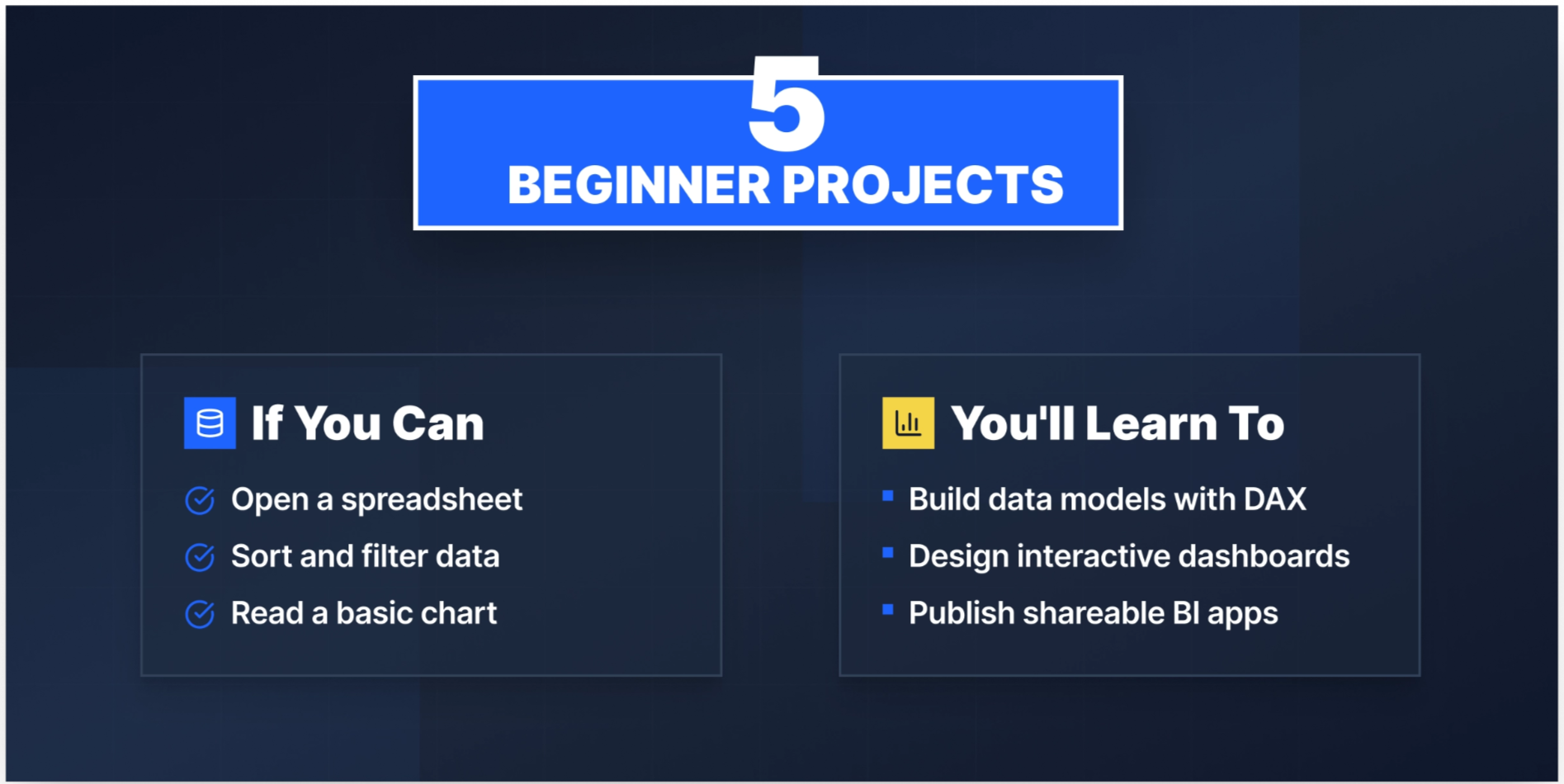
Transform Your Data Portfolio with These 15 Power BI Project Ideas
Building a robust Power BI portfolio is essential for aspiring business or data analysts in 2026. Employers seek candidates who can transform messy data into clean models and create impactful dashboards that drive informed decision-making. 15 compelling Power BI project ideas will not only showcase your technical prowess but also demonstrate your ability to derive actionable insights from data. These projects serve as tangible evidence of your skills, empowering you to stand out in a competitive job market.
Designing agentic AI systems where control meets user trust.
In a world where technology can either empower or overwhelm, designing for agentic AI is crucial. Users crave autonomy, but they also need control, consent, and accountability in their interactions with intelligent systems. This guide presents practical UX patterns and operational frameworks that prioritize user trust and transparency. By integrating these design principles, organizations can build powerful systems that not only deliver results but also enhance user confidence.