cost
cost at Beyond Market Intelligence is a file of 32 stories. The newest of them: “Why Model Switching Can Erase the Savings of Cheaper AI Inference”, “AWS Agent Pinpoints Cloud Fixes Before You Deploy”, and “Your First NeurIPS Workshop Is Worth Funding Yourself”. Testing cheaper LLM inference models comes with a hidden cost: switching models mid-session can erase the savings entirely. AWS's Well-Architected Agent preview points to a smarter path forward for cloud teams: catch issues before they reach production. Acme AI is the next-generation, AI-powered spreadsheet platform built to replace Excel and redefine how analysts, data scientists, and enterprise teams work… The list below is every cost story on Beyond Market Intelligence, newest first.
Why Model Switching Can Erase the Savings of Cheaper AI Inference
Testing cheaper LLM inference models comes with a hidden cost: switching models mid-session can erase the savings entirely. I ran routing experiments to understand why, and the results show that context loss, incompatible reasoning patterns, and repeated re-processing add up fast. The math on model switching is clear, cheaper per token means nothing when you pay the switching tax repeatedly. For deeper context on what keeps LLMs in check, see our related piece on spec-driven test automation.

AWS Agent Pinpoints Cloud Fixes Before You Deploy
AWS's Well-Architected Agent preview points to a smarter path forward for cloud teams: catch issues before they reach production. By analyzing environments against established best practices, it surfaces prioritized fixes across cost, security, performance, and reliability, then suggests remediation steps. Reviewing infrastructure-as-code pre-deployment is especially practical, shifting quality checks earlier in the workflow. For those exploring how such agents reason, our interactive 3D visualization of an AI agent's inner workings offers a useful companion perspective.
Your First NeurIPS Workshop Is Worth Funding Yourself
A NeurIPS workshop poster is a real credential, especially right after a master's. Paying your own way for a workshop-only ticket feels like a gamble, but it's one that signals genuine commitment. You'll network directly with researchers who share your niche, and that visibility often outlasts the conference itself. For deeper context on what you can still gain without full access, our related piece "Navigating NeurIPS Without Workshop Access: What Attending Still Offers" covers the practical opportunities that remain.

Replit pivots from Anthropic to OpenAI, citing cost as key factor
Replit CEO Amjad Masad confirmed the company has shifted its primary AI partnership from Anthropic to OpenAI, with cost playing a central role in the decision. The move comes despite Replit announcing an OpenAI partnership in August with no public indication it had moved away from Anthropic. We explored a similar theme in "Reimagining the workplace where AI handles tasks so people can lead," which examines Masad's broader vision for AI-driven productivity. Pragmatic economics, not ideology, drove this choice.

Hydrogen swaps diesel for less money with this retrofitted truck solution
Diesel is expensive and polluting, but LNK Energies says it has a smarter answer: a retrofitted truck that swaps diesel for hydrogen, and actually costs less. That is a compelling value proposition in a sector hungry for cleaner fuel. The company is not asking fleets to buy new vehicles, just to upgrade existing ones. It makes the transition feel practical. For more on how startups are reshaping legacy industries, see our coverage of the military contract won by an AI-powered balloon company.

Tracking the True Cost of Long-Running Coding Agents
Long-running coding agents don't just cost compute, they cost control. As these systems operate for hours or days, the expense of monitoring every tool call compounds quietly, and the real price is often hidden in oversight rather than execution. That's a problem worth examining closely. For a deeper look at how risky actions can be caught early, our piece on a decision-first model offers a useful lens. Understanding where the money goes is the first step toward spending it wisely.

A cheaper inside look keeps AI agents in check without the costly second opinion
Goodfire's new approach is refreshingly practical. Instead of paying a second AI to review every action an agent takes, its monitors look inside the model as it works and only escalate when something seems off. That's a smarter use of resources, and it keeps oversight affordable without sacrificing visibility. For anyone exploring how agents can run more efficiently, this is a meaningful step toward cost-effective control. And if you're curious about related agent tools, our piece on Docker Agent is worth a look.
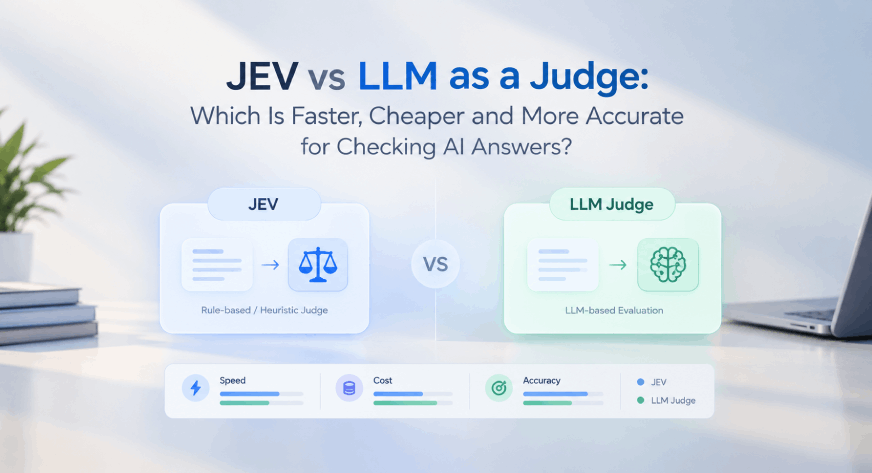
Why Small Decision Models Beat LLMs for AI Answer Evaluation
Jev takes a different path in the AI evaluation debate. Where LLM-as-a-Judge generates full responses for every check, Jev returns a short choice with a confidence score. That is a leaner, faster route to the same destination. Teams feeling the cost and delay of large-model judging should explore this approach. It keeps the evaluation simple without sacrificing reliability. For more on how small decision models fit into the broader routing conversation, our piece on model routing as a design choice pairs well with this discussion.

Legato reimagines hearing care with AI glasses built for comfort and access
Legato's AI glasses tackle a problem many avoid naming: the discomfort and stigma of traditional hearing aids. By embedding hearing care into something people already wear, they lower both the financial and social barriers to access. That's a smart reframe. For a deeper look at how AI is rethinking everyday tools, see our coverage of how Photon's $4.5M bet on AI agents reimagines messaging over apps. Legato proves that innovation often starts by questioning what a device is supposed to look like.

Stop Overpaying for AI Tools Hidden in Your Data Workflow
If you're feeling constrained by traditional spreadsheets, it's time to explore a solution that empowers your data journey. Jev delivers typed probabilities, not text, for faster data decisions. TypeSafe AI, founded by former OpenAI researcher Diogo Almeida, has introduced Jev, a decision-making model that generates calibrated probabilities for any given text prompt. This isn't another chatbot. It's a tool built for clarity, giving users actionable numbers instead of verbose answers. We find this approach refreshingly direct.

Fitbit Air arrives in India but its price tag raises questions
Fitbit Air lands in India at roughly $146, about $47 more than its U.S. price tag. That gap raises a fair question: is the premium worth it for Indian buyers? We think the answer depends on whether the device delivers enough localized value. For context, Apple Pay's measured arrival in India shows that global tech brands often struggle with pricing strategy here. Fitbit should take note. Pricing isn't just a number; it's a signal of respect for the market.

300K lines refactored for $4,000: what a C codebase taught AI agents
Three hundred thousand lines of C, refactored in three weeks for $4,000 in tokens. CodeScene's case study is a practical stress test for AI agents, not a headline. The playbook of codebase-specific recipes the agents built is the real prize, it suggests these tools learn context, not just syntax. Practitioners are right to question the scope and the harness's role. That skepticism is healthy.
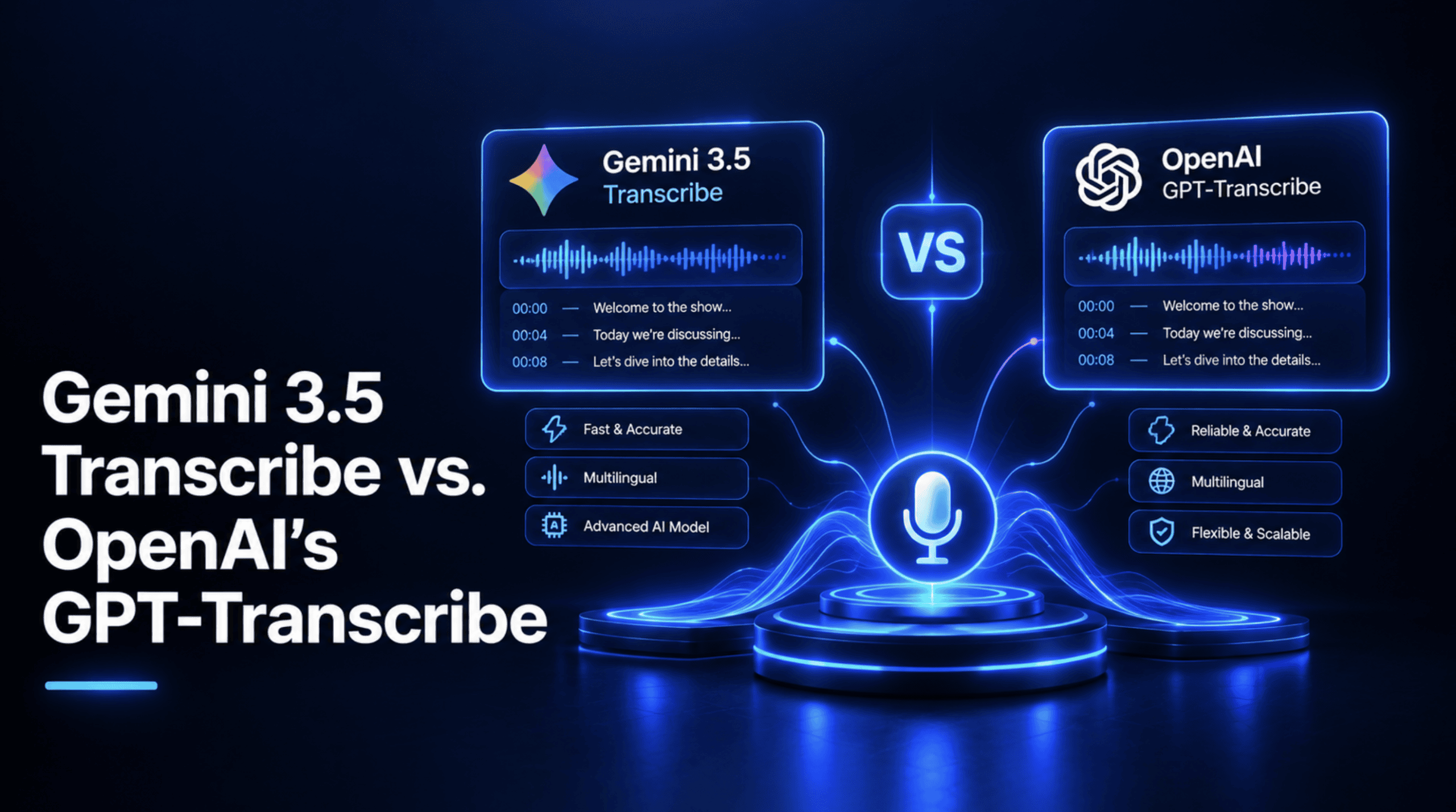
Two AI transcribers compared: real performance where the numbers count
You've read the benchmarks, but what happens when two AI transcribers face real-world data? We pushed them past marketing claims to see where the numbers actually land. The comparison walks through each model's background, a concrete use case with working code, and a side-by-side comparison of the metrics that determine productivity. If you appreciated our breakdown of Qwen3-VL's struggles with dates, this follow-up answers a practical question: which tool earns its place in your workflow?

Evolve Your Recommendations: Real-World Insights on Adaptive Systems
Adaptive recommendation systems are rarely defeated by model architecture alone. Mallika Rao shows that real complexity emerges in production, where real-time feedback loops, retrieval freshness, and multi-stage orchestration must all bend to latency and cost constraints. This is practical insight, grounded in operational reality. For deeper context on how such systems are built, explore our piece on *Agent Harnesses* to see similar engineering discipline applied elsewhere. Rao's work is a reminder that evolution happens under pressure, not in isolation.

Explore OpenAI’s New Models: Accessible AI for Smarter Spreadsheets
OpenAI's latest models share DNA with Astra, yet they're aimed squarely at a simpler target: your everyday spreadsheet. That's a welcome shift. For too long, powerful AI felt locked behind complexity. These new tools strip that barrier, making smarter data work feel less like a chore and more like a natural extension of your thinking. It's a practical step forward. If you're already exploring how AI handles real-world tasks, our piece on computer vision deployments pairs nicely with this launch.
Stop Wrestling with VLOOKUP and Discover a More Reliable Approach
A VLOOKUP that works 80% of the time is a puzzle with a pattern, not a mystery. When one lookup fails while a second, similar one succeeds, the issue is rarely the formula itself; it's the data's hidden inconsistencies. The real clue is that your price lookup works flawlessly because it uses `VALUE`, forcing a numeric match. Your description lookup doesn't. The problem is almost certainly a formatting mismatch, perhaps some part numbers are text, others are numbers.
From Loot to Logic: Build Your Own Probability Tracker
Building a statistical cheat sheet for loot probability is a smart way to turn frustration into clarity. The user's plan to map binomial distributions onto reroll costs is practical, and the percentile overview idea adds real insight. The main hurdle is linking cost scaling to roll counts, but that's solvable with a lookup table. For a deeper dive into adaptive systems that handle variable outcomes, check out "Evolve Your Recommendations: Real-World Insights on Adaptive Systems.
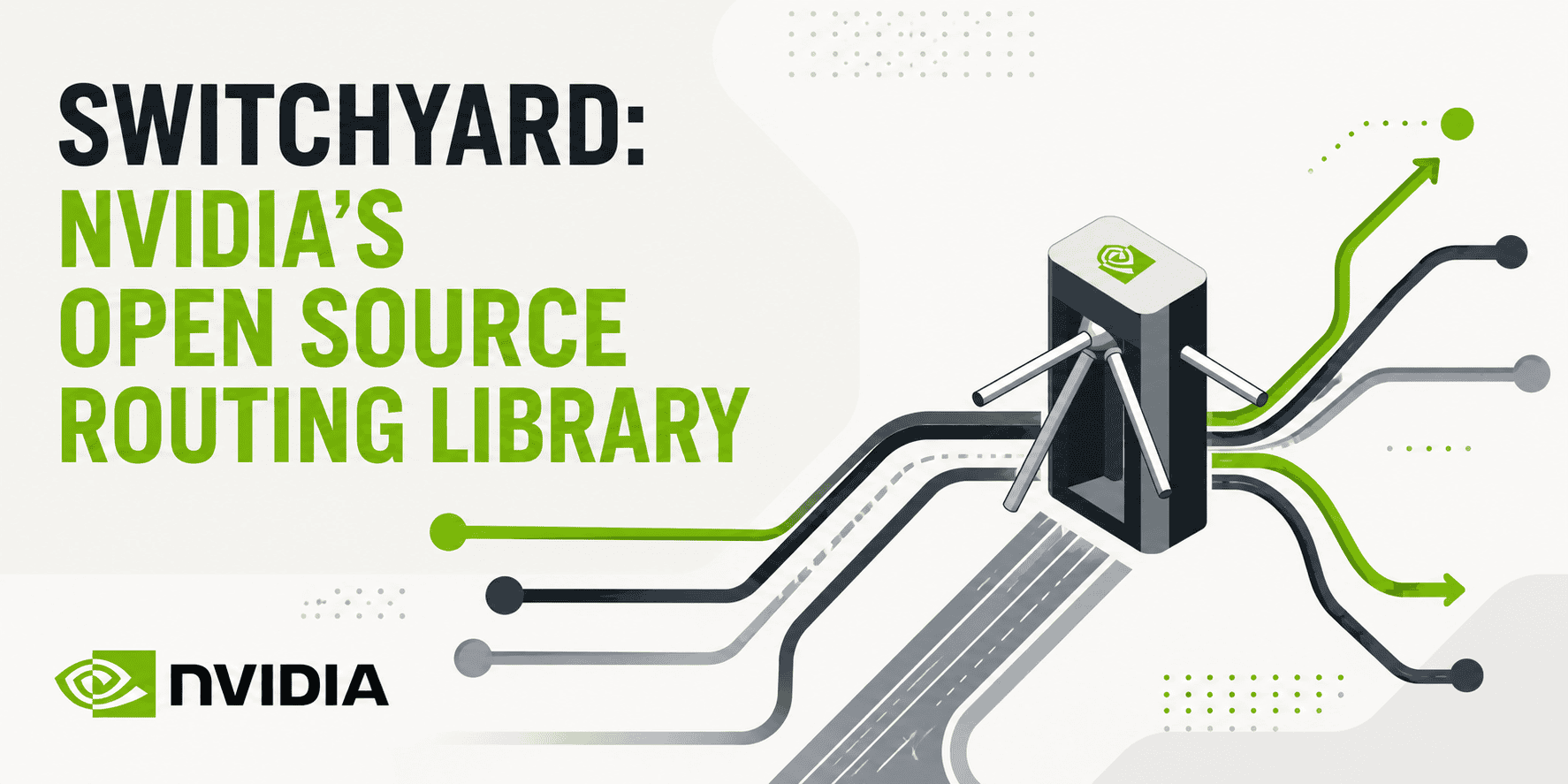
Intelligent routing reduces AI costs without sacrificing quality.
Not every AI request needs the full power of your most expensive model. Switchyard, NVIDIA's open-source routing library, offers a smarter approach: route simpler queries to lighter models, saving cost and latency without a major drop in quality. It's a practical shift toward efficiency. For those building distributed systems, our guide on distributed algorithms explores the foundational concepts that make routing like this possible. Explore Switchyard and see how intelligent routing changes the math.

The new Mac Mini delivers M6 performance starting at $899
Apple's new Mac Mini arrives with the M6 chip and a $899 starting price, pairing 16GB of RAM with 256GB of storage. That's a solid foundation for everyday power, though the base storage might feel tight for heavier users. It's a practical step forward, not a flashy leap. For more on how AI tools handle real-world tasks, our piece on Jev versus LLMs offers a grounded look at decision-making.

Memory shortage forces Amazon to raise hardware prices 60%
Amazon is passing the memory shortage directly to consumers, raising hardware prices by 60 percent. It's a stark reminder that supply chain pressure doesn't stay in the factory; it lands on the shelf. We get the logic, but the scale stings. For anyone watching how adaptive systems handle real-world constraints, this feels like a familiar lesson in forced evolution. If you're curious how companies navigate such tight margins, our piece on adaptive recommendation systems offers a useful parallel.
Discover how AI can protect your margins without hiding the numbers.
Hiding your margin inside the bus cost is a clever stopgap, but it's a trap. When your sales team notices the bus fee shifting without reason, they'll dig deeper, and your safety net vanishes. The real issue isn't spreadsheet技巧; it's trust. A cleaner approach is to use Excel's custom number formats to display a rounded total while keeping the true formula intact, or to place the margin in a separate, protected sheet that only you can edit.

Blinded Tests Reveal When Long Context Beats RAG on Quality
A 127,000-token prompt can beat a top-5 RAG pipeline on the same 12 questions, graded blind for correctness, completeness, and grounding. That's the claim this controlled comparison puts to the test, and it's a useful one. Most teams assume retrieval is the only way to manage cost and latency, but Kimi K3's 1M token context window challenges that reflex. The tradeoffs are real, and the data here gives you a clearer lens on when full-context wins.

Route easy queries around the model to cut latency and cost
Every question in an enterprise RAG pipeline doesn't deserve a full model call. The pipeline from Article 9 proves that simple keyword matches can skip the LLM entirely, saving about two seconds per query. That's not a small win; it's a direct cut to latency and cost without sacrificing accuracy. Buying faster hardware isn't the only answer. Routing easy questions around the model is smarter. For more on questioning AI's assumptions, check out "Verify Your AI's Understanding: A Simple Check for Tax Season."
Discover where your next CS conference actually takes you
Most conference rankings reward prestige. This one rewards a good time. Someone finally built a tool that admits what every researcher already knows: acceptance rates matter, but so does the weather in May. Honest CS Rankings maps about 540 CORE-ranked conferences, then sorts them by destination quality. Real climate data, Global Peace Index scores, World Bank costs. There is even an Upsets tab for A-star venues in questionable locations. It is practical, slightly cynical, and genuinely useful.