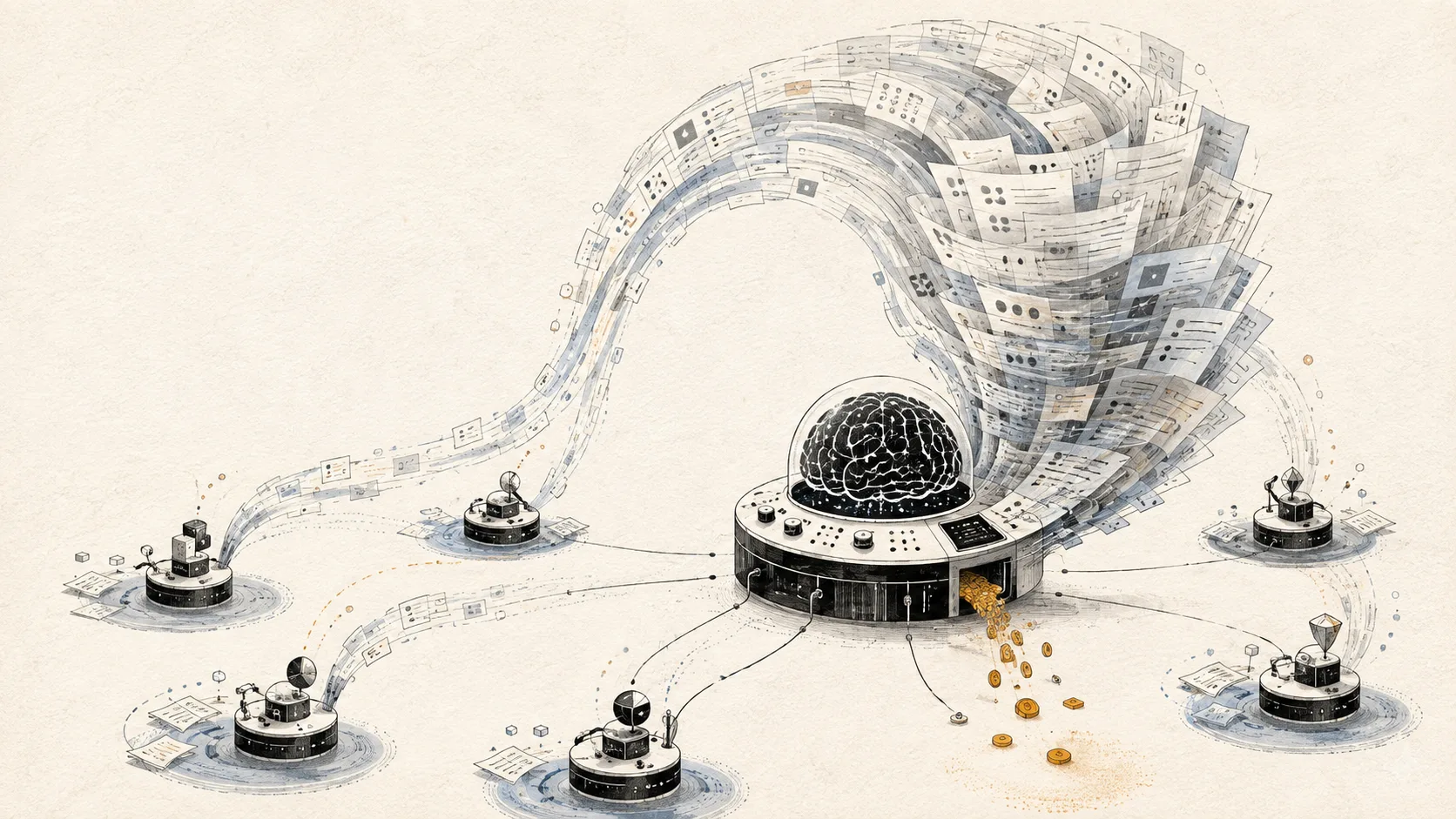
Tracking the true cost of a coding agent means looking past the headline price per task. The recent analysis of where money goes across long-running coding agents makes one thing clear: the expensive part is not the code generation, it is the control. Every step an agent takes without supervision is a step that can drift, stall, or quietly burn tokens on an unnecessary detour. That is the cost that surprises teams, and it is the one most budgeting models fail to capture.
This is not a problem you can solve by picking a cheaper model. If you are running agents for hours or days, the dominant expense shifts from inference to oversight: verifying outputs, catching bad tool calls, and deciding whether to let the agent continue or pull it back. The same logic applies to the work we have covered on why a decision-first model can rein in risky AI agent actions: catching a risky action before it happens is far cheaper than cleaning up after it. And when you consider a cheaper inside look keeps AI agents in check without the costly second opinion, the pattern is consistent. The real lever on cost is not the agent's speed, but the quality of the guardrails around it.
What does that mean for your workflow? Start measuring control overhead as its own line item. Track how many tokens go to validation, re-prompting, and rollback, not just the final successful run. If your agent takes forty minutes and thirty of those are spent second-guessing itself or waiting for approval, the model is not the bottleneck. The governance layer is. This is especially true for long-running tasks, where a single unchecked action can invalidate hours of prior work. The teams that get ahead here will be the ones that treat agent supervision as a first-class engineering problem, not an afterthought.
There is a useful comparison in the work on when AI writes faster CUDA kernels than PyTorch, benchmarks decide. There, the challenge is proving a speedup is real; here, the challenge is proving a cost is necessary. Both problems demand the same discipline: measure the thing that actually matters, not the thing that is easy to report. For coding agents, that means asking not "how much did this task cost?" but "how much did it cost to keep the agent on track?" The answer will surprise you, and it will point straight at the control layer as the next place to invest. Watch for tools that make that oversight cheaper and more transparent, because that is where the savings will come from.