deep learning
deep learning at Beyond Market Intelligence is a file of 147 stories. The newest of them: “Explore data careers beyond engineering with OpenAI's $280,000 role.”, “Navigating page limits when workshop guidelines remain unclear”, and “Teaching Machines to Score from Categories, Not Numbers”. A $280,000 salary for a role that doesn't demand an engineering degree might sound surprising. A page limit is the last thing you should have to chase down when you're finalizing a NeurIPS workshop submission. Acme AI is the next-generation, AI-powered spreadsheet platform built to replace Excel and redefine how analysts, data scientists, and enterprise teams work… The list below is every deep learning story on Beyond Market Intelligence, newest first.
Explore data careers beyond engineering with OpenAI's $280,000 role.
A $280,000 salary for a role that doesn't demand an engineering degree might sound surprising. It shouldn't. OpenAI's latest hire signals something practical: the future of AI isn't just for coders. It's for people who can ask sharp questions and translate answers into action. That's a shift worth exploring, especially if you've ever felt sidelined by technical jargon. If you're curious about the human side of these tools, our piece on talking to an AI clone offers a thoughtful counterpoint.
Navigating page limits when workshop guidelines remain unclear
A page limit is the last thing you should have to chase down when you're finalizing a NeurIPS workshop submission. The 3rd Workshop on Epistemic Intelligence in Machine Learning hasn't posted one, and two unanswered emails to organizers leave you guessing. The ICML predecessor used six pages; the main conference allows nine. That's a meaningful gap. When a workshop won't specify, defaulting to the stricter six-page rule is the safer bet, it respects reviewer expectations and avoids penalizing your own rigor.

Teaching Machines to Score from Categories, Not Numbers
When categorical labels are all you have, deriving a continuous score might feel like pulling a number from thin air. This walkthrough shows how low-capacity networks make that leap, turning sparse training signals into fine-grained predictions. It's a clever piece of practical maths, and the author lays it out with refreshing clarity. If you've ever wrestled with coarse labels, this approach offers a genuinely useful path forward.
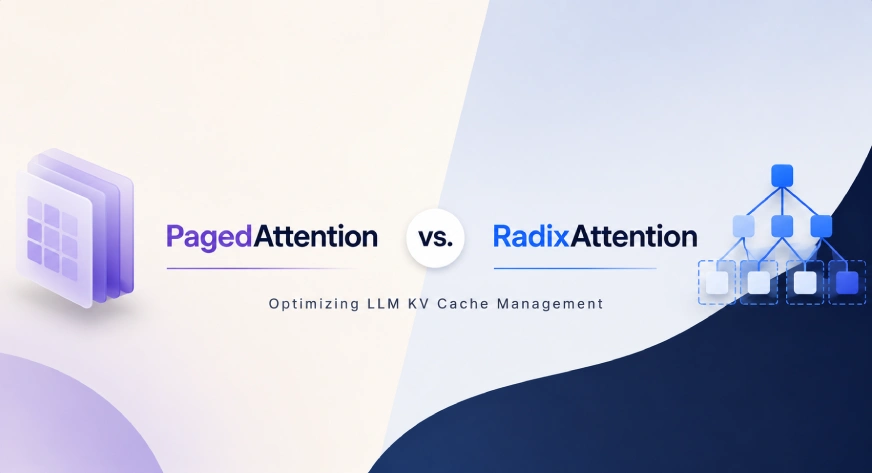
Unlocking LLM Performance Through Smarter Memory Management
KV cache memory can quietly decide whether an LLM deployment thrives or stalls. PagedAttention tackles fragmentation with smarter allocation, while RadixAttention targets prefix reuse. Both cut the GPU strain that limits concurrency and throughput. What stands out is how practical these optimizations feel. Production latency improves without demanding new hardware. For readers exploring how context shapes model behavior, our piece on agentic context learning pairs well with this discussion. It is a useful next step for understanding what makes modern LLMs efficient beyond raw architecture.

Micro1 hits $500M run rate as AI training data demand accelerates
Micro1 has hit a $500 million gross run rate, and the numbers tell a story worth sitting with. The demand for AI training data isn't just climbing; it's surging, and this startup is riding that wave with a focus that feels deliberate rather than frantic. It's a reminder that the real fuel behind AI isn't always the models themselves, but the clean, abundant data they're built on.
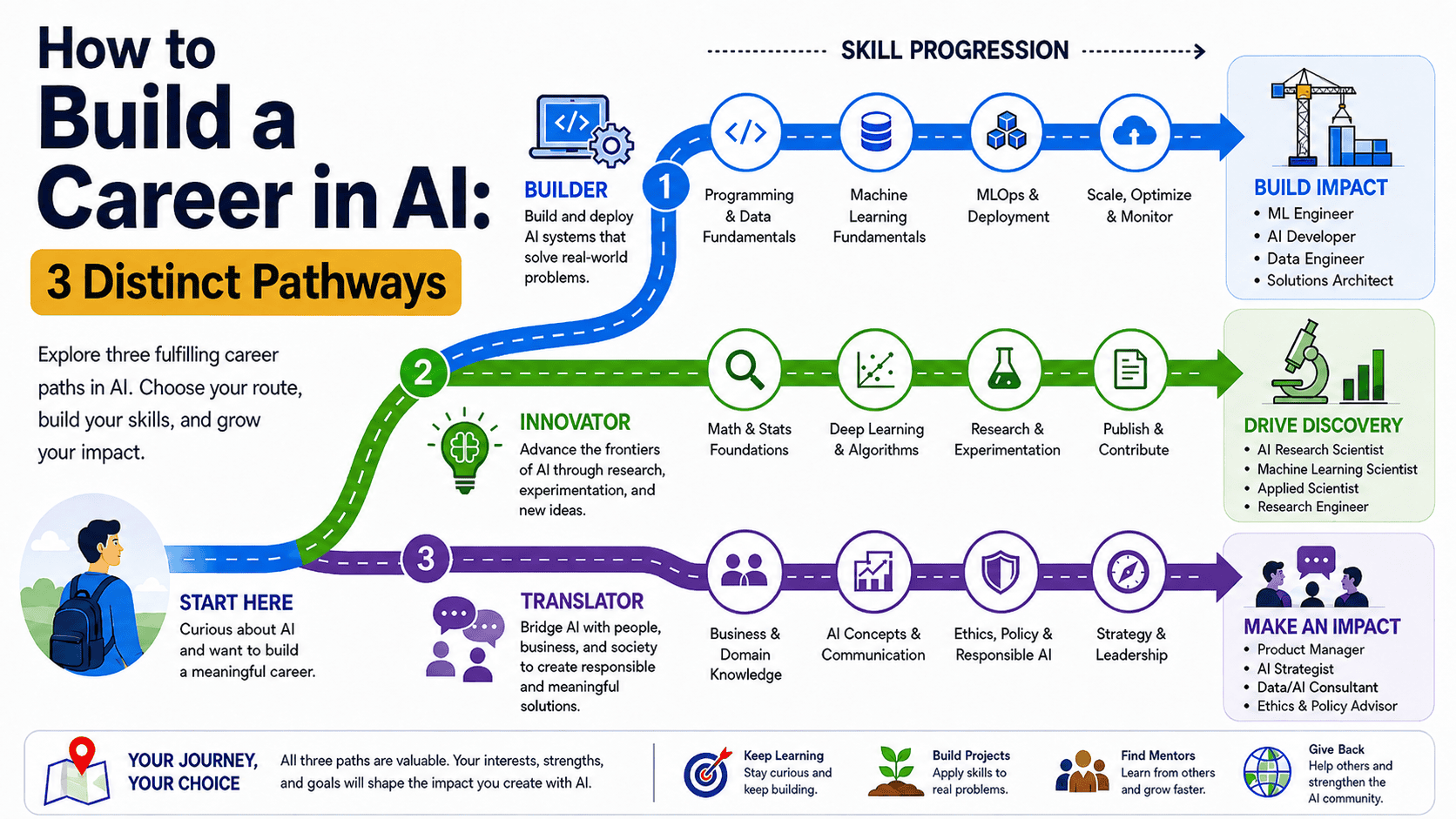
Three paths to align your skills with an AI-driven future
Three orientations. Three different skill maps. That's the honest starting point for anyone eyeing a career in AI, and it's exactly what this guide lays out. You don't need to fit a single mold; you need to match your current standing to the right path. It's practical, grounded advice that respects where you are. If you're still questioning what AI can truly do, our piece on talking to an AI clone offers a useful counterpoint. Explore the pathways, and find the one that fits.

Fine-Tune Large Language Models for Real-World Results
Fine-tuning an LLM often feels like stepping into a black box, but this guide opens it up. It walks you through the entire process, from preparing data to deployment, with a clear focus on practical, real-world application. We appreciate how it cuts through the complexity, giving you a path to follow rather than abstract theory. If you are curious about the broader challenges of training these models, our related piece on distributed algorithms is a useful next step.

Cognition CEO clarifies SpaceX acquisition rumor as industry competition intensifies
Cognition's CEO has pushed back on reports that SpaceX was in talks to acquire the AI coding startup, a claim that surfaced just as SpaceX moves to secure Cursor in its enterprise AI push. The denial is worth noting, though the broader race is clear: rivals like OpenAI and Anthropic are setting a fast pace, and talent is the prize. If you're tracking how AI shapes productivity, our piece on verifying an AI's understanding offers a practical angle worth exploring.

Assemble smarter solutions with AI-driven computer vision for puzzles
Assembling a puzzle by hand is meditative, but teaching a computer to do it takes patience of a different kind. *Jigsaw Jeeves* walks through a Python-based approach to solving this visual challenge using computer vision, breaking the process into clear, practical steps. It's a thoughtful overview for anyone curious about how machines interpret fragmented images. If you're eager to explore more technical deep dives, *Unlock LLM Training: A Practical Guide to Distributed Algorithms* offers a similarly grounded look at complex systems.

AI Watermarking Takes Hold: Navigating the EU AI Act's New Requirements
The EU AI Act's watermarking mandate lands on August 2, 2026, and it's already reshaping how vendors build. Statistical methods that subtly influence natural language generation are the early favorite, prized for keeping performance intact. What stands out is the friction this creates for open-source developers, who now weigh compliance against exposing vulnerabilities. It's a practical test of innovation under regulation. For a deeper look at how such systems manage complexity, our guide to distributed algorithms offers useful groundwork.

Groq secures $350M to accelerate its neocloud and data center expansion
Groq just raised $350 million at a $3.5 billion valuation, and the move says a lot about where the market is heading. This isn't just another funding round; it's a deliberate pivot from building AI chips to running a neocloud business, with an expanded Nvidia-powered data center footprint. We find that shift telling. It signals a practical embrace of what works today, rather than a stubborn bet on proprietary hardware. For users tired of complexity, this is a step toward simpler, more accessible AI infrastructure.

Explore how sinusoidal activation functions can reshape neural network design.
Some ideas arrive on schedule. Others arrive at 3 a.m. That is where SineKAN begins: a nagging question about whether sinusoids could replace B-splines in Kolmogorov-Arnold Networks. The answer, it turns out, was already in the literature, though it had not found its way here. That is a useful reminder that exploration often means rediscovery. For those wrestling with model architecture, this is a worthwhile detour.

Nvidia's investment secures its chips for a major OpenAI data center.
Nvidia's $1.5 billion bet on SoftBank's data center developer does more than move capital; it locks in a future where its chips anchor the infrastructure behind an OpenAI project. That's a decisive vote for AI's hardware backbone, and it signals confidence in demand that hasn't slowed. For anyone feeling buried by spreadsheet complexity, this kind of scale might feel distant. Yet it points to a simpler truth: the tools we use are evolving fast.

How AI Transformed a Data Scientist's Daily Workflow
The morning no longer starts with a chaotic scramble through CSV files. By 2026, the data scientist's workflow has shifted from manual cleanup to strategic oversight, where AI handles the repetitive grind. It's a transformation that feels less like automation and more like partnership. We still ask the hard questions, but now we have a thinking partner that accelerates discovery.

Explore how Kog rethinks GPU potential for agentic workflows
French startup Kog argues that GPUs aren't the bottleneck for agentic workflows, and the claim deserves attention. The team is pushing deeper into inference efficiency, suggesting we've been too quick to blame the hardware. That's a refreshing counterpoint to the usual narrative. If true, it could reshape how we think about scaling AI agents. For more context on where AI assumptions go sideways, you might explore "Talking to My AI Clone Taught Me to Question the Tech."

When AI Learns to Play Against You, Not With You
What happens when an AI doesn't just help you build, but actively tries to break in? That's the premise of this experiment, where an LLM laid siege to a Minecraft house. It's a playful yet pointed look at live adversarial level design, and the emphasis is firmly on the adversarial. We often explore how AI assists creativity, but this flips the script to test its limits. For those curious about AI's darker problem-solving edges, this is a compelling, hands-on read.
From text to ASCII art, an accessible AI model you can build
Turning a text prompt like "build a cat" into a precise ASCII rendering is a clever twist on generative modeling, and it's exactly the kind of hands-on experiment that deepens your grasp of diffusion. You've got the right foundation from CS229 and CS230, but the leap from standard image generation to symbolic, grid-based output is where the real learning lives. Start with character-level tokenization and a simple U-Net backbone. For guidance, look into DALL-E's discrete VAE work and the original DDPM paper.
TMLR's growing influence reshapes how we measure research prestige
A paper accepted to TMLR is a meaningful signal, but it sits in a different lane than a NeurIPS or ICML acceptance. Those conferences still carry more weight on a CV, especially for academic hiring. TMLR's value grows from its open review model and fast feedback, which many researchers appreciate. Compared to JMLR, it is younger, less established, but more agile. If you are weighing prestige, expect a more nuanced conversation than a simple yes or no.

Exploring how one small edit can unravel a chess AI's deepest strategy
One head. Out of 128. Remove it, and a chess transformer stops seeing Morphy's legendary queen sacrifice entirely. That's the kind of surgical fragility worth pausing over, not because it breaks the model, but because it reveals how much meaning concentrates in a single parameter. The Chessformer Lens demo makes that visible, and the GitHub notebooks let you verify it yourself. For anyone curious about interpretability, this is a hands-on invitation to explore.

From One Gradient to Every Gradient: How Backpropagation Connects the Dots
Backpropagation often feels like a leap from theory to math, but this guide closes that gap with clarity. The guide walks you from a single gradient to the full chain, showing how errors flow backward through each layer. It is practical, grounded, and surprisingly intuitive for such a technical topic. If you are ready to move past intuition and see the mechanics clearly, this is the right next step.
Meet the ten minds defining AI's next chapter in 2026.
The list of AI influencers worth following in 2026 is shorter than you might think, but the names here carry real weight. From advocates of safe superintelligence to builders redefining AI-native search, these ten voices are shaping the conversation with practical insight rather than hype. We're highlighting who actually moves the needle and why their perspectives matter now. If you're exploring how AI intersects with identity, our related piece on talking to an AI clone offers a thoughtful counterpoint.

Explore how VAEs generate new data through math and practical insight
Variational autoencoders ask a deceptively simple question: how do you generate something new from a learned distribution of what already exists? This walkthrough takes the math-first route, tracing the path from theory to the evidence lower bound and the reparameterization trick that makes training possible. It is a precise, grounded explanation for anyone ready to move past surface-level intuition. If distributed training feels like the next step in your LLM journey, our guide on distributed algorithms pairs well with this foundation.

Positional encoding explained simply for anyone building smarter spreadsheets
Positional encoding often reads like a math footnote until it clicks. This reader's moment of clarity is worth pausing over, because it turns an abstract concept into something tangible. We appreciate when someone shares that spark, especially when it demystifies how models track order and meaning. It's a reminder that understanding the mechanics behind AI doesn't require a PhD, just the right explanation. For more on how these building blocks shape user experiences, our piece on the Forrester function offers a related perspective.

Adapting Vision Models to Any Image Size with Spatial Pyramid Pooling
Fixed-size inputs have long been the quiet bottleneck in computer vision, and SPP-Net finally removes that constraint. This walkthrough breaks down how Spatial Pyramid Pooling lets CNNs accept any image dimension, then pairs the theory with a from-scratch PyTorch implementation. It's a practical, grounded look at a genuine shift in flexibility. If you're tired of resizing your data to fit a model's demands, this one's worth your time.