feature engineering
12 stories filed under feature engineering on Beyond Market Intelligence. The newest of them: “Explore how EpochGo brings local-first AutoML to your data with privacy and control”, “Strengthen churn and CLV models with the untapped signal in your text data”, and “Spot Hidden Data Drift When Individual Features Seem Stable”. EpochGo separates the reasoning layer from the execution layer, and that distinction is the key insight here. Your churn and CLV models are leaving signal on the table. Acme AI is the next-generation, AI-powered spreadsheet platform built to replace Excel and redefine how analysts, data scientists, and enterprise teams work… The list below is every feature engineering story on Beyond Market Intelligence, newest first.

Explore how EpochGo brings local-first AutoML to your data with privacy and control
EpochGo separates the reasoning layer from the execution layer, and that distinction is the key insight here. By letting a local LLM inspect schema metadata while deterministic Scikit-Learn pipelines handle all actual data transformations, the system sidesteps both cloud API costs and LLM hallucinations in mathematical reasoning. It runs entirely offline on consumer hardware. For deeper context on keeping LLM outputs grounded, our piece on JEV as a continuous filter explores similar thinking.

Strengthen churn and CLV models with the untapped signal in your text data
Your churn and CLV models are leaving signal on the table. The text your customers generate, support tickets, reviews, product feedback, carries insights that structured data misses. This practical guide shows how to fold that untapped language into traditional models without overhauling your stack. It's about making your predictions sharper with what you already have. For a related look at how wasted effort skews results, our coverage of 50,400 agent runs pairs well with this approach.

Spot Hidden Data Drift When Individual Features Seem Stable
Your features look stable, but your model is quietly failing. That's the problem this post tackles head-on. Hidden data drift often hides in the relationships between features, not the features themselves. Adversarial validation with scikit-learn can catch those subtle shifts before they undermine performance. It's a smart, practical technique for anyone who suspects their model is degrading but can't find the cause.
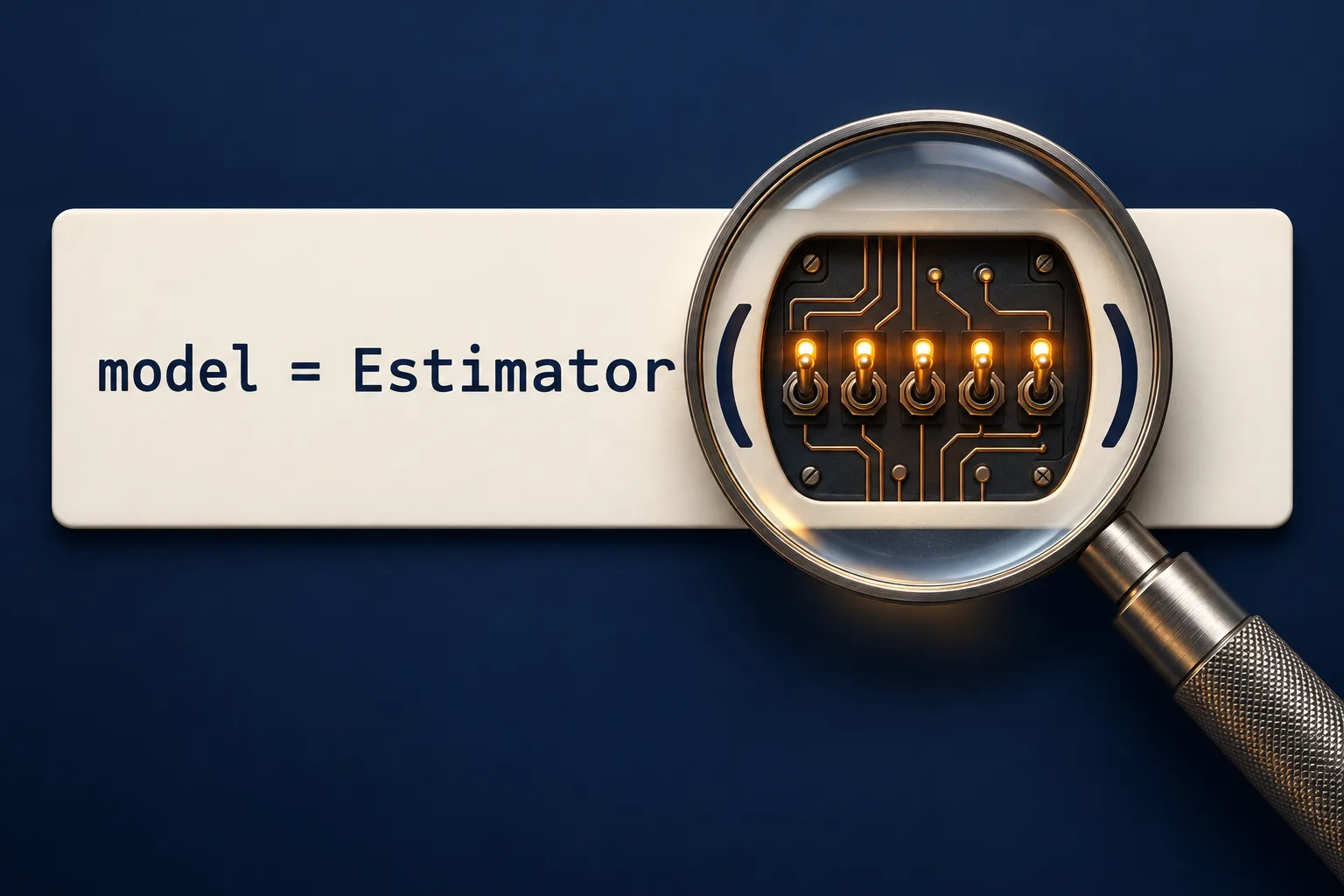
When AI Writes the Code, Do You Trust the Defaults?
AI assistants are remarkably good at writing code, but they don't always question the assumptions baked into the libraries they use. That gap is where subtle errors hide. This piece examines five scikit-learn defaults that deserve a second look before you ship. It's a practical, grounded reminder that trusting the tool isn't the same as understanding it. If you're building for production, this is worth your attention. For broader context on model deployment challenges, our related piece on real-world computer vision offers useful perspective.
Explore how machine learning ranks 1.18 million horse racing runners
A 43.5% strike rate on the first live day of a rebuilt model is a strong opening statement. This project, called Hoofs, tackles British and Irish horse racing with 1.18 million historical runner records and a firm respect for the market baseline. Beating the price is harder than building a decent model, a candid observation. For those exploring similar predictive challenges, this is a practical case study.
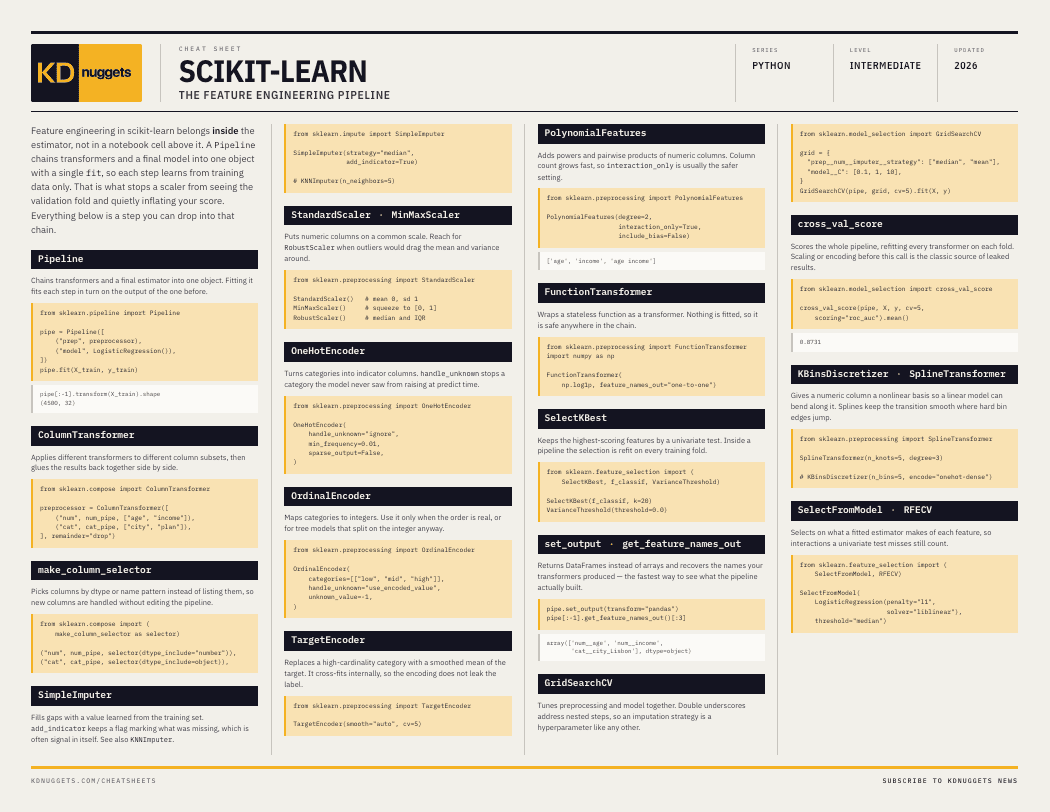
Master Your Feature Engineering Pipeline with This Practical Guide
Feature engineering often breaks down when steps leak information from the test set. That is why this new KDnuggets cheat sheet centers on a simple truth: once feature engineering lives inside a Pipeline, each step is fitted on training data only, and the model is scored on what it actually earned. It is practical, direct, and refreshingly grounded. For a deeper look at how structure shapes machine learning, our guide to paragraph structure in LLMs offers a useful parallel.
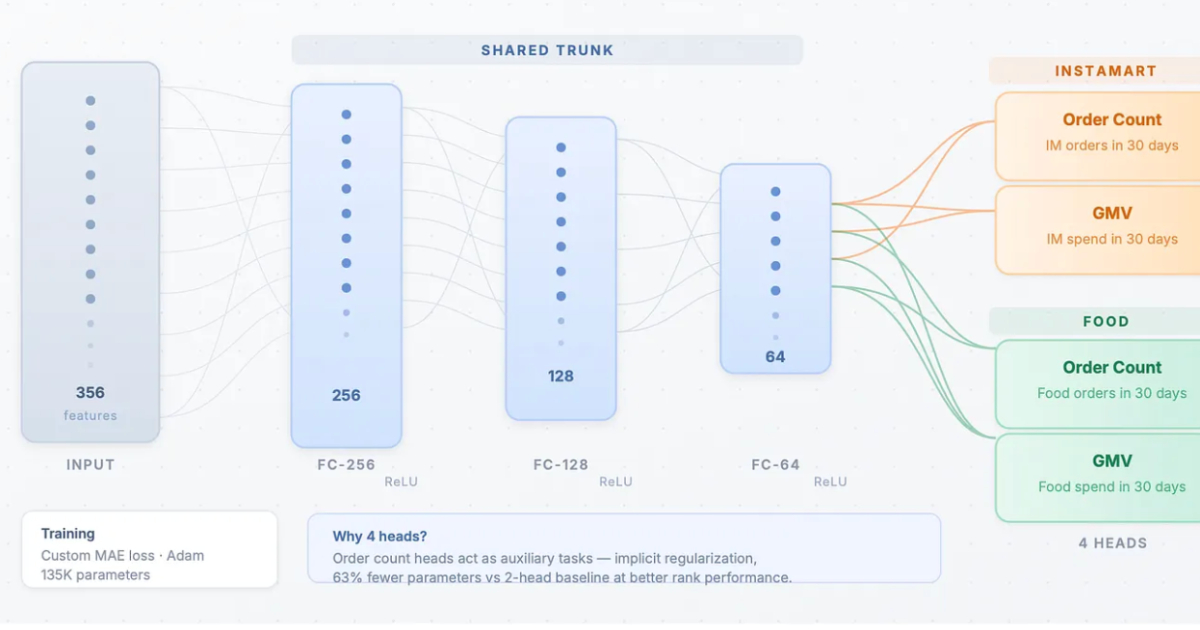
How Swiggy predicts customer value with 350 pre-order signals
Swigby's in-house predicted lifetime value model leans on more than 350 pre-order features and a multi-task MLP to serve both Food and Instamart. Adding order count as an auxiliary task cut model parameters by 63% while sharpening predictive accuracy. That's the kind of practical efficiency we admire. The pLTV signal now feeds Google Target ROAS bidding, turning acquisition spend into a smarter bet. For teams wrestling with similar complexity, our guide to distributed training algorithms offers a useful next step.
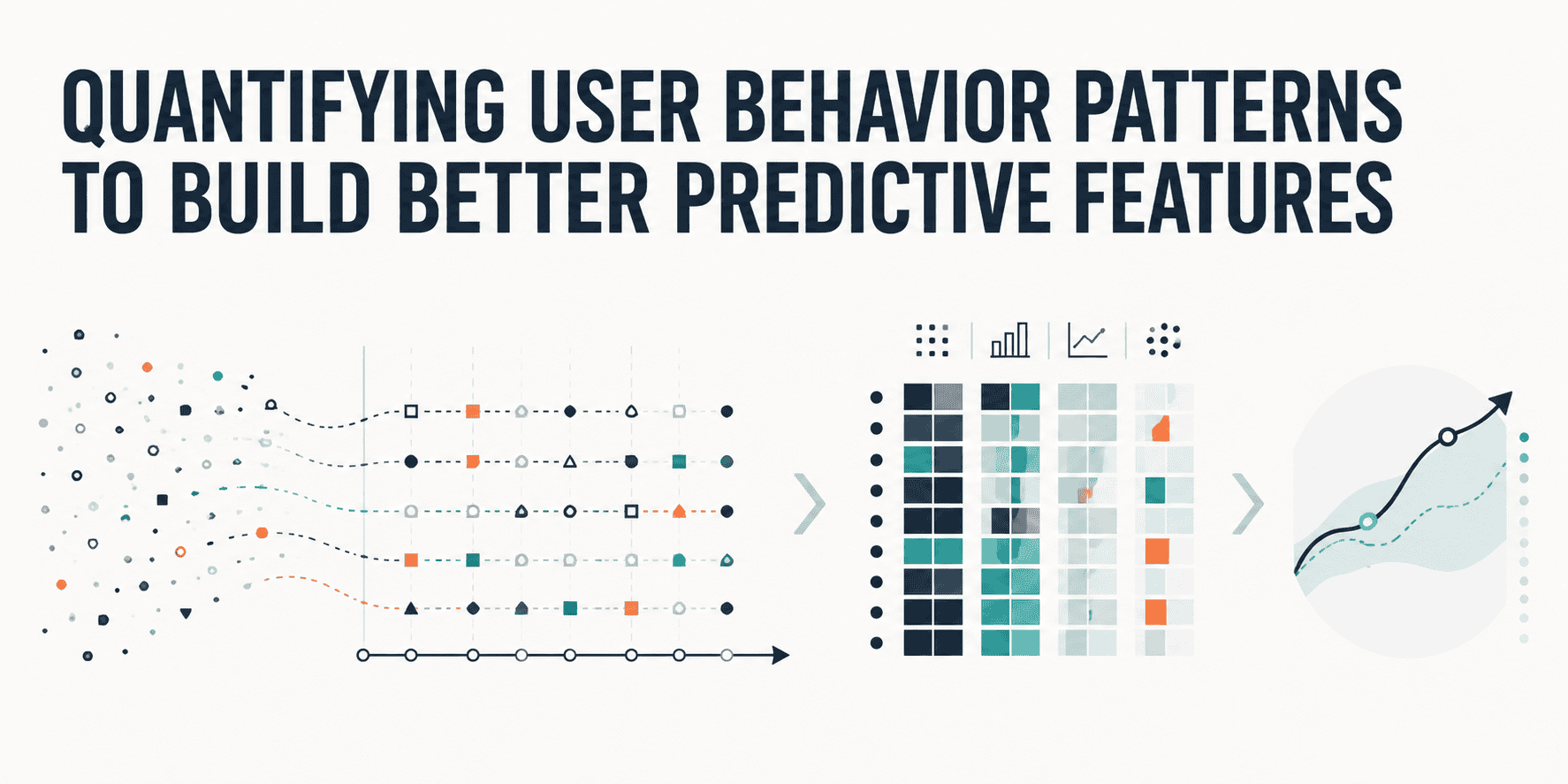
Discover how behavior patterns unlock smarter predictive tools
A single click stream from a 35-year-old male in Seattle reveals almost nothing about his intent. Raw demographics and isolated actions are noise. We need to quantify behavior patterns over time to build predictive features that actually matter. This is about moving beyond surface-level data to understand the sequence and context of user actions. For a deeper look at how we approach pattern recognition in practical systems, our piece on real-world computer vision deployments offers a useful parallel.

What Hidden Gaps in Your Data Reveal About Your Assumptions
We often treat missing values as a glitch, a blank cell to be filled or dropped. But that silence carries its own message, hiding assumptions we rarely question. This piece on Towards Data Science digs into what we overlook when data goes unrecorded, challenging us to see absence as part of the story. It is a thoughtful, grounded read for anyone who has ever trusted a dataset too quickly.
Automated feature engineering evolves with genetic algorithms and open-source simplicity.
Feature engineering remains the quiet battleground where tabular ML models are won or lost. py-evoFE (v0.3.0) takes a different path: genetic algorithms that evolve compact, high-impact feature recipes instead of brute-forcing thousands of noisy combinations. Its hierarchical chaining, Polars-powered vectorization, and multi-fidelity screening are thoughtful engineering. For anyone tired of manual transformations or explosive feature spaces, this library invites exploration. It is practical, open-source, and built for the workflows teams actually use. That is worth a closer look.

Unlocking Data Potential by Combining Labelled and Unlabelled Insights
Most of your data sits unlabeled, and that's not a problem to solve, it's an opportunity to leverage. Semi-supervised learning sits between the fully labeled and the entirely unlabeled, using a small amount of guidance to make sense of the larger, messier whole. This primer walks through the algorithms that make that possible and, just as importantly, where they stumble. It's a practical read for anyone who wants to get more from their data without drowning in annotation costs.

Seeing Through the Noise: How Geometry Explains Unstable Regression Coefficients
If your regression coefficients keep shifting or ballooning, multicollinearity is likely the culprit, and geometry explains why. When predictor variables move together, their overlapping dimensions confuse the model, making individual effects unstable. It's not about bad data; it's about hidden relationships inflating uncertainty. Understanding this spatial dynamic turns a frustrating puzzle into a manageable one. For those eager to explore how mathematical structures shape practical tools, our piece on the Forrester function offers a natural next step.