fine tuning
fine tuning at Beyond Market Intelligence is a file of 27 stories. The newest of them: “Speed up your 500-image annotation without sacrificing model accuracy”, “Ten Hugging Face Models Reshaping How Data Works in 2026”, and “Running AI detection fully client-side with a fraction of the original size”. Manually labeling 500 images with bounding boxes is the kind of task that makes you question your life choices, but you don't have to do it all by hand. Ten Hugging Face models are quietly reshaping how data moves through text, vision, audio, and retrieval pipelines in 2026, and that shift is worth paying attention to. Acme AI is the next-generation, AI-powered spreadsheet platform built to replace Excel and redefine how analysts, data scientists, and enterprise teams work… The list below is every fine tuning story on Beyond Market Intelligence, newest first.
Speed up your 500-image annotation without sacrificing model accuracy
Manually labeling 500 images with bounding boxes is the kind of task that makes you question your life choices, but you don't have to do it all by hand. The most reliable path is to let an open-vocabulary model like Grounding DINO handle the first pass, then use CVAT for review and correction. Grounding DINO is well-suited for custom classes because it doesn't require fine-tuning to recognize new objects, just type in what you're looking for.
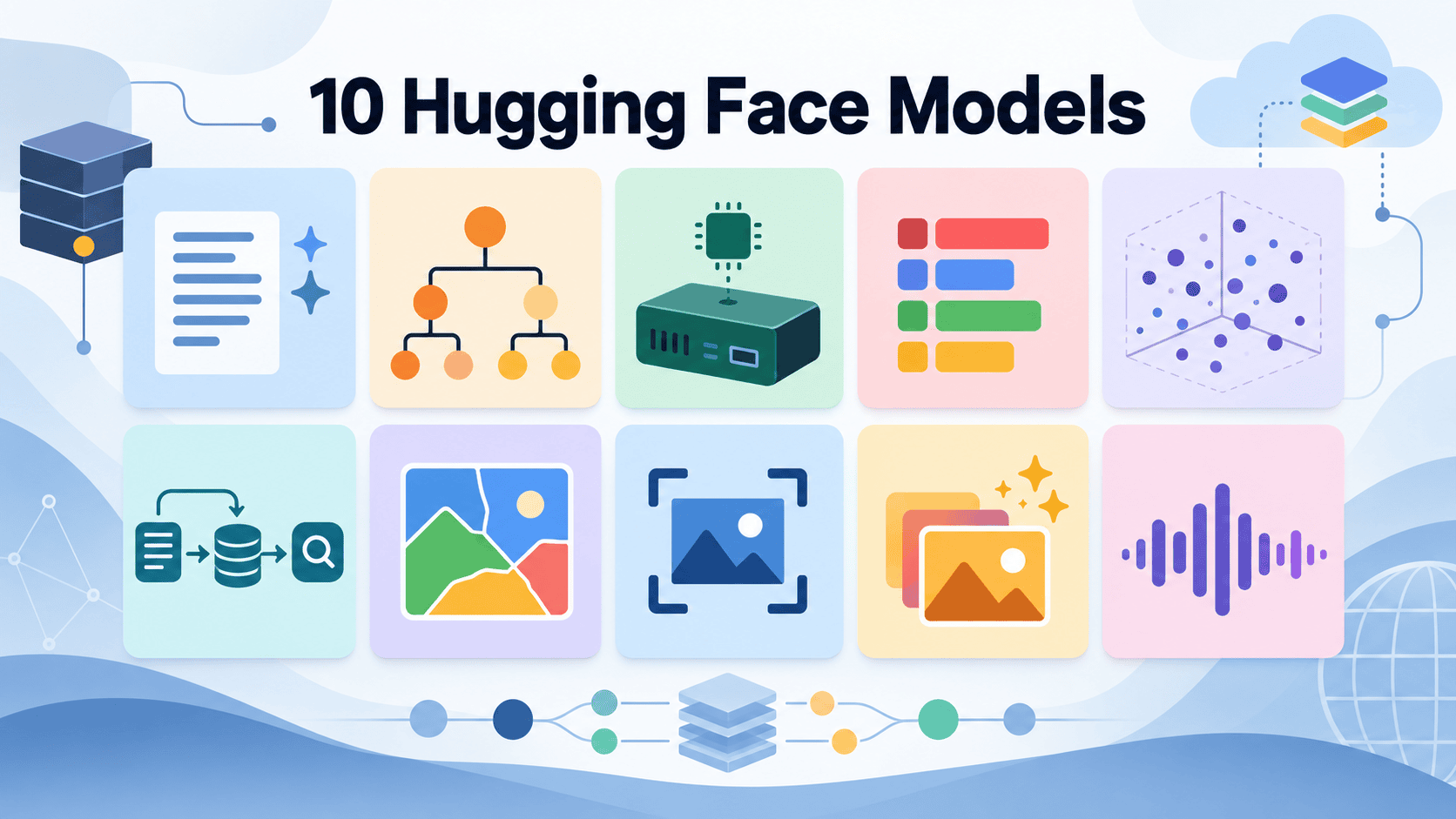
Ten Hugging Face Models Reshaping How Data Works in 2026
Ten Hugging Face models are quietly reshaping how data moves through text, vision, audio, and retrieval pipelines in 2026, and that shift is worth paying attention to. These aren't speculative projects, they're tools you can use today. If you've ever felt constrained by a tool that asks you to wait for answers a local model already knows, our related article "Stop Waiting for Answers Your Local Model Already Knows" explores that exact friction.
Running AI detection fully client-side with a fraction of the original size
Two open-source AI detectors, stripped of unnecessary bulk and running entirely in your browser. Rita Bratamaiti compressed a 500 MB text model to 97 MB and a ViT image detector to 26 MB, then got both working client-side with ONNX Runtime Web. No uploads, no servers. A text check takes about 60 milliseconds on a laptop. It is a practical, transparent approach to AI detection, and one that respects your privacy.

A budget GPU runs real-time neural weather in Minecraft at 30 FPS
A Minecraft mod now runs real-time neural weather at 30 FPS on a budget GPU. A teacher model paints roughly 3,000 frames of snow, wet surfaces, and night scenes, while a tiny 1.4M-parameter student U-Net applies them at 26 milliseconds per frame. The key insight? Pixel loss alone produced washed-out results, but a PatchGAN fine-tune delivered fat snow and convincing reflections. Night scenes and snowy biomes remain tricky.
Unlabeled network data holds the key to app detection at scale
Unlabeled traffic is the only realistic path when you need to identify 3,000 to 5,000 apps without a labeled dataset to train on. Your instinct to treat 15-second windows as bags and use self-supervised pretraining is the right foundation, especially masked modeling on flow features. The real risk is the encoder learning device identity instead of app behavior, so contrastive pairs must come from varied sessions. Fine-tune with your 100 labeled apps and validate that embeddings cluster by app, not by device.
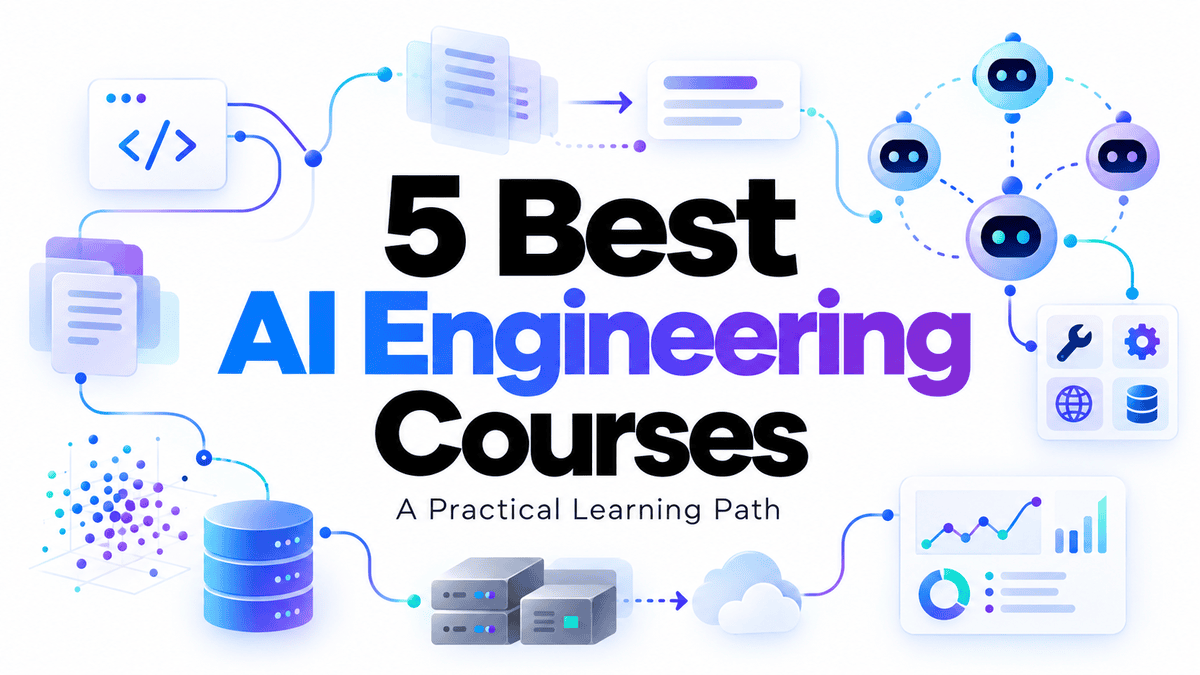
Explore five free courses to build practical AI engineering skills
Practical AI skills shouldn't require a computer science degree to access. That's why these five free courses focus on the fundamentals that actually matter: LLM basics, RAG, MLOps, fine-tuning, and deployment. Each one is built to move you from understanding concepts to applying them in real workflows. If you're ready to strengthen your engineering toolkit, start exploring. And for a broader view of where AI infrastructure is heading, our coverage of Python Workers going live offers useful context.

Small AI Model Beats GPT-5.6 on Tax Forms but Stumbles on Dates
A small 8-billion-parameter model just beat GPT-5.6 Terra on tax forms, 21 out of 32 W-2s fully correct versus 7. That's the kind of result that makes you rethink what "small" means. But Qwen3-VL stumbled on dates, reading dd-mm-yyyy as mm-dd, and struggled with contract expiry fields. The lesson isn't that bigger is worse. It's that focused fine-tuning can outperform scale on specific tasks. For a deeper look at optimization trade-offs, our piece on Tauon explores how smarter training methods can reshape performance.
Accelerate Local LLM Learning: A New Prototype for Faster Fact Correction
Watching a toddler learn taught Kavanutz something about AI. Jayce, his new prototype, skips the heavy lifting of RAG pipelines and fine-tuning entirely. Instead, it shifts raw context vectors across a fixed pool of 4,048 prototype slots, correcting mistakes in real time. The benchmarks are telling: faster updates, better sample efficiency on sequential tests, and a strict memory ceiling. It's a lean, framework-free proof of concept built on NumPy and Java.
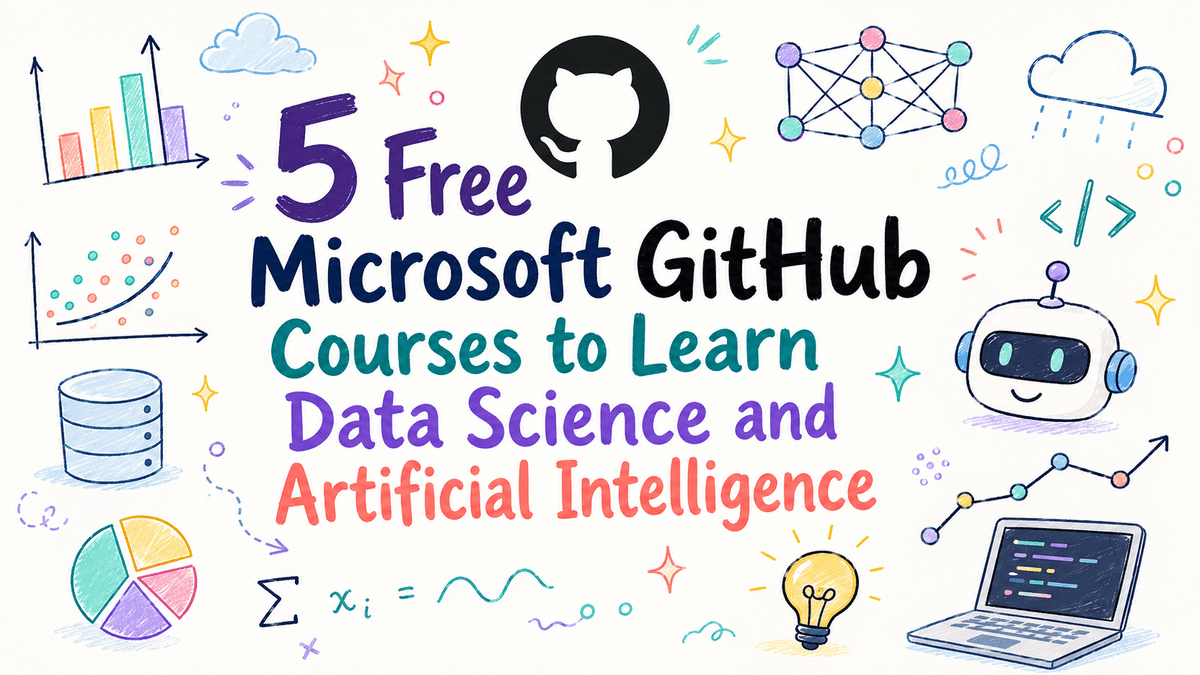
Discover five free GitHub courses to build practical AI skills
Microsoft's GitHub is quietly becoming one of the best free launchpads for data science and AI skills. These five courses cut through the noise, covering everything from machine learning fundamentals to generative AI, LLMs, RAG, and fine-tuning. What stands out is how practical the path feels, you are not just reading about concepts, you are building toward AI agents. If you are ready to move beyond theory, this is a solid starting point.
From Codebase to Dataset: Fine-Tuning AI on Your Own Projects
Turning a well-built React or Next.js project into a fine-tuning dataset is a puzzle worth solving, especially when you're aiming for quality over generic code dumps. The real challenge isn't just extracting files; it's crafting instructions that mirror how you'd actually ask for a component or a page. Pairing screenshots with code and preserving cross-file context are the hard parts, but they're where the value lives.
A small language model that teaches itself column arithmetic.
This is the kind of result that makes you question what small models actually need. A 348M-parameter model, trained on 22.7B tokens, hits 99.4% across nine arithmetic sub-tasks, beating GPT-3's 175B few-shot numbers by a wide margin. The clever part isn't just the accuracy; it's that the model learned place values it was never taught, inventing "millions" and "ten-millions" from zero examples. That's not brute force. That's pattern recognition. We've covered how AI reshapes data ownership, and this feels like a natural extension

Explore how open models make frontier AI more accessible for everyone.
Frontier AI isn't just for the few anymore. Thomson, an open-weights model built through continual learning on existing open models, shows that meaningful progress is possible without massive budgets. The report demonstrates performance gains comparable to multiple generations of advancement, while preserving stability and reducing the forgetting that plagues narrow adaptation. That's a practical path toward SovereignAI, one that puts ownership within reach of more institutions. It's not about hype; it's about what's achievable with the right stack and a focused approach.
Finding the Right Settings for Multi-Agent PPO Training
Hyperparameter tuning for multi-agent reinforcement learning is rarely a one-size-fits-all affair. When you're comparing PPO variants across VMAS tasks, the fact that optimal settings drift between architectures and scenarios is expected, not a flaw. Methodologically, unifying hyperparameters is the only way to isolate architectural value, but note two: forced uniformity can break convergence. That tension is real. Since your goal is testing robustness under frozen-model adversarial attacks, you are effectively evaluating resilience, not raw performance.

Fine-tuning shapes smarter AI agents, even from modest models
Nvidia's latest research flips the spotlight from the model to the harness, and that's a shift worth noticing. Their work shows that fine-tuning the surrounding framework can keep AI agents on track, even when the underlying model isn't particularly strong at the task. It's a refreshingly grounded take, suggesting that clever engineering around the model matters as much as raw capability. For anyone wrestling with AI's unpredictability, this points to a more practical path forward.

Fine-Tune Large Language Models for Real-World Results
Fine-tuning an LLM often feels like stepping into a black box, but this guide opens it up. It walks you through the entire process, from preparing data to deployment, with a clear focus on practical, real-world application. We appreciate how it cuts through the complexity, giving you a path to follow rather than abstract theory. If you are curious about the broader challenges of training these models, our related piece on distributed algorithms is a useful next step.

Capital One's open-weight models power a scalable multi-agent AI platform
Capital One isn't waiting for a better off-the-shelf model. At VB Transform 2026, Kel Vanee described how the bank built a multi-agent platform by deeply customizing open-weight models with proprietary data, treating that data as an advantage no frontier model can match. The approach scales beyond one use case, lifting performance across the portfolio. It's a practical blueprint for financial services, and for readers exploring how AI agents handle complex workflows, our related piece on bridging retrieval and action offers a useful parallel.
How 37,000 AI agents collaborate to transform drug discovery
The assumption that one engineer equals one AI agent is already outdated. At Stanford, James Zou's team has scaled past that model, building a virtual biotech where 37,000 specialized agents collaborate like a real company. The results speak for themselves: the system designed a drug that Merck later independently validated, earning FDA breakthrough status. For developers, the lesson isn't about building smarter single agents, it's about designing environments where thousands can work together. That's a shift worth exploring, especially as orchestration becomes the real bottleneck.

Explore hands-on courses to master generative AI and LLM tools.
Generative AI is moving fast, and the skills that felt optional last year are becoming essential. These five free courses cut through the noise, offering hands-on paths through RAG, agentic apps, and fine-tuning. You will build real proficiency, not just collect concepts. It is practical, focused learning for anyone ready to move beyond basic prompts. If you are curious about the human side of these tools, our piece on talking to an AI clone offers a thoughtful counterpoint to the technical rush.

From Spotify to shopping: AI taste prediction arrives for e-commerce
A group of former Spotify engineers has raised $10 million to apply the same recommendation engine that powers music discovery to online shopping. Their platform predicts which product a shopper wants next, learns general taste, and fine-tunes in real time based on behavior. It is a practical step toward making e-commerce feel less like a search bar and more like a guide. If you are curious about the limits of such personalization, our piece on talking to an AI clone offers a useful counterpoint.
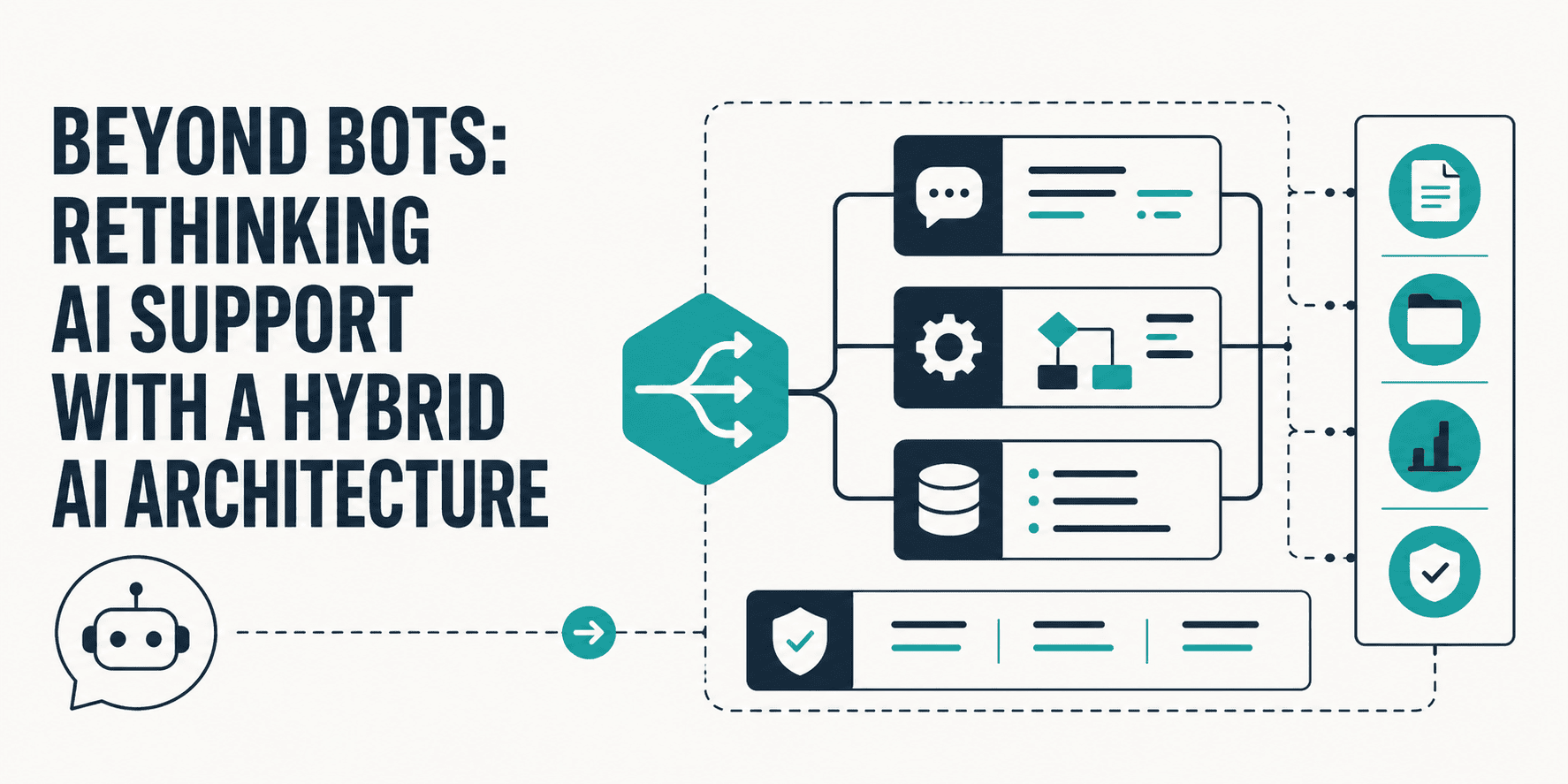
Blending RAG and fine-tuning for smarter, human-centered AI support
Fine-tuning and retrieval aren't rivals. They're partners. This piece breaks down why a hybrid AI architecture, one that blends RAG's precision with fine-tuning's adaptability, creates support experiences that actually feel helpful. It's a practical look at moving beyond rigid bot scripts toward something more responsive. If you're exploring how AI can better serve real users, this is a solid starting point. For a broader view on AI's trajectory, you might also check out "Explore the Future: When AI Designs Its Own Hardware."

Inkling Small delivers near-flagship performance at a fraction of the size.
Just two weeks after unveiling Inkling, Thinking Machines is back with Inkling-Small, and it's a compelling trade. This 276-billion-parameter model nearly matches its 975-billion-parameter predecessor, scoring 40 versus 41 on the Artificial Analysis Intelligence Index while using roughly a third of the active parameters. It even outpaces the flagship on coding and reasoning benchmarks. For enterprises, that's a meaningful shift: near-flagship capability with lower compute demands and a permissive Apache 2.0 license. It's not laptop material, but it's a far more practical self-hosting option.
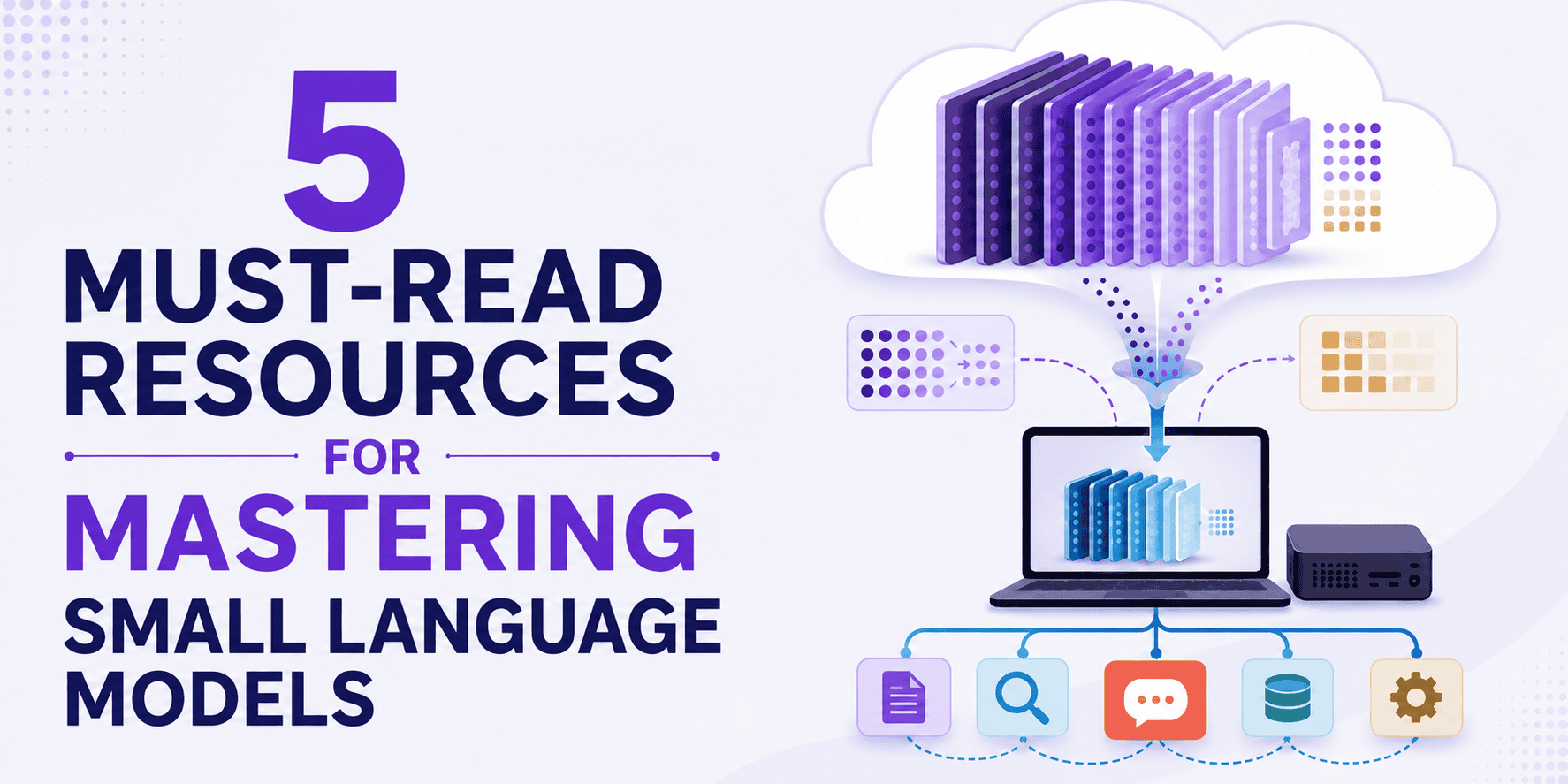
Explore practical resources to master small language models
Small language models are quietly reshaping what's possible for data professionals, and this guide cuts straight to the resources that matter. We've curated five essential reads that cover architecture, fine-tuning, agentic workflows, and local deployment, giving you a practical path forward without the fluff. If you're ready to move beyond theory, these picks will help you build real skills. For a deeper look at how AI systems truly behave, our piece on talking to an AI clone offers a thought-provoking companion.
Choose the Right Architecture for Your Multi-Tenant Data Platform
Choosing between fine-tuning and a shared RAG layer isn't about sophistication; it's about where truth lives. Your instinct on Option 1 is sound. Fine-tuning is costly and slow to update, while a curated global knowledge base gives you control over accuracy and citations. For Sri Lankan context, pair a global RAG with your user-specific stores. This scales cleanly and keeps sensitive data isolated. For deeper architectural trade-offs, our piece on "Exploring Paragraph Structure" offers useful context on how LLMs navigate token spaces.

Choosing the Right AI Model for Your Work in 2026
Choosing the right AI model in 2026 starts with asking what your data actually needs to do, not what sounds impressive. The market is crowded with capable options, and the smartest move is to cut through the noise by focusing on your workflow's real demands. We're past the hype phase; this is about practical fit. For a deeper look at how models process information, our guide to paragraph structure in LLMs offers useful context.