inference
inference at Beyond Market Intelligence is a file of 53 stories. The newest of them: “Explore how FreeToken brings powerful AI inference to everyday hardware.”, “Five Production Methods to Make Your LLM Leaner and Faster”, and “Discover how one free AI model quietly earned developers' trust”. Mixture-of-Experts models hold real promise, but their size has kept them off most local devices. Every parameter in your model costs money, and too many of them mean your inference bill climbs with every prompt. Acme AI is the next-generation, AI-powered spreadsheet platform built to replace Excel and redefine how analysts, data scientists, and enterprise teams work… The list below is every inference story on Beyond Market Intelligence, newest first.

Explore how FreeToken brings powerful AI inference to everyday hardware.
Mixture-of-Experts models hold real promise, but their size has kept them off most local devices. FreeToken, built by researchers at UC Berkeley and MIT, tackles that head-on with a dynamic scheduling policy that trims weight overhead and speeds up decoding. It is an open-source engine designed for consumer hardware, not data-center luxuries. That focus on execution efficiency makes self-hosted reasoning far more practical. For a broader look at how distributed methods underpin such systems, our guide to distributed algorithms is a solid next stop.
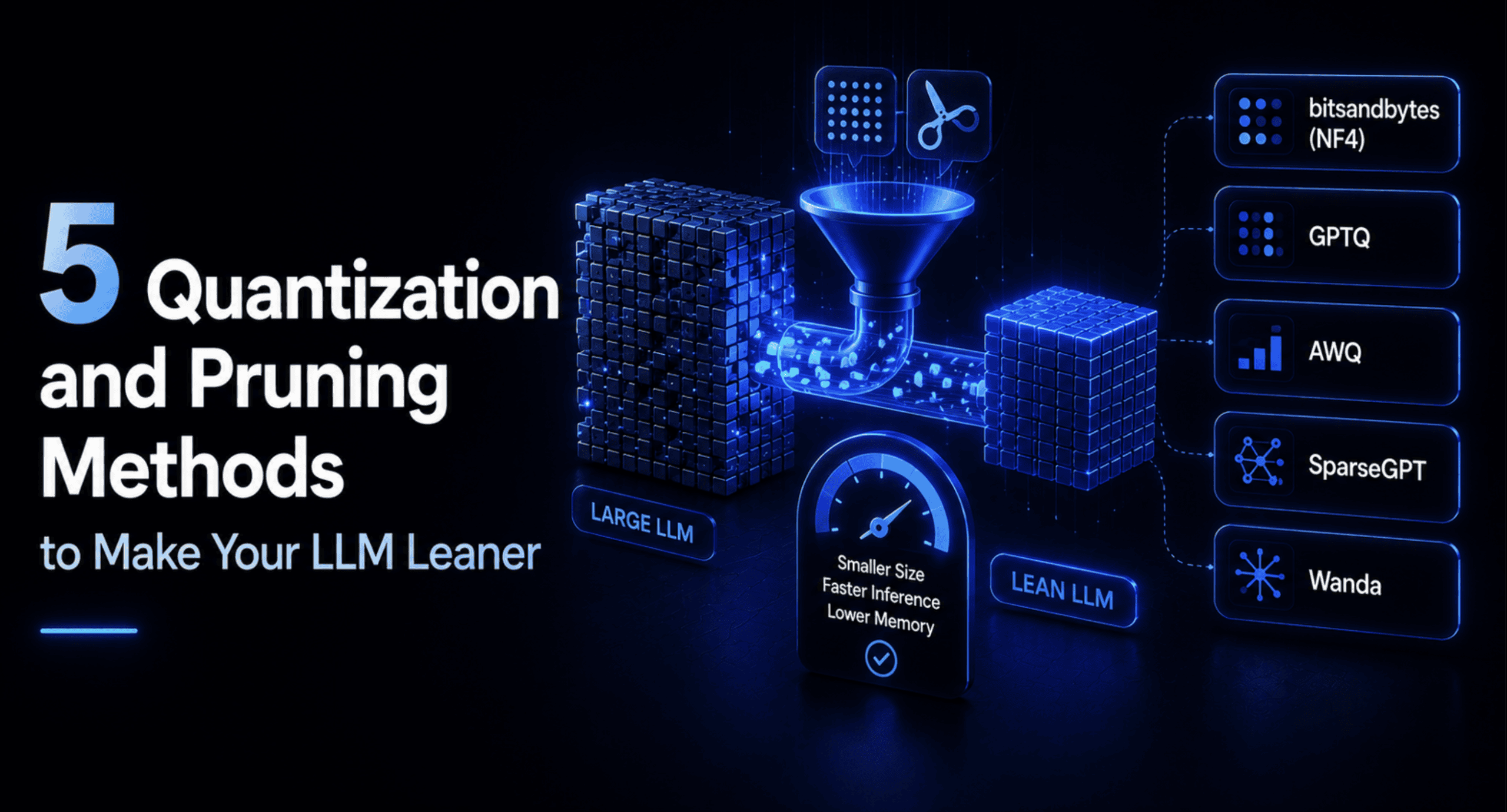
Five Production Methods to Make Your LLM Leaner and Faster
Every parameter in your model costs money, and too many of them mean your inference bill climbs with every prompt. Quantization and pruning are how you cut that weight without gutting performance, and skipping them leaves you paying for latency you do not need. Quantization and pruning cut model weight without gutting performance, and five production methods demonstrate how. If you are still unpacking how distributed systems shape model training, our guide to distributed algorithms pairs well with this one.

Discover how one free AI model quietly earned developers' trust
A week ago, a mystery model called Ox Alpha appeared on OpenRouter, one entrant among 400, yet it stood out for being quietly good. Hobbyists pushed trillions of tokens through it daily, sparking a week of speculation. Then Z.ai revealed it was GLM-5.3-Flash, served entirely on Chinese chips. That fact changes the economics. At 57 on the intelligence index for nine cents a task, it forces a hard question: why pay 7.4x more for two extra points? The cost calculus just got sharper.

Jalapeño delivers faster inference with greater energy efficiency
OpenAI's Jalapeño chip isn't just fast; it's fast where it counts. Tested on SemiAnalysis' InferenceX benchmark, it delivered more tokens per user and higher throughput per kilowatt than any currently available model. That's the kind of efficiency that turns experimental AI into practical tooling. We're eager to see how this reshapes deployment decisions, especially for teams tired of trading speed for cost. For a closer look at how AI performance impacts real-world judgment, our piece on questioning an AI clone offers a useful counterpoint.

Perplexity brings its AI agent home, running locally on Nvidia hardware you own
Perplexity is taking its agentic platform off the cloud and onto your desk, and the move feels less like a stunt and more like a quiet turning point. Portable Computer, built with Nvidia, runs entirely on hardware you already own, starting with the DGX Spark and RTX-equipped Linux machines. The pitch is refreshingly direct: your files, your models, and your work stay local, and the credit counter stays parked at zero.
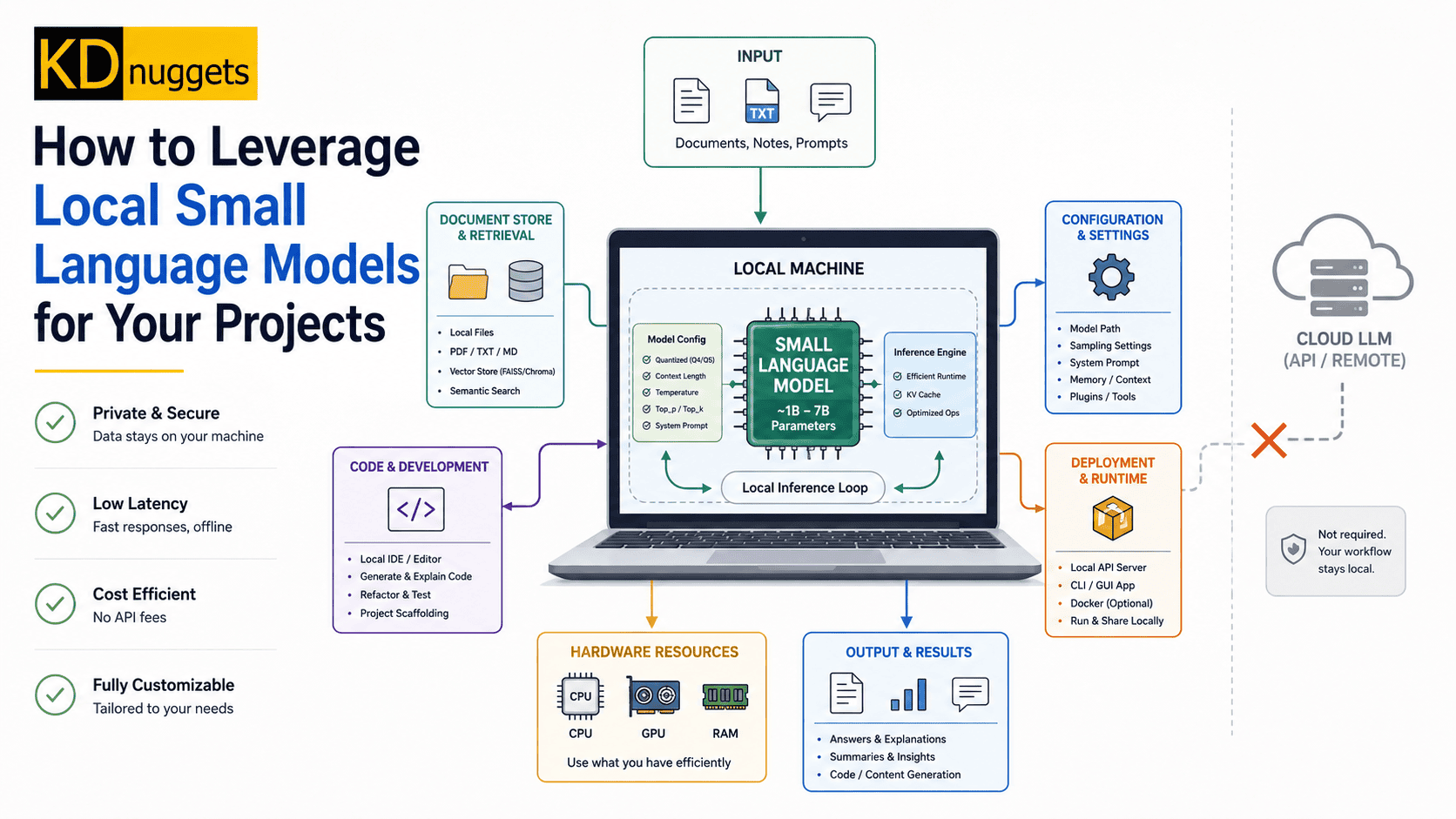
Unlock Faster AI by Running Small Language Models on Your Own Hardware
Local small language models let you run capable AI without sending your data anywhere. That is the practical appeal: privacy, lower cost, and direct control over your own hardware. This guide walks through the real steps to get them working, and we think the payoff is worth exploring. If you are curious about the broader challenges of distributed systems, our piece on unlocking LLM training offers a useful companion. For now, start compact, stay efficient, and see what you can build.

When Milliseconds Matter: Teaching LLMs to Forget on Purpose
Most LLM runtimes treat memory as an endless resource, but this one treats it as a deadline. It refuses admission rather than miss a 33ms robot control cycle, evicting KV cache by meaning instead of age, all in hand-written CUDA. That's a sharp rebuke to the bloat most of us accept. It's a focused, practical stand for precision, and it makes you wonder what else we're letting slip.
Explore the Hidden Geometry Inside Your Model's Working Memory
The KV cache isn't a flat list; it's a navigable vector space, and this researcher turned that observation into a working system. On a frozen Qwen3.5-2B at 32k context, geometric routing cuts physical KV reads by 16-31× while still retrieving the planted long-range needle. That's not a theoretical pitch; it's a reproducible demo. The insight is that attention is already similarity search, so indexing old context isn't a hack, it's the natural next step.

From Fab to Token: Navigating AI's Infrastructure Bottlenecks
The gap between chip fabrication and the models that actually process data is where the real pressure builds. Jordan Nanos unpacks this friction in his presentation, connecting semiconductor constraints and data center buildout to the tokenomics that shape AI software today. What stands out is the focus on real-world GPU scaling and benchmark performance, grounding the conversation in practical reality. It is a useful perspective for anyone navigating this market, and it pairs well with our guide on distributed training algorithms.

When benchmarks meet reality, AI agents still have room to grow.
DeepSeek's V4 Flash tops leaderboards and earns developer praise, but real-world agent work tells a different story. In testing across eight harnesses and 240 runs, only 129 passed, just six of 30 complex workflows succeeded everywhere. That gap matters. Raw capability isn't enough when tool configuration, caching, and retries shape outcomes. Meanwhile, price hikes of up to 1,100% complicate the value equation. The model still undercuts rivals, but the real test is orchestration, not benchmarks. Enterprises should measure cost per completed workflow, not per token.

Explore how BDH-CQ unifies memory and inference in one system
A new reasoning system called BDH-CQ is challenging the cost, accuracy tradeoffs that have long constrained AI development. By updating recurrent memory with demonstrations and solving queries through iterative, high-dimensional computation, it keeps reasoning entirely in latent space. No task identifiers are used in training, and no parameters shift at inference. A 150M-parameter version achieves 29.5% pass@2 on ARC-AGI-1 at $0.00070 per task. That breaks the reported Pareto frontier, showing that accessible, efficient reasoning is possible.

Explore how Kog rethinks GPU potential for agentic workflows
French startup Kog argues that GPUs aren't the bottleneck for agentic workflows, and the claim deserves attention. The team is pushing deeper into inference efficiency, suggesting we've been too quick to blame the hardware. That's a refreshing counterpoint to the usual narrative. If true, it could reshape how we think about scaling AI agents. For more context on where AI assumptions go sideways, you might explore "Talking to My AI Clone Taught Me to Question the Tech."

Transcribing Long Documents with a More Intelligent OCR Approach
A month after Baidu launched Unlimited-OCR, the model's focus on long-document transcription stands out. Unlike typical vision-language systems, it tackles the real bottleneck of expanding Key-Value caches, which slow down multi-page processing. That is a practical step forward. For readers eager to understand how AI handles context at scale, our guide to distributed training offers a useful parallel. Baidu's approach feels less like a flashy demo and more like a genuine fix for a persistent workflow problem.
Balancing AI inference between server and edge for smarter cost control
Splitting inference across server and client hardware is a practical answer to AI's rising cost problem. The idea of keeping proprietary weights server-side while offloading part of the computation to user devices is worth serious attention. The real challenge is coordination: training two models to communicate through latent tensors is promising, though the complexity is substantial. If the protocol becomes standardized, the flexibility could extend beyond one-to-one setups. For deeper context on distributed systems, our guide on distributed algorithms explores similar terrain.

MacPaw brings on-device AI to developers with Liquid models
MacPaw is bringing its AI assistant Eney on-device, tapping Liquid AI's models to give developers in its app store a faster, more private path to inference. It's a practical move that sidesteps cloud dependency while keeping performance local. We see this as a natural step for tools that should feel responsive, not remote. For more on how adaptive systems behave in real settings, our piece "Evolve Your Recommendations: Real-World Insights on Adaptive Systems" offers useful context worth exploring.

Explore how portable modular data centers can transform AI infrastructure.
Runware is betting that the future of data centers fits in a pod. This week, the AI infrastructure company unveiled Sonic Inference Pod, a modular data center designed to answer a simple question: can portability redefine how we deploy compute? It's a bold move, and one that feels less like a gimmick and more like a response to real friction. Traditional infrastructure is heavy and rigid. Exploring a modular path could empower teams to meet AI's demands with unexpected agility.
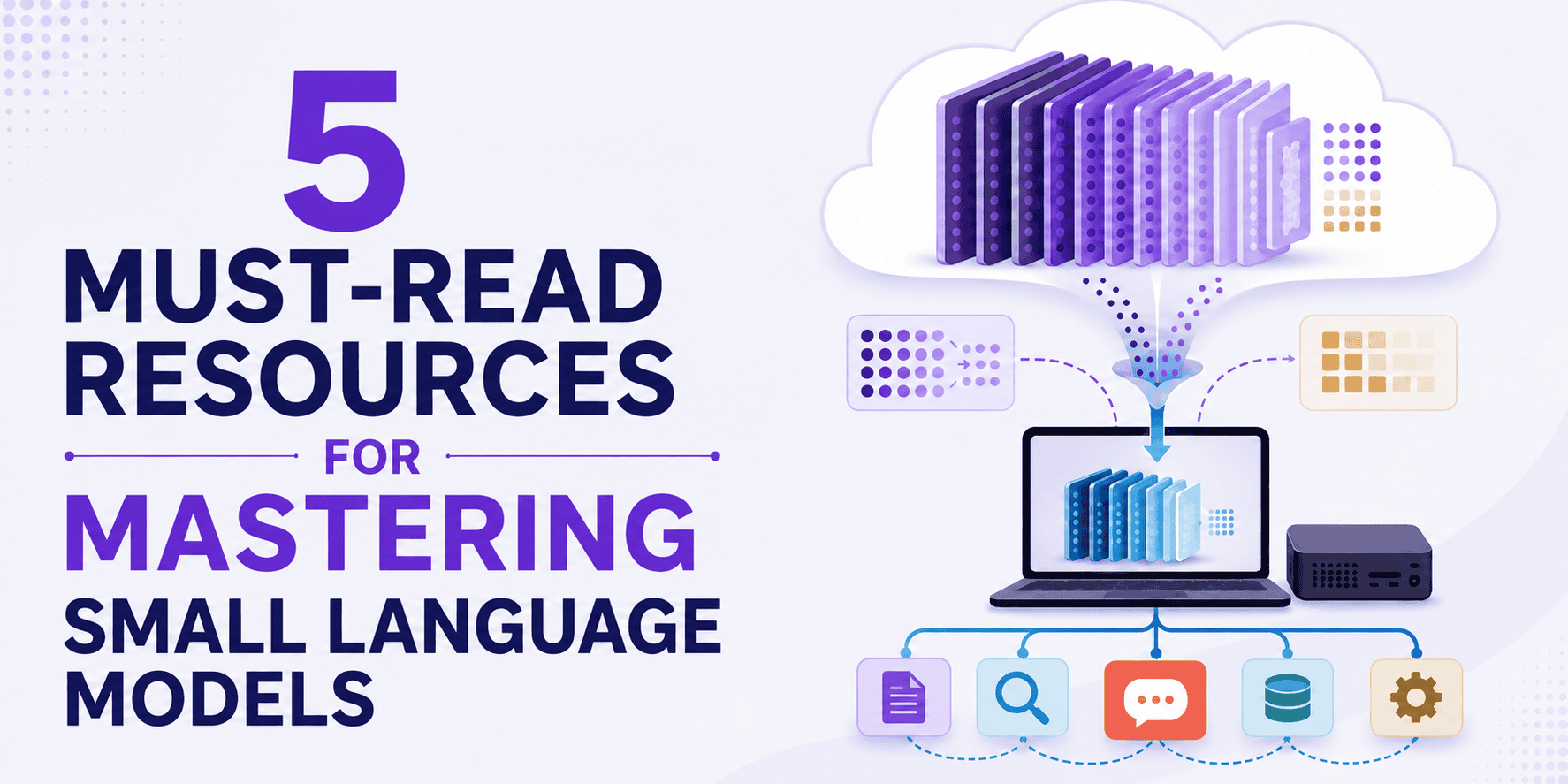
Explore practical resources to master small language models
Small language models are quietly reshaping what's possible for data professionals, and this guide cuts straight to the resources that matter. We've curated five essential reads that cover architecture, fine-tuning, agentic workflows, and local deployment, giving you a practical path forward without the fluff. If you're ready to move beyond theory, these picks will help you build real skills. For a deeper look at how AI systems truly behave, our piece on talking to an AI clone offers a thought-provoking companion.

Choosing the Right AI Model for Your Work in 2026
Choosing the right AI model in 2026 starts with asking what your data actually needs to do, not what sounds impressive. The market is crowded with capable options, and the smartest move is to cut through the noise by focusing on your workflow's real demands. We're past the hype phase; this is about practical fit. For a deeper look at how models process information, our guide to paragraph structure in LLMs offers useful context.
Netflix's blueprint for scaling LLM inference across diverse hardware
Netflix's move to detail its in-house LLM serving platform is a practical look at the messy, real-world work of scaling AI. Supporting different model sizes, juggling hardware constraints, and keeping pace with fast-moving engines like Triton and vLLM isn't glamorous, but it's essential. The company's willingness to share these production lessons offers a grounded counterpoint to the usual hype. If you're wrestling with similar trade-offs, Netflix's account is worth your time, and our related article on distributed training algorithms pairs well with it.

Enterprises race to buy AI compute without tracking what it costs
The compute gap isn't about buying more, it's about seeing what you already own. Across 107 enterprises, GPU utilization sits at 50% or less for 83%, yet 64% plan to switch or add providers within the year. That tension defines the moment: spending is accelerating ahead of measurement, with fewer than half tracking costs rigorously. The next wave of infrastructure decisions will be shaped by visibility, not capacity. Those who close this gap first will steer their AI economics with confidence.

Three Harvard dropouts just reimagined AI hardware without GPUs.
Three Harvard dropouts just turned a decade of skepticism into a $10.3 billion valuation. Etched has built custom chips and memory components that accelerate inference on any AI model, no GPUs required. That is a bold claim, and the big-name investors backing them seem to agree. It is easy to dismiss founders who leave school, but this bet on purpose-built hardware feels less like a stunt and more like a calculated push past current computing limits.

Build Your Own LLM Runtime with a Guided Tour of Real Bugs
There's a particular satisfaction in packing your own weights and capturing your own CUDA graphs, and that's exactly the terrain this walkthrough covers. The post traces the building of annotated-llm-runtime on an H100, with three bugs generating most of the hard-won annotations. It's a practical, grounded tour for anyone curious about the mechanics beneath the abstraction. For broader context on the distributed side, *Unlock LLM Training* pairs well here, though this piece stands firmly on its own.

Open-Sourcing Tri-Net v2 for Reproducible Monkeypox Detection Research
Open-sourcing a research project is one thing; making it reproducible is another. With Tri-Net v2, the team behind the Scientific Reports paper on unified monkeypox detection has done both. They didn't just drop training scripts. They rebuilt the framework with leakage-free pipelines, multiple backbones, and Docker support built in. That is how you invite validation. The over 1,100 article accesses suggest real interest, and now the community can test, break, and improve the work.

Infinity raises $15M to build smarter infrastructure for AI-native data
Infinity's $15 million raise, backed by Touring Capital and researchers from OpenAI and Anthropic, signals something worth paying attention to. At a $100 million valuation, this isn't just another funding round; it's a bet that AI infrastructure can move beyond the hype and into practical, everyday use. We've seen how easily AI tools can mislead, as our own piece on catching AI slop before it skews your model shows. Infinity's work feels like a grounded step toward making that complexity manageable.