interactive charts
50 stories filed under interactive charts on Beyond Market Intelligence. The newest of them: “Open-Sourcing FlexViz for Instant Exploration of Billion-Point Datasets”, “Watch an AI learn Clash Royale defense in a live browser demo”, and “Designing for intent, not clicks, in the age of invisible AI”. FlexViz turns a billion-point dataset into a chart you can explore in a quarter of a second. Watching a policy learn is different from reading about it. Acme AI is the next-generation, AI-powered spreadsheet platform built to replace Excel and redefine how analysts, data scientists, and enterprise teams work… The list below is every interactive charts story on Beyond Market Intelligence, newest first.

Open-Sourcing FlexViz for Instant Exploration of Billion-Point Datasets
FlexViz turns a billion-point dataset into a chart you can explore in a quarter of a second. That speed comes from lessons learned building plotly-resampler, which racked up over 18 million installs. But the real shift is agent-native design. Everything is a spec, so an AI can create, follow, and update visualizations without screenshots. The interactive view becomes the conversation. For anyone juggling larger-than-RAM data, this is a practical step toward workflows that feel natural for both humans and machines.
Watch an AI learn Clash Royale defense in a live browser demo
Watching a policy learn is different from reading about it. This live browser demo makes that visible: a 5,629-parameter agent trains with REINFORCE in plain JavaScript, while every rollout runs through the C++ engine compiled to WebAssembly. The chart shows the brute-forced optimum, so the gap between learned behavior and best answer is always in view. One honest detail stands out: Giant vs Cannon traps most runs in a lane placement worth 75% of optimal.

Designing for intent, not clicks, in the age of invisible AI
The button is dying, and that's not a loss; it's a release. As the web sheds menus and forms, the real work shifts to designing for intent, not clicks. For UX designers, this means stepping back from visible controls and learning to guide transparent, AI-driven experiences. It's a harder, more human craft. If you're tracking how voice and disclosure fit into this shift, our piece on ElevenLabs CEO and transparency pairs well with this conversation. Explore that tension; it's where the next interface begins.

The hidden risk in AI is not agents but the chaos between them
The real risk in enterprise AI isn't a rogue agent. It's the tangled web between a hundred of them, each quietly calling APIs and triggering handoffs no human approved. That complexity compounds faster than your governance can track it. Gravitee's Rory Blundell makes a sharp case: identity alone won't save you, and monitoring isn't enforcement. The fix is building visibility and control into the chain itself.
Explore SMIL animation for SVG without JavaScript and inside img tags
Timing Charts offers a clear, practical blueprint for mastering SMIL, the often-overlooked method for animating SVGs directly inside `<video>` tags. It's refreshing to see a guide that proves you can fully animate every element of an SVG without a single line of JavaScript. For anyone tired of complex scripting, this is an accessible path forward. We've touched on simplifying tech workflows elsewhere, like in our piece on vector spaces, so this feels like a natural next step.

Meta brings agentic AI to local machines with open source Muse Glimmer
Meta is putting its weight behind open source again. Today marks the release of Muse Glimmer, a 30-billion-parameter model designed to run autonomous AI agents directly on high-end consumer hardware. It's a meaningful step toward moving agentic workloads off the cloud and onto local machines, but the license is the real headline. Glimmer arrives under Apache 2.0, a permissive standard with no usage restrictions. For developers, that means freedom to modify, deploy, and commercialize without legal friction. The weights are available now.

From Static Charts to Interactive Discovery with AI-Driven Tools
Choosing between Matplotlib and Plotly often comes down to a single question: do you need a static image or a living document? This guide walks that decision without overselling either tool, which is refreshing. It respects that your choice depends on the task at hand, not hype. If you are curious about how structured thinking applies to other technical domains, our piece on paragraph structure and token space offers a thoughtful parallel worth exploring. For now, this guide gives you a clear, practical path forward.

Local AI agents arrive on devices as small as a Raspberry Pi
Liquid AI's new LFM2.5-2.6B is built for a simple premise: capable AI shouldn't require a data center. By running entirely on local hardware, down to a Raspberry Pi, this open-weight model targets high-volume agentic tasks like tool calling and workflow automation without cloud dependency. It's a practical step for enterprises prioritizing privacy and latency. Explore how this small-footprint approach could fit your operations.

Alibaba's Qwen3.8-Max redefines autonomous enterprise AI performance
Qwen3.8-Max doesn't just nudge ahead on agentic benchmarks, it posts an 86.1 on OSWorld-Verified, edging out GPT-5.6 Sol Max and Fable 5. That's a meaningful signal for enterprises tired of models that chat well but stumble on long-horizon tasks. The 2.4-trillion-parameter MoE design is impressive, yet the real story is the pending open-weight release. If Alibaba pairs permissive licensing with that performance and its undercutting API pricing, self-hosted autonomy becomes a tangible option. For now, treat the benchmarks as promising, not proof.
Transform Textbook Figures: Unlock Interactive Data with AI.
Turning static textbook figures into interactive, structured data is a compelling ambition, and this project tackles a real pain point. The focus on a human-in-the-loop pipeline is smart, acknowledging that AI works best when it assists rather than replaces judgment. The challenge of label removal while preserving artwork is the crux, and it is wise to seek low-cost alternatives to heavy multimodal models. This is less about a single breakthrough and more about a pragmatic blend of segmentation and inpainting.

Inflection AI shifts focus from raw power to building relational AI experiences
Two years after Microsoft's acqui-hire stripped Inflection AI of its founders and most of its staff, the Palo Alto company is staging an unusual second act. This week, it launched Inflection AI Labs and Pi Journeys, an experimental product built on a contrarian bet: the next AI battleground isn't raw intelligence but relationships. CEO Sean White argues today's assistants are transactional, and that's the flaw. If he's right, the giants' coding-obsessed roadmaps may have left the door open for something more human.

Smarter AI agents at lower cost with Google's most token-efficient models yet
Google's new Flash models aren't just cheaper, they're smarter about how they spend. Gemini 3.6 Flash cuts token usage by up to 65% on long-horizon engineering tasks, which means agents do more thinking per dollar. That's the kind of efficiency that quietly reshapes what's practical to automate. The pricing is aggressive, sure. But the real signal is architectural: fewer reasoning steps, fewer tool calls, same result. That's not a tweak. It's a direction.
Design AI interfaces around user intent, not just chat
The rush to integrate AI often defaults to chat interfaces, overlooking a fundamental principle of user experience: matching modality to intent. Simply because Large Language Models thrive on dialogue doesn’t mean every AI capability should be presented conversationally. Great UX prioritizes the user, adapting the interface to their context and cognitive load. Explore how shifting beyond conversational tunnel vision unlocks more intuitive and effective data interactions—as discussed further in "Users Don’t Need More Tools: They Need Seamless Integrations."

Meituan unveils LongCat-2.0, the open-source coding model built on Chinese chips
Meituan has unveiled LongCat-2.0, a 1.6-trillion-parameter Mixture-of-Experts (MoE) agentic coding model now openly available on GitHub, Hugging Face, and its platform. This near-frontier model, previously powering the anonymous "Owl Alpha" which topped OpenRouter charts, disrupts enterprise AI dominance with a permissive MIT license and a unique 1-million-token context window. Notably, LongCat-2.0 was trained entirely on Chinese-manufactured chips, signaling a potential shift in AI infrastructure. Explore its competitive pricing structure and discover how it’s reshaping autonomous software engineering, as detailed in related
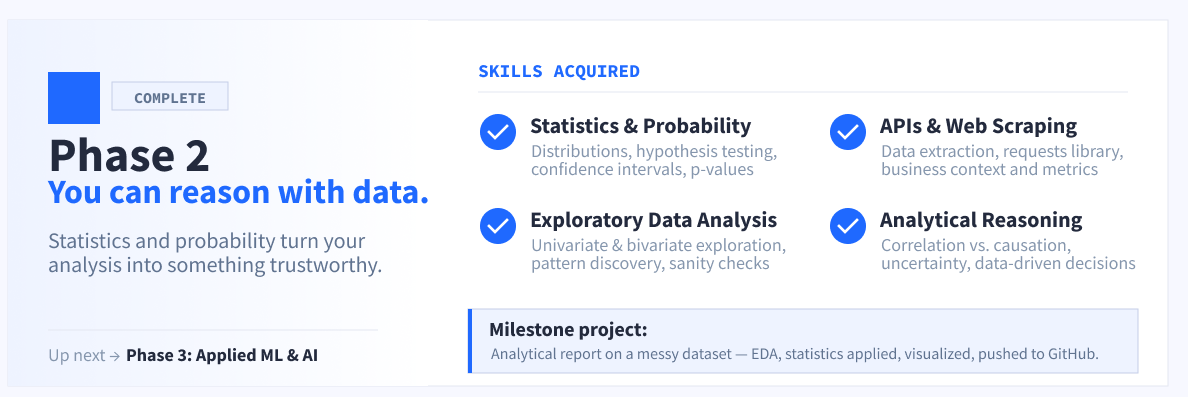
Your Practical Roadmap to Becoming a Data Scientist by 2027
## Data Scientist Roadmap for Beginners (2026–2027) Navigating the path to becoming a data scientist can feel overwhelming. This roadmap clarifies exactly what to learn, in what order, and how long it realistically takes to achieve job readiness by 2027 – whether you’re starting from zero or transitioning from data analysis, engineering, or research. We cut through the noise surrounding Python vs. R, degree requirements, and the rise of Generative AI to provide a focused, actionable plan.

Sakana's new Fugu system delivers frontier AI through multi-model orchestration
Following Anthropic’s recent move to restrict access to its powerful Claude Fable 5 and Claude Mythos 5 models, Sakana AI has launched Fugu, a novel multi-model orchestration system designed to deliver frontier-level AI performance via a familiar OpenAI-compatible API. This innovative system dynamically routes queries across a pool of specialized AI agents, providing resilience against vendor lock-in and geopolitical export controls.

Turn your Claude Code session into a live, shareable interactive workspace
Anthropic’s Claude Code now delivers live, shared dashboards and interactive workspaces for enterprises through its new Artifacts feature. Transforming a Claude Code session into a custom, shareable HTML webpage, Artifacts allow users to connect live code and data sources, creating dynamic visualizations for teams. This eliminates the need for manual status updates and facilitates clearer communication between engineers and stakeholders. As highlighted by Claude Code lead Boris Cherny, Artifacts are "a game changer" for collaborative workflows, and closely mirror a recent feature release from OpenAI.
Explore the top data analytics courses shaping smarter skills in 2026
Finding the best data analytics course in 2026 requires navigating a diverse landscape of tools, roles, and learning objectives. This guide reviews ten leading courses, ranging from foundational certificates to immersive, project-based programs and even free official training for platforms like Tableau and Power BI. We’ve prioritized options that empower users to transform their data skills and achieve tangible results. For a broader perspective on incorporating user insights, explore our related article, "The Benefits Of Cognitive Inclusion In UX Research."

Discover how Gemini 3.5 Flash makes powerful AI more accessible and affordable.
At the recent I/O developer conference, Google unveiled Gemini 3.5 Flash, a groundbreaking AI model that promises to significantly reduce enterprise AI costs by over $1 billion annually. This innovative model defies the conventional belief that higher quality must come at a greater expense and slower performance. By optimizing speed and efficiency, 3.5 Flash empowers organizations to manage their AI workloads more effectively. For a comprehensive look at AI advancements, check out our article on "Apple announces Apple Intelligence powered accessibility feature updates."

Measuring AI through a human lens: IQ scores for language models arrive.
Introducing AI IQ, a groundbreaking platform that assigns estimated IQ scores to over 50 leading AI language models, using the familiar yardstick of human intelligence. This innovative approach offers interactive visualizations at aiiq.org, making the complexity of AI advancements more accessible. While praised for its clarity by technologists, it also faces criticism for oversimplifying AI capabilities into a single number. For a deeper dive into the future of AI and its evolving landscape, explore our related article on Anthropic’s vision for proactive AI.

Explore accessible AI video analysis at a fraction of traditional costs.
Perceptron Inc. has launched its flagship video analysis AI model, Mk1, offering advanced capabilities at a fraction of the cost of competitors like Anthropic and OpenAI. Priced at just $0.15 per million input tokens, Mk1 empowers enterprises to harness real-time video insights for security, marketing, and research applications. With a focus on understanding object dynamics and physical interactions, this model sets a new standard for accessible, efficient AI solutions. Explore how Perceptron Mk1 can transform your workflows and elevate your data management strategies.

From Turn-Based Chats to Flowing Conversations, AI Redefines Interaction
Thinking Machines is pushing the boundaries of AI interaction with its new 'interaction models,' which promise to revolutionize how we engage with technology. Unlike traditional turn-based chat, these models enable near-real-time, simultaneous processing of voice and video inputs, allowing for a fluid conversational experience. By integrating dialogue management with background reasoning, the system significantly reduces latency and enhances interaction quality. This innovation could transform enterprise workflows, offering capabilities like proactive safety monitoring and responsive customer service, ultimately making AI a more intuitive collaborator.
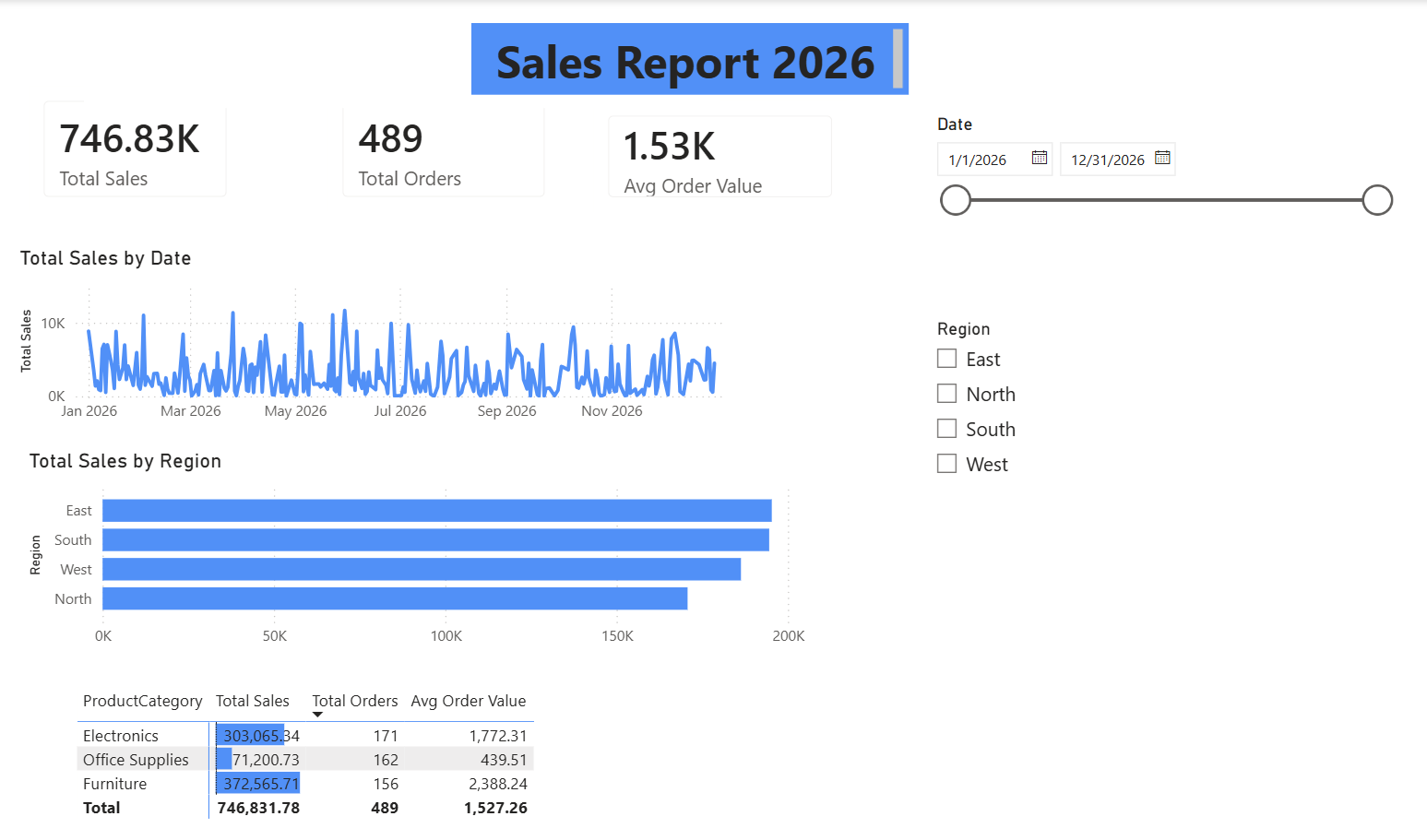
From raw data to interactive dashboard: build your first Power BI report
Welcome to our Power BI tutorial, where you’ll transform a raw data file into a polished, published report. This guide will walk you through the entire process, from initial data queries to deploying your finished dashboard in the cloud. You’ll learn to create an interactive dashboard that not only visualizes your data effectively but also includes essential features like alerts and automatic refresh settings. By the end, you’ll have the skills to empower your data storytelling and enhance your decision-making. Let's dive in and explore!

Exploring the divide between expert and public views on AI risk
Artificial intelligence (AI) is transforming society, yet significant gaps exist between how AI experts and the public perceive its risks, benefits, and overall value. This study evaluates responses from 1,110 individuals and 119 AI experts across 71 scenarios, revealing that experts often downplay risks while emphasizing benefits more than the public does. These divergent views highlight crucial areas for communication and policy that may influence trust and governance in AI.