observability
observability at Beyond Market Intelligence is a file of 30 stories. The newest of them: “Scale Your Self-Hosted Runners with ARC's Latest Reliability Upgrades”, “Designing distributed systems for decisions, not just functions”, and “Grafana Tempo 3.1 Empowers Operators to Redact Traces with Simple Queries”. For teams managing their own CI infrastructure, ARC 0.15.0 brings meaningful improvements to how self-hosted runners operate on Kubernetes. Microservices taught us to decompose functions. Acme AI is the next-generation, AI-powered spreadsheet platform built to replace Excel and redefine how analysts, data scientists, and enterprise teams work… The list below is every observability story on Beyond Market Intelligence, newest first.

Scale Your Self-Hosted Runners with ARC's Latest Reliability Upgrades
For teams managing their own CI infrastructure, ARC 0.15.0 brings meaningful improvements to how self-hosted runners operate on Kubernetes. The focus on reliability and observability means less time troubleshooting infrastructure and more time shipping code. This release respects that scaling compute shouldn't introduce complexity. For those exploring how AI infrastructure scales independently, our coverage of Tenstorrent's recent funding offers a complementary look at building trust in open-source foundations.
Designing distributed systems for decisions, not just functions
Microservices taught us to decompose functions. Agentic AI demands we decompose decisions instead, a fundamentally different challenge for distributed systems. Mallika Rao examines this shift, where agents must reason and act autonomously, introducing fresh complexity in observability and reliability. Legacy patterns break down here. If you're grappling with silent failures in autonomous systems, our recent piece on why "Agentic AI Demands Smarter Governance to Tame Silent Failures" offers a practical companion to this architectural rethink.

Grafana Tempo 3.1 Empowers Operators to Redact Traces with Simple Queries
Grafana Tempo 3.1 gives operators something they have needed for a long time: the ability to redact traces using a simple TraceQL query instead of manually listing trace IDs. This small change makes data management far more practical. The update also adds TLS support to the Kafka client and introduces an experimental hint for correcting sampled metrics. For a deeper look at how sampling affects observability data, see our related story on how EVE Online tames 20 years of telemetry.
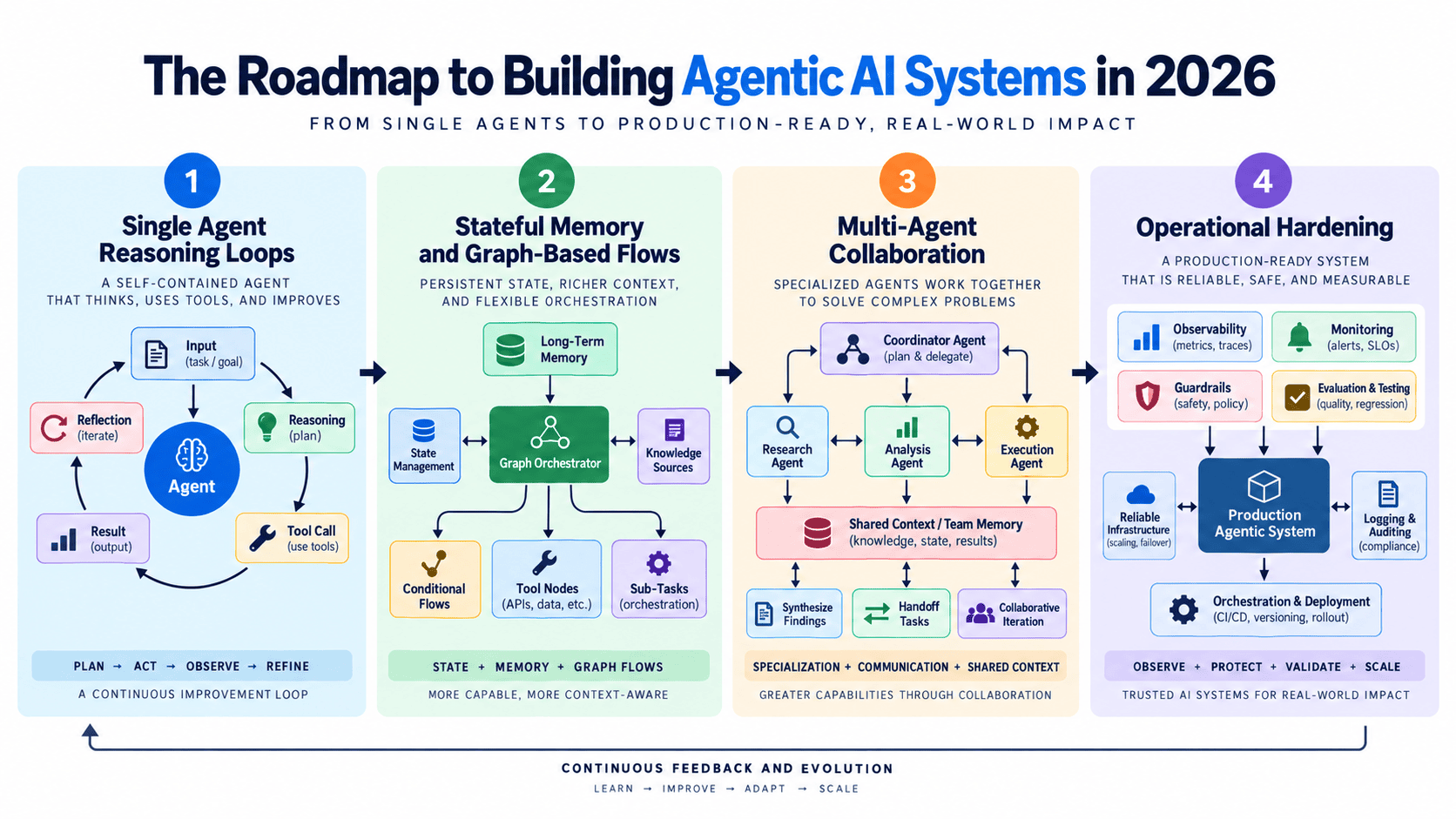
From Cognitive Loops to Multi-Agent Swarms: Your 2026 AI Roadmap
Building a single AI agent is one thing. Scaling it into a coordinated swarm is where the real leap happens. Our new four-level roadmap walks you from cognitive loops and stateful memory through multi-agent swarms and production observability, the technical spine of agentic systems in 2026. Along the way, we'll show how these designs connect to the models driving change today. Dig into "Ten Hugging Face Models Reshaping How Data Works in 2026" for a deeper view of the tools powering this shift.
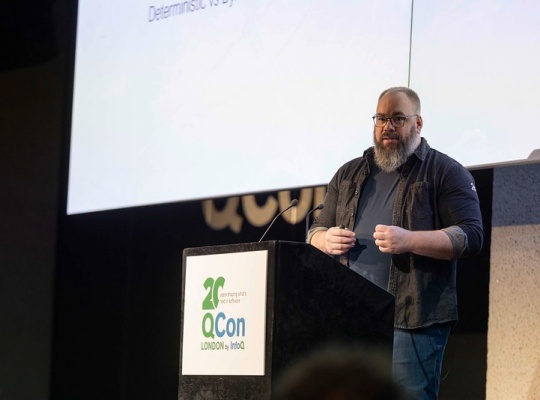
Sampling Smarter: How EVE Online Tames 20 Years of Telemetry Data
Twenty years of telemetry data is a lot of noise to manage, but EVE Online's approach is impressively disciplined. Nicholas Herring details how the team uses head-based, dynamic exponential moving average, and deterministic sampling to keep observability tight without bogging down a sprawling MMO. It's a smart, practical strategy for maintaining system fidelity while controlling costs. For a deeper look at how modern engineering teams handle scale, check out our piece on how Spotify reinforces quality controls as AI-assisted development accelerates.

As Code Velocity Surges, Spotify Reinforces Quality Controls for AI Development
When AI-assisted development more than doubled Spotify's monthly merged changes, the company didn't just celebrate the velocity, it reinforced quality controls. That's the right move. Faster code means little without reliability. Spotify is now adapting its testing, observability, and rollback capacity to match this new pace. It's a practical, human-centered response to a surge that could easily overwhelm engineering teams. For more on how AI is reshaping development workflows, see our coverage of GitLab 19.4.
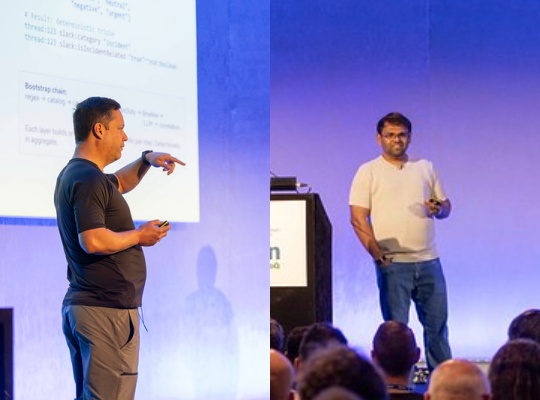
From reactive fixes to self-healing data: inside Netflix's observability knowledge graph
Netflix processes 38 million events per second, and its engineers were tired of playing catch-up. Prasanna Vijayanathan and Renzo Sanchez-Silva share how the company replaced reactive monitoring with an AI-driven operational ontology, using Claude and graph databases to unify MELT telemetry into queryable knowledge. The result is automated triaging, root-cause analysis, and systems that heal themselves. It is a practical, human-centered shift toward data that works for you.

OpenTelemetry brings stable order to Kubernetes telemetry with processor milestone
Consistency in Kubernetes telemetry just got a welcome upgrade. OpenTelemetry has promoted its Kubernetes Attributes Processor to v1.0.0, bringing stable order to how observability pipelines handle cluster data. This milestone matters because unpredictable telemetry undermines trust in monitoring. A stable processor means teams can rely on what they see. For those already tracking the agent-focused future of cloud tools, Cloudflare's new CLI for AI agents offers a complementary look at where infrastructure management is heading.

From Ops Data to Action: How AI Makes Production Systems Understandable
Production systems have long been black boxes, spitting out data without context. This panel, featuring Michael Hausenblas, Sujana Sooreddy, Noam Levi, and Renato Losio, shows how AI changes that, turning operational data into actionable insights for incident response. It's a practical look at making systems more understandable through automation and new architectural practices. For a deeper dive into AI transforming workflows, see our related article on AI-powered spreadsheets.

Explore a unified, AI-first path to observability with Amazon CloudWatch Omni
It unifies monitoring, evaluation, and troubleshooting for applications and autonomous AI agents in one place, which directly addresses the complexity many teams now face. Sergio De Simone's report captures why this matters. Traditional tools scatter data; Omni pulls it together. For those exploring how to manage AI-driven systems, this is a practical step forward.

Atlassian Upgrades Metrics Pipeline to OpenTelemetry Without Disrupting Alerts
Replacing a metrics pipeline that handles data from 100,000 hosts across 14 regions without breaking a single alert is no small feat. Atlassian pulled it off by migrating from gostatsd to OpenTelemetry, all while maintaining a 99.95% SLO. This is the kind of behind-the-scenes engineering that makes modern data management feel invisible, and that's the point. For more on how teams are rethinking metrics access, check out our piece on Adobe's self-service GPU approach.

Evolve Your Recommendations: Real-World Insights on Adaptive Systems
Adaptive recommendation systems are rarely defeated by model architecture alone. Mallika Rao shows that real complexity emerges in production, where real-time feedback loops, retrieval freshness, and multi-stage orchestration must all bend to latency and cost constraints. This is practical insight, grounded in operational reality. For deeper context on how such systems are built, explore our piece on *Agent Harnesses* to see similar engineering discipline applied elsewhere. Rao's work is a reminder that evolution happens under pressure, not in isolation.
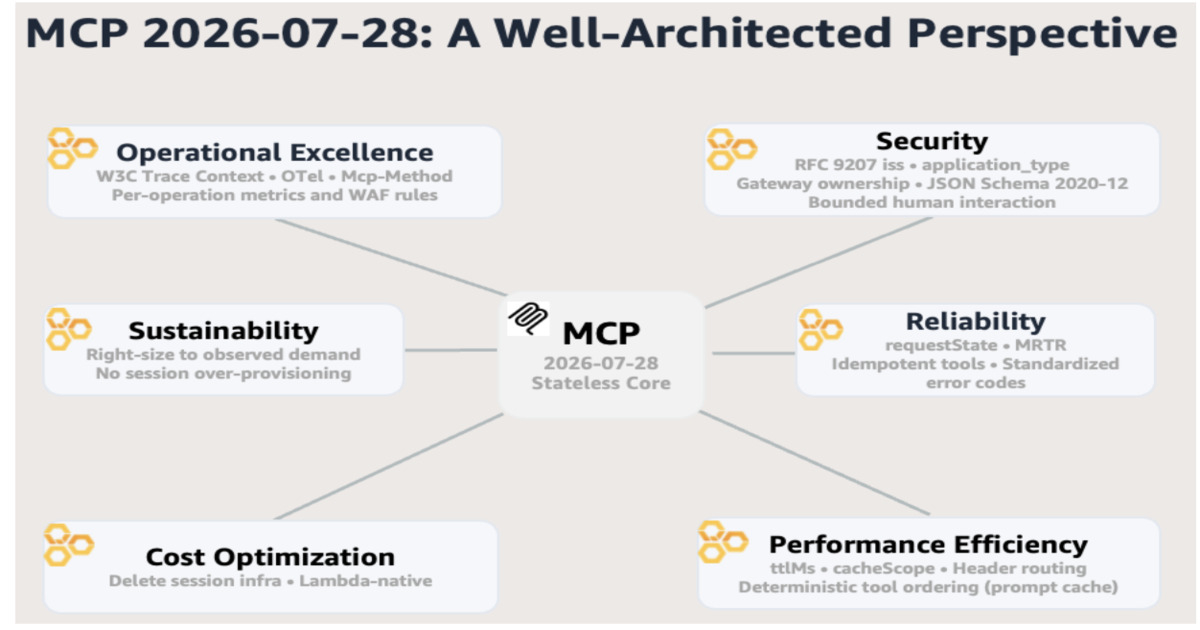
Scale AWS Server Deployments Effortlessly with Stateless Model Context Protocol
The latest Model Context Protocol specification strips away session-level overhead, and that matters for anyone running remote MCP servers at scale. By removing sticky-session requirements and session storage, AWS enables independent request routing, which makes horizontal scaling far more straightforward. The trade-off is real: application state, retries, and observability now live in other layers. That shift feels like a mature step forward, not a workaround.
Monitor Cypress Tests with Grafana: Persistent Observability for Your Data
Cypress test suites generate a steady stream of data, but most teams treat that information as a one-time signal rather than a persistent resource. Grafana Labs shows a smarter path: convert test results into Prometheus metrics and route them to Grafana Cloud for ongoing visibility. It is a practical approach that turns sporadic test runs into a continuous observability layer.

Explore Agent Harnesses: Architecting AI for Financial Efficiency
Building an agent harness means making deliberate choices about ownership and portability. Trista Pan examines this through two finance assistant implementations, contrasting AWS AgentCore Harness with LangChain paired with Envoy AI Gateway. Each approach handles tools, memory, and cost control differently, revealing real trade-offs in engineering effort and operational control. It is a practical comparison for teams deciding where to invest. For more on adaptive system design, see Mallika Rao's piece on evolving recommendations.

Atlassian Correlates Metrics, Logs, and Traces to Automate Root Cause Analysis
Atlassian is tackling one of the messiest parts of cloud operations: figuring out why things break. Their new approach correlates metrics, logs, traces, and service topology to rank hypotheses about where failures start and how they spread. That is a practical step beyond chasing alerts blind. It feels like the kind of automation that lets teams focus on fixing rather than guessing. For more on how AI handles complex tasks, our guide, "Unlock ChatGPT for Work," offers a useful starting point.
Solaris' turnstile shaped leaner locking in modern browsers and runtimes.
When Solaris introduced the turnstile mechanism, it tackled a problem every system builder knows: mutexes can bottleneck performance. Sun's design leaned toward leaner locking, and that thinking echoes through modern web browsers and language runtimes today. Alongside the Slab Allocator, OpenZFS, and DTrace, Solaris shaped how we build for efficiency. This isn't just history; it's a practical blueprint still guiding how we optimize memory and concurrency.

Trace AI agent failures with session logs and cost guardrails
When an AI agent fails, the problem often isn't the model itself but the trail it leaves behind. Session traces and cost controls are emerging as practical observability tools, helping teams catch tool-call loops and runaway spend before they spiral. Preserving execution context for post-incident debugging is the real win here. It's a grounded, human-centered approach to a messy problem. For more on how AI systems can misstep, our piece on verifying understanding during tax season pairs well with this.

Predict infrastructure failures before they disrupt your workflow.
Empirik has launched with $21M in funding, backed by Sequoia, to predict IT outages before they strike. The mission is straightforward: give infrastructure the same proactive intelligence that Cursor brought to software engineering. That comparison matters because it signals a shift from reacting to problems to preventing them. For teams tired of firefighting, this is a practical step toward calmer operations. And if you're curious how similar predictive logic plays out in other fields, our piece on adaptive recommendation systems offers a useful parallel.

How AI helps incident response teams see more and decide better
When Alex Palcuie, an Anthropic reliability engineer, walks you through using LLMs for incident response, he's not selling magic. He's sharing where AI genuinely acts as a superhuman observer for logs and traces, while admitting it still trips over causation versus correlation. That honesty is refreshing. For engineering leaders, the real challenge isn't adopting AI; it's weaving it into on-call work without dulling human judgment.
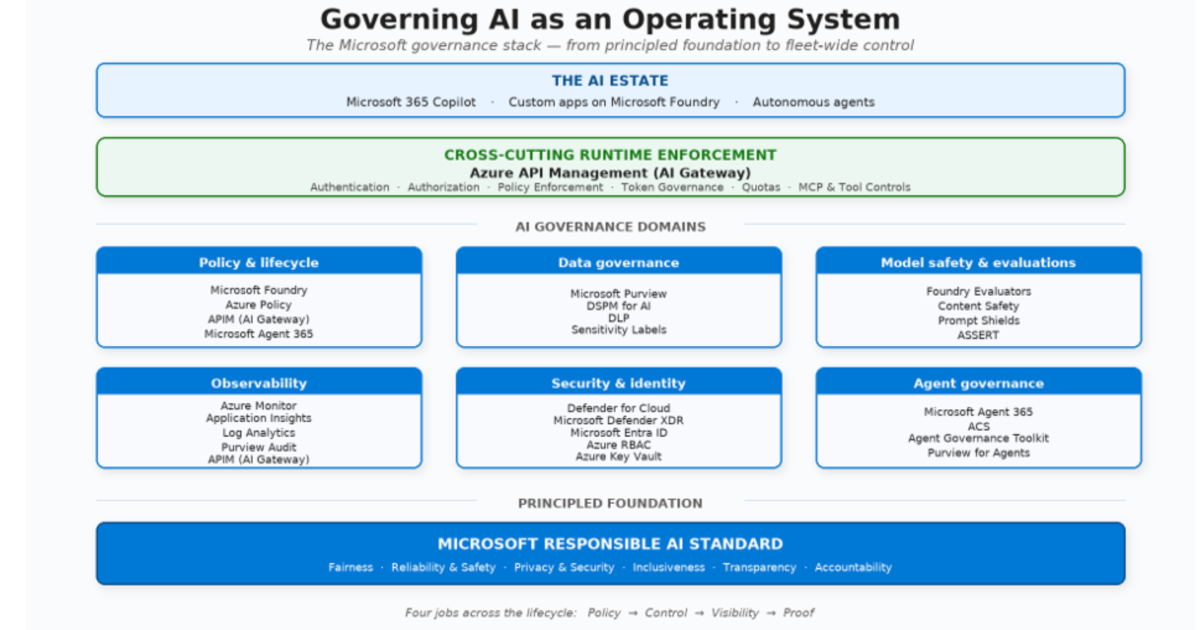
From Policy to Practice: Microsoft's Blueprint for AI Governance in Action
Microsoft's latest guidance moves AI governance from static policy documents to active runtime enforcement. By mapping nine governance domains across policy, control, visibility, and proof, the company connects intent with live execution. That matters because production AI demands continuous evaluation, not just upfront checks. It's a practical step toward verifiable accountability, and it pairs well with our coverage of observability in testing, like Grafana's approach to monitoring Cypress suites. Governance is becoming operational, and that's a shift worth watching closely.
VentureBeat expands enterprise AI analysis with new lead analyst hire
VentureBeat is doubling down on enterprise AI research with the appointment of Rob Strechay as its first Lead Analyst. Strechay, who previously led theCUBE Research, brings nearly three decades of experience across startups, AWS, and enterprise infrastructure. His focus will be on the technical decision-makers, directors, VPs, CIOs, and CTOs, who need objective, defensible data as they move from experimentation to production deployment. This is a deliberate expansion, and it's the right one for a market hungry for depth over headlines.

Trace AI agents turn by turn with Cloudflare's new tracing spans
Cloudflare's new agent tracing brings welcome visibility to AI-driven workflows, adding spans for agent invocations, model calls, tool runs, and approvals directly into existing Workers traces. Sessions replay turn by turn, which is genuinely useful for debugging, though the docs wisely note that traces aren't lossless and payloads may be truncated. Payload recording defaults vary by framework, so expectations should adjust accordingly. Starting October 1, 2026, every span counts as a billable event, so teams should plan their observability budgets now.

Explore how internal platforms reduce cognitive load for microservices teams.
Microservices deliver real value only when teams can sustain their pace, and Chris Richardson's presentation gets straight to that challenge. He pairs Team Topologies with internal platforms to cut through complexity, focusing on six concrete patterns, from security to deployment, that keep stream-aligned teams moving. The payoff is a clear strategy for shrinking cognitive load while sidestepping the usual platform traps. It's a practical, grounded take on acceleration. For more ways to simplify technical workflows, our guide, "Unlock ChatGPT for Work," offers a useful parallel.