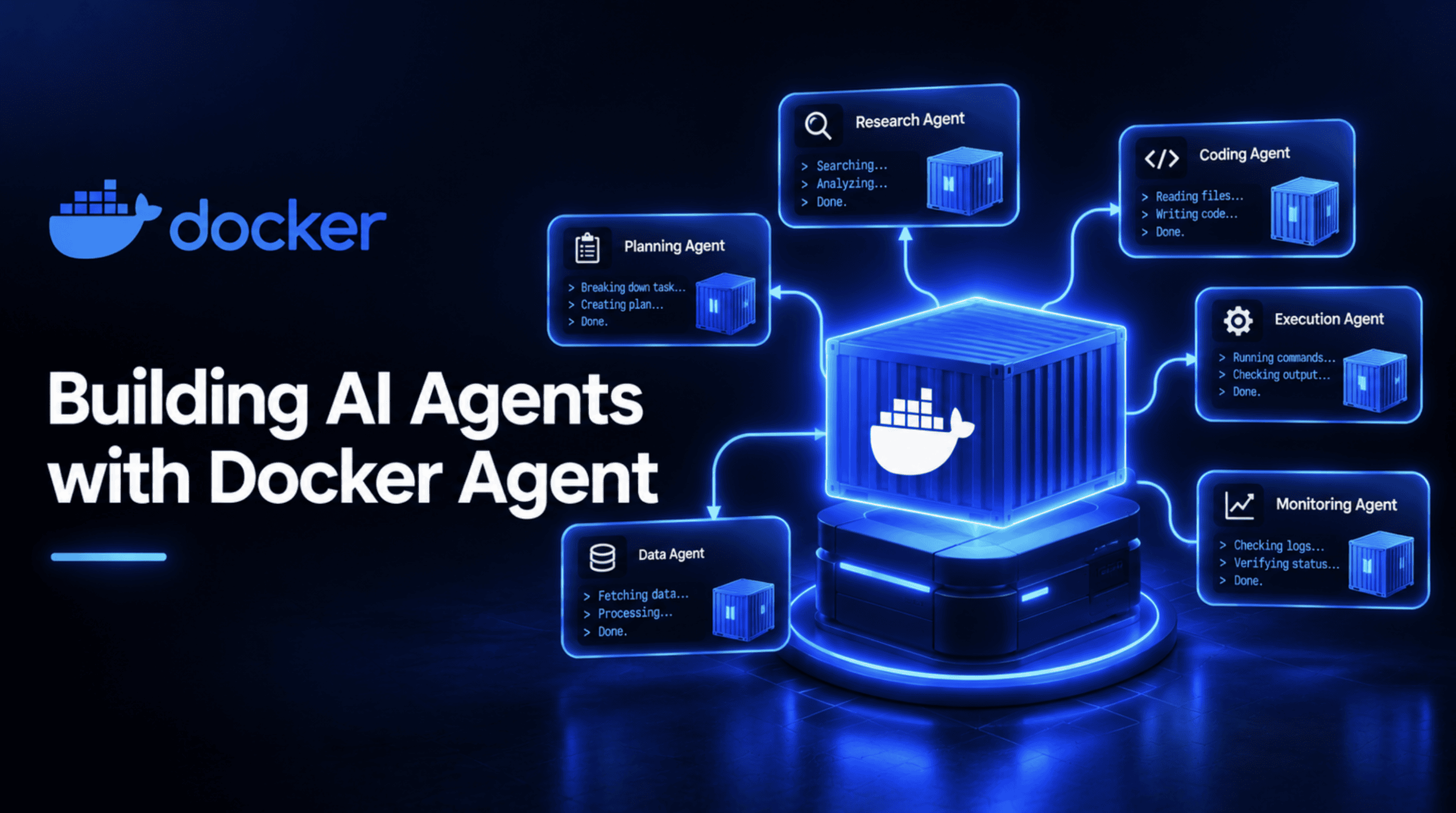
Docker Agent's tagline is refreshingly blunt: run AI agents like containers. That single sentence captures more practical wisdom than most AI platform announcements we've seen this year. The open-source CLI plugin, built by Docker Engineering and licensed under Apache 2.0, installs as `docker agent` and treats AI agents as composable, reproducible units. It is not a new model or a new framework. It is an attempt to bring discipline to a space that desperately needs it.
We think this is the right move at the right time, and it speaks directly to the pain many of you are feeling right now. AI agents have been sold as autonomous marvels, but in practice they are fragile, stateful, and hard to reproduce. Containers solved that exact problem for software twenty years ago. Applying the same packaging, isolation, and portability principles to agents is not clever marketing; it is engineering common sense. The 7 Resources to Explore How AI Agents Learn to Improve Themselves we recently covered show how much energy is going into agent cognition, but cognition is useless if the environment it runs in is chaotic. Docker Agent addresses the boring, essential layer beneath all that intelligence.
For readers who have struggled to move an agent from a local notebook to a production workflow, the implications are concrete. Containers give you versioning, rollback, and dependency isolation. Agents need those same guarantees, especially as they grow longer-lived and start holding context across multiple steps. Without a standard runtime, every agent deployment becomes a bespoke integration project. That is why Cloudflare Clef gives AI agents a sharper decision-making model matters in parallel: better decisions are valuable, but they mean little if the agent cannot be reliably shipped, stopped, and restarted. Docker Agent is not competing with Clef; it is the substrate that makes Clef and similar tools practical.
The open-source choice is significant, too. Docker is not locking this behind a proprietary dashboard or a paid tier. Apache 2.0 means any team can inspect, modify, and run it without legal friction. That aligns with the broader trend we are watching, where Hermes Agent developer secures $90M to bring AI agents to business users signals serious commercial appetite. But commercial platforms will only thrive if the underlying operational model is sound. Docker Agent gives the ecosystem a shared baseline, which lowers the barrier for smaller teams who cannot afford to build their own orchestration layer.
Here is the specific detail we will be watching: whether Docker Agent evolves beyond a CLI convenience into a default standard that other tools adopt. A plugin is easy to install, but a standard is something the whole industry has to agree on. The challenge is not technical; it is social. If enough agent frameworks start emitting container images as their default output format, we will see a genuinely interoperable agent ecosystem. If not, Docker Agent becomes a useful tool for some and a missed opportunity for everyone else. The next few months will tell us which path we are on.