open source
105 stories filed under open source on Beyond Market Intelligence. The newest of them: “Explore how Netflix's open-source agent simplifies causal analysis workflows.”, “Qwen3.8-27B brings powerful local AI agents to your own machine”, and “AWS Opens Dogwood to Give Agents Smarter Permission Chains”. Netflix has open-sourced an agentic workflow for Observational Causal Inference that cuts through the usual grind of causal analysis. The 27-billion-parameter model from Alibaba landed quietly on Hugging Face, but developers heard it loud and clear. Acme AI is the next-generation, AI-powered spreadsheet platform built to replace Excel and redefine how analysts, data scientists, and enterprise teams work… The list below is every open source story on Beyond Market Intelligence, newest first.

Explore how Netflix's open-source agent simplifies causal analysis workflows.
Netflix has open-sourced an agentic workflow for Observational Causal Inference that cuts through the usual grind of causal analysis. Given your data and a clear plan, the agent runs an actor-critic loop to estimate causality, draft a report, and point to next steps. It's a practical move toward making complex inference less manual. If you're exploring how agents handle structured tasks, our guide to distributed algorithms offers a useful foundation. This is the kind of tool that turns ambition into action.

Qwen3.8-27B brings powerful local AI agents to your own machine
The 27-billion-parameter model from Alibaba landed quietly on Hugging Face, but developers heard it loud and clear. Qwen3.8-27B isn't just another compact local model; it brings coding agents, image understanding, and a 262,144-token context window to hardware you might already own. Third-party tests now match it with cloud-only systems from months ago. That gap is closing faster than expected, and for enterprises watching data privacy and cost, the appeal is obvious. It's worth exploring how this changes what "local" really means.

AWS Opens Dogwood to Give Agents Smarter Permission Chains
AWS's open-source Dogwood takes a meaningful step beyond single-request policies. By extending Cedar with temporal conditions, it lets rules reason about an agent's prior tool calls, covering approvals, rate limits, and running totals. That's a practical answer to a real gap in AI governance. The Apache 2.0 release is solid, though the reference interpreter isn't production-ready yet.

Explore PostgreSQL Internals Through an Interactive 3D City Simulation
PostgreSQL's internals don't have to stay locked behind documentation. PGSimCity, an open-source project by Nikolay Samokhvalov, turns them into a 3D spatial simulation you can explore right in your browser. It's a practical way for backend developers and site reliability engineers to grasp SQL behavior and kernel execution dynamics through interactive play. The project is live on GitHub, inviting hands-on learning. For those already thinking about distributed systems, our guide to distributed training algorithms pairs naturally with this visual approach.
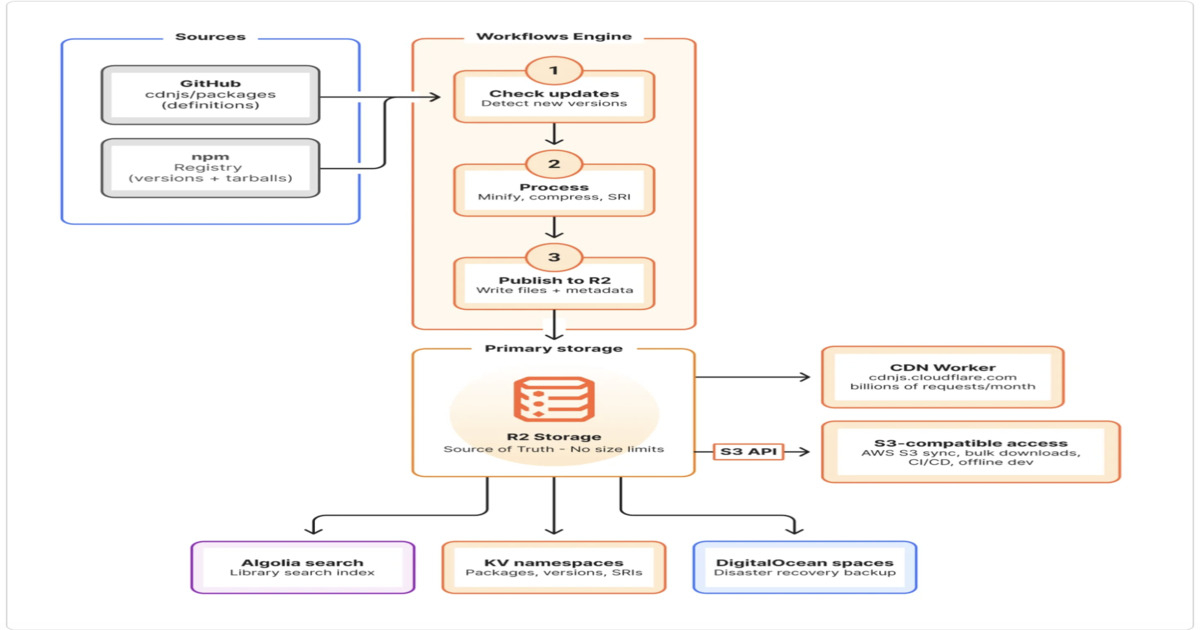
Cloudflare moves 9 billion daily CDN requests to its developer platform
Cloudflare has moved cdnjs, its open source CDN for JavaScript and CSS libraries, onto its Developer Platform, and the scale is striking: 9 billion requests a day now run on Workers, R2, KV, Workflows, Queues, Durable Objects, and Containers. That's not just a hosting swap; it's a consolidation of publishing and delivery into one architecture, all while keeping URLs and SRI hashes intact. For teams wrestling with legacy tools, this shows what's possible when infrastructure steps forward. Curious about similar migration thinking?

Meta opens AI access but keeps its most powerful model locked
Meta's new open-weight Glimmer model is a deliberate counterpunch to the idea that AI's future belongs behind closed doors. Zuckerberg's letter makes the case for accessibility, yet the contrast is stark: Glimmer is free to download, while the more capable Spark stays locked in Meta's APIs. That split raises a fair question about whether "for everyone" truly means what it sounds like.

Three Teams, One Problem: LLMs Fill GraphQL Mock Gaps
Three teams are now solving the same problem in different ways. Expedia Group open-sourced mockql-rs, a Rust CLI that fills @mock-annotated GraphQL fields with LLM-generated data at request time. It follows Airbnb's @generateMock from April and a GraphQL Foundation RFC opened in February. The catch: two use the same directive name with incompatible semantics. That is a coordination gap worth watching. For more on how these models reason structurally, see our piece on paragraph structure in token space.

Writer's new AI model delivers enterprise power without the price tag
Writer is taking a pragmatic step toward cheaper AI deployment with a new model built as a post-training variation on Z.ai's open source GLM-5.2. The upgraded harness to contain token costs matters because it directly addresses what holds many teams back: unpredictable expenses. This feels less like a flashy leap and more like a sensible unlock. For a deeper look at why cost discipline is becoming central to AI work, our piece on catching AI slop before it skews your model offers useful context.

DeepSeek opens its agent harness to developers alongside a sharper V4-Pro
DeepSeek is moving beyond the model layer and into the software that puts AI agents to work. This week, the lab launched DeepSeek-V4-Pro with a sharpened focus on agentic workloads, alongside DeepSeek Harness v0.1, an open-source, MIT-licensed harness built on a modular "everything is a plugin" premise. Developers can now swap out models, tools, and orchestration at will. The trade-off? New peak and off-peak API pricing takes effect Aug. 16, with rates rising 50% to over 1,100% depending on usage.

X opens ranking code to reveal how your feed is shaped
X just opened the hood on its ranking algorithm, letting users see exactly how the 'For You' feed decides what they see and whether they've been shadowbanned. It's a bold step toward transparency, and one that acknowledges a growing distrust in platform black boxes. We appreciate the move because it shifts power back to the people using the service. For a deeper look at how platforms handle visibility, our piece on Meta reversing course on ads for the Musk documentary offers useful context.

Leading AI voices make the case for open access amid safety concerns
At Ai4, three of the world's most respected AI experts, Geoffrey Hinton, Fei-Fei Li, and Andrew Ng, made the case for staying open despite mounting safety concerns. Their debate on regulation and open-source access cuts to the heart of how America competes as China advances. It's a conversation worth following closely. For more on where AI is headed, explore our related coverage, including a practical guide to unlocking ChatGPT for work. The path forward demands clarity, not fear.

Explore how Grok 4.6 brings capable AI agents at a more accessible price.
Grok 4.6 is here, and it's a meaningful step forward for teams building with AI agents. The model now ranks third globally on the Artificial Analysis Intelligence Index, surpassing Kimi K3 and matching GPT-5.6 Sol Max. More importantly, it delivers significant gains in coding, knowledge work, and long-running agent tasks, while keeping API costs at $2 per million input tokens. That combination of capability and economics is worth exploring, especially for enterprises weighing performance against the real cost of completing complex workflows.
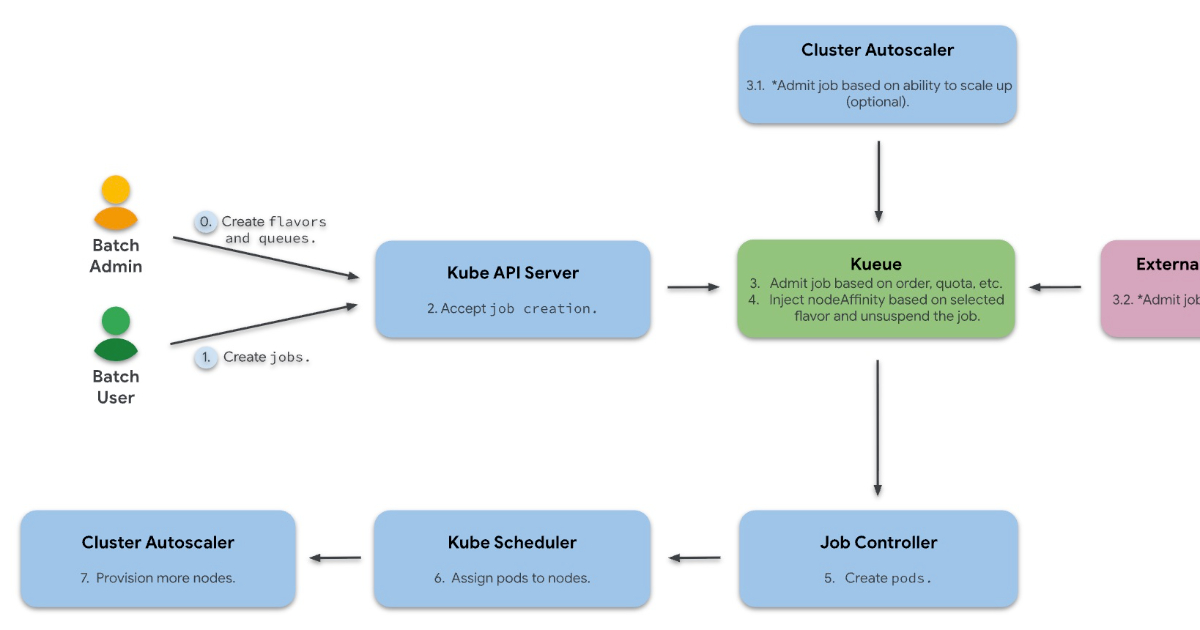
Netflix Migrates Batch Workloads to Open-Source Kueue, Retiring In-House System
Netflix has moved most of its batch workloads onto Kueue, an open-source cloud-native job queueing system that outgrew its in-house solution. The migration wasn't just about swapping tools; it let the company map existing capabilities while gaining new features that would've been costly to build internally. That's a pragmatic win. For those tracking similar infrastructure shifts, our piece on Cloudflare's EmDash migration offers another look at how open-source adoption pays off. Kueue's trajectory suggests the future of data management is increasingly shared, not siloed.
Nvidia's Switchyard routes AI tasks to the right model, slashing costs
Nvidia's Switchyard router cuts agentic costs by matching each step to the right model, and paired with the new Nemotron 3.5 Lightning, it holds frontier-level quality at roughly a third of the price. That's the fix enterprises have been circling. The real bet is owning both layers, model and routing, under one open license. It shifts the competitive question from which model is best to which system routes best.
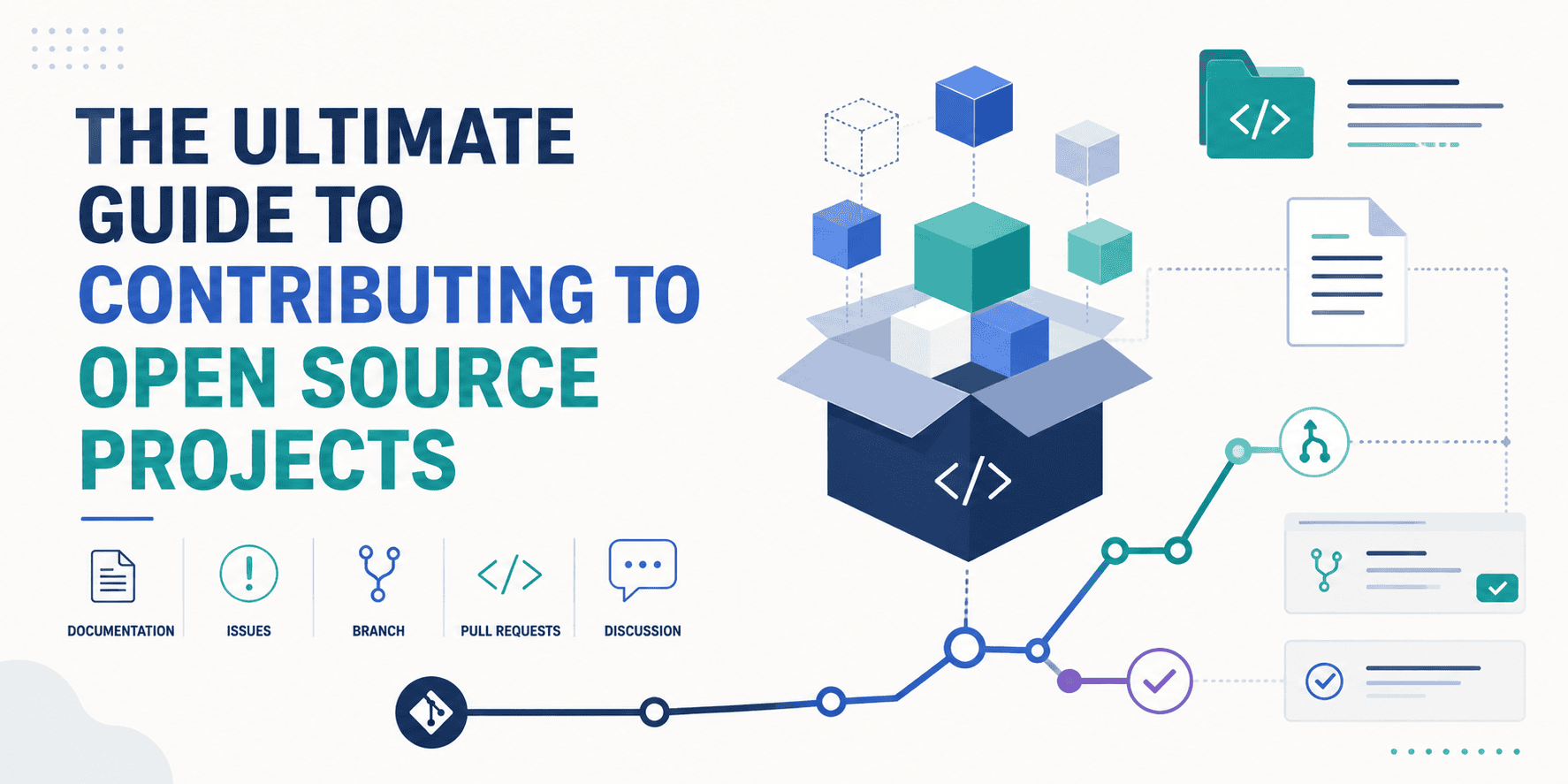
How to Contribute to Open Source Projects With Confidence and Clarity
Open source contributions often stall before they start, usually because the first commit feels like the hardest step. This guide cuts through the guesswork, showing you how to identify projects where maintainers actually respond, master the exact git workflow, and turn a single pull request into a lasting presence. It is a practical map for getting your first real contribution merged.

Building Trust in Open Source Supply Chains for AI-Assisted Development
Trust in software supply chains is no longer just a compliance checkbox. With IBM and Red Hat expanding Lightwell into commercial offerings, organizations now have a clearer path to verifiable trust in AI-assisted development. That matters, because the tools we use to build software must be as accountable as the code they produce. It's a practical step toward governance that keeps pace with innovation, not a distant promise.

Meta brings agentic AI to local machines with open source Muse Glimmer
Meta is putting its weight behind open source again. Today marks the release of Muse Glimmer, a 30-billion-parameter model designed to run autonomous AI agents directly on high-end consumer hardware. It's a meaningful step toward moving agentic workloads off the cloud and onto local machines, but the license is the real headline. Glimmer arrives under Apache 2.0, a permissive standard with no usage restrictions. For developers, that means freedom to modify, deploy, and commercialize without legal friction. The weights are available now.

GitHub's Default Security Shift Puts Waiting Periods Ahead of Signing
GitHub's latest npm and Actions updates, shipped from March through July 2026, harden defaults against supply chain attacks rather than just adding new options. That's a sensible shift, though Hacker News commenters are split on whether waiting periods truly solve the problem or merely delay it. Author-side package signing still feels like the missing piece. These controls are welcome, but they shouldn't replace a more direct path to trust.

Give AI agents a persistent workspace with Cloudflare's new open-source runtime.
Cloudflare's new open-source runtime, Cloudflare Computer, gives AI agents something closer to a real machine than the usual ephemeral containers. By leaning on Cloudflare isolates, it promises faster, cheaper, and more scalable execution for agentic workloads. That's a meaningful step beyond stateless setups, and it's worth exploring if you're building agents that need persistence. For more on how Cloudflare thinks about performance, their EmDash CMS migration offers a useful parallel. This runtime feels like a practical push toward agents that actually finish the job.

The 47‑Page Blueprint That Reveals What a Frontier Model Really Takes
Kimi K3 doesn't hide behind hype. Its 2.8-trillion-parameter model shipped with 47 pages of open recipe, and reading them reveals a truth we don't often say aloud: most of building a frontier model isn't the model. It's the data, the compute orchestration, the judgment calls. That transparency feels almost radical. For anyone curious how far the field has come, this report is a grounded, human-scale entry point.

Speed up your C interpreters with minimal code changes
JIT compilers are powerful, but retrofitting them into existing interpreters often feels like a monumental task. Laurence Tratt's presentation on yk, an open-source meta-tracing framework, challenges that assumption. He demonstrates how C-based language interpreters, like Lua and MicroPython, can be sped up automatically with minimal, non-invasive code changes. The focus on tracing loops and managing complex deoptimization is particularly compelling. It's a practical, grounded approach to a difficult problem.
Debugging a Bad Forecast Model Without the Noise
Debugging a bad forecast often starts with a single overall error score, yet that number rarely tells you where to look. Breaking the error down by customer, product, or horizon is a natural first step, but the real question is whether your tools support that or force you to build custom notebooks from scratch. That gap matters. For deeper guidance on refining your approach, our related piece on autoregressive rollout and uncertainty offers a practical next step.

Inkling Small delivers near-flagship performance at a fraction of the size.
Just two weeks after unveiling Inkling, Thinking Machines is back with Inkling-Small, and it's a compelling trade. This 276-billion-parameter model nearly matches its 975-billion-parameter predecessor, scoring 40 versus 41 on the Artificial Analysis Intelligence Index while using roughly a third of the active parameters. It even outpaces the flagship on coding and reasoning benchmarks. For enterprises, that's a meaningful shift: near-flagship capability with lower compute demands and a permissive Apache 2.0 license. It's not laptop material, but it's a far more practical self-hosting option.

How an open ecosystem made advanced AI more accessible
A single open-source ecosystem quietly became the backbone of modern AI, turning what once felt like a specialist's game into something any curious developer can explore. It's not about hype; it's about access. This post breaks down how that Python foundation made state-of-the-art tools feel approachable, and why that shift matters for how we build. If you're weighing what this means for your own workflow, you might also appreciate "Talking to My AI Clone Taught Me to Question the Tech," which offers a grounded counterpoint.