practitioners
practitioners at Beyond Market Intelligence is a file of 13 stories. The newest of them: “AWS Tests European Cloud Independence Without Global Network Link”, “Microsoft's Maia 300 Targets Multi-Gigawatt Inference While Efficiency Claims Face Scrutiny”, and “Dots Promises a Smarter Workflow, but Data Scientists Should Look Closer”. On October 24, AWS will sever its European Sovereign Cloud from the global network backbone, running on EU hardware, software, and local staff. Microsoft's plan to scale Maia to multi-gigawatt deployments by 2027 signals serious intent, but leading the announcement with tokens-per-watt invites scrutiny. Acme AI is the next-generation, AI-powered spreadsheet platform built to replace Excel and redefine how analysts, data scientists, and enterprise teams work… The list below is every practitioners story on Beyond Market Intelligence, newest first.

AWS Tests European Cloud Independence Without Global Network Link
On October 24, AWS will sever its European Sovereign Cloud from the global network backbone, running on EU hardware, software, and local staff. The company insists neither system is operation-critical, yet practitioners remain split on whether this test actually addresses customer concerns. It is a deliberate exercise in independence, but the question lingers: does isolation prove sovereignty? For deeper context on shifting AI alliances, see our coverage of Replit pivoting from Anthropic to OpenAI.

Microsoft's Maia 300 Targets Multi-Gigawatt Inference While Efficiency Claims Face Scrutiny
Microsoft's plan to scale Maia to multi-gigawatt deployments by 2027 signals serious intent, but leading the announcement with tokens-per-watt invites scrutiny. Practitioners are right to question that efficiency claim. Maia 300's design is clever, collapsing scale-up and scale-out onto one Ethernet fabric and moving KV state between prefill and decode workers without leaving it. For teams focused on shipping faster, our piece on how AI helps developers accelerate release cadence offers a complementary perspective on the productivity side of the equation.
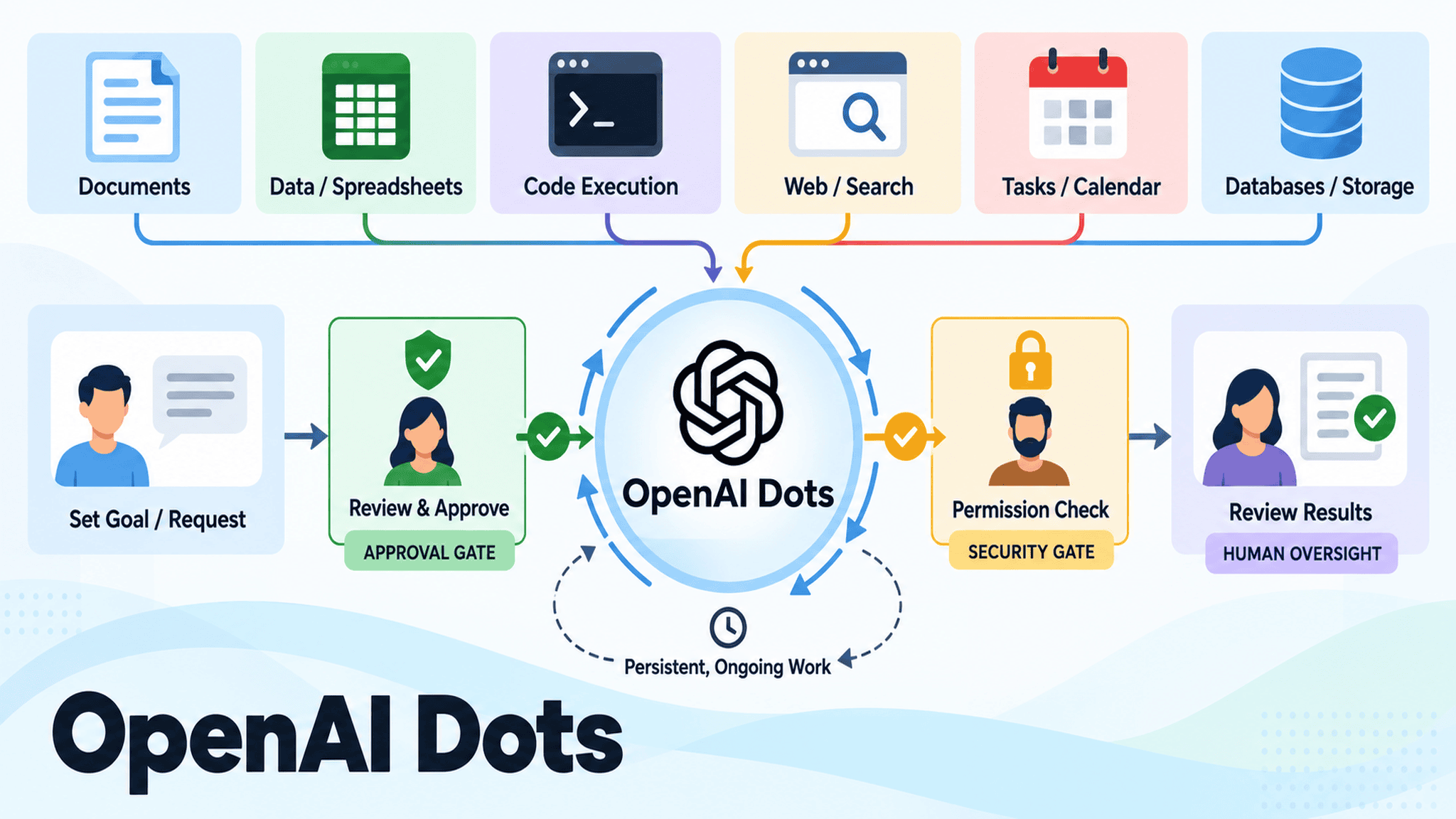
Dots Promises a Smarter Workflow, but Data Scientists Should Look Closer
Dots promises a smarter workflow, and that promise is genuinely appealing. But before you hand it the keys to your data pipeline, look closer at what it actually automates and where human judgment still matters. The gap between demo and deployment is where practitioners earn their keep. If you're weighing how much ownership to cede to AI, "Speed Isn't Everything When AI Does the Work You Used to Own" offers a useful counterpoint worth exploring.
Five Practitioners on Keeping AI Reliable in Production
Running AI in production means trusting it with real decisions, and that trust isn't automatic. On October 14, InfoQ brings together five practitioners for a free 60-minute panel on keeping AI reliable, from agent autonomy and human approval to verifying AI-generated changes and protecting sensitive data. Registrants can ask questions and get the recording. If you're weighing how much autonomy to grant your agents, this conversation is worth your time.

Google's Spanner Omni goes live, swapping hardware clocks and storage for software
Google made Spanner Omni generally available, swapping its own hardware clocks and storage for software abstractions. Running its distributed SQL database on-premises, across clouds, or on a laptop is a striking move, but the lack of an availability SLA means practitioners are pricing the trade-off in tail latency and operational toil. For more on how cloud services manage reliability under pressure, see our coverage of Cloudflare's cross-tenant data exposure vulnerability.
A practical guide to diffusion models that balances deep math with clear insight
The balance between mathematical rigor and intuitive insight in *The Principles of Diffusion Models* is genuinely exceptional. It's a practical guide aimed at researchers and practitioners who already have basic deep learning knowledge, no prior specialization in diffusion models required. The dedicated appendices invite deeper dives into the math without overwhelming the main text. For readers exploring how AI models evolve, our piece on how small AI models closed the gap on a test built for humans offers a complementary perspective.
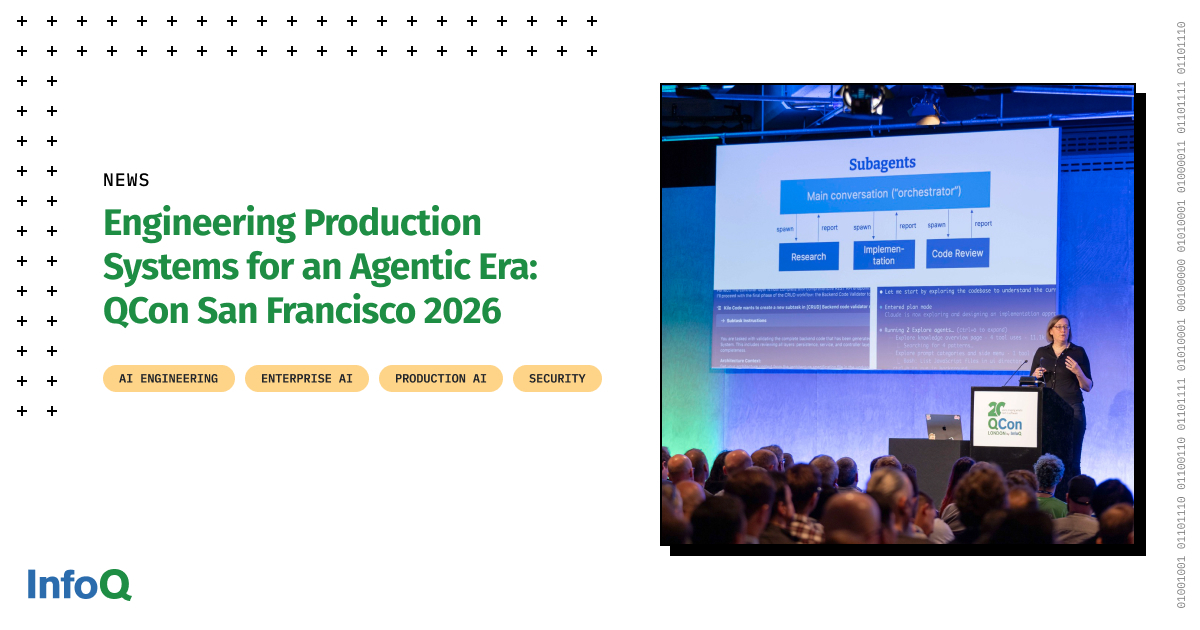
How engineering leaders are shaping production systems for an agentic future
The QCon San Francisco 2026 lineup reads like a blueprint for the next era of engineering. Airbnb, OpenAI, Netflix, and Honeycomb are sending practitioners, not visionaries, to share how they build production systems as AI agents take on more responsibility. This is not theory. It is the messy, practical work of evolving infrastructure under real load. For deeper context on the talent shifts shaping this world, see our coverage of how OpenAI parts with three researchers over data handling concerns.

300K lines refactored for $4,000: what a C codebase taught AI agents
Three hundred thousand lines of C, refactored in three weeks for $4,000 in tokens. CodeScene's case study is a practical stress test for AI agents, not a headline. The playbook of codebase-specific recipes the agents built is the real prize, it suggests these tools learn context, not just syntax. Practitioners are right to question the scope and the harness's role. That skepticism is healthy.
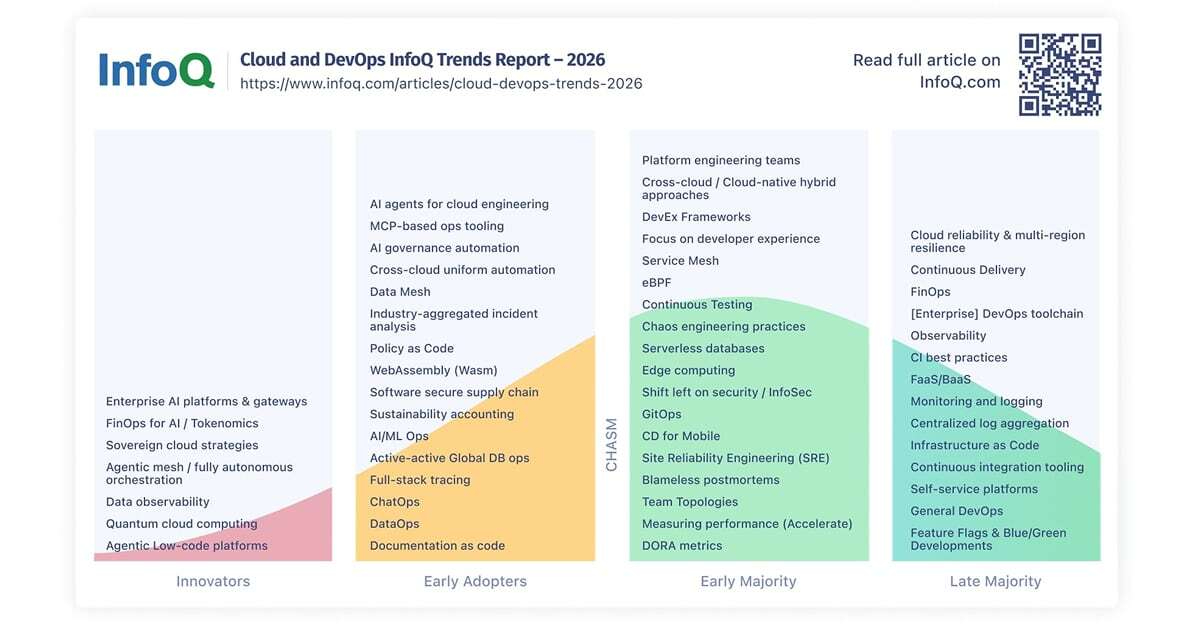
Explore the 2026 cloud and DevOps trends shaping your data future
The cloud and DevOps landscape is shifting under our feet, and the InfoQ editorial team is here to map it out. In this podcast, Daniel Bryant, Matt Saunders, Shweta Vohra, Steef-Jan Wiggers, and Mark Silvester sit down to dissect the annual Trends Report for 2026. They get raw and honest about AI, resilience, platforms, FinOps, and sovereignty. If you're feeling constrained by traditional infrastructure thinking, this conversation empowers you to explore what is actually next.

Explore how free sandboxes remove friction from learning AWS
Setting up a sandbox for a workshop used to mean handing over your own AWS account and crossing your fingers. That friction is gone. The AWS Builder Center now provides free, time-limited environments, so developers can learn without watching their credit card or worrying about surprise charges. It is a practical fix for a long-standing community request, and it removes a real barrier to hands-on learning. For anyone exploring new AWS technologies, this makes building and experimenting feel far more accessible.

Roll back Kubernetes upgrades with a seven-day safety net
Upgrading a Kubernetes cluster should feel like progress, not a gamble. Amazon EKS now lets you roll back the control plane to its previous version within seven days of an upgrade, giving teams a practical safety net when issues surface. That window turns a risky leap into a manageable step. It's a straightforward acknowledgment that even well-tested updates can go sideways. For practitioners tired of crossing their fingers during upgrades, this is a welcome layer of control.
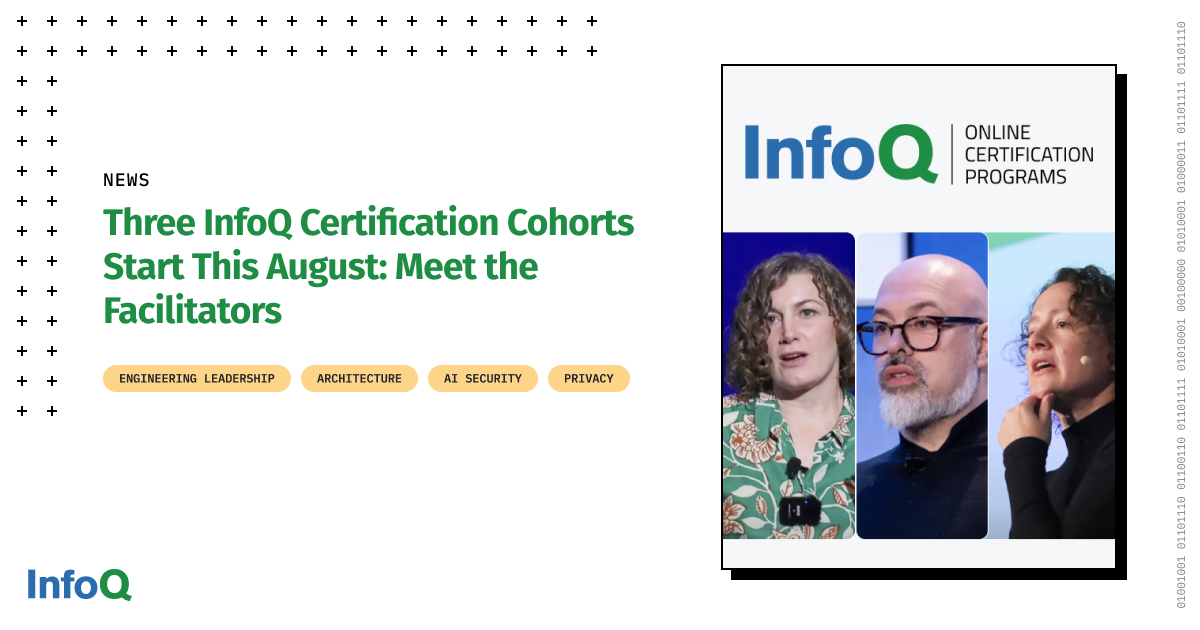
Three InfoQ Certification Cohorts Launch This August with Expert Facilitators
Three certification cohorts open this August, each led by a senior practitioner applying QCon talk frameworks directly to your work. Luca Mezzalira tackles architecture, Michelle Brush focuses on engineering leadership, and Katharine Jarmul addresses AI security and privacy. That is a solid lineup for five weeks of focused, practical learning. If you want to see how these frameworks scale beyond the classroom, our piece on scaling AWS deployments with Stateless Model Context Protocol offers a useful technical companion.

Evolutionary Code Optimization Arrives as a Secure, Measurable Service
Google's AlphaEvolve has hit general availability on the Gemini Enterprise Agent Platform, and the practical payoff is already clear: Klarna doubled its ML training throughput. What stands out is the privacy-first design, with evaluators running client-side so code never leaves your infrastructure. That's a meaningful step for teams cautious about exposing proprietary work. It's worth noting, though, that AlphaEvolve shines only where a measurable evaluation function exists, so it's not a universal fix.