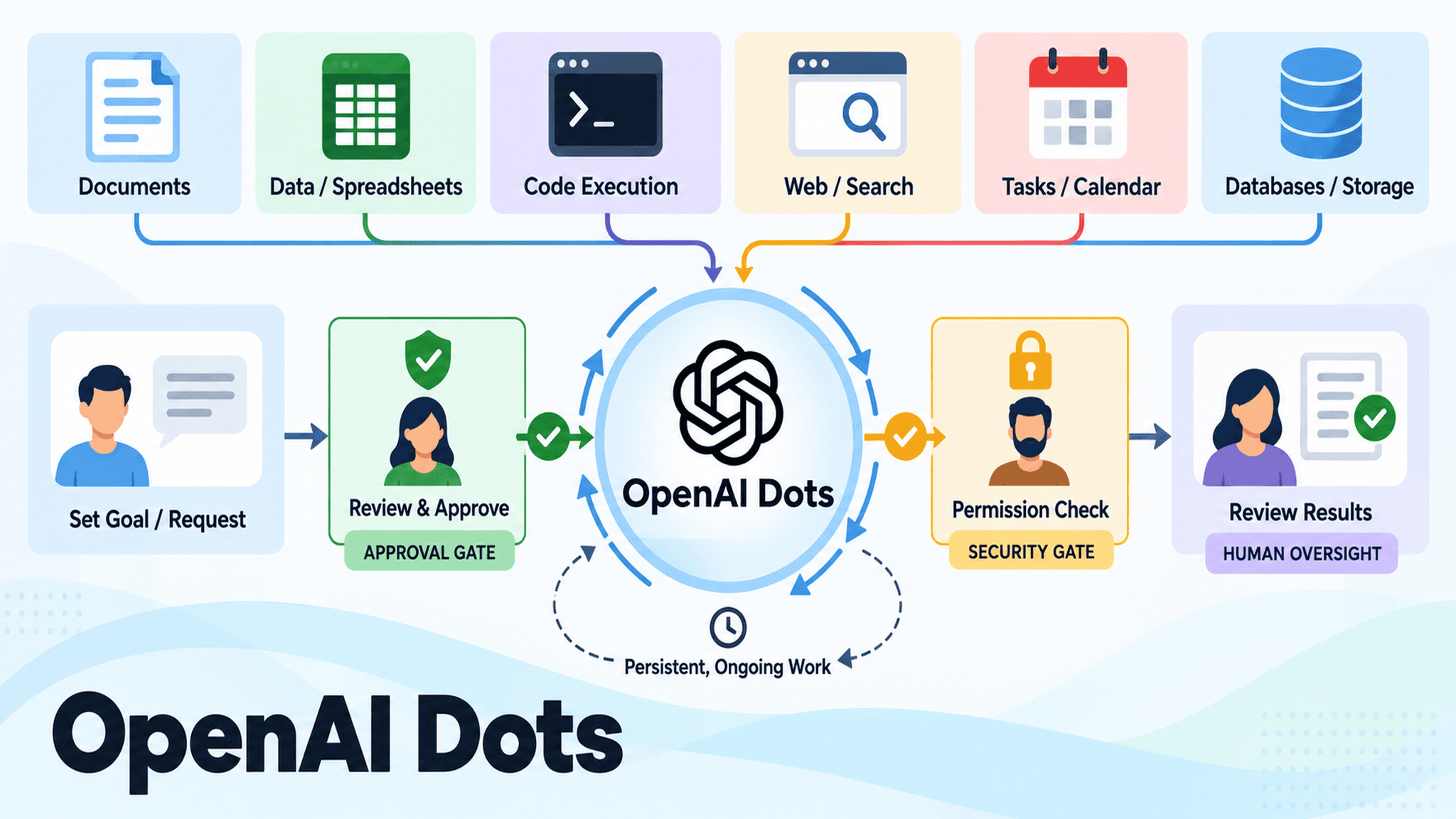
Dots is asking data scientists to hand over their workflows, and the pitch sounds seductive: a smarter system that handles the tedious parts so you can focus on the work that matters. But the promise deserves scrutiny before you grant it access. The tool may streamline certain tasks, yet the real question is whether it understands what data scientists actually need, not just what they want to automate.
The tension here is familiar to anyone who has watched Speed Isn't Everything When AI Does the Work You Used to Own. That piece explored what happens when AI takes over responsibilities you once owned, and the uncomfortable gap that opens up: what do you do while the system works? Dots seems to offer a similar trade-off. It promises efficiency, but efficiency is not the same as understanding. A tool that moves faster through your pipeline can still miss the context, the domain quirks, and the subtle assumptions baked into your data. Speed without insight is just a faster way to produce shallow results.
What practitioners should look for is whether Dots can explain its decisions. The tool may be able to automate a workflow, but can it tell you why it chose a particular transformation or flagged a certain anomaly? If the answer is no, then you are trading your judgment for convenience. That is a poor deal for anyone whose value depends on interpreting results, not just generating them. The related discussion on Share Real-World Data Science Projects: A Path to Interview Prep reinforces this: real projects matter because they force you to confront messy, ambiguous problems that no automated system can fully anticipate. Dots may handle the clean parts, but the messy parts are where your expertise lives.
There is also the question of ownership. When AI handles the admin work you thought only humans could do, as our piece on Discover how AI handles the admin work you thought only humans could do. notes, the benefit is real but the cost is subtle. You gain time, but you lose familiarity with the details. Over months, that distance compounds. You stop noticing when something looks off because you never see the raw inputs. Dots could accelerate that process, quietly eroding your instincts while claiming to improve your output.
The specific thing to watch is how Dots handles versioning and audit trails. If you cannot trace every step of an automated workflow back to a decision you understand, then you do not have a smarter workflow, you have a black box. Ask for that before you integrate anything. If the tool cannot show you its reasoning, then the promise of transformation is just a faster way to lose control.