python
python at Beyond Market Intelligence is a file of 74 stories. The newest of them: “Porting Doom's renderer into a transformer with zero training”, “Turn Web Pages into Smart Q&A Engines with AI”, and “Choosing Between LangChain and LangGraph for Smarter Agentic Workflows”. A 21-billion-parameter transformer just rendered Doom's iconic first frame, and it never saw a single training example. Most tutorials make web scraping sound harder than it needs to be. Acme AI is the next-generation, AI-powered spreadsheet platform built to replace Excel and redefine how analysts, data scientists, and enterprise teams work… The list below is every python story on Beyond Market Intelligence, newest first.
Porting Doom's renderer into a transformer with zero training
A 21-billion-parameter transformer just rendered Doom's iconic first frame, and it never saw a single training example. The trick: a custom compiler that bakes a computation graph directly into weights, then runs the classic renderer inside that fixed structure. The result is a standard Hugging Face checkpoint, no special code needed. One frame takes 3,614 prompt tokens plus 53,747 generated ones, about 40 minutes on a B200. That is 35 frames per day, a fitting pace for a project this gloriously impractical.
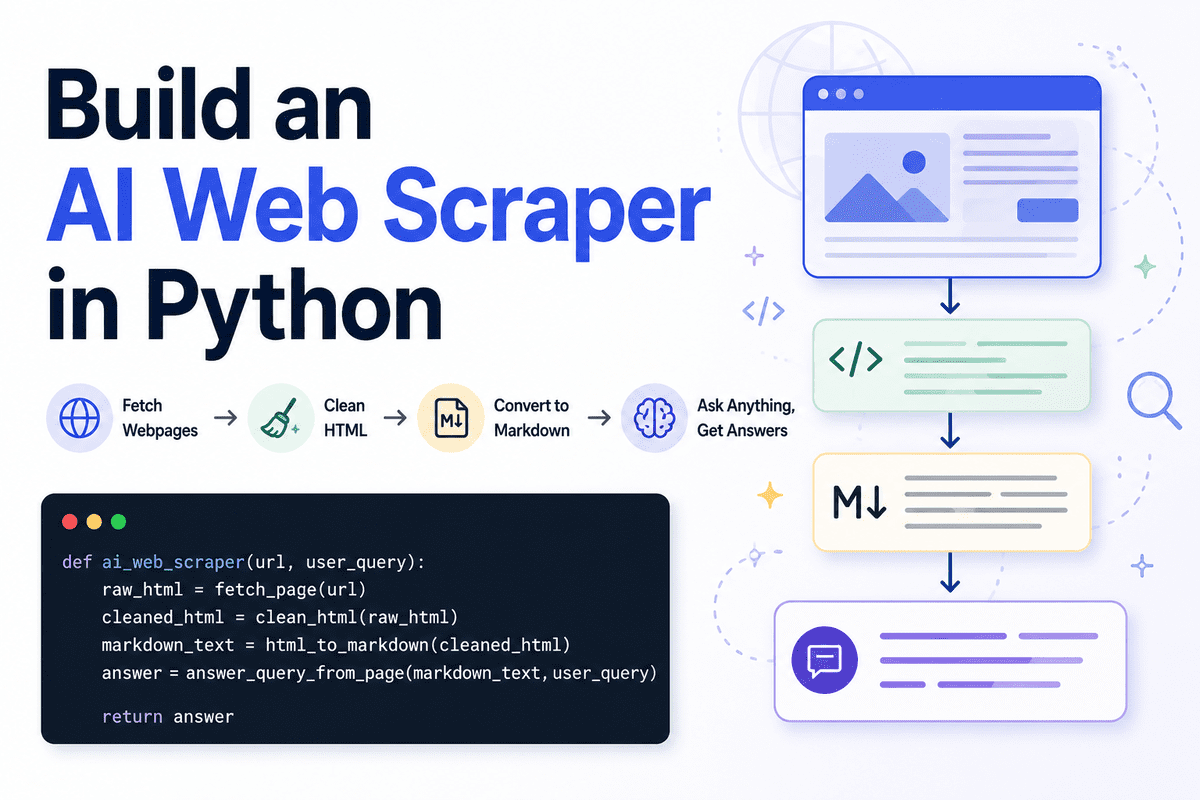
Turn Web Pages into Smart Q&A Engines with AI
Most tutorials make web scraping sound harder than it needs to be. This one strips away the noise: clean the HTML, convert it to Markdown, and let an LLM answer focused questions. The payoff is real, especially when you want answers without burning through tokens on messy page structures. It's a practical, no-nonsense approach that respects your time and your budget. If you're tired of wrestling with raw scraped data, this method feels like a quiet win.

Choosing Between LangChain and LangGraph for Smarter Agentic Workflows
Choosing between LangChain and LangGraph doesn't have to stall your agentic workflow. This guide cuts through the overlap to highlight four key differences, helping you match the tool to the task. It's a practical read for anyone tired of guessing which framework fits. We appreciate the clarity here, especially since it complements our earlier exploration of distributed training algorithms. If you're building systems that need structure, start with this breakdown. It's a straightforward step toward more intentional design.

Explore Five Simple Ways to Install Python on Windows
Choosing the right installation path shouldn't slow down your first Python project. This guide walks through five practical methods, from the official installer to modern tools like WinGet and uv. Each option serves a different need, so you can match the setup to your skill level and workflow. It's a straightforward starting point for anyone ready to build without the friction. For a deeper look at what Python can do once you're up and running, our guide on advanced techniques is worth exploring next.

Choosing the Right Python Tool for Your Data Workflow
Not all Python data libraries are created equal, and the choice between Polars and Pandas often comes down to what you're actually building. For AI developers, the question isn't just about speed; it's about matching the tool to the task. Pandas offers familiarity and a mature ecosystem, while Polars brings performance gains that can matter at scale. We think the answer isn't a simple switch, but a careful evaluation of your workflow.
Discover how Fru brings faster random forest performance to Python and R users.
Building a faster random forest isn't just about squeezing out milliseconds; it's about unblocking bigger data work. That's what a colleague and I aimed for with Fru, a Rust-based implementation we just published in Software X. It offers bindings for Python and R, and the performance speaks for itself. In Python, Fru can outpace scikit-learn by several factors, and in some cases, it's hundreds of times faster.

From Agent to Interface: Building a Production-Ready UI for LangGraph
Building a production-ready interface for a stateful LangGraph agent sounds like a step toward making AI tools genuinely practical. Creating a Streamlit UI matters because a powerful agent is only useful if people can actually interact with it. The focus here is on accessibility, turning complex backend logic into something approachable. It is a reminder that thoughtful design carries equal weight to the technology underneath.

From Static Charts to Interactive Discovery with AI-Driven Tools
Choosing between Matplotlib and Plotly often comes down to a single question: do you need a static image or a living document? This guide walks that decision without overselling either tool, which is refreshing. It respects that your choice depends on the task at hand, not hype. If you are curious about how structured thinking applies to other technical domains, our piece on paragraph structure and token space offers a thoughtful parallel worth exploring. For now, this guide gives you a clear, practical path forward.
Transform raw CSV data into clear executive summaries with AI.
A messy CSV rarely tells a clear story on its own. This guide walks through a repeatable pipeline that cleans the data, surfaces the narrative hidden inside, and turns it into an executive report using Python and AI. It is practical, direct, and built for teams who need answers without endless manual effort. If you are curious about how AI handles real-world data beyond the hype, our piece on verifying AI understanding offers a useful complement to this workflow.

Explore how medallion architecture simplifies your data pipeline with Python and DuckDB
Most teams hit the same wall: raw data lands in one place, and chaos follows. The Medallion Architecture cuts through that with a clear Bronze, Silver, and Gold path, turning mess into structure. This guide pairs that framework with a working Python and DuckDB example, so you can see it run, not just read about it. For more on how LLMs navigate token space, check out our piece on paragraph structure.
Build a smarter analytics team by choosing tools that grow with your needs
You're running a one-person analytics operation, and you're asking the right question: not "what's new," but "what's next." Moving from SQL and Snowflake toward a team-ready stack means shifting from writing queries to building systems. Focus on version control, orchestration tools, and cloud-native data engineering. That's where automation lives. Pair it with a solid understanding of MLOps practices. It's less about chasing every package and more about creating reliable pipelines.

Build a free local CLI agent with Python and Ollama from scratch
Building a CLI agent from scratch sounds like a focused challenge, and this guide takes you through it using Python and Ollama without spending a dime. It's a practical, hands-on approach for anyone tired of clicking through menus when a command line could do the work faster. The steps are clear enough to follow, yet they leave room for your own tinkering.
Build a stateful support agent to transform a 15-minute booking into seconds.
Fifteen minutes to book an appointment is fifteen minutes too many when you know the process can be automated. This guide walks through building a stateful customer support agent with Python, LangGraph, and Langfuse, showing exactly how to replace a tedious workflow with something that actually works. It's a practical, hands-on look at what AI-native tooling can do for everyday tasks. For more on the human side of these systems, check out "Talking to My AI Clone Taught Me to Question the Tech."
Explore how LanceDB unifies text, images, and documents for smarter AI workflows.
Large language models excel at text, but they stumble when information hides across documents or inside images. That's where LanceDB steps in. This guide breaks down how the vector database stores embeddings and powers similarity search for AI workloads, with a practical Python demo to get you started. It's a clear, accessible look at a tool that simplifies multimodal data handling. For more on how AI handles context, check out our piece on agentic learning.

How an open ecosystem made advanced AI more accessible
A single open-source ecosystem quietly became the backbone of modern AI, turning what once felt like a specialist's game into something any curious developer can explore. It's not about hype; it's about access. This post breaks down how that Python foundation made state-of-the-art tools feel approachable, and why that shift matters for how we build. If you're weighing what this means for your own workflow, you might also appreciate "Talking to My AI Clone Taught Me to Question the Tech," which offers a grounded counterpoint.
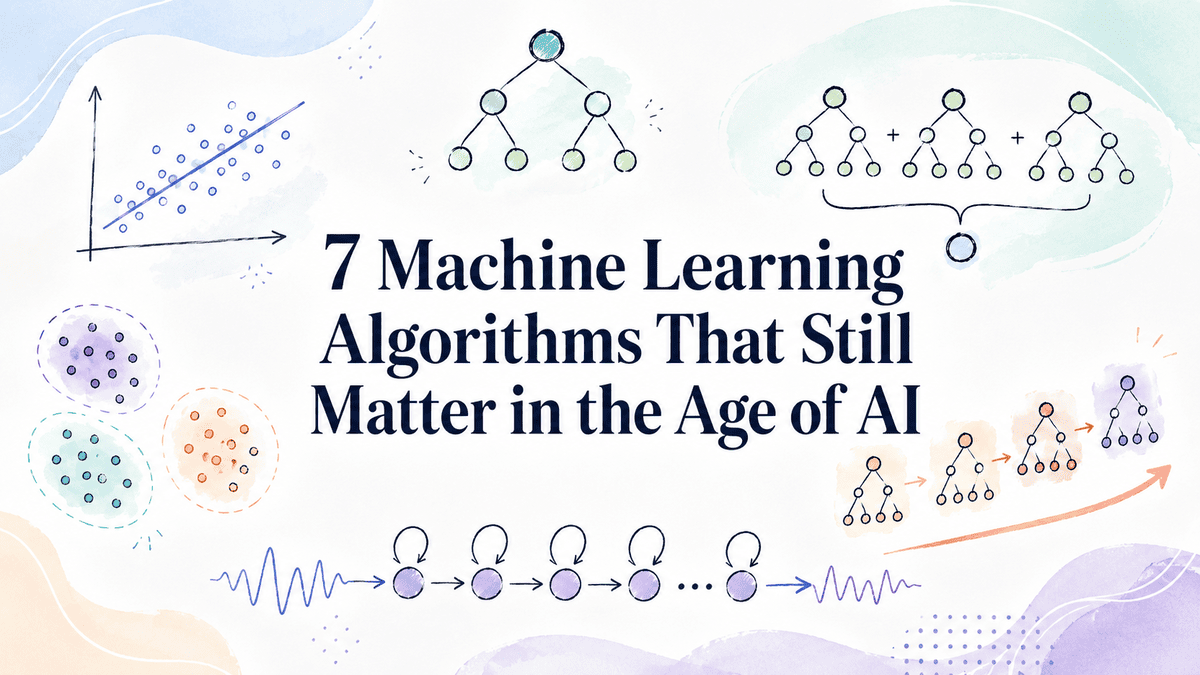
7 Machine Learning Algorithms Powering Smarter Data Workflows
Machine learning is vast, but the fundamentals still carry the weight. Before you reach for LLMs or generative AI, these seven algorithms deserve your attention. They are not flashy, but they are practical, and they handle the heavy lifting in everything from regression to clustering. If you are feeling overwhelmed by the pace of AI, this guide cuts through the noise with clear, working Python code. It is a grounded reminder that mastery starts with the basics.

Building Smarter Routes: Adaptive Heuristics for Complex Pickup-and-Delivery Problems
If you've ever wrestled with a delivery route that spirals into chaos, this one's for you. Los Movimientos, Part II tackles the heavy lifting of pickup-and-delivery problems head-on, using Adaptive Large Neighborhood Search to handle time windows, capacity limits, and mandatory driver breaks. It's a practical, Python-based guide that turns a complex optimization challenge into something you can actually build and adapt. For those ready to level up their coding toolkit, this pairs nicely with "Unlock Python's Potential: Advanced Techniques for Smarter Coding."
From Python to weights: a compiler proves what transformers can express
Most people assume a transformer's capabilities come from training. Rob's compiler challenges that assumption directly. He built a tool that takes a computation graph written in ordinary Python and outputs the weights for a standard Phi-3 model, loadable in vanilla Hugging Face with zero training involved. It's a clever way to isolate what these architectures can express, separate from what they can learn. For a deeper look at how he constructs these proofs, the write-up is worth your time.

Give an AI agent a browser with OpenAI SDK and Playwright MCP
Giving an LLM agent a browser isn't about handing it a tool, it's about teaching it to navigate the web with purpose. This guide walks through building a browser-use agent with the OpenAI Agents SDK and Playwright MCP, turning a capable model into something that can actually click, scroll, and reason. It's a practical, grounded approach to a complex task. If you're curious about how far AI can go when given the right environment, this is a solid place to start.
Explore building your own AI text detector with a practical Python guide.
Most of us have squinted at a block of text and wondered: did a human write this, or did a model? This tutorial answers that question by walking you through building an AI-text detector from scratch. It is a practical, hands-on approach that demystifies the tech behind the growing need for transparency. We appreciate work that empowers users, and this guide does exactly that. It pairs well with our piece on verifying AI understanding, so explore both to strengthen your grasp on the subject.

Empower Your Workflow with an AI Agent That Writes and Executes Code
Watching an AI agent write code and execute it live is one thing, but building that workflow yourself is where the real insight lands. This walkthrough with the OpenAI Agents SDK and Docker shows exactly how to set up a system that moves from prompt to running code, and it does so with practical clarity. If you are ready to move beyond static outputs, this one is worth your time.

Explore smarter Python patterns and real-world projects to transform your workflow
If-else chains slow you down, and this week we're showing you a cleaner path. The Registry Pattern in Python offers a smarter, more maintainable approach to dispatching logic, and we're glad to spotlight it. Alongside that, you'll find practical SQL projects to strengthen your portfolio and YouTube channels that keep your AI knowledge sharp. For a deeper reflection on where this technology leads, check out "Talking to My AI Clone Taught Me to Question the Tech" for a thoughtful counterpoint on human interaction with AI.
Optimizing protocol responses with AI-driven hierarchical surface modeling
Building a surrogate-assisted multi-objective optimizer from 40 heterogeneous studies is a serious engineering lift, not a one-hour Colab session. The user's instinct to separate hierarchical modeling (PyMC) from optimization (pymoo + pysamoo) is sound, but the real bottleneck is the data's conditional structure and physiological constraints. For 2026, the strongest stack is PyMC for the response surface, SMT for cheap surrogates, and pymoo for the final Pareto front. No AI tool yet replaces that workflow from a spreadsheet upload.

When the Loop Has No Brain, the Architecture Speaks for Itself
Most discussions of loop engineering assume an LLM sits at the center of the loop. This experiment challenges that by removing the model entirely, using a deterministic, zero-dependency Python benchmark to isolate the architecture itself. The author tested whether a goal-directed controller could isolate failures better than a linear pipeline, validating it across 300 random seeds. The results are narrow but compelling: failure isolation is a measurable property of control flow, independent of reasoning.