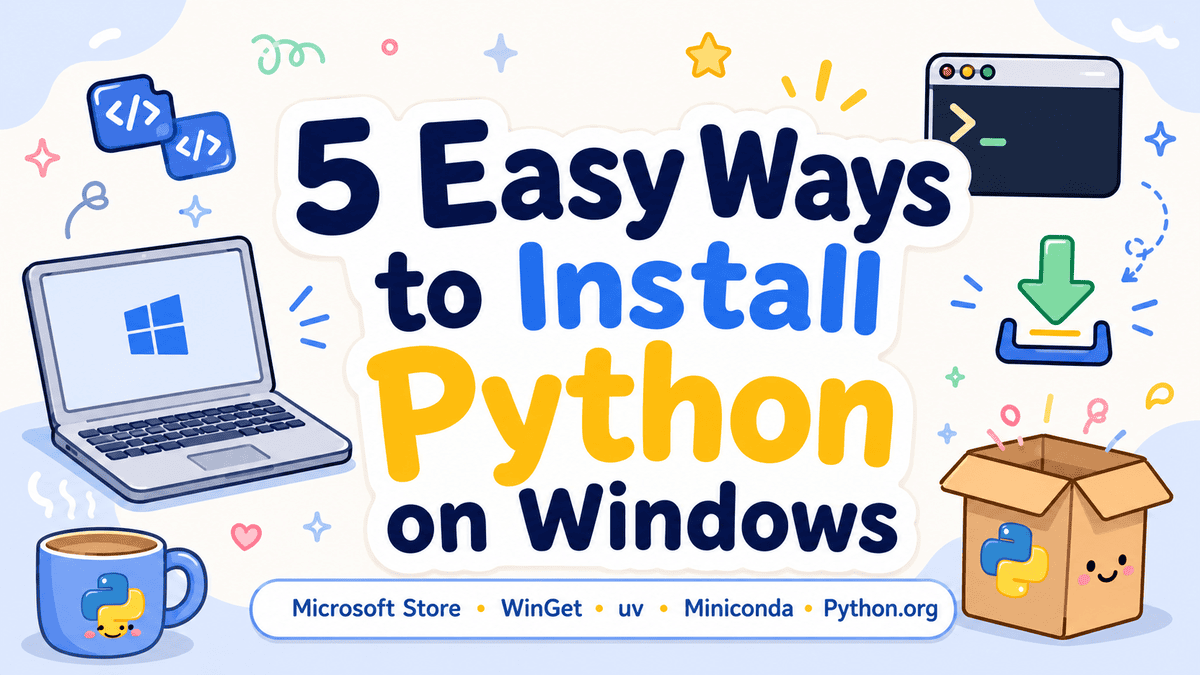
There is a quiet assumption hiding in most Python setup guides: that the hardest part of learning to code is the code itself. But anyone who has stared at a PATH error at 11 p.m. knows the real obstacle is often the installation. Five distinct paths get Python running on Windows, from the official installer to more modern tools like uv and Miniconda. On the surface, it is a practical how-to. But the deeper point is about choice, and what that choice says about how you want to work.
For our readers, this is not just about getting Python onto a machine. It is about recognizing that the tool you choose shapes your workflow for months to come. The official installer is the safe, familiar route, but tools like uv are built for speed and simplicity, appealing to developers who want less friction and more doing. Miniconda, meanwhile, speaks to those who need robust package management from day one. The piece wisely avoids declaring a single winner, and that restraint is correct. The best setup is the one that matches your current skill level and your future ambitions. If you are just starting out, the simplest path is often the right one, because your energy should go into learning, not into configuring environments. If you are already building projects, investing time in a tool like uv now could save you headaches later. This connects directly to the advice in our piece on Unlock Python's Potential: Advanced Techniques for Smarter Coding, where we argue that leveling up is less about new syntax and more about understanding the tools that let you write better code with less effort.
What stands out here is that installation is treated as a legitimate decision point, not just a chore to get through. That is a perspective worth respecting. Many beginners assume there is one right way, and they spend hours searching forums for the "best" method. The truth is more human. The right choice depends on your tolerance for complexity, your need for control, and your willingness to learn new tools. This mirrors the philosophy we explored in Starting a Career in Data Science in the Age of AI, where we emphasized that adapting to change matters more than mastering any single technology. The same logic applies here. The method you choose today is not a lifelong commitment. You can start with the official installer, get comfortable, and later migrate to uv or Miniconda when your projects demand it. Readers would do well to be reminded that this is not a binding decision.
Our honest take is simple: do not overthink the process, but do respect it. If you are a beginner, choose the official installer or the Python Install Manager, because they are designed to get you running with minimal fuss. If you are a developer who values speed and modern workflows, explore uv. If you are heading into data science, Miniconda is a strong ally. The real takeaway is that installation is not a distraction from your work; it is the first step of it. The question to ask yourself is not "Which method is best?" but "Which method lets me start building faster?" That is a question worth answering deliberately, because the answer will shape how you approach everything after it. And when you are ready to move beyond setup, our guide on Build Your First World Model: A Practical Python Guide shows what a little momentum can do.