reasoning
Beyond Market Intelligence keeps reasoning in one place: 33 stories so far. The section currently leads with “Exploring the Next Wave of AI Architectures Beyond Transformers”, “Uncover Hidden System Flaws Before They Exist with Formal Reasoning”, and “Build Smarter AI Agents by Adding Human Oversight Where It Matters Most”. The race to move beyond the Transformer is producing a fascinating zoo of architectures, from Mamba's selective state spaces to Dragon Hatchling's emergent attention. Formal reasoning doesn't require a PhD in math to catch system flaws before they appear. Acme AI is the next-generation, AI-powered spreadsheet platform built to replace Excel and redefine how analysts, data scientists, and enterprise teams work… The list below is every reasoning story on Beyond Market Intelligence, newest first.
Exploring the Next Wave of AI Architectures Beyond Transformers
The race to move beyond the Transformer is producing a fascinating zoo of architectures, from Mamba's selective state spaces to Dragon Hatchling's emergent attention. What stands out is the shared goal: getting more intelligence from limited compute, not just scaling up. These aren't merely academic curiosities, they're practical bets on reasoning, memory, and adaptation. The comparison table reveals how linear attention, softmax, and test-time memory overlap across labs. For deeper context on system-level reasoning, see our piece on uncovering hidden flaws with formal methods.

Uncover Hidden System Flaws Before They Exist with Formal Reasoning
Formal reasoning doesn't require a PhD in math to catch system flaws before they appear. Hillel Wayne shows how property strength, state-space verification, and environment assumptions help engineers uncover architectural bugs early. His mental model of "adversarial non-determinism" makes concurrency and distributed failures approachable without complex tools. If you're wrestling with edge cases that traditional testing misses, this practical framework transforms how you think about system reliability.
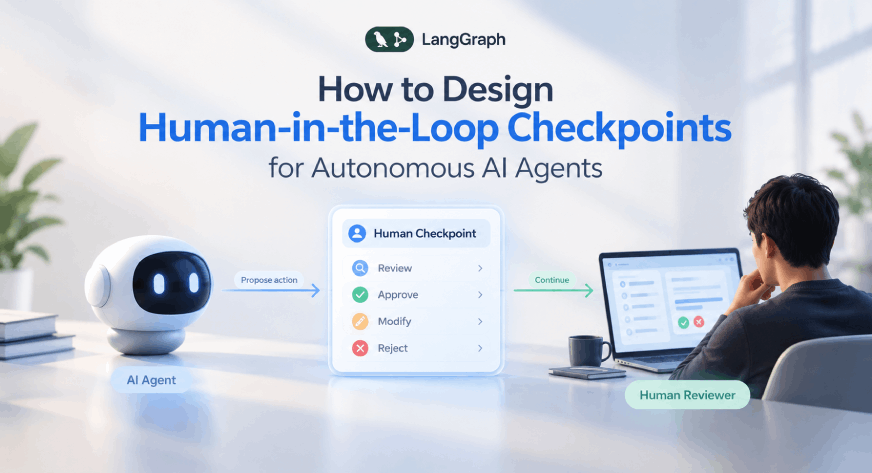
Build Smarter AI Agents by Adding Human Oversight Where It Matters Most
Autonomous AI agents can read, retrieve, reason, and trigger actions in seconds, useful speed, but real risk when the next step touches money, customer records, or live systems. Human-in-the-loop checkpoints add control exactly where a recommendation is about to become action. That's the smart design. For deeper context, our piece on Anthropic restricting internal AI tests from live internet shows how even the most advanced labs are rethinking control.
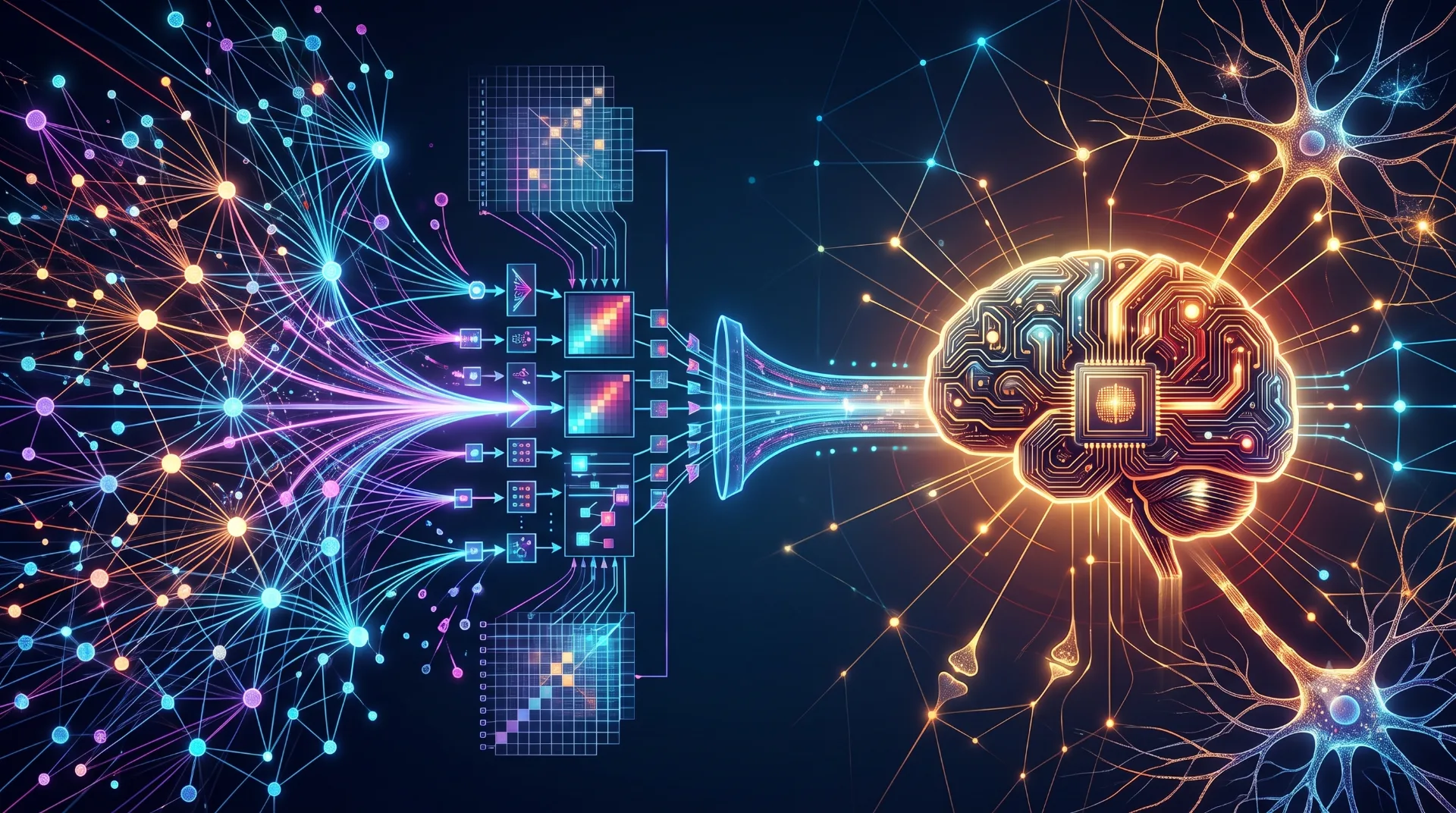
Smart Graph Decisions at Scale: Where TypeSafe Jev Meets LLM Reasoning
High-frequency graph decisions demand speed and consistency, not just clever prompting. TypeSafe Jev delivers that calibrated, System One approach, while LLMs handle the synthesis and open-ended reasoning where they excel. It is a practical division of labor that finally makes GraphRAG scalable. For readers tracking how these models handle structure and long-form generation, the related piece on paragraph structure in token space offers a useful complement.

Unlock Your Codebase: Explore AI-Powered Knowledge Graphs for Seamless Development
Multi-file reasoning has long been the silent killer of AI coding workflows. Graphify, launched in April 2026, tackles this head-on by turning codebases and unstructured data into queryable knowledge graphs. The recent parser upgrades and cross-file resolution improvements show real momentum, though community feedback rightly notes that daily integration still needs polish. We see promising architecture here, and we are watching closely. For more on how AI tools are reshaping developer expectations, check out our piece on navigating AI/ML job requirements.
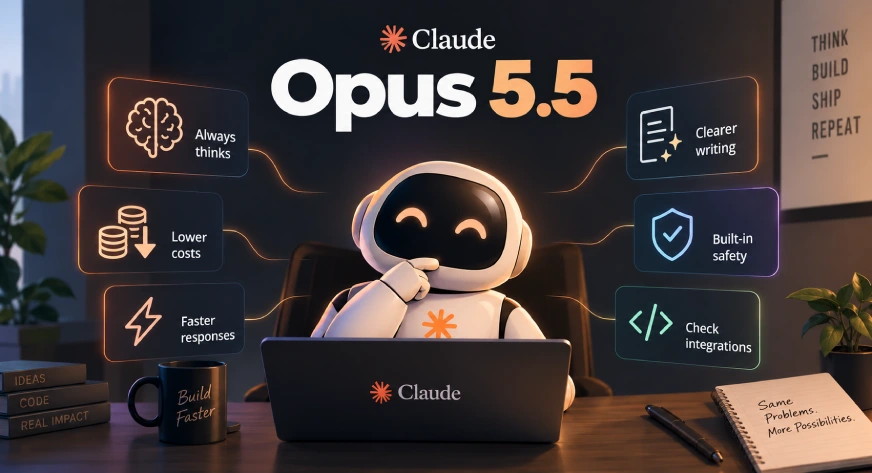
Unlock New Reasoning Power: A Deep Dive into Claude Opus 5.5
Claude Opus 5.5 reasons on every request, responds faster, and costs less to run. That combination is worth pausing over, because it points to a model designed for practical work rather than just benchmark bragging. Anthropic packed real upgrades into its latest flagship, and the implications for everyday data tasks are significant.

Unlock Advanced RAG: 6 Architectures for Semantic Search & LLMs
Basic graph retrieval only gets you so far. This guide walks through six production-oriented architectures that pair semantic search with knowledge graphs and LLM reasoning, giving practitioners a practical route beyond simple vector lookups. It's a grounded, no-nonsense read for teams ready to move past toy demos. For a deeper look at how LLMs handle structure internally, pair it with our piece on paragraph structure and token space. The ideas complement each other well.

LLMs prove strategic reasoning on Go, with room to grow.
GoBench puts large language models to a properly hard test: 9x9 Go against a ladder of KataGo opponents, from random to superhuman. The results are telling. GPT-6 Astra max lands at 2500 Elo, while the best KataGo sits at 4400, and even with coding tools and two hours of prep, Codex with Astra reaches only 3560. That gap matters. The benchmark's strong correlation with ARC-AGI 2 (r=0.83) suggests it is measuring genuine reasoning, not memorization. It is a refreshingly unsaturated evaluation.
Beyond Prompts and Loops: How Graph Engineering Shapes Smarter AI
The debate over loops versus graphs in AI agent design isn't just technical sparring; it's a signal of how far we've come. Graph engineering moves beyond the linear constraints of prompts and loops, offering a structured way to build workflows that adapt and scale. It's a practical evolution, not a buzzword. For those still wrestling with token-level nuances, our piece on paragraph structure offers a useful parallel. This shift matters because it redefines what we can build, and we're just beginning to explore its potential.

Move beyond basic RAG with four knowledge graph patterns for agentic AI.
Knowledge graphs are moving from the background to the backbone of agentic AI, and Cassie Shum is here to show you why. In her talk, she moves past basic retrieval to outline four practical architecture patterns that bring reasoning into production. It's a grounded, actionable look at building systems that don't just retrieve, but reason. For a broader perspective on how these ideas connect, our piece on bridging retrieval and action offers a useful parallel.
A prompt exploit reveals how quickly AI models can be challenged.
A jailbreak landed on GPT-6 Astra within 24 hours of its release. The researcher behind it, who broke GPT-5 in under an hour last year, had to rework the original minimal TIP attack. This time, they combined the Task-in-Prompt method with four unnamed techniques to hide the harmful objective inside a decoy task like solving a cipher. Instead of publishing the exploit, they reportedly shared the details privately with OpenAI.

How recurrent depth lets AI think beyond linear reasoning.
OpenAI's Astra model is stepping outside the lines of sequential reasoning, and safety experts are paying close attention. This "recurrent depth" technique lets the model break free from the step-by-step thinking that defines most reasoning systems. It's a bold move, one that could unlock faster, more flexible AI. But with that freedom comes real uncertainty about what the model might do when it no longer follows a predictable path. We're not sounding alarm bells, but we are watching closely.
Build your own text-to-image model with Jasper Research's new cookbook.
Jasper Research just released a cookbook that walks through building a text-to-image model from scratch, and it's refreshingly honest about the messy middle. The guide shares full reasoning and intermediate results, so you're not just seeing polished outputs but the actual decision points. It also includes a 100M-image dataset and a tiny codebase, meaning you can train your own model without needing a supercomputer. If you've felt boxed in by black-box tools, this is an accessible entry into the mechanics.
From Config Wrangling to Experiment Scaffolding: A PhD Reality Check
The instinct to keep the eval harness and metric definitions close is the right one. That layer is where your scientific judgment lives. Handing off the scaffolding while holding onto the core is a workable line, even if you keep crossing it. The detachment you describe is real. The fix is likely not more careful diff-reading. It is rebuilding a mental model of the system at a higher level, so you can reason about the numbers without needing the code memorized.

LLM Benchmarks Show Surprising Daily Performance Fluctuations
A single hourly LLM benchmark score can mislead you. After analyzing 31,352 hourly scores, the data shows within-day variation sits at 2.8 points, while between-day variation jumps to 8.4 points. That threefold gap matters. It means isolated movements mostly reflect normal model randomness, but sustained daily shifts reveal true performance drift. This is the missing observability layer for production AI. You cannot manage what you only sample once. Continuous evaluation, like the system built here, turns noisy data into actionable signals.
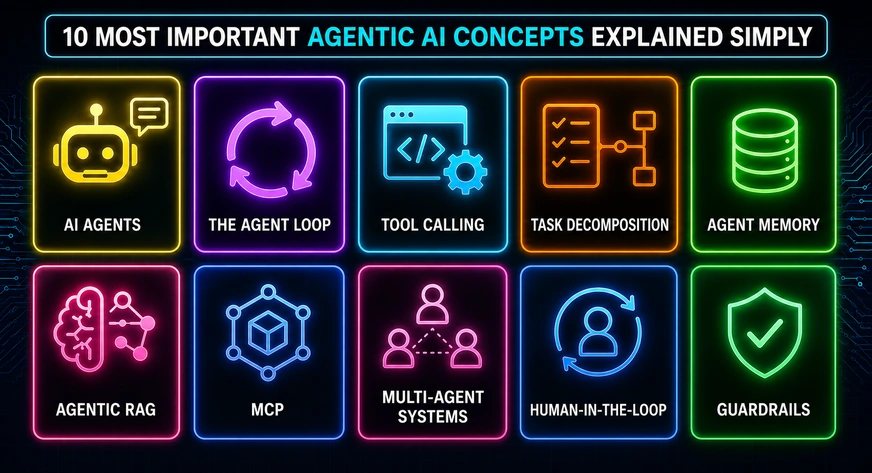
Agentic AI Demystified: The Core Concepts That Truly Matter
If terms like tool calling, MCP, and guardrails are starting to blur together, you're not alone. Agentic AI gets talked about like a shared language, yet few people stop to define it clearly. This guide cuts through that noise. It breaks down the ten core concepts that actually matter, so you can move from confused to confident. It's a practical starting point for anyone ready to make sense of the moment.

Qwen3.8-27B brings powerful local AI agents to your own machine
The 27-billion-parameter model from Alibaba landed quietly on Hugging Face, but developers heard it loud and clear. Qwen3.8-27B isn't just another compact local model; it brings coding agents, image understanding, and a 262,144-token context window to hardware you might already own. Third-party tests now match it with cloud-only systems from months ago. That gap is closing faster than expected, and for enterprises watching data privacy and cost, the appeal is obvious. It's worth exploring how this changes what "local" really means.
When AI Sounds Confident, Verify It Knows the Answer
Arun Mishra's eval harness exposed a flaw that should worry any team shipping LLM-assisted tools: the model was most confident precisely when it was most wrong. Qualitative review caught nothing because the explanations sounded authoritative. That is the trap. We test for fluency when correctness is what matters. Mishra's approach, measuring accuracy against synthetic ground truth, reveals the gap between plausible and correct. It is tedious work, but skipping it means deploying tools that fail quietly.
Discover how AI agents can execute routine tasks faster with Nemotron Lightning.
Long-running AI agents often spend most of their time on routine execution rather than difficult reasoning. After making a plan, they might handle hundreds of tool calls, file reads, or validations. Using a frontier reasoning model for every step becomes slow and expensive. NVIDIA's Nemotron 3.5 Lightning targets this directly, offering a more efficient path for those repetitive actions. It's a practical reminder that smarter execution matters as much as smarter planning.
Discover how Gemini 3.7 Flash empowers smarter coding and agentic workflows
Gemini 3.7 Flash arrives with coding and agentic workflows at the center, and a price cut that makes it hard to ignore. For the next few months, developers can run it at half the standard rate, a direct bet that Google's efficiency gains will translate into lower operating costs. We think that's the right wager, especially for teams running high-volume agents. The real test isn't the leaderboard; it's whether the model reduces retries and manual oversight in production.
Teaching a transformer exact arithmetic by hand, not training
A single transformer model, its weights hand-set with no training, just averted the arithmetic meltdown that defines its peers. One version nails all three million possible three-digit products, and the same approach scales to twelve-digit multiplication. What stands out is the compiler work: turning the grade-school algorithm into a standard Phi-3 checkpoint through Torchwright. Frontier models crumble at seven digits, five scoring zero out of five hundred, while this one holds steady.

Why Pure Reasoning Reaches Its Limit Without Real-World Data
Reasoning alone has a hard ceiling. No matter how advanced non-physical AI becomes, it cannot predict the chaotic, messy reality of the physical world without a sensory and motor interface. We are asking for breakthroughs in science and technology, but those demands outstrip what pure logic can deliver. This isn't a limitation to be coded around; it's a fundamental gap. To truly transform our data-driven future, intelligence must touch the ground.

From 60 years of databases to 18 months of agents, memory bridges the gap.
Six decades of database engineering. Eighteen months of modern AI agents. That ratio explains everything about the state of agentic development right now, we're not mid-curve, we're at its base. Token-maxxing already taught us the hard lesson: context is scarce, and stuffing it isn't strategy. The real answer is persistent, queryable memory, semantic, access-controlled, human-curated, that makes each expensive answer cheap next time. That's the architecture emerging.
Explore Visual Reasoning: A New Benchmark for AI Models.
Visual reasoning has always been the quiet barrier between pattern-matching and true understanding. When we saw the benchmark challenge posed by /u/moschles, it felt less like a test and more like a mirror. We're not just asking AI to identify objects; we're asking it to explain why a circle isn't a square. That distinction matters. For anyone who has wrestled with the limits of current models, this exploration offers a practical lens.