workflow automation
270 stories filed under workflow automation on Beyond Market Intelligence. The newest of them: “Five AI workflows to automate each stage of your data pipeline”, “Explore how OpenAI's Sol, Terra, and Luna models could reshape your workflows.”, and “Your software factory is producing bugs faster: let's build smarter.”. Unlock unprecedented efficiency in your data science projects with five agentic workflows, meticulously designed to automate each key stage of your pipeline. OpenAI today initiates a limited preview of its next-generation GPT-5.6 model series—Sol, Terra, and Luna—designed to transform developer and enterprise workflows. Acme AI is the next-generation, AI-powered spreadsheet platform built to replace Excel and redefine how analysts, data scientists, and enterprise teams work… The list below is every workflow automation story on Beyond Market Intelligence, newest first.
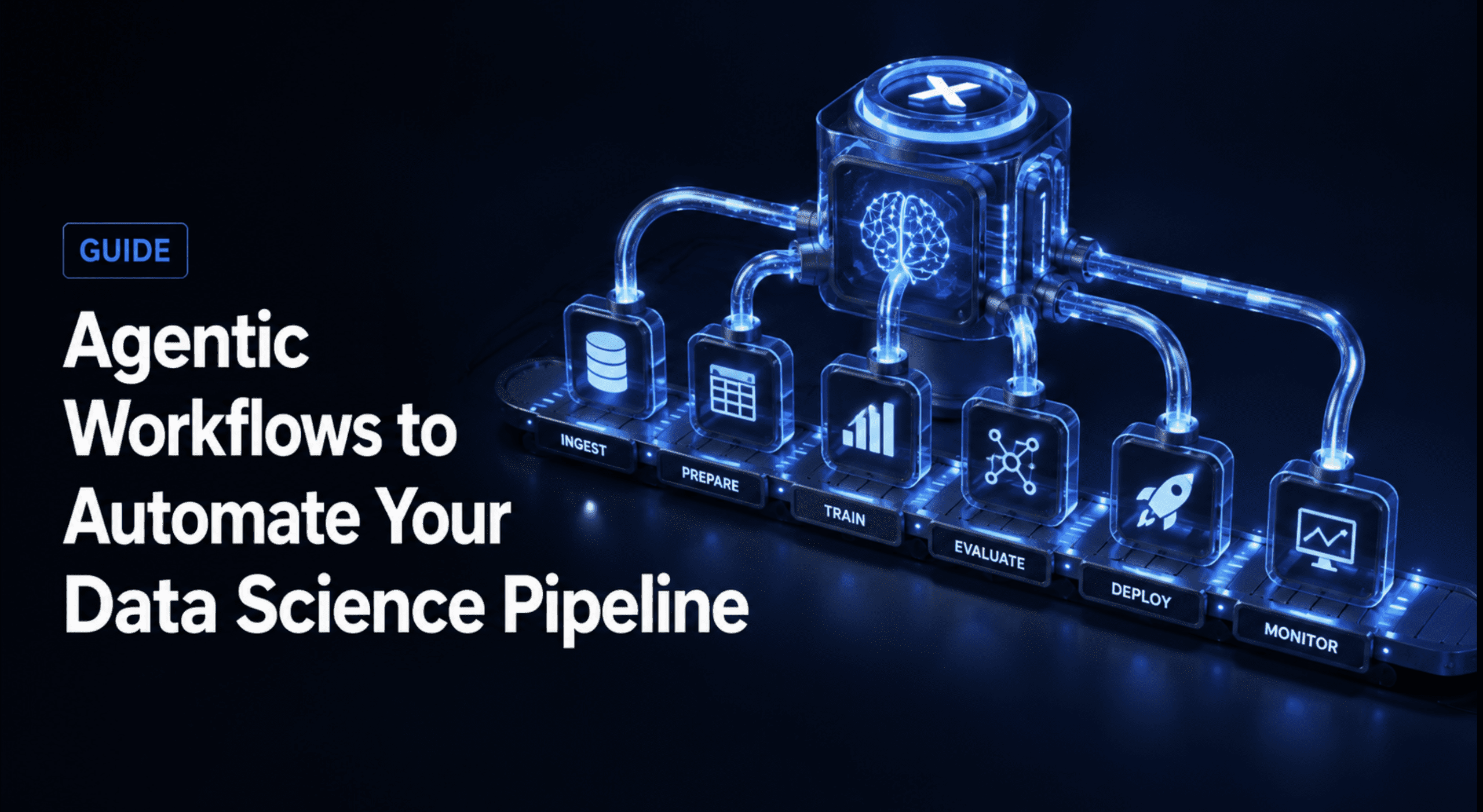
Five AI workflows to automate each stage of your data pipeline
Unlock unprecedented efficiency in your data science projects with five agentic workflows, meticulously designed to automate each key stage of your pipeline. Concrete, actionable strategies for data ingestion, cleaning, feature engineering, model training, and deployment empower you to move beyond manual processes. Discover how agentic automation can transform your workflow and accelerate insights. For those interested in the underlying infrastructure, explore our article on "Fine-tuning Language Models on Apple Silicon with MLX" for a deeper dive into local model optimization.

Explore how OpenAI's Sol, Terra, and Luna models could reshape your workflows.
OpenAI today initiates a limited preview of its next-generation GPT-5.6 model series—Sol, Terra, and Luna—designed to transform developer and enterprise workflows. Following coordination with the U.S. government, access is currently restricted to approximately 20 organizations. Sol, the top-tier model, excels in complex reasoning and security applications, while Terra balances performance and efficiency, and Luna prioritizes speed and cost-effectiveness. This phased release reflects a novel landscape of safety interventions and compliance parameters for enterprise buyers. "It’s not about Anthropic vs.

Your software factory is producing bugs faster: let's build smarter.
Many organizations mistakenly believe they're building a software factory, when in reality, they're simply accelerating the release of bugs. Just as industrialized factories revolutionized physical production, a similar shift is now underway in software development, fueled by LLMs. However, traditional development lifecycles are ill-equipped for this new speed. A true software factory demands more than just velocity—it requires a platform with standardized processes, rigorous quality control, and inherent traceability. Otherwise, you risk generating "AI slop" faster than ever.

Small model, big impact: Liquid AI redefines on-device data extraction.
Liquid AI has released LFM2.5-230M, its smallest AI language model yet, demonstrating that architectural efficiency can outperform brute-force scaling. This 230-million-parameter foundation model excels at data extraction and is designed for on-device agentic workflows, running seamlessly on smartphones, laptops, and robotics. Notably, LFM2.5-230M surpasses models four times its size on key benchmarks, signaling a pivotal shift toward optimized AI solutions for enterprises seeking cost-effective, local processing—a strategy mirroring recent price adjustments seen in the gaming console market, as discussed in our article on Xbox.
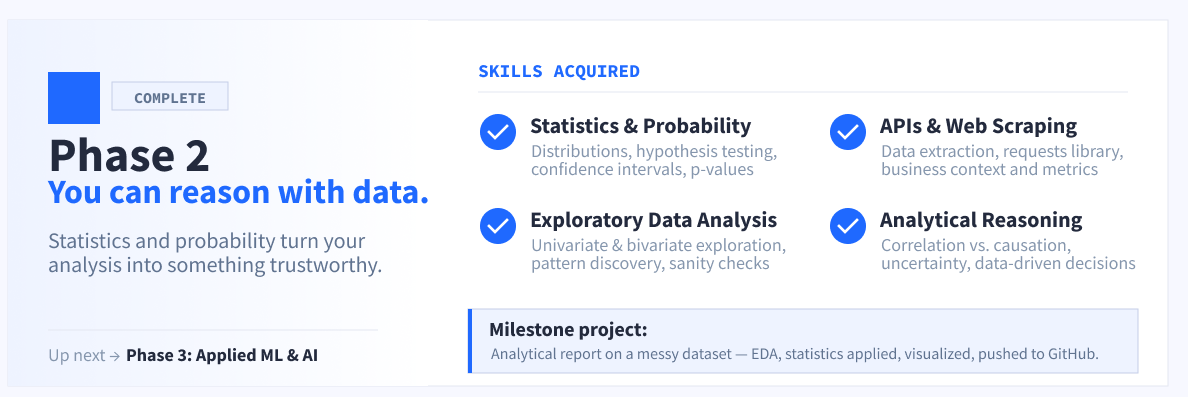
Your Practical Roadmap to Becoming a Data Scientist by 2027
## Data Scientist Roadmap for Beginners (2026–2027) Navigating the path to becoming a data scientist can feel overwhelming. This roadmap clarifies exactly what to learn, in what order, and how long it realistically takes to achieve job readiness by 2027 – whether you’re starting from zero or transitioning from data analysis, engineering, or research. We cut through the noise surrounding Python vs. R, degree requirements, and the rise of Generative AI to provide a focused, actionable plan.

Mindstone's Rebel lets AI agents remember which model fits each task
Navigating the burgeoning landscape of AI agent orchestration platforms can feel overwhelming. Mindstone’s Rebel emerges as a promising solution, offering a local-first, agentic AI operating system designed for enterprise efficiency. Released this week, Rebel utilizes a "Fair Source" license allowing teams under 100 users free adoption and customization, while larger organizations require an enterprise license.

Mistral OCR 4 brings structured document intelligence to enterprise workflows
Mistral AI has launched OCR 4, transforming document extraction into a full enterprise AI solution. This fourth-generation model delivers structured document representations, including bounding boxes, block classification, and confidence scores, moving beyond simple text extraction. Supporting 170 languages and deployable on-premise, OCR 4 addresses critical data sovereignty concerns, particularly relevant following recent U.S. export control actions. Early enterprise feedback highlights significant cost and latency reductions, positioning Mistral as a compelling alternative for document-intensive workflows.

Discover how adaptive AI scaffolding transforms agent performance on the fly
Xiaomi's HarnessX introduces a transformative approach to AI agent development, autonomously rewriting its own scaffolding mid-task—a technique that yields particularly impressive gains for smaller models. Addressing a critical engineering bottleneck, HarnessX treats the AI harness as a modular object, enabling dynamic adaptation to application-specific requirements. Practical results demonstrate an average +14.5% performance boost, with the open-weight Qwen3.5-9B model achieving a remarkable +44% improvement on embodied planning tasks, signaling that harness evolution can be a powerful alternative to simply scaling foundation models.

From Day One: Build a Testable ETL Pipeline with AI Assistance
Starting a new data engineering role? Prioritize making your ETL pipeline testable—it's the most impactful initial step. A practical onboarding workflow focused on rapid environment setup and automated testing, leveraging AI to accelerate development, is outlined here. We'll guide you through establishing a robust, reliable foundation for your data processes. Ensuring testability from the start significantly reduces debugging time and improves overall pipeline stability.

Enterprise AI imagery finds its own voice with faster, open-weight generation
Enterprise-grade AI image generation in just 2 seconds is now a reality with Krea 2 Raw and Turbo, available as open weights under a custom license. Addressing concerns that AI imagery often lacks originality, Krea’s new models offer greater visual variety, prompt accuracy, and crucial customization capabilities for brands. Krea 2 Turbo’s remarkable 2-second generation speed surpasses competitors, while Krea 2 Raw provides a flexible foundation for training custom models.

When Data Paths Break, AI Inference Stalls in Production
Moving AI workloads from pilot to production often reveals a critical bottleneck: data delivery. While demonstrations thrive on direct storage-to-compute connections, these "point-to-point" architectures crumble under the weight of sustained production traffic, leading to stalled inference pipelines and underutilized GPUs. F5 emphasizes that successful AI operationalization demands infrastructure engineered to withstand real-world failures, not just ideal conditions. Building a resilient, observable data delivery layer is paramount for unlocking AI's full potential.

AI agents that rewrite their own rules unlock smarter enterprise workflows
Researchers are introducing Self-Harness, a framework enabling AI agents to systematically refine their own operational rules, potentially boosting performance by up to 60%. While building frontier AI models remains complex, customizing the “harness”— the system governing agent behavior—is increasingly valuable for enterprises. Self-Harness addresses the challenge of manual harness tuning by leveraging the agent's own execution traces to identify and correct weaknesses, moving beyond intuition-based adjustments.

Your agent needs more than a memory boost to stay reliable in production.
Enterprise AI agent deployments often stall due to a critical, frequently overlooked challenge: maintaining accuracy as input grows. Traditional approaches—fine-tuning and Retrieval-Augmented Generation (RAG)—each present limitations: forgetting and context rot, respectively. A promising alternative leverages hypernetworks to generate task-specific models on demand, sidestepping these issues. This approach, exemplified by companies like Nace.AI, aims for a 90/10 split – the agent handles the bulk of the workflow, with experts validating the final results.

Turn your Claude Code session into a live, shareable interactive workspace
Anthropic’s Claude Code now delivers live, shared dashboards and interactive workspaces for enterprises through its new Artifacts feature. Transforming a Claude Code session into a custom, shareable HTML webpage, Artifacts allow users to connect live code and data sources, creating dynamic visualizations for teams. This eliminates the need for manual status updates and facilitates clearer communication between engineers and stakeholders. As highlighted by Claude Code lead Boris Cherny, Artifacts are "a game changer" for collaborative workflows, and closely mirror a recent feature release from OpenAI.

Optimizing AI agents beyond guesswork with smarter constraint frameworks
Engineering teams face a persistent challenge: deploying AI agents that, despite initial success, often hallucinate or miss critical constraints in production. Addressing this requires tedious trial-and-error, making it difficult to pinpoint effective adjustments. Introducing Arbor, a new AI optimization framework developed by researchers at Renmin University of China and Microsoft Research, which delivers over 2.5 times the verifiable performance gains of standard AI coding agents like Claude Code and Codex – all within the same compute budget.

Adobe shifts Creative Cloud from media generation to intelligent production orchestration
Adobe is redefining creative workflows with the public beta release of its embedded "creative agent," now available across Creative Cloud applications like Premiere Pro and Photoshop. Moving beyond simple media generation, this agent orchestrates complex production tasks—from batch file management to brand asset updates—by directly accessing software APIs. Powered by new "Elements" and "Projects" technologies for visual consistency and contextual memory, Adobe empowers creatives to delegate tedious tasks, maintaining full aesthetic control.
Embrace Uncertainty to Make Smarter Design Decisions with AI
In an increasingly AI-driven design landscape, it's crucial to move beyond treating predictions as definitive truths. Probabilistic Design is a future-focused mindset empowering UX and product teams to embrace uncertainty and intelligently interpret AI outputs. Learn how to make adaptive decisions, transforming potential pitfalls into opportunities. Discover a framework for navigating complexity and building more resilient solutions. For deeper insights into the evolving AI landscape, explore "Probably raises $9M to build a more reliable kind of AI."

Sakana Marlin trades speed for strategic depth in autonomous business research
For businesses demanding insights beyond surface-level AI responses, Sakana AI introduces Marlin, a "Virtual CSO" designed for deep, strategic research. Unlike typical chatbots, Marlin leverages a novel Adaptive Branching Monte Carlo Tree Search (AB-MCTS) engine to autonomously generate comprehensive, 100-page reports and executive slides—often in just eight hours. Targeting enterprises like financial institutions and think tanks, Marlin represents a shift toward methodical reasoning over rapid generation, empowering data-driven decision-making. Explore sample reports and discover how this innovative agent can transform your research workflows.

AI speeds your data pipelines but can't replace their documentation
Vibe coding offers remarkable speed for generating isolated implementations, but prompts’ inherent temporality creates challenges for enterprise data platforms. These platforms, often fragmented across diverse teams and technologies, risk accumulating inconsistent logic and hidden dependencies as operational context resides in scattered conversations rather than the system itself. Spec-driven development (SDD) addresses this by converting prompts and knowledge into executable, versioned specifications—persistent operational memory for both humans and AI.
Explore the top data analytics courses shaping smarter skills in 2026
Finding the best data analytics course in 2026 requires navigating a diverse landscape of tools, roles, and learning objectives. This guide reviews ten leading courses, ranging from foundational certificates to immersive, project-based programs and even free official training for platforms like Tableau and Power BI. We’ve prioritized options that empower users to transform their data skills and achieve tangible results. For a broader perspective on incorporating user insights, explore our related article, "The Benefits Of Cognitive Inclusion In UX Research."

Discover how AI skills evolve without altering model weights
Microsoft’s new, open-source framework, SkillOpt, streamlines the optimization of AI agent skills—a crucial element for real-world AI applications. Traditionally, refining these skills, which are sets of instructions guiding models, requires tedious manual adjustments. SkillOpt introduces an optimizer that treats these skill documents as trainable objects, evolving them based on performance feedback using deep-learning techniques. Initial results, demonstrated on models like GPT-5.5 and Qwen, show SkillOpt significantly boosts accuracy and delivers compact, transferable skill artifacts, addressing a key challenge in agentic AI.

New benchmark reveals GPT-5.5 outperforms Claude on complex professional tasks
A significant shift has occurred in AI evaluation with the launch of Agents’ Last Exam (ALE), a rigorous new benchmark designed to assess AI’s ability to handle economically valuable, long-horizon professional workflows. OpenAI’s GPT-5.5, operating through the Codex harness, currently leads the ALE Leaderboard with a 24.0% pass rate, surpassing Anthropic’s Claude Fable 5.

Xiaomi's open source MiMo Code aims to simplify long, complex coding tasks
Xiaomi has open-sourced MiMo Code V0.1.0, a terminal-native AI coding assistant that demonstrates impressive performance, outperforming Anthropic's Claude Code on long-horizon coding tasks. This innovative harness, built on the OpenCode agent, incorporates a unique cross-session memory system designed to overcome AI coding agents’ tendency to "forget" earlier instructions. Developers can explore the tool immediately with limited-time free access to Xiaomi’s powerful multimodal MiMo-V2.5 model, requiring no registration. For those seeking deeper insights into AI agent skill optimization, explore our related article on Microsoft's SkillOpt.
Future-Proof Your Excel Skills: VBA or Office Scripts?
Navigating the world of Excel automation can feel complex, especially with evolving technologies. You're weighing VBA, a familiar tool embraced by your GM, against the future-focused potential of Office Scripts. While aligning with your manager’s expertise offers immediate benefit, consider that Office Scripts provide greater cloud compatibility and represent Microsoft’s direction. Explore both options to discover a solution that balances current needs with long-term productivity gains and empowers your data journey.