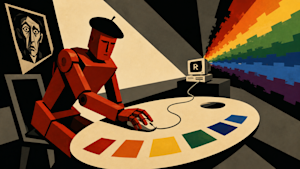
Adobe's unveiling of its Creative Agent represents a significant shift in how creative professionals will interact with AI, moving beyond simple media generation towards intelligent production orchestration. This isn't just about generating images; it's about automating the tedious workflows that bog down creativity, freeing up designers and editors to focus on the core artistic vision. The move reflects a growing understanding within the industry that AI's true power lies in augmenting human capabilities, not replacing them entirely, a point underscored by recent surveys showing a strong preference for AI as an operational assistant rather than an autonomous creator. Copilot searched your mailbox. LiteLLM handed out admin keys. Run this 5-check audit before your stack is next highlights the critical need for security and responsible implementation as these powerful tools become more integrated, a concern Adobe will need to address directly as their agent expands. The approach also aligns with a broader trend of embedding AI capabilities directly within existing software ecosystems, rather than relying on standalone tools, which arguably provides a more seamless and intuitive user experience. Spotify's reserved ticket sales to music superfans are now going live demonstrates the potential for AI to enhance existing platforms and services, suggesting Adobe's strategy will resonate with a broad audience.
The technical underpinnings of Adobe's Creative Agent, particularly the "Elements" and "Projects" features, are crucial to its potential. The ability to maintain visual consistency across campaigns, far beyond what simple prompting can achieve, addresses a key challenge in generative AI – ensuring brand identity remains intact as projects scale. This persistent memory and context management are vital for enterprise adoption, where maintaining brand guidelines and legal compliance is paramount. However, significant questions remain regarding the backend architecture and API accessibility. Without open APIs or support for standards like the Model Context Protocol, integrating Adobe's agent into broader AI workflows and custom task routing systems will be considerably more difficult, potentially limiting its appeal to larger organizations with dedicated AI engineering teams. The proprietary nature of the system, requiring active Creative Cloud commercial licenses, also presents a barrier to entry compared to open-source alternatives.
The focus on specific agent applications within Premiere Pro, Illustrator, Photoshop, and InDesign showcases a pragmatic understanding of user needs. Automating tasks like project setup, batch renaming, and background removal—often the most time-consuming aspects of creative work—directly addresses pain points for individual creators and enterprise teams alike. The integration with platforms like ChatGPT, Claude, Microsoft Copilot, and Gemini further expands the agent's reach and utility, creating a more interconnected creative workflow. However, the success of this approach hinges on Adobe's ability to clearly articulate the security and governance implications for enterprise IT departments, particularly concerning data provenance, storage, and role-based permissions. The rising prominence of developer-first AI platforms like fal.ai adds a layer of complexity, forcing Adobe to define its role in a rapidly evolving ecosystem.
Ultimately, Adobe's Creative Agent represents a compelling vision for the future of creative work, one where AI intelligently handles the mundane, allowing human creators to focus on innovation and artistry. The emphasis on human control—ensuring the final creative decision always rests with the designer—is a reassuring message in a field often fraught with anxieties about automation. What remains to be seen is whether Adobe can successfully navigate the technical challenges of API accessibility and enterprise integration while maintaining its proprietary ecosystem, and whether the broader creative community will embrace this new paradigm, or continue to prioritize the autonomy and craft that have always defined their work.