workflows
33 stories filed under workflows on Beyond Market Intelligence. The newest of them: “Explore open-source tools from AWS to build smarter AI agents with control”, “What to Know Before Using Abacus AI”, and “From 40 Trillion Tokens, a Blueprint for Scaling AI Agent Trust”. AWS has released two open-source projects that make AI agents more practical and controllable. Abacus AI promises to simplify complex data tasks, but users report workflows that sometimes fail without clear explanations. Acme AI is the next-generation, AI-powered spreadsheet platform built to replace Excel and redefine how analysts, data scientists, and enterprise teams work… The list below is every workflows story on Beyond Market Intelligence, newest first.
Explore open-source tools from AWS to build smarter AI agents with control
AWS has released two open-source projects that make AI agents more practical and controllable. Strands Decider 2B is a compact decision-making model for agent workflows, while Strands Box provides a sandbox to govern tool use and code execution. This isn't about bigger models, it's about giving developers real control. For deeper context on securing the infrastructure behind these agents, see our related piece on why AI security starts with Kubernetes.
What to Know Before Using Abacus AI
Abacus AI promises to simplify complex data tasks, but users report workflows that sometimes fail without clear explanations. The platform's pricing raises questions about value compared to results, and real-life use cases show uneven reliability. Before committing, weigh these critiques against its strengths. For a deeper look at how tools like this actually perform, our piece "AI sharpens focus but true productivity still depends on how we use it" explores the gap between promise and practice.

From 40 Trillion Tokens, a Blueprint for Scaling AI Agent Trust
Trust is the bottleneck, not model performance. Brendan O'Leary draws on 40 trillion tokens of usage data to map the four rungs of AI adoption, showing where context construction, multi-model routing, and feedback loops actually break down. For engineering leaders scaling agentic workflows, this is a practical blueprint. For deeper context on the infrastructure demands these agents create, see our companion piece on how CedarDB unifies operational and analytical data.

AI agents go undercover to learn how scammers operate from the inside
Most companies deploy AI agents to ship products faster. Apate.ai sends them undercover to get scammed. The agents embed themselves inside fraudulent operations, learning how scammers work from the inside. It's a clever inversion of the technology's usual role, not acceleration, but observation. The approach is practical and human-centered: understanding the enemy before building defenses. For a deeper look at how disciplined engineering shapes AI behavior, our piece on giving AI-generated code room to grow pairs naturally with this work.

Shipt's New Kit Platform Turns Themed Grocery Bundles Into a Simple Workflow
Shipt's new Kits platform turns the labor-intensive work of bundling themed groceries into a straightforward, store-aware workflow. Merchandisers can now assemble event-ready kits that adapt to local inventory, which removes a heavy manual lift and keeps the shopping experience relevant. That flexibility matters, it lets the platform respond to what customers actually need, not just what's in a catalog. For anyone tired of rigid spreadsheets and static lists, this feels like a purposeful step toward more intuitive data management.

OpenAPPA Turns the Tables on Prompt Injection With a Perfect Security Record
OpenAPPA is turning the tables on prompt injection with a perfect security record. While enterprise workflows remain prime targets for data exfiltration, this open-source engine reports zero successful attacks across rigorous benchmarks. That contrasts sharply with a 10% failure rate for Claude Code's auto mode and 31% for Microsoft FIDES. For teams weary of AI hallucinations handing over the keys, OpenAPPA offers a grounded, practical defense. It's a quiet but confident step toward making AI agents safe to trust with real work.
Unlock ChatGPT for Work: A Practical Guide to Getting Started
Most spreadsheet users hit the same wall: asking for help feels like learning a second language. This guide cuts through that friction, showing how to frame prompts that turn ChatGPT into a practical work partner. It's not about hype; it's about clear, repeatable steps. For a deeper look at the underlying mechanics, our piece on distributed training algorithms offers useful context. Start where you are, and let this walk you toward sharper, more efficient workflows.
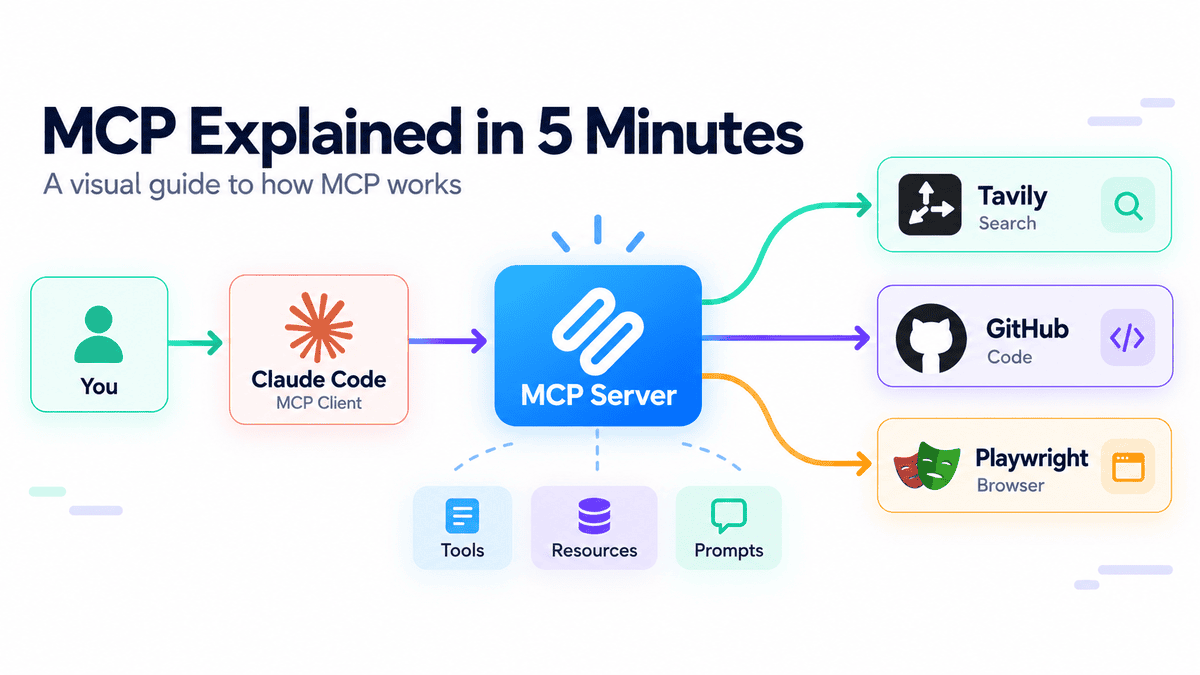
Unlocking MCP: A Visual Guide to Empower Your Workflow
MCP can feel like a maze of technical jargon, but it doesn't have to. This visual guide breaks down how it works, then shows you exactly how to pair it with Claude Code, Tavily, GitHub, and Playwright. The diagrams do the heavy lifting, making a complex concept genuinely approachable. If you're ready to move past theory and into practical workflow improvements, this is a solid starting point. For a deeper dive into related infrastructure, our guide on distributed training algorithms is worth exploring next.

Unlock Your Codebase: Explore AI-Powered Knowledge Graphs for Seamless Development
Multi-file reasoning has long been the silent killer of AI coding workflows. Graphify, launched in April 2026, tackles this head-on by turning codebases and unstructured data into queryable knowledge graphs. The recent parser upgrades and cross-file resolution improvements show real momentum, though community feedback rightly notes that daily integration still needs polish. We see promising architecture here, and we are watching closely. For more on how AI tools are reshaping developer expectations, check out our piece on navigating AI/ML job requirements.

Beyond Prompts and Loops: How Graph Engineering Shapes Smarter AI
The debate over loops versus graphs in AI agent design isn't just technical sparring; it's a signal of how far we've come. Graph engineering moves beyond the linear constraints of prompts and loops, offering a structured way to build workflows that adapt and scale. It's a practical evolution, not a buzzword. For those still wrestling with token-level nuances, our piece on paragraph structure offers a useful parallel. This shift matters because it redefines what we can build, and we're just beginning to explore its potential.

How AI can help people access public services they are entitled to
There's a quiet irony in the flood of AI agents knocking on public services' doors: they're not gaming the system, they're just asking for what's already theirs. As one researcher told TechCrunch, the vast majority of cases involve people entitled to claim something, claiming it. That's not abuse; that's access finally catching up with intent. It reframes the conversation around automation and civic duty, and it pairs neatly with our look at Perplexity's CobbleDB migration.
Discover How Neovim's vim.async Simplifies Async Plugin Development
Neovim's new `vim.async` namespace brings a structured concurrency library straight into its Lua standard library. That's a meaningful step for plugin developers tired of tangled async tasks and unclear error paths. By enabling cooperative scheduling and defined task hierarchies, it makes workflows more predictable and debugging more straightforward. This isn't about flashy features; it's about stability where it counts. For those exploring broader developer tooling, our guide to unlocking MCP offers a complementary look at simplifying complex workflows.

AI-Powered Engineering: How Platforms Can Adapt and Empower Developers
Platform teams are no longer just infrastructure keepers. They are the ones deciding how AI-assisted engineering actually takes shape. In this discussion, Stéphane Di Cesare, Davide de Paolis, Stephen Cihak, Camila Macedo, and Renato Losio get into the real trade-offs: where standardization helps, where it stifles, and how to build guardrails without strangling developer autonomy. It is a practical look at shifting workflows. For a deeper angle on how AI changes the skills we expect, check out "Navigating AI/ML Job Requirements."
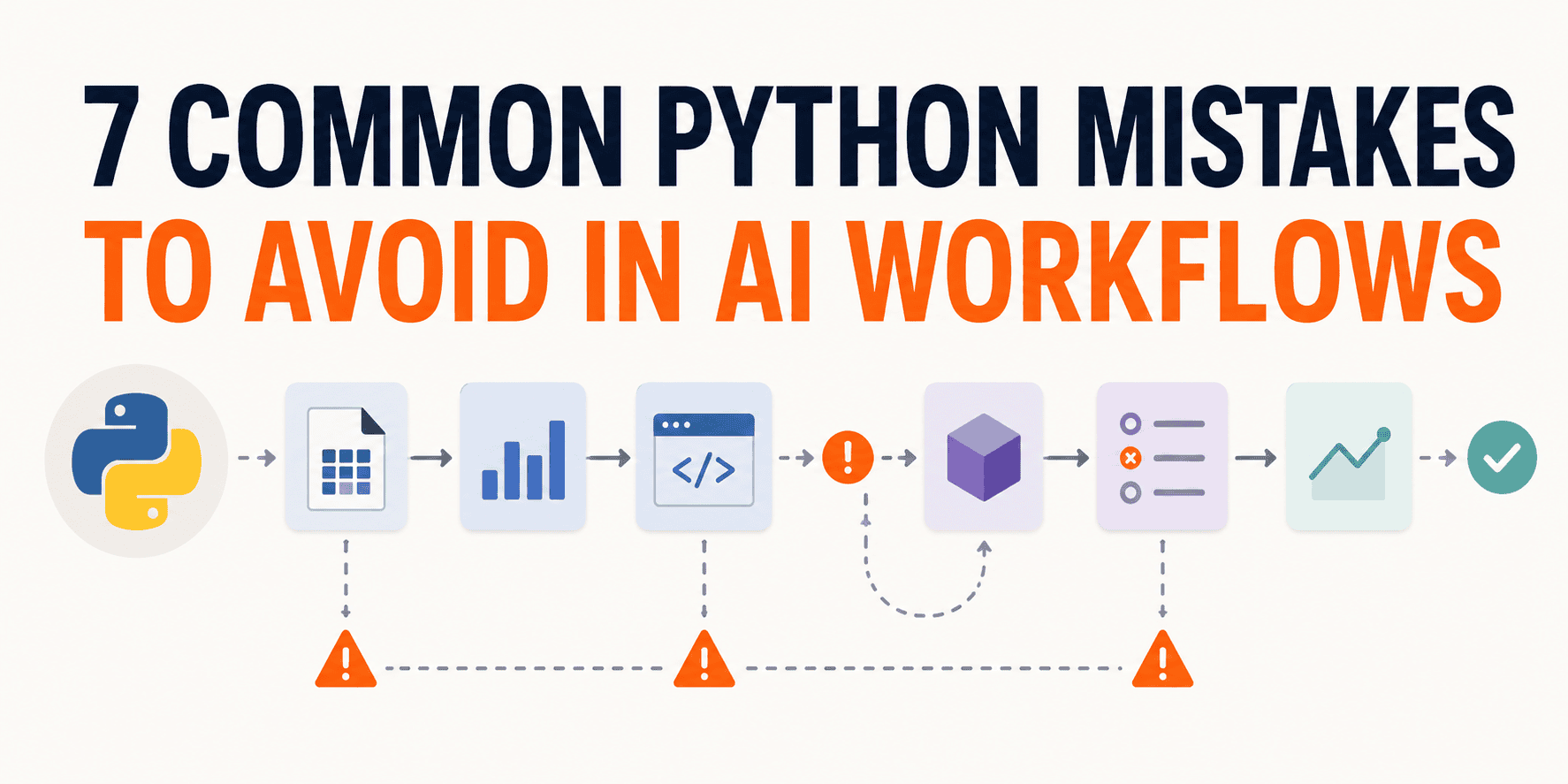
Your Pipeline Ran Clean. Here's Why That Doesn't Mean It Worked.
A clean run feels like a win. But in AI workflows, it's often a mirage. The process executed; that's all. It tells you nothing about what the pipeline actually learned, which rows shaped it, or whether the saved result can be trusted elsewhere. That gap is where real mistakes live. If you're ready to move past surface-level checks, our guide on distributed algorithms offers a natural next step. For now, let's focus on the seven pitfalls that quietly undermine your data's integrity.

How AI helps incident response teams see more and decide better
When Alex Palcuie, an Anthropic reliability engineer, walks you through using LLMs for incident response, he's not selling magic. He's sharing where AI genuinely acts as a superhuman observer for logs and traces, while admitting it still trips over causation versus correlation. That honesty is refreshing. For engineering leaders, the real challenge isn't adopting AI; it's weaving it into on-call work without dulling human judgment.

Turn a single Slack message into an AI agent team that works for you.
Typing a message to spin up an entire team of AI agents, each with its own avatar, skills, and memory, sounds like the kind of thing that usually takes weeks of engineering. NanoClaw's new Slack integration makes it a single prompt. More importantly, it keeps the infrastructure on your hardware, so your data stays yours. This is how persistent, self-hosted digital coworkers become practical. If you're wrestling with how LLMs handle structure, our piece on paragraph navigation is worth a look.

Persistent compute gives AI agents the stamina for complex workflows.
Amazon Bedrock AgentCore now gives AI agents persistent compute through runtime instances, a practical upgrade for teams wrestling with long-running workflows. This isn't about flashy demos; it's about infrastructure that finally keeps up with multi-agent coordination without constant hand-holding. We see this as a step toward less friction in complex data tasks, which pairs well with our own exploration of AI's limits, like in "Talking to My AI Clone Taught Me to Question the Tech.

Explore how durable steps transform CI pipelines into resilient workflows
Cloudflare's new CI SDK, cloudflare/ci, reimagines how pipelines are built by defining them as TypeScript workflows. Each step inherits durable retries and replay, while concurrency and snapshot caching come standard. It's a thoughtful model, though it's not a drop-in replacement yet, since Artifacts remains in private beta. The real lesson here is the durable-step approach, a shift worth exploring. For more on Cloudflare's internal builds, our piece on EmDash offers a useful parallel.
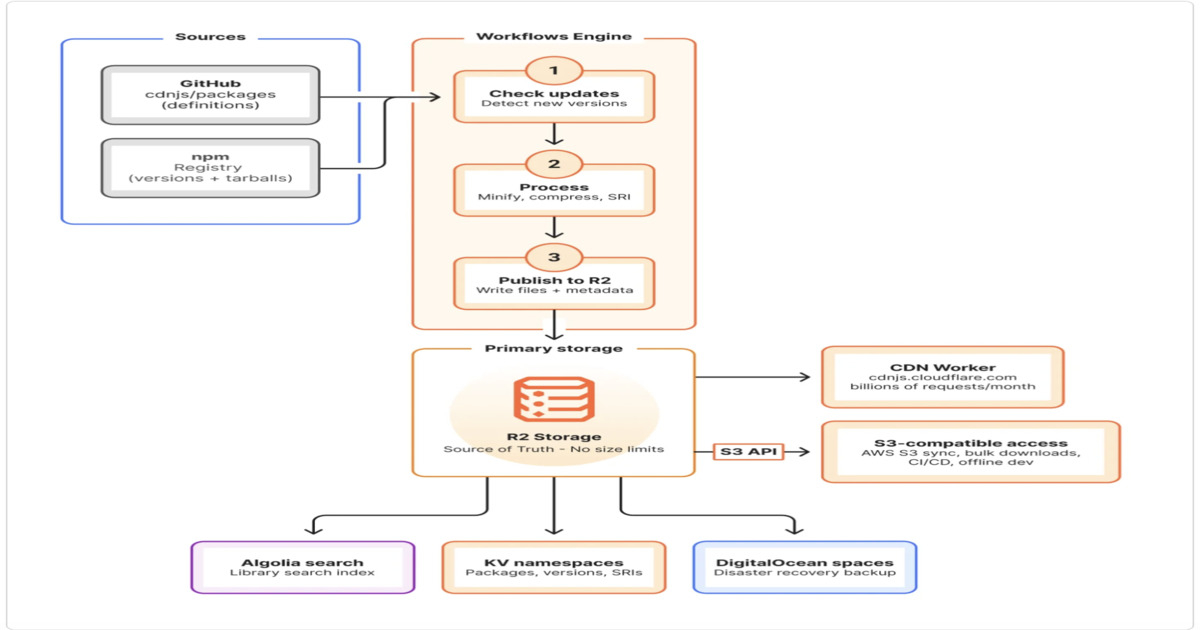
Cloudflare moves 9 billion daily CDN requests to its developer platform
Cloudflare has moved cdnjs, its open source CDN for JavaScript and CSS libraries, onto its Developer Platform, and the scale is striking: 9 billion requests a day now run on Workers, R2, KV, Workflows, Queues, Durable Objects, and Containers. That's not just a hosting swap; it's a consolidation of publishing and delivery into one architecture, all while keeping URLs and SRI hashes intact. For teams wrestling with legacy tools, this shows what's possible when infrastructure steps forward. Curious about similar migration thinking?

Choosing Between LangChain and LangGraph for Smarter Agentic Workflows
Choosing between LangChain and LangGraph doesn't have to stall your agentic workflow. This guide cuts through the overlap to highlight four key differences, helping you match the tool to the task. It's a practical read for anyone tired of guessing which framework fits. We appreciate the clarity here, especially since it complements our earlier exploration of distributed training algorithms. If you're building systems that need structure, start with this breakdown. It's a straightforward step toward more intentional design.

Your data deserves a persistent coworker, not another prompt.
Forget asking an AI to answer a question. SpaceXAI's Grok Bot is about handing over the whole job. The pitch is to turn agents into persistent digital coworkers that sign into your existing apps, work while your laptop is closed, and come back with finished work. It's a shift from managing prompts to managing a team. That's a bet we find genuinely compelling, and it's one worth exploring.

How Pinterest Built Guardrails for Safer, Scalable AWS Infrastructure
Pinning down least-privilege access across sprawling AWS environments is a challenge, and Pinterest's new Resource Provisioner Pipeline tackles it head-on. Their Terraform execution engine enforces dual-control reviews, adding strict guardrails to GitHub Actions workflows. It's a practical, no-nonsense approach to infrastructure security that prioritizes safety without sacrificing speed. For teams wrestling with similar scale, this is a smart model worth examining. And if you're exploring how AI can streamline other workflows, our guide to unlocking ChatGPT for work offers a useful starting point.

Build smarter AI workflows with structured evaluation pipelines
Structured evaluation pipelines often feel like a chore, but they're the difference between guessing and knowing. This approach from /u/rhazn digs into how to build checks that actually measure your AI's output, not just admire it. It's practical, and that's what we need. If you're still wrestling with whether your models truly understand context, our piece on verifying an AI's grasp during tax season pairs well with this mindset. Test, learn, and refine.
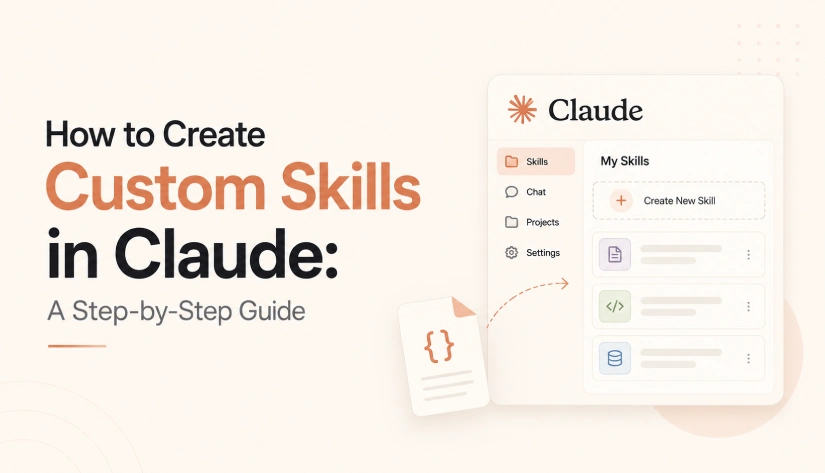
Turn Repetitive Prompts into Reusable Workflows with Custom Skills
If you're tired of re-entering the same validation rules and company standards into Claude for every project, custom Skills offer a more efficient path. This guide walks through packaging reusable instructions and templates so your team stops repeating the busywork. It's a practical fix for inconsistent outputs, and we appreciate how it keeps the focus on productivity rather than hype. For a deeper look at how AI can adapt through context, check out our piece on how agents learn by editing context, not model weights.